Standards
Licensing bodies, training requirements, and the guide-to-client ratios we hold on group, private, and climbing departures.
4 sections
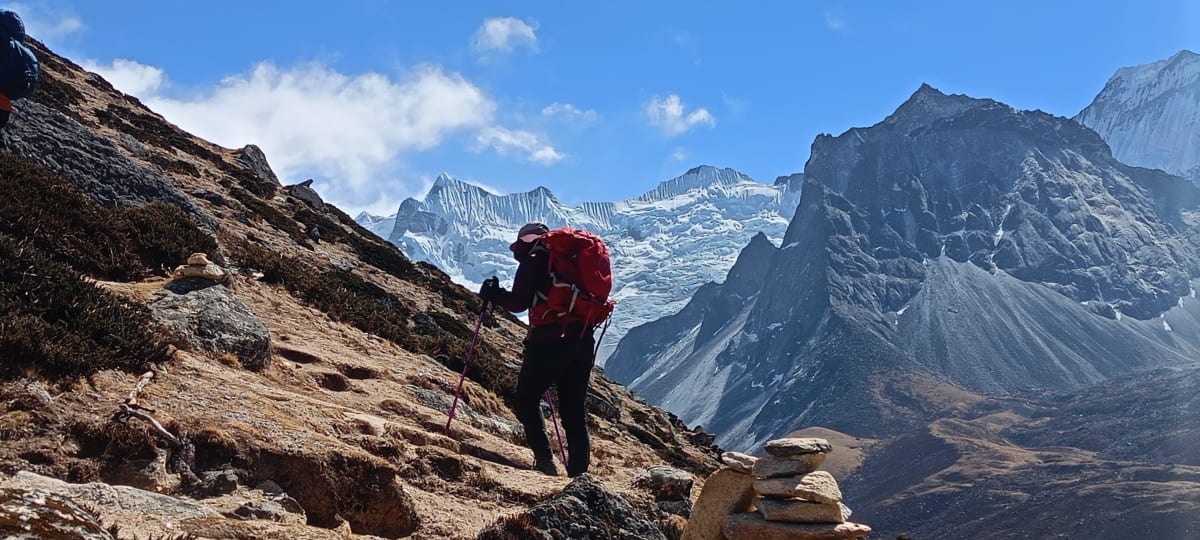
A trekking guide license comes from the Nepal Mountaineering Association (NMA) or a TAAN registration, both requiring completed training courses, a minimum number of documented treks, and renewal on a set cycle rather than a one-time credential. Every guide on this site holds one or both, and their license numbers are published on their team profile rather than kept off the page, the way most operators handle it.
Climbing peaks add a further layer: an NMA climbing guide license, distinct from the standard trekking license, verified through the Khumbu Climbing Center's technical course or an equivalent program before a guide leads a client on fixed ropes.
Every guide on this site holds a Wilderness First Responder (WFR) certification or equivalent, renewed on a multi-year cycle rather than earned once and forgotten. WFR training covers altitude illness recognition, wound management, and evacuation decision-making in a remote setting where the nearest hospital can be a full day's walk or a helicopter flight away. Our senior guide additionally holds a certificate from the Himalayan Rescue Association's high-altitude medicine seminar at Pheriche, the clinic whose 500 m sleeping-altitude guideline our itineraries are built around, detailed in the altitude sickness prevention guide.
Standard group departures run one licensed guide per group of up to 12, with a porter for roughly every two trekkers on longer routes. Climbing departures run smaller: Island Peak and similar technical peaks cap at 8 to 10 clients per lead climbing guide, tightening further on Ama Dablam-grade expeditions where the group size itself is capped near 6 to 8 for safety on fixed ropes. Private departures set their own ratio by the client's request.
Every guide article on this site carries a byline from the team member who wrote it, and safety-critical pages (altitude, insurance, winter routes) carry an additional "reviewed by" credit from our senior guide before publication. This is the same standard applied to who leads your trek: the person named as your guide on a trip page is the person who shows up at the airport, not a substitute assigned later. Full credentials for each guide sit on their individual profile.