Explore
Peak climbing in Nepal covers the 27 mountains administered by the Nepal Mountaineering Association (NMA), summits between roughly 5,500 m and 6,500 m such as Island Peak (6,189 m), Mera Peak (6,476 m), and Lobuche East (6,119 m), that sit between trekking and full expedition mountaineering. Royalties for the popular Group B peaks (Island, Mera, Lobuche East) run USD 250 per climber in spring, USD 125 in autumn, and USD 70 in winter and summer, far below the Department of Tourism royalties charged for expedition peaks like Ama Dablam (6,812 m). A typical climbing itinerary lasts 14 days because the trekking approach doubles as the acclimatization phase.
Our climbing sherpas hold NMA guide certifications and re-fix the standard routes on Island Peak and Lobuche East each season. The pages below compare the peaks we operate, explain the permit and royalty system, and set out the fitness benchmarks that decide summit rates.
Routes
 Technical
 17 days
6,119 m
From
USD 2,500 pp
 Strenuous
 17 days
6,476 m
From
USD 2,500 pp
 Moderate-Strenuous
 13 days
5,732 m
From
USD 1,400 pp
 Technical
 14 days
6,189 m
From
USD 2,400 pp
 Technical
 28 days
6,812 m
From
USD 9,500 pp
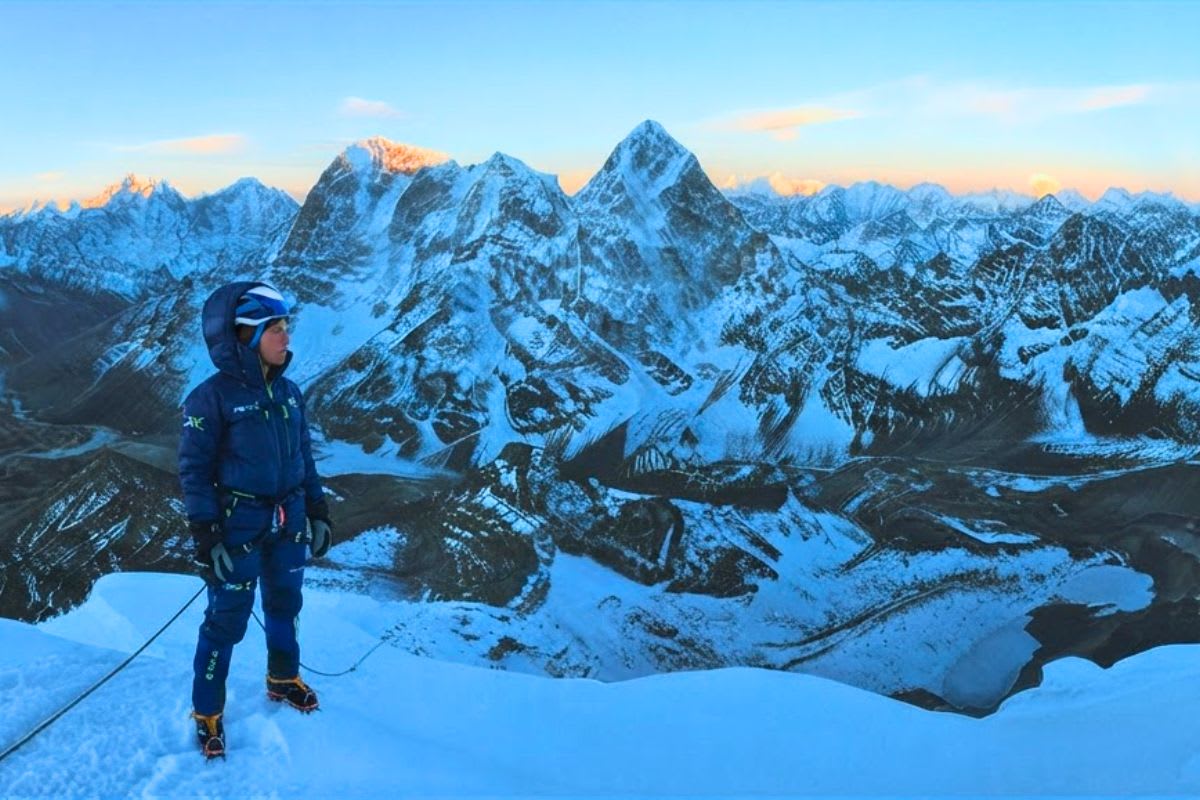
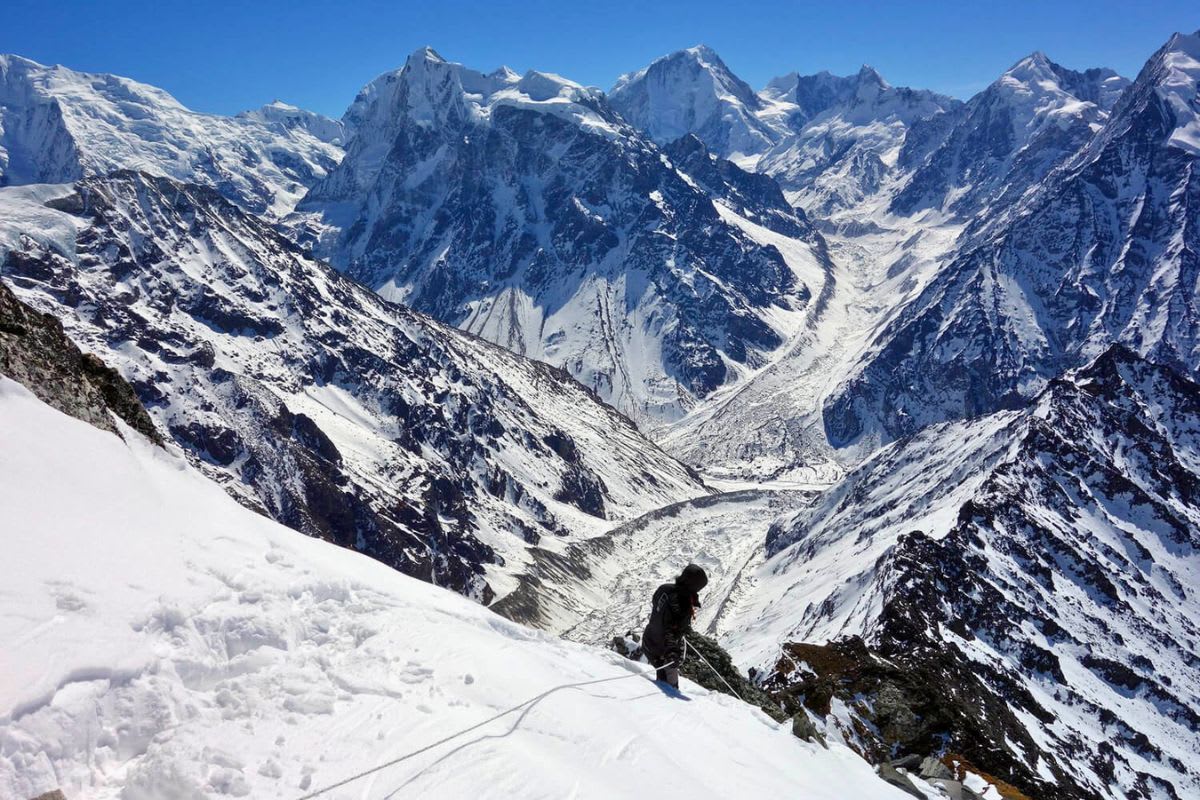
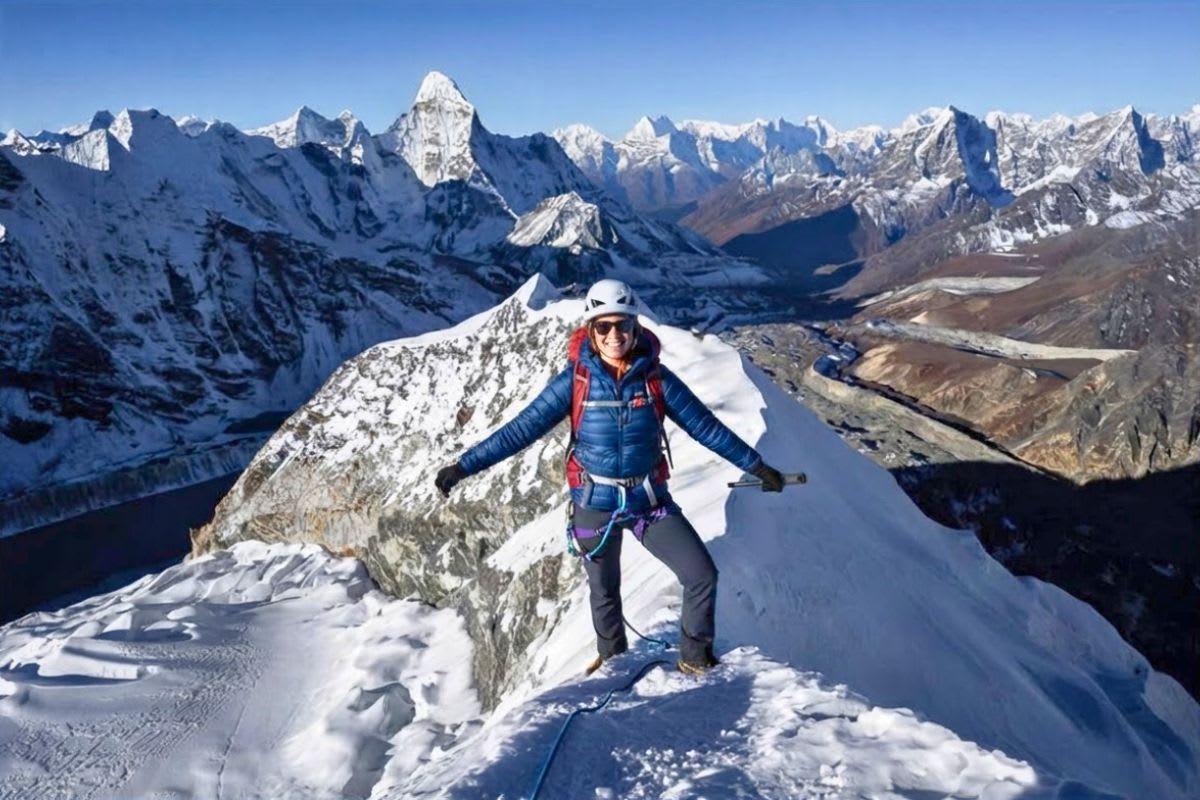
Yala Peak (5,732 m) in Langtang is the entry point: a non-technical scramble with a rope for the summit slope, climbable by fit trekkers with no prior mountaineering. Island Peak adds a glacier crossing with ladder sections and a 45-degree headwall on fixed lines, which makes prior crampon time useful rather than optional. Mera Peak is higher at 6,476 m but technically simpler, a long snow walk where the altitude, never the angle, is the test. Lobuche East is the steepest of the three popular Khumbu peaks and rewards climbers who already handle jumar and abseil transitions.
The selection rule our NMA-certified sherpas apply: pick the peak by your weakest skill, never by the summit altitude. The full comparison, with royalty math and season windows, sits in beginner climbing peaks in Nepal, and the training benchmarks live in the climbing fitness preparation guide.
An NMA climbing permit is the royalty document itself, issued through a registered operator, and it stacks on top of the region's trekking permits rather than replacing them. Island Peak and Lobuche East climbers also pay the Sagarmatha National Park entry (NPR 3,000) and the Khumbu municipality permit (NPR 2,000); Mera Peak crosses Makalu Barun National Park (NPR 3,000). Every NMA permit also carries a refundable garbage deposit, USD 250 for the standard peaks, returned after the liaison check.
Royalty rates are seasonal, so the same Island Peak permit costs USD 250 in April and USD 70 in December. The full fee table and application steps are in the NMA peak permit and royalty guide, and the acclimatization logic that keeps summit day safe is covered in the acclimatization schedule for the Khumbu.
| Peak | Summit altitude | Duration | 2026 group cost |
|---|---|---|---|
| Yala Peak | 5,732 m | 13 days | USD 1,400-1,900 |
| Island Peak | 6,189 m | 14 days | USD 2,400-3,300 |
| Lobuche East | 6,119 m | 17 days | USD 2,500-3,350 |
| Mera Peak | 6,476 m | 17 days | USD 2,500-3,400 |
| Ama Dablam | 6,812 m | 28 days | USD 9,500-13,000 |
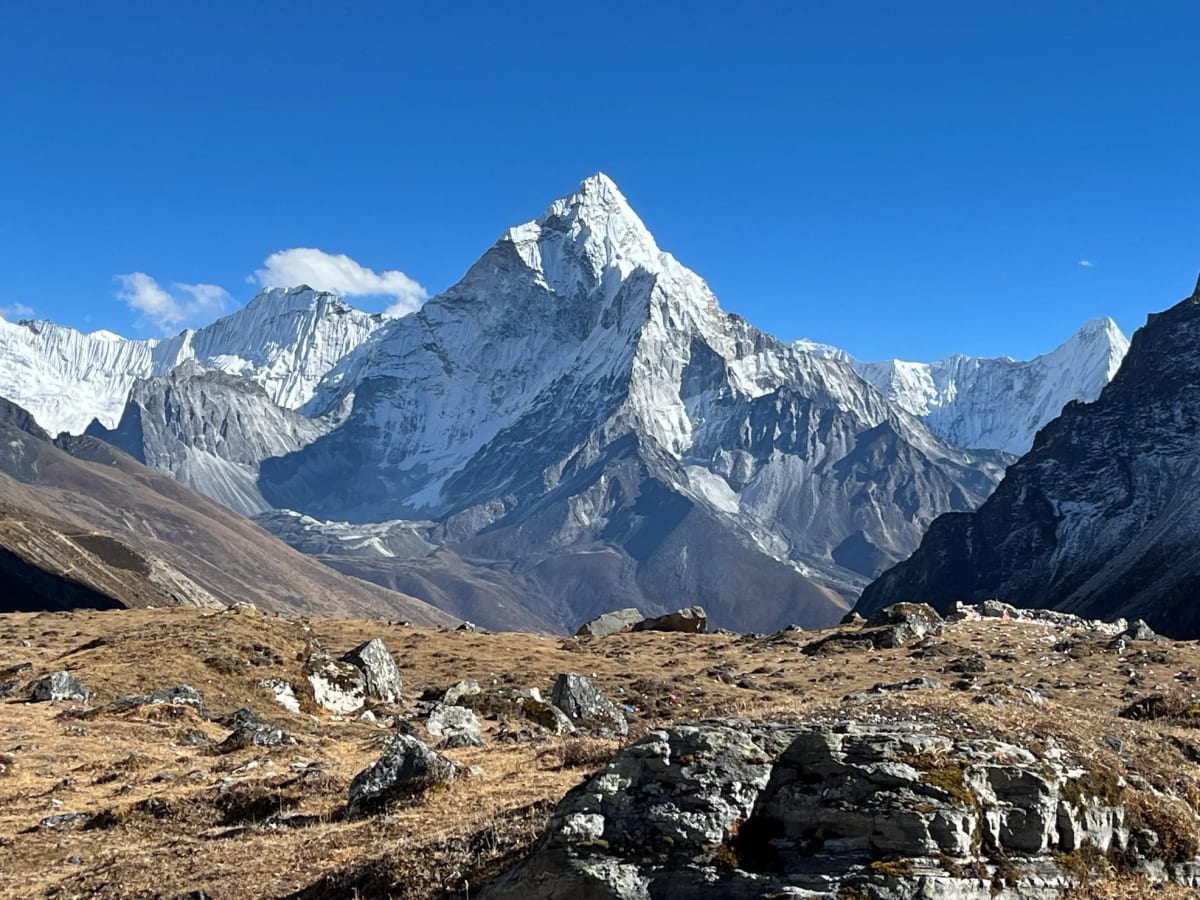
Ama Dablam sits apart from the other four: it's a full technical expedition peak rather than an NMA trekking peak, needing advanced ice and mixed-climbing skills, a much longer siege-style itinerary with rope-fixing camps, and a Department of Tourism expedition royalty rather than the flat NMA fee the trekking peaks use, which is why its price runs roughly four times the next most expensive option. Yala Peak, at the opposite end, is the one climb on this list a strong trekker with zero technical background can reasonably attempt.
Island Peak and Lobuche East cost close to the same because both need identical technical gear and a similar Khumbu approach; Mera Peak runs slightly higher mainly because its Hinku valley approach carries higher porter and logistics costs than the busier Khumbu trail the other three share.
Not always. Trekking guides hold an NMA Trekking Guide License, while peak climbs need a guide with additional NMA climbing certification and, for Ama Dablam specifically, expedition-level technical experience. Every climbing departure we run above Yala Peak's difficulty carries a climbing sherpa in addition to the trekking guide, and clients can check both credentials directly on our team page before booking.
Planning
FAQ
Yala Peak (5,732 m) in the Langtang region, a non-technical scramble with a rope for the final summit slope, climbable by fit trekkers with no prior mountaineering experience. Island Peak, Mera Peak, and Lobuche East all involve fixed-rope sections that make some prior crampon or rope familiarity genuinely useful.
No, for Island Peak, Mera Peak, Lobuche East, or Yala Peak: all four run a base-camp skills day covering crampon technique, ice-axe use, and jumar ascending before the summit push. Ama Dablam is the exception, since it's a full technical expedition peak requiring advanced ice and mixed-climbing skills beyond what any of the trekking peaks demand.
Ama Dablam is a technical expedition peak, not an NMA trekking peak, so it needs a much longer siege-style itinerary with rope-fixing camps, advanced technical guiding, and a Department of Tourism expedition royalty rather than the flat NMA fee the trekking peaks use. That combination puts it at roughly four times the cost of Island Peak or Mera Peak.