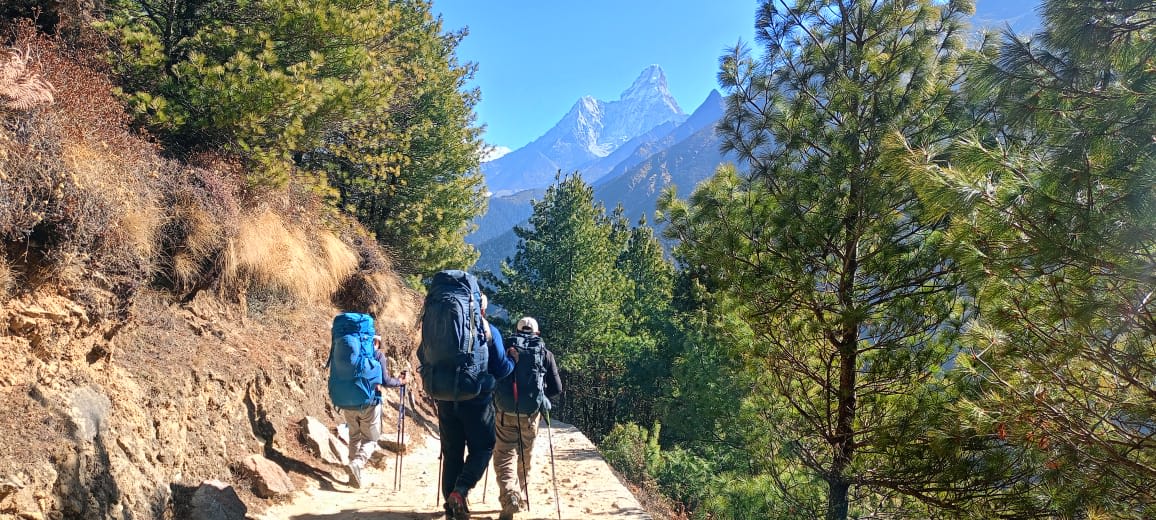
Explore
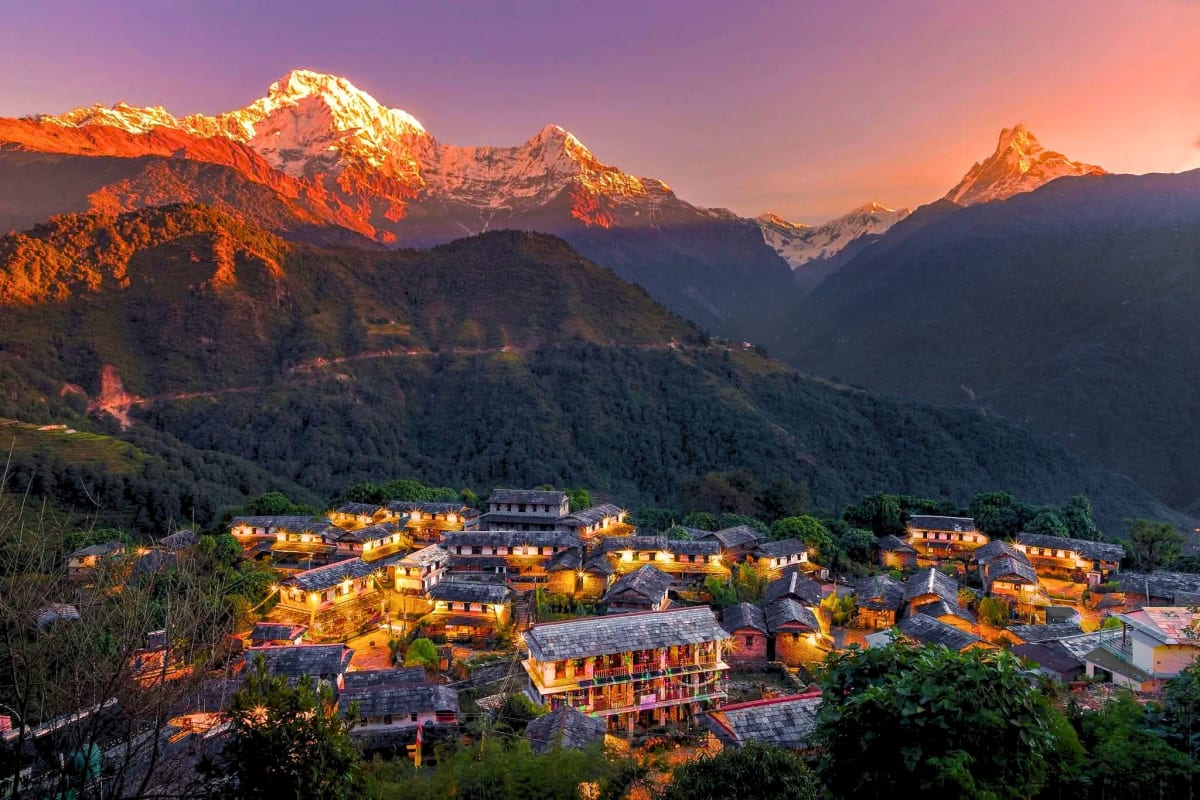
There are 38 trips on this site across nine regions, priced from USD 40 for a day in the Kathmandu Valley to USD 13,000 for a month on Ama Dablam. Most people arrive knowing roughly what they want to see and not much about what it costs, how many days it takes, or how hard it is.
Three variables narrow that list faster than any mountain name does: how many days you have on the ground, how high you're willing to sleep, and what you can spend. Answer those and the shortlist usually writes itself.
This page is built to work backward from those three constraints. If you'd rather see the decision laid out end to end, the package selection guide walks through it in more detail.
Segments
Days are the hardest constraint to bend, because the days you'd cut are the acclimatization days. Permits can be hurried and budgets can stretch. A 14-day high-altitude trek doesn't fit into a 10-day window.
| Days available | What fits | Example route | Group price |
|---|---|---|---|
| 1 | Kathmandu Valley heritage tours | Heritage Day Tour | USD 40-70 |
| 4 | A low foothill trek, or a fixed-base retreat | Poon Hill Trek | USD 350-600 |
| 7 | A mid-altitude trek below 5,000 m | Langtang Valley Trek | USD 650-950 |
| 12 | The flagship high routes, Everest included | Everest Base Camp | USD 1,200-1,800 |
| 18+ | Circuits, remote regions, and climbing peaks | Three Passes | USD 1,900-2,600 |
Add two buffer days to whatever you pick. One goes to the domestic flight to the trailhead, one to weather. Our own departure records show Lukla flights left on time on roughly 83% of mornings in February 2026 and 61% of mornings in May, which is why the buffer is written into every Everest itinerary rather than offered as an upgrade. What happens when it slips is covered in the Lukla cancellation guide.
Above 3,000 m the schedule stops being a preference. Sleeping altitude rises no more than 500 m a day, with a rest day for every 1,000 m of net gain, following the Himalayan Rescue Association's Pheriche clinic guidance. That arithmetic puts a hard floor under the duration of any trek reaching 5,000 m.
The 38 trips are grouped into six segments by the traveller each one suits, which gets you to a shortlist faster than working through nine geographic regions.
Family packages keep every route sleeping below 2,900 m with walking days a mixed-age group can sustain. Four of the five involve no trekking.
Budget packages collect the six routes at USD 1,000 or less. That price comes from a short route, a low ceiling, or road access instead of a mountain flight. It never comes from dropping the guide, the porter, or the permits.
Luxury packages means private departures and specialist logistics, mainly the helicopter return from Everest Base Camp. Above 4,000 m, luxury buys a dedicated guide and your own schedule. It doesn't buy better lodges, because past the tree line only teahouses exist.
Group packages covers how fixed departures work, how a date moves from open to guaranteed, and why sharing a trek cuts USD 300-400 off the per-person price.
Customized packages covers rebuilding a route around your own dates, slowing it down for an older walker, or combining two regions into one trip.
Short packages curates what fits a one-week window without needing an acclimatization day.
Every price on this site includes all required government permits, a licensed Nepali guide, accommodation for every night on the itinerary, and ground transport between the fixed start and end points. Teahouses on the trekking routes, standard hotels on the cultural tours and retreats.
Four things sit outside that price on every trip: international flights to Kathmandu, personal trekking gear, tips for guides and porters, and travel insurance. They're listed on each route's cost table rather than buried in the terms. Insurance is the one nobody should skip. Above 4,000 m you need a policy that names helicopter evacuation explicitly and states an altitude ceiling higher than your route's high point, and the insurance guide lists the clauses to check.
When two operators quote very different numbers for the same 14-day trek, the gap is almost always in that second list. A quote that looks too good usually assumes you're buying your own meals on the mountain, or it has quietly dropped the porter. Ask what's excluded before you compare anything. The inclusions guide sets out a full line-by-line list, and the package versus self-booking comparison covers what the same trip costs if you assemble it yourself.
Duration drives price harder than altitude or difficulty does. A four-day foothill trek and a fourteen-day Everest trek use the same permit categories and the same guide licensing tier. The longer one pays for ten more guide-days, ten more porter-days, ten more teahouse nights, and the meals that feed the staff.
Two things break that pattern. Domestic mountain flights add a fixed lump regardless of trip length: the Kathmandu to Lukla round trip runs USD 360-440 per person at 2026 foreign-national fares, which is why Everest routes start higher than Annapurna routes of the same length. Restricted-area permits do the same at the other end of the country. Upper Mustang adds USD 500 for the first ten days on top of everything else, which is how a 12-day Mustang trek prices out near a 20-day Everest circuit.
The route-by-route version, including what a fair 2026 quote looks like line by line, is in the Nepal trek cost guide and the cost breakdown article.
October to November and March to May are the two reliable weather windows, and October is the busiest month on any Himalayan trail. At the autumn peak, teahouses at junctions like Gorak Shep and Manang fill by early afternoon, and guides phone ahead two villages rather than one.
Winter has quietly become a real option rather than a fallback. January 2026 arrivals in Nepal hit 92,573, up 15.7% year on year, according to a Nepal Tourism Board release, and February 2026 recorded the highest arrivals for that month on record. The trade-off is cold, not cloud. Nights reach -20 C at Gorak Shep, the air is the clearest it gets all year, and the lodges have spare rooms.
Monsoon, June to September, rules out most of the country but not all of it. Upper Mustang and Dolpo sit in the rain shadow behind the Annapurna and Dhaulagiri ranges and stay dry and walkable while everything south of the mountains is under cloud. The rain-shadow guide covers which valleys qualify and why.
Four to six weeks covers any standard-permit trek in peak season, which is most of this site. Restricted areas need six to eight. The Department of Immigration processes those only through a registered agency; since March 2026 a solo applicant can be processed on their own, though the guide and agency filing are still mandatory. A Kathmandu day tour or a Pokhara retreat can be arranged inside a week.
Booking early doesn't lower the price, because nothing here is priced dynamically against demand. What it buys is your choice of dates, and on the popular October departures, a private teahouse room in lodges that only have a handful. Deposit terms and the payment schedule are set out in the deposit and payment guide.
Four people build and lead everything on this site, and their names sit on the pages they wrote.
Passang Dawa Sherpa (NMA-licensed) was born in Phortse at 3,840 m and leads this company's Everest Base Camp departures. Mingma Tendi Sherpa (NMA-licensed) signs off every safety-critical page and guides across Langtang, Manaslu, and the Annapurna Circuit. Ajay Shrestha built the wellness programs and grew up in Ghandruk on the Poon Hill route. Ramesh Rai files every trekking permit the company issues and wrote the permit guides from the counter rather than from a government manual.
Licence numbers, NMA certifications, and departure counts are on the team page. The commercial point is narrow: when a price or an itinerary changes here, it changes because one of those four came back from a trip and said conditions had changed.
Any of the 38 routes can be rebuilt around different dates, a slower pace, or two regions fused into one trip. Pricing starts from that route's private rate, with no separate customization fee.
One thing is fixed. Days can be added to an itinerary above 3,000 m to make it safer; they can't be removed to make it shorter. The customized packages page covers what's adjustable and what isn't, and where the line sits between a custom trip and simply picking a lower route.
Planning
 Nepal Travel Package vs. Booking Separately Family Package vs Customized Package: Which to Book What's Included in a Nepal Travel Package Luxury vs Budget Nepal Travel Package: The Real Difference
  Kathmandu Heritage Tour vs Pokhara Retreat: Short Trip Options Nepal Travel Package Deposit & Payment Schedule Explained Can I Customize a Nepal Travel Package After Booking? How to Choose a Nepal Travel Package
 FAQ
All government permits, a licensed Nepali guide, accommodation for every night on the itinerary, and ground transport between the fixed start and end points. Excluded: international flights, personal gear, tips, and travel insurance. When two quotes for the same trek differ sharply, the gap is almost always in what the cheaper operator left out.
Group rates run from USD 40 for a one-day Kathmandu heritage tour to USD 1,200-1,800 for the 12 day Everest Base Camp trek, with most mid-length routes landing between USD 550 and USD 950. Duration is the main driver. Domestic mountain flights add a fixed USD 360-440 to Everest routes, and restricted-area permits add USD 500 in regions like Upper Mustang.
four days covers a foothill trek like Poon Hill at 3,210 m. seven days covers a mid-altitude route such as Langtang Valley. Everest Base Camp needs 12 to 16. Add two buffer days to any of these for domestic flights and weather: Lukla and Jomsom flights slip often enough that the buffer is part of the plan, not insurance against a rare event.
October to November and March to May are the reliable windows, with October carrying the heaviest trail traffic of the year. Winter is growing fast (January 2026 arrivals were up 15.7% year on year per the Nepal Tourism Board) and gives the clearest air of the year in exchange for nights near -20 C at altitude. In monsoon, June to September, only the rain-shadow valleys of Upper Mustang and Dolpo stay reliably dry.
On unrestricted routes like Everest Base Camp, the Annapurna Circuit, and Poon Hill, a solo traveller can join a group departure or book privately. Manaslu, Upper Mustang, Dolpo, and Kanchenjunga are restricted areas where Department of Immigration rules require a licensed guide and a registered-agency booking; since 22 March 2026 a solo traveller can hold the restricted-area permit alone rather than needing to be matched to an existing departure.