Explore
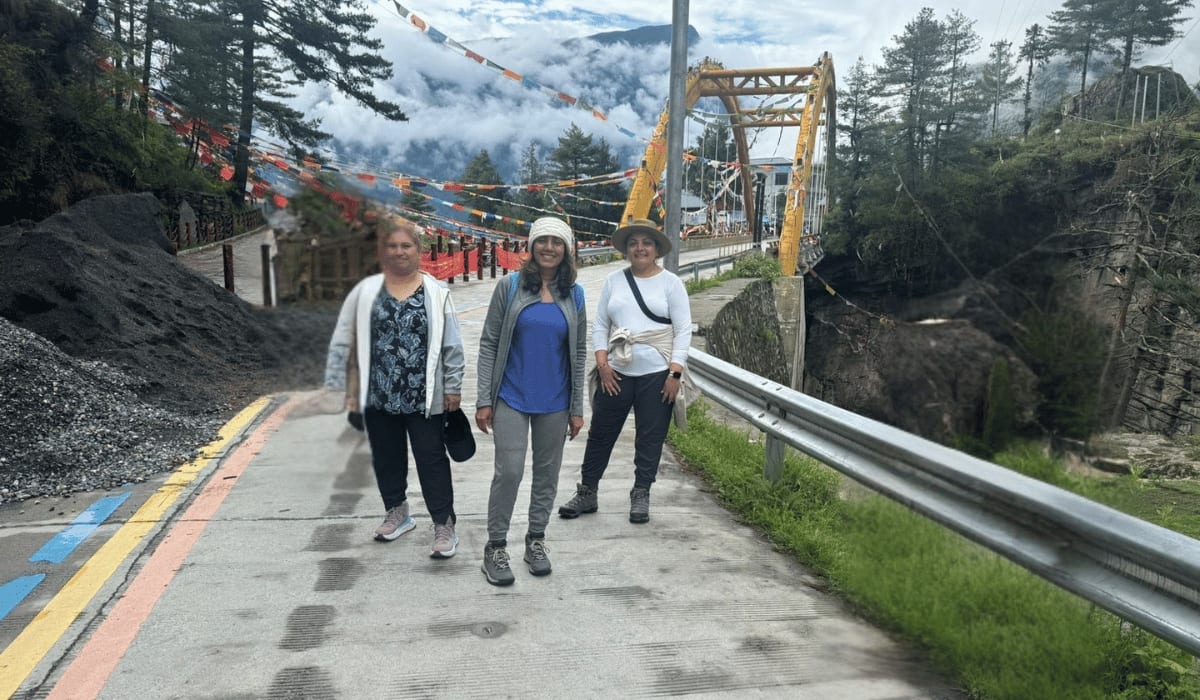
Tibet is the high plateau region north of Nepal reached overland via the Kathmandu-to-Lhasa highway or by flight, requiring a Chinese group visa and Tibet Travel Permit arranged through a licensed agency rather than issued to individual travellers. Our Tibet product is the Kailash Mansarovar Yatra, which we run on two routes: 13 days via Simikot and Hilsa from Nepal's far west, or 15 days overland via Lhasa, Shigatse, and Rongbuk below Everest's north face. Both complete the same kora around Mount Kailash.
Every Tibet booking runs on the same Chinese Group Visa and Tibet Travel Permit process, a different regulatory system from the TIMS card and national park entries that cover the rest of this site's Nepal content. Independent travel is not permitted anywhere in the Tibet Autonomous Region, and the permits cannot be obtained by a traveler applying alone.
Sections
Four things for a Kailash trip, and none of them can be obtained by an individual traveler applying alone. A Chinese Group Visa, issued to a registered group through a licensed agency rather than as an ordinary tourist visa. A Tibet Travel Permit from the Tibet Tourism Bureau. An Alien's Travel Permit for Ngari, the restricted prefecture Kailash sits in. And a Military Area Entry Permit for the Kailash region itself.
This is the single biggest difference from trekking in Nepal, where you buy a TIMS card and a national park entry over a counter in Kathmandu or Pokhara the morning you start. Nothing in Tibet works that way. Every foreign visitor travels on a pre-approved itinerary with a licensed guide, and the paperwork is filed weeks in advance by the agency rather than by you.
Two details are quoted wrongly almost everywhere. The Chinese Group Visa fee is nationality-dependent rather than a flat figure, and Nepali citizens have been exempt from Chinese visa fees since 1 May 2024 per the Chinese Embassy in Kathmandu. And the permit that usually sets your booking deadline is the Military Area Entry Permit, which agencies advise takes 15 business days or longer, not the visa. Full detail is in the Kailash Mansarovar permits and visa guide.
One pilgrimage, on two routes. The Kailash Mansarovar Yatra runs either 13 days via Simikot and Hilsa from Nepal's far west, at USD 1,800 to 3,500, or 15 days overland via Lhasa, Shigatse, and Rongbuk below Everest's north face, at USD 3,800 to 6,000.
Both complete the same kora around Mount Kailash and cross the same pass. The shorter route reaches the mountain faster and cheaper; the longer one spends about a week gaining altitude by road, which suits pilgrims without prior high-altitude experience, and takes in central Tibet along the way.
We do not currently sell the Kerung crossing, also spelled Gyirong, on the Rasuwagadhi road north of Kathmandu, despite it being widely advertised as the fastest overland approach. The border is operating, but we could not confirm from any primary or news source that third-country nationals are currently eligible to cross there, and that eligibility has changed more than once. We would rather leave a route out than sell one whose entry point we cannot verify.
Tibet holds you high for longer rather than taking you higher at a single point. Lhasa sits at 3,656 m, which is above the altitude at which the Himalayan Rescue Association's sleeping-altitude guidance starts governing a schedule, and it is reached by a one-hour flight rather than a week of walking.
That is the reverse of how Nepal treks work. On an Everest or Annapurna itinerary you gain altitude on foot over days, which is itself the acclimatization. Flying into Lhasa or driving onto the plateau delivers you to 3,650 m or higher with no adaptation at all, which is why both Kailash itineraries build in rest days that look like sightseeing days on paper.
The Dolma La on the Kailash kora, published between 5,590 m and 5,669 m depending on the source, is higher than Everest Base Camp on the Nepal side. The acclimatization guide covers the sleeping-altitude discipline that applies here exactly as it does on any Nepal route, and the altitude sickness guide covers what to watch for.
May through September, with sources splitting over whether the season closes in September or runs into October. Winter closes the plateau for this route.
Book roughly three months ahead for a peak-season date. The constraint is permit processing rather than bed availability, and you should expect to spend several working days in Kathmandu while the Group Visa is processed, since the Chinese Embassy there accepts applications on weekday mornings only. Build those days into your flights rather than assuming a same-week turnaround.