Collection
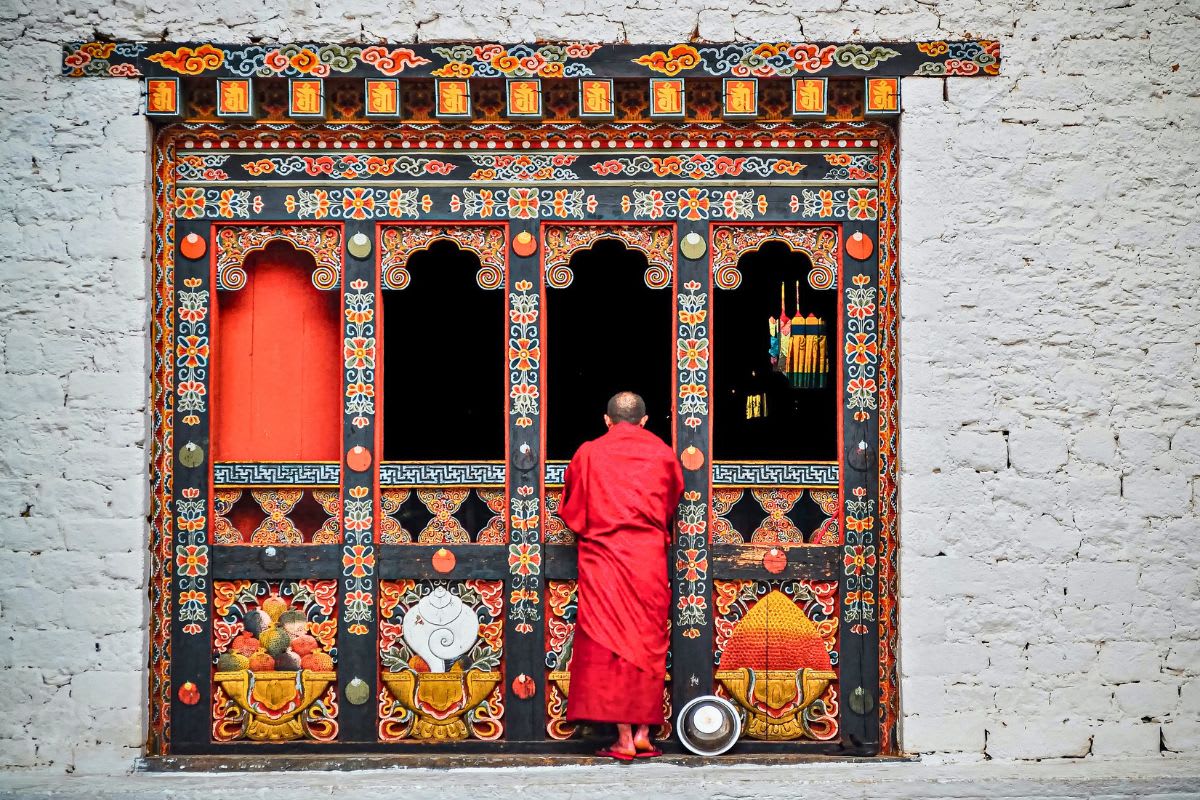
Five trips on this site are built for families, and none of them sleeps higher than Ghorepani at 2,860 m. They run from a one-day Kathmandu heritage tour at USD 40 to a week beside Phewa Lake at USD 600 to 1,100, and only one of the five, the four day Poon Hill trek, involves real trekking days.
Parents ask three questions before they book anything, usually in this order. How high does it go? How far do the children walk each day? And what happens if someone can't finish?
Altitude answers the first question and then quietly decides the other two, because a route that stays low can be walked slowly without anybody's safety margin shrinking. Everything below is picked on that basis.
Curated for you
 Easy
Easy 5 days
1,600 m
From
USD 600 pp
 Easy
Easy 2 days
1,541 m
From
USD 90 pp
Easy 6 days
150 m
From
USD 550 pp
 Easy
Easy 4 days
3,210 m
From
USD 350 pp
 Easy
Easy 1 days
1,400 m
From
USD 40 pp
The five family trips run from a single day in Kathmandu to a week-long retreat on a lake, priced from USD 40 to USD 1,100 per person in a group. Four of the five involve no trekking at all.
| Trip | Days | Highest point | Walking per day | Group price |
|---|---|---|---|---|
| Kathmandu Heritage Day Tour | 1 | 1,400 m | Short stretches between sites | USD 40-70 |
| Extended Heritage Tour | 2 | 1,541 m | Short stretches between sites | USD 90-150 |
| Poon Hill Trek | 4 | 3,210 m | 3-5 hours | USD 350-600 |
| Pokhara Wellness Retreat | 5 | 1,600 m | Optional, under an hour | USD 600-1,100 |
| Lumbini Meditation Immersion | 6 | 150 m | Optional, under an hour | USD 550-900 |
None of the five needs an acclimatization day, which is why they combine so easily. More on that below.
Sleeping altitude is the number that matters, not the high point, and on family routes it should stay under about 3,000 m. The Himalayan Rescue Association's Pheriche clinic sets the guideline this site's itineraries are built around: above 3,000 m, sleeping altitude should rise no more than 500 m a day, with a rest day for every 1,000 m of net gain. Acute mountain sickness can appear from roughly 2,500 m upward.
Age isn't the variable. Ascent rate is. A fit adult who gains 900 m of sleeping height in a day is at more risk than a nine-year-old who gains 400 m, and children show the same AMS symptoms adults do, they're just worse at describing them.
That is the whole reason this page exists as a shortlist rather than a catalogue. Poon Hill tops out at 3,210 m, but you only stand there for about an hour at dawn. You sleep at Ghorepani, 2,860 m, which is below the band where the 500 m rule starts governing a schedule. The acclimatization guide covers how that rule reshapes the higher routes, and the Everest with children guide covers what happens when a family wants to go past this page.
Poon Hill suits children who can walk three to five hours a day, which in practice means most eight-year-olds and a fair number of six-year-olds if a porter carries their pack. four days, a high point of 3,210 m, teahouses every night, no technical ground anywhere on the route.
There's one genuinely hard morning, and you should know about it before you book. Day two climbs the Ulleri staircase, roughly 3,200 stone steps climbing 500 m from Tikhedhunga, inside a six-hour day to Ghorepani. It isn't dangerous. It's just long. The way through it is an early start and letting the slowest walker set the pace from the first step rather than the third hour.
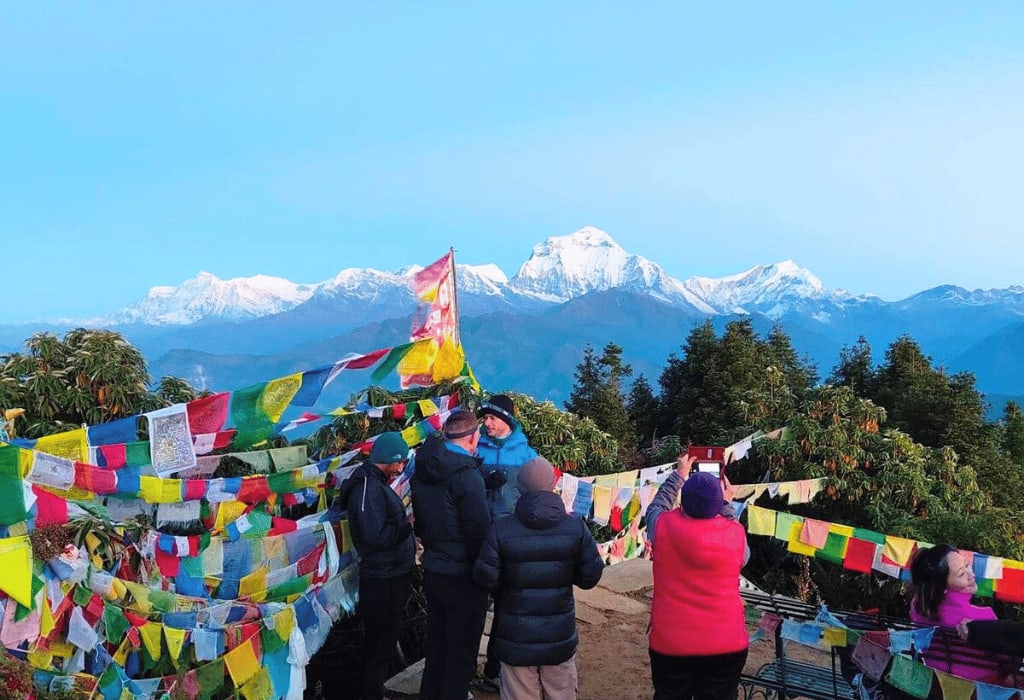
Day three is why people come. You leave the lodge around 5 am and climb the last 350 m to the viewpoint, about 45 minutes in the dark. From the tower the range runs from Dhaulagiri I at 8,167 m across to Annapurna South at 7,219 m and Machhapuchhre at 6,993 m. Anyone who'd rather sleep can stay in the lodge; the group collects them on the way past after breakfast.
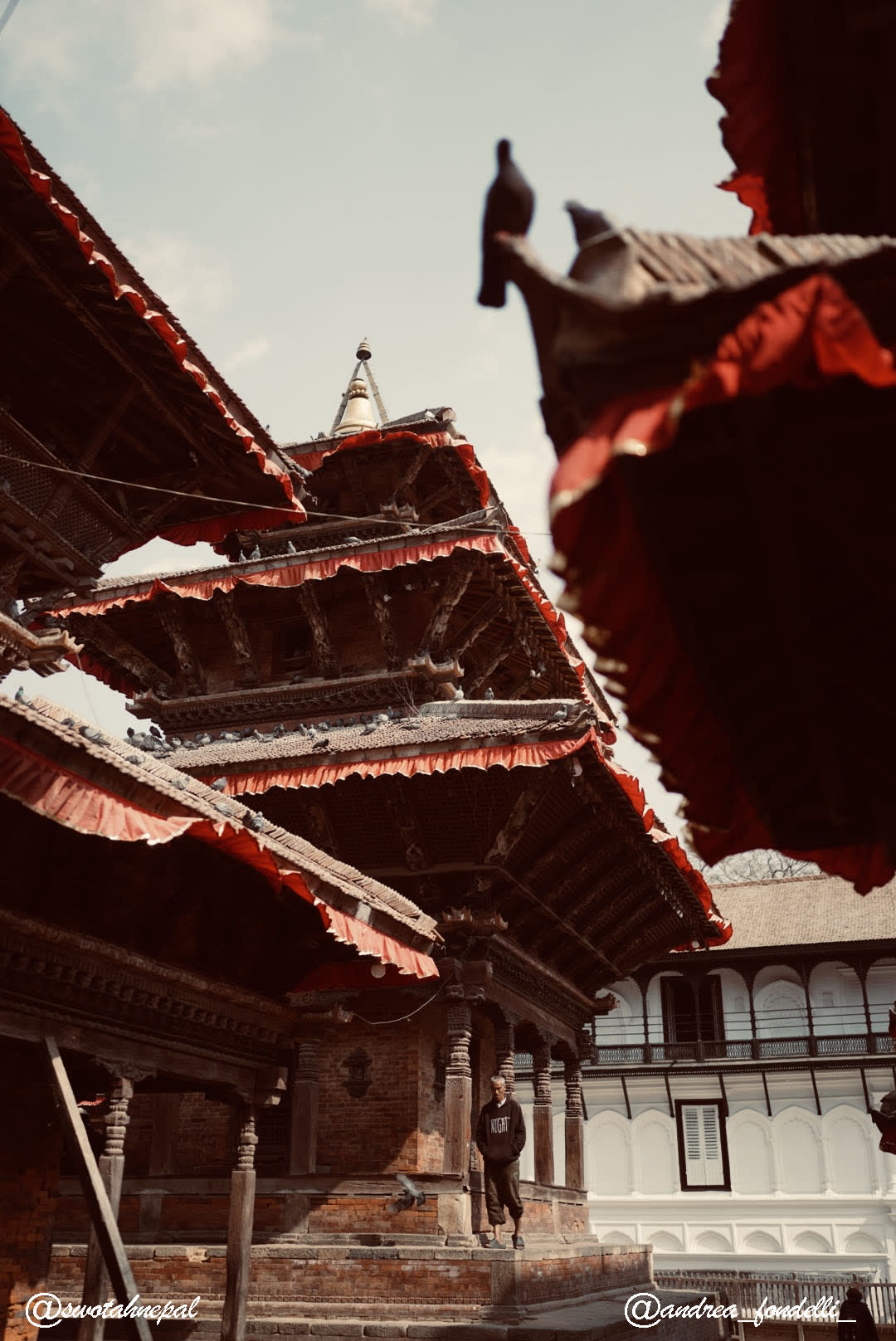
One free day points to the Kathmandu Heritage Day Tour at USD 40-70; two days point to the Extended Heritage Tour at USD 90-150. Both are hotel-based, move between the Valley's UNESCO sites on foot and by vehicle, and keep walking to short stretches.
The Heritage Day Tour is the lowest-commitment trip on the site. It works as a first day while jet lag wears off, or as the last day before a flight home, and it needs no permit of any kind.
The Extended Heritage Tour adds Bhaktapur and Patan over two days. Bhaktapur is the one that earns the extra day with children. Durbar Square is largely traffic-free, so nobody spends the visit holding a small hand at a kerb, and the potters' square is a working square where the wheels are actually turning rather than a plaque describing wheels that used to turn.
The Pokhara and Lumbini retreats are the two trips built for a family that splits. Both run from one fixed base, so nobody packs a bag and moves lodges each morning, and the middle of each day is open rather than scheduled.
The Pokhara Wellness Retreat sits beside Phewa Lake at 822 m, with a 1,600 m high point only if the group takes the optional dawn drive up to Sarangkot. Sunrise and evening sessions bookend the day and the hours between belong to whoever is in them. One half of the family can take a boat to the island temple, another can go up to Sarangkot for the Annapurna sunrise, and the rest can sit by the water doing nothing. Everyone regroups for meals.
The Lumbini Meditation Immersion goes further in the same direction, down to 150 m on the Terai plain. It's built around the Maya Devi Temple and the monastic zone, where a dozen countries have each built a temple in their own national style. Children who find one temple dull often don't find that stretch dull, because the Thai, Burmese, German, and Japanese monasteries look nothing like each other.
Choose Lumbini over Pokhara if you're travelling with someone for whom even a mild elevation change is one variable too many, or if you want the trip contemplative rather than scenic. The Kathmandu and Pokhara short-trip comparison sets the two city-based options side by side.
The core kit is the same as an adult's with three changes: one extra insulating layer, stronger sun protection, and a full dry change carried in your own daypack rather than the porter's duffel.
Children lose heat faster than adults because they carry more surface area per kilogram of body mass, and the Ghorepani bedrooms are unheated even when the dining room stove is lit. Trek at Poon Hill's altitudes in November and the dining room is warm from about six in the evening; the bedroom never is. That extra fleece isn't optional.
Sun protection matters more here than parents expect. The WHO's Global Solar UV Index guidance puts the increase at roughly 10% for every 1,000 m of elevation, so the UV load at Ghorepani is around 30% higher than at sea level, and it arrives through cloud. Hat, high-factor cream on ears and the back of the neck, and sunglasses that actually stay on.
The dry-change rule is the one people skip. The trail crosses several small stream sections and a child is far more likely than an adult to be soaked at 11 am, which is hours before the group reaches the lodge where the porter dropped the bags. Everything else on the packing list applies unchanged; the sizes just get smaller.
Book private. On Poon Hill that's USD 500-800 against USD 350-600 in a group, and on a family trip the difference buys the one thing a fixed departure can't sell you: the itinerary bends around your slowest walker.
That sounds abstract until day two. A private booking means you can stop, add an hour to a break, or turn the Ulleri morning into a short day, without negotiating any of it with eight other people who want to keep moving. On a group departure, the same conversation has a social cost, and the person paying it is usually a child.
It also means the guide is watching your children rather than dividing attention across eight adults, which matters more on the staircase than anywhere else on the route. If your dates or your route don't fit the published calendar at all, the family and custom package comparison covers where the line between the two sits.
One free day in Kathmandu points to the Heritage Day Tour. Two days points to the extended version. A week with at least one person who wants a real trekking day points to Poon Hill. A week where the group would rather stay put and split their time points to Pokhara, or to Lumbini if you want the lowest altitude and the slowest register.
They stack cleanly. None of the five requires an acclimatization day, so Kathmandu, then Poon Hill, then Pokhara is a straightforward two-week trip rather than three separate logistical problems. Book it as one itinerary rather than three and the Pokhara transfers get absorbed into the plan instead of eating two mornings.
Mardi Himal at 4,200 m over five to seven days and Langtang Valley at 4,984 m over seven to ten are the two routes families graduate to, and both sit inside the budget segment at USD 550-900 and USD 650-950 respectively.
The honest test for stepping up isn't the children's ages. It's whether every adult in the group is willing to turn around. Above 4,000 m the right answer to a headache that won't clear is to go down, and that only works if nobody in the party is quietly determined to reach the viewpoint anyway. Families who can't answer that question yet should do Poon Hill first and find out.
FAQ
There's no fixed minimum age. What decides it is whether the child can walk three to five hours a day and whether the route sleeps low. Poon Hill, which sleeps at 2,860 m, suits most children from about eight, and younger ones manage it on a private departure with a porter carrying their pack and a slower daily pace.
Yes, for kids who can manage the daily walking. Poon Hill is graded easy, sleeps at 2,860 m, uses established teahouses every night, and crosses no technical ground. The one hard section is the Ulleri staircase on day two, roughly 3,200 stone steps, inside a six-hour day and is best handled with an early start.
Four of the five. The Kathmandu Heritage Day Tour and its two-day extended version are hotel-based with short walks between heritage sites. The Pokhara Wellness Retreat and the Lumbini Meditation Immersion both run from one fixed base with optional light activity rather than daily point-to-point walking.
Private. On Poon Hill that's USD 500-800 against USD 350-600 in a group. The premium buys an itinerary that adjusts around your slowest walker instead of a fixed schedule, and a guide whose attention isn't divided across eight other travellers on the steep sections.
The Lumbini Meditation Immersion sits at 150 m on the Terai plain, the lowest trip on this site, so altitude planning doesn't apply. It suits families travelling with a grandparent, or anyone who'd rather skip even Pokhara's 822 m lakeside elevation.