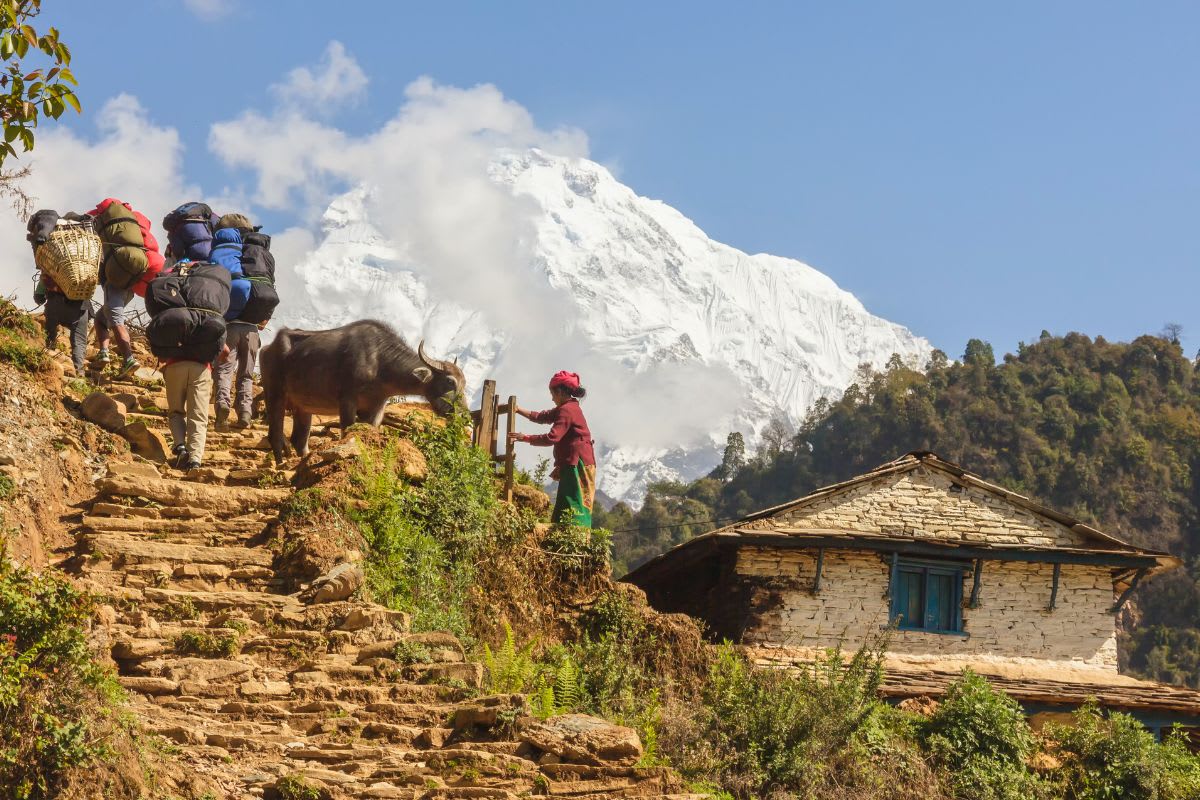
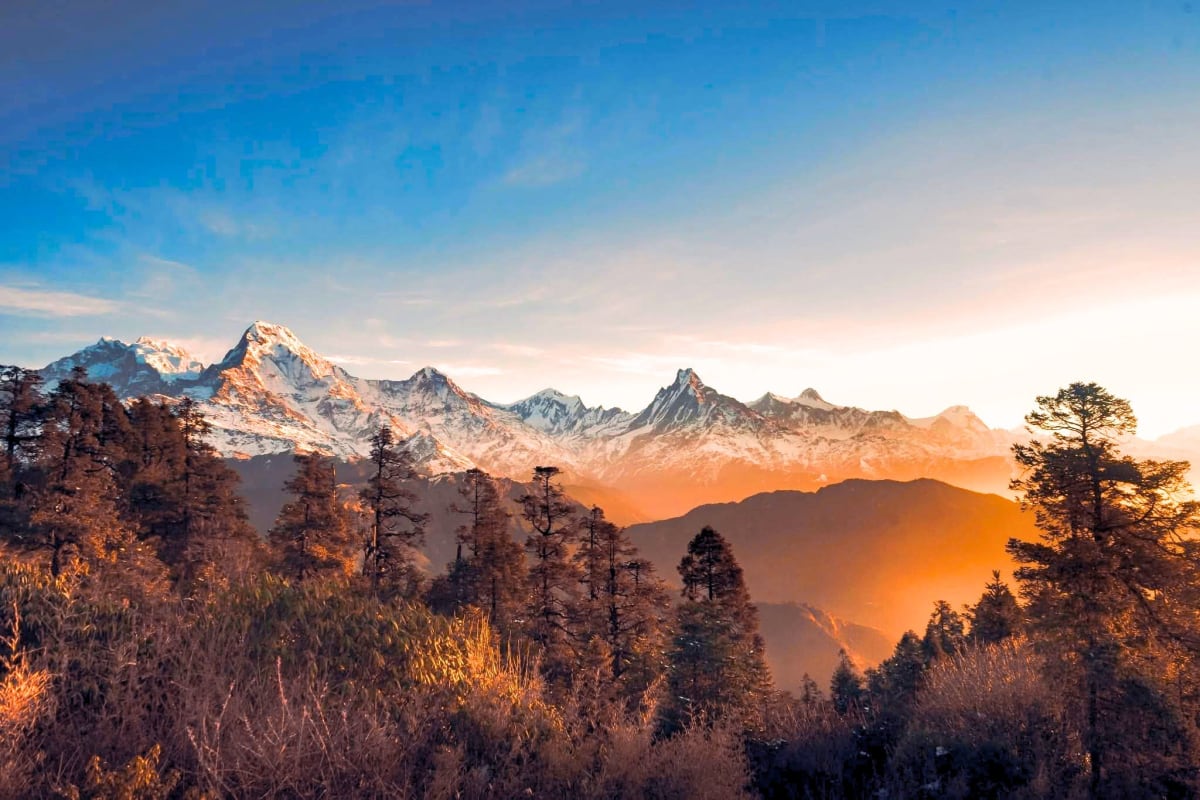

Everest's mountaineering record book starts with Tenzing Norgay and Edmund Hillary's confirmed first summit on 29 May 1953, climbing the south side from Nepal as part of a British expedition led by John Hunt. Junko Tabei of Japan became the first woman to summit on 16 May 1975. Reinhold Messner and Peter Habeler proved the mountain survivable without bottled oxygen on 8 May 1978, and Messner returned two years later, on 20 August 1980, to solo it, also without supplemental oxygen. Passang Dawa Sherpa, who leads this company's Everest Base Camp departures, put this list together from the milestones every Khumbu guide grows up knowing.
The sections below cover each major first in order, the ongoing summit-count record held by a Sherpa climber, and why Sherpa mountaineers rarely got the same individual recognition as the foreign climbers they guided, despite doing the harder and more dangerous work.
In this guide 6
- 01 Who summited Everest first?
- 02 Who was the first woman to summit Everest?
- 03 Who climbed Everest without bottled oxygen first?
- 04 Who is the youngest person to summit Everest?
- 05 Who holds the record for the most Everest summits?
- 06 Why don't Sherpa climbers get the same recognition as foreign mountaineers?
Who summited Everest first?
Tenzing Norgay, a Sherpa climber from the Khumbu, and Edmund Hillary, a New Zealand beekeeper, reached the summit together on 29 May 1953, the first confirmed ascent in history. They climbed the South Col route from the Nepal side as members of a British expedition led by John Hunt, in the same year Nepal had only recently opened its borders to foreign mountaineers. Neither man ever said publicly which of them physically stepped onto the highest point first, treating the summit as a shared achievement rather than a personal race, a framing that has held for seven decades since.
The pair reached the top at roughly 11:30 am, spent about 15 minutes at the summit taking photographs and leaving a small offering, then began the descent immediately given the thin margin of daylight and oxygen remaining. News of the summit reached London on the morning of Queen Elizabeth II's coronation, 2 June 1953, turning the ascent into a national story on both sides of the achievement.
Who was the first woman to summit Everest?
Junko Tabei of Japan became the first woman to summit Everest on 16 May 1975, twelve days after surviving an avalanche that buried her expedition's camp during the approach. She led an all-women Japanese expedition up the South Col route, the same line Hillary and Norgay had climbed 22 years earlier, and continued climbing at altitude for decades afterward, later becoming the first woman to complete all Seven Summits.
Her ascent opened Everest to a wave of women climbers who followed over the next two decades, though summit numbers by gender still skew heavily male across Everest's full history, a gap that has narrowed but not closed as commercial guided climbing has grown.
Who climbed Everest without bottled oxygen first?
Reinhold Messner and Peter Habeler reached the summit without supplemental oxygen on 8 May 1978, settling a genuine medical debate over whether the human body could function at all at that altitude without it. Before their climb, some physiologists argued the "death zone" above roughly 8,000 m would cause fatal impairment in any climber breathing ambient air alone, regardless of fitness or acclimatization.
Messner returned two years later, on 20 August 1980, and soloed the mountain via a new route on the Tibet side, again without oxygen, a climb still regarded as one of the boldest single ascents in the sport's history. Oxygen-free climbing remains rare today: most guided commercial expeditions, including every trek this company runs to Base Camp itself, never approach the altitude where the question applies.
Who is the youngest person to summit Everest?
Jordan Romero is commonly cited as the youngest person to summit Everest, reaching the top at age 13 in 2010 via the Tibet side. Age-record claims on Everest are sometimes disputed across different sources and mountaineering bodies, since minimum-age rules and record-keeping have varied by country and by decade, so this figure is best treated as the widely reported claim rather than a single uncontested fact.
Nepal has since restricted climbing permits to those 16 and older on its side of the mountain, a rule that postdates several of the earliest youth-record ascents and reflects growing caution about minors at extreme altitude.
Who holds the record for the most Everest summits?
Kami Rita Sherpa holds the record for the most Everest summits by any individual, having passed 30 summits by the mid-2020s while continuing to climb each season, so the exact current total keeps rising rather than sitting at a fixed number. He works as a climbing Sherpa, fixing ropes and guiding clients on the mountain's standard routes, the same job category that does the most repeated high-altitude work on Everest of anyone in the industry.
His record reflects a broader pattern: Sherpa climbers as a group hold most of Everest's real endurance records, since they climb the mountain multiple times most seasons as working guides while foreign clients typically summit once in a lifetime.
Why don't Sherpa climbers get the same recognition as foreign mountaineers?
Sherpa climbers have historically received far less individual recognition in Western mountaineering media than the foreign climbers they guided, despite fixing the ropes, carrying the heaviest loads, and doing the most repeated exposure to the mountain's most dangerous sections. Tenzing Norgay himself spent decades being described in some Western accounts as Hillary's assistant rather than his equal on the 1953 climb, a framing both men rejected at the time.
This imbalance has shifted somewhat as Sherpa climbers like Kami Rita Sherpa gained individual name recognition through record-setting seasons, and as expedition reporting has increasingly credited the Sherpa climbing teams whose route-fixing work every commercial expedition depends on. Passang Dawa Sherpa notes that on the Base Camp treks this company runs, well below any summit attempt, the guiding team still does the same disproportionate share of the logistics and safety work that summit expeditions rely on Sherpa crews for higher up. This pattern, real work done at scale without matching individual recognition, is a large part of why this site names its guides directly on every Everest-region page rather than describing the guiding team only in general terms.
FAQ
Common questions
Did Hillary or Tenzing Norgay reach the summit first?+
Neither man ever said publicly which of them physically stepped onto the highest point first. Tenzing Norgay and Edmund Hillary treated their 29 May 1953 summit as a shared achievement rather than a personal race, and that framing has held for seven decades since.
Who was the first person to climb Everest without oxygen?+
Reinhold Messner and Peter Habeler made the first oxygen-free ascent on 8 May 1978, settling a real debate over whether the human body could function at all above roughly 8,000 m without supplemental oxygen. Messner then soloed the mountain without oxygen in 1980, a climb still regarded as one of the boldest in mountaineering history.
Who has climbed Everest the most times?+
Kami Rita Sherpa holds the record for the most Everest summits by any individual, having passed 30 by the mid-2020s while still actively climbing each season. He works as a climbing Sherpa, the job category that repeats high-altitude route-fixing and guiding work most often.
Does reaching Everest Base Camp count as an Everest record attempt?+
No. Base Camp sits at 5,364 m, thousands of metres below the summit and nowhere near the altitude where oxygen-free or speed records apply. The Everest Base Camp trek this company runs is a trekking itinerary to Base Camp itself, not a summit expedition, and none of the records on this page apply to it.