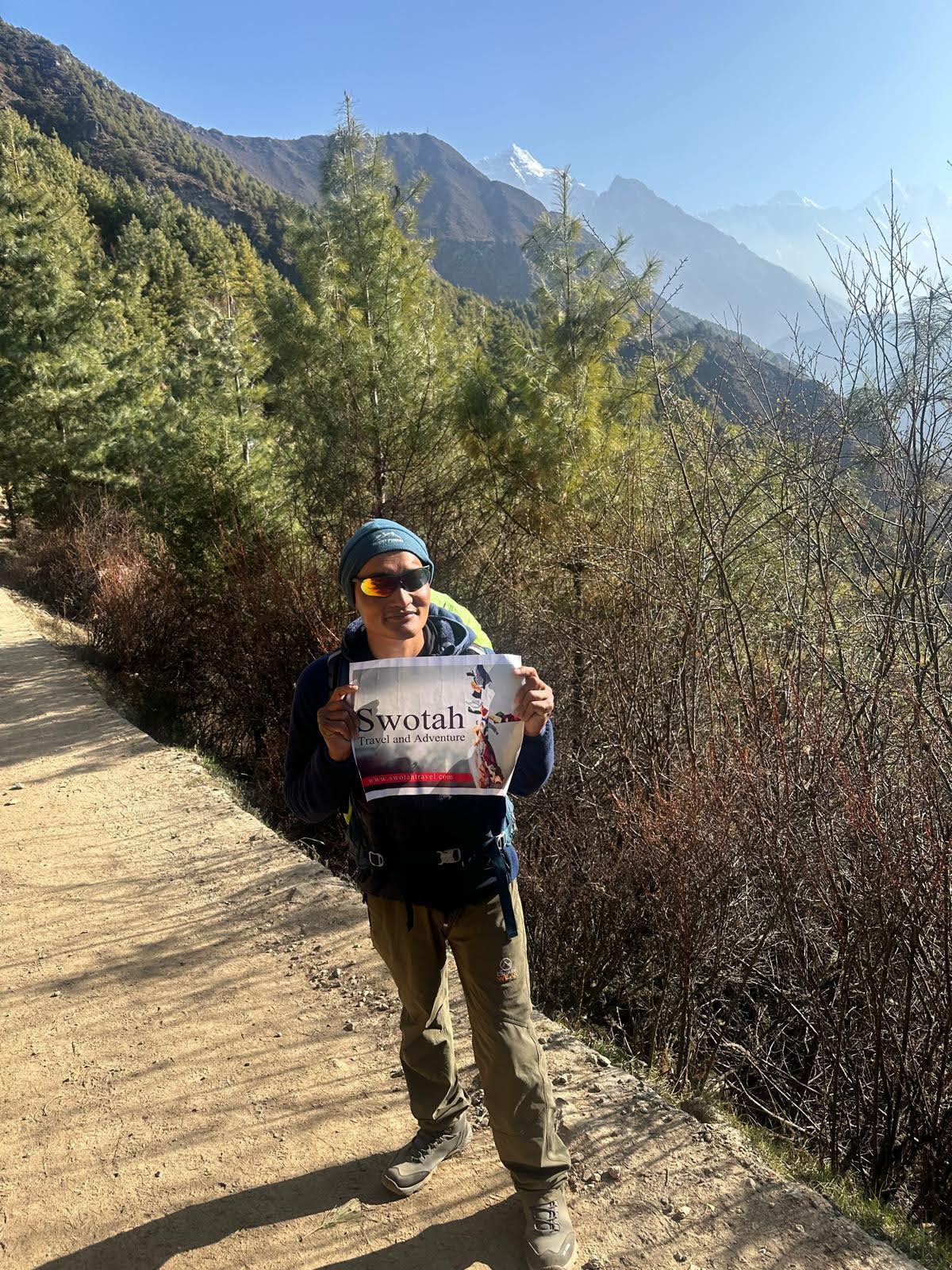
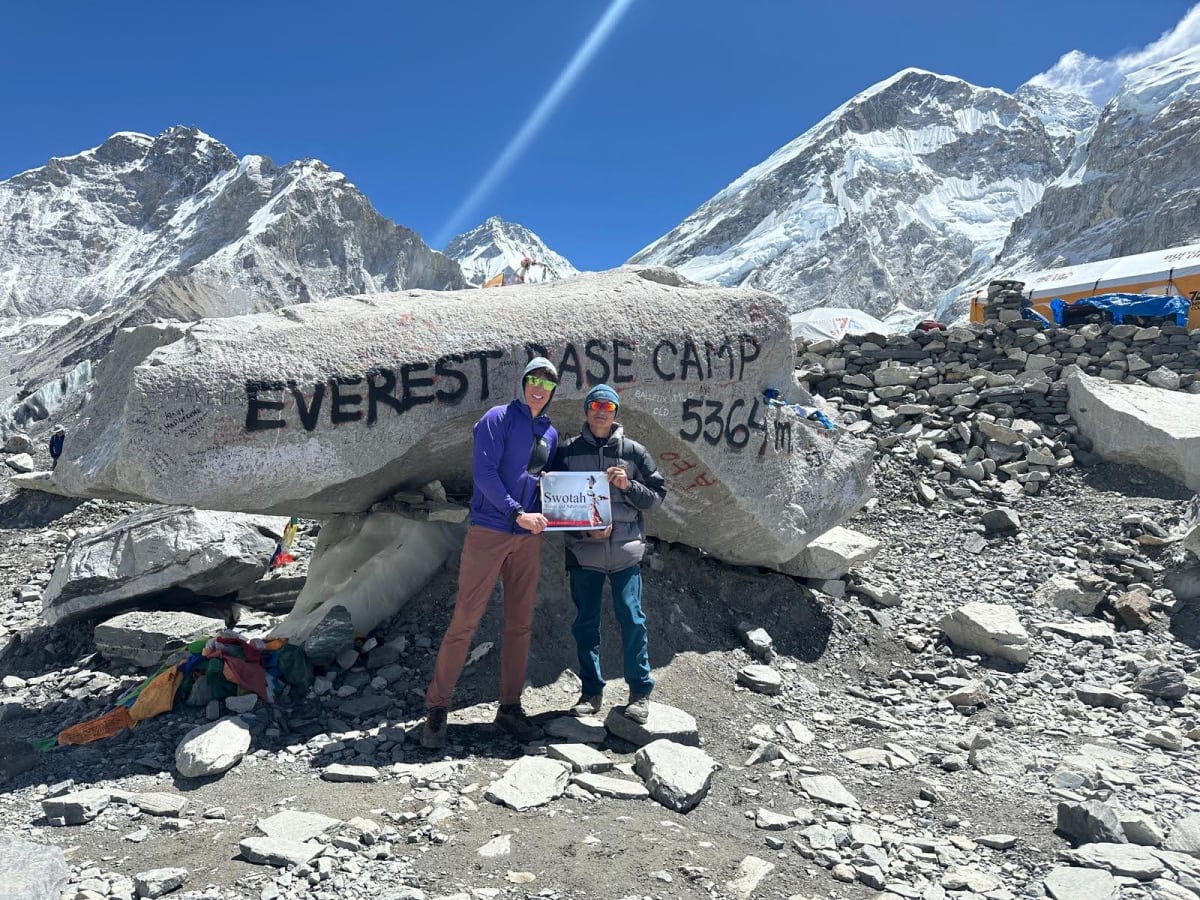
Moderate-strenuous is our grading: 130 km round trip, 6,015 m of cumulative ascent, walking days of 5 to 7 hours, and 11 nights above 3,000 m. No day requires technical skill or scrambling, and the trail is a maintained mule-and-yak path the entire way. The physical work concentrates in three days: the 800 m climb from the Hillary Bridge to Namche, the ascent from Tengboche to Dingboche, and the base camp day itself, which runs 7 to 8 hours at over 5,000 m.
Altitude, not fitness, turns trekkers around on this route. Acute mountain sickness (AMS) affects some trekkers above 3,000 m regardless of conditioning, which is why our itinerary ascends sleeping altitude by less than 500 m per day above Namche, matching the Himalayan Rescue Association's Pheriche clinic guideline. Symptoms, prevention, and our guide protocols are detailed in the altitude sickness prevention guide, and training advice for the three hard days is in our fitness notes on that page. A reasonable benchmark: if you can hike 15 km with 800 m of ascent on back-to-back weekend days carrying 6 kg, you are fit enough.
Our guides score symptoms twice daily above 4,000 m using the Lake Louise scale, which rates headache, gastrointestinal upset, fatigue, and dizziness from 0 to 3 each against a recent altitude gain; a score of 6 or higher means descent, not negotiation. HAPE (fluid in the lungs, presenting as breathlessness at rest and a wet cough) and HACE (fluid on the brain, presenting as confusion and a stumbling gait) are the two emergency forms we train for specifically, and both are treated identically: immediate descent, oxygen if available, and evacuation. In four coordinated evacuations above 5,000 m on our departures, all four clients made a full recovery, which is the standard our acclimatization schedule exists to protect.