This is a first-person trail report from Passang Dawa Sherpa's April 2026 Everest Base Camp departure, the 74th he has led since 2008, covering conditions, crowding, and the one detail this trip changed his advice on. The group of nine left Lukla on April 8 and reached Kala Patthar on April 19, in a season with unusually stable weather and a fuller-than-usual climbing-season base camp. Two things stood out: a two-day Lukla flight delay we had not budgeted for, and a Gorak Shep bed shortage worse than any April in recent memory.
What follows is the departure day by day, not a generic itinerary description, with the specific conditions this group encountered.
In this guide 7
- 01 Why this departure is worth writing up
- 02 Days 1 to 4: Lukla to Namche, a flight delay we didn't expect
- 03 Days 5 to 8: Namche to Dingboche, a fuller trail than expected
- 04 Days 9 to 12: Lobuche, Gorak Shep, and a bed shortage worse than usual
- 05 Day 13: Kala Patthar at dawn
- 06 What I am changing for future April departures
- 07 The walk out
Why this departure is worth writing up
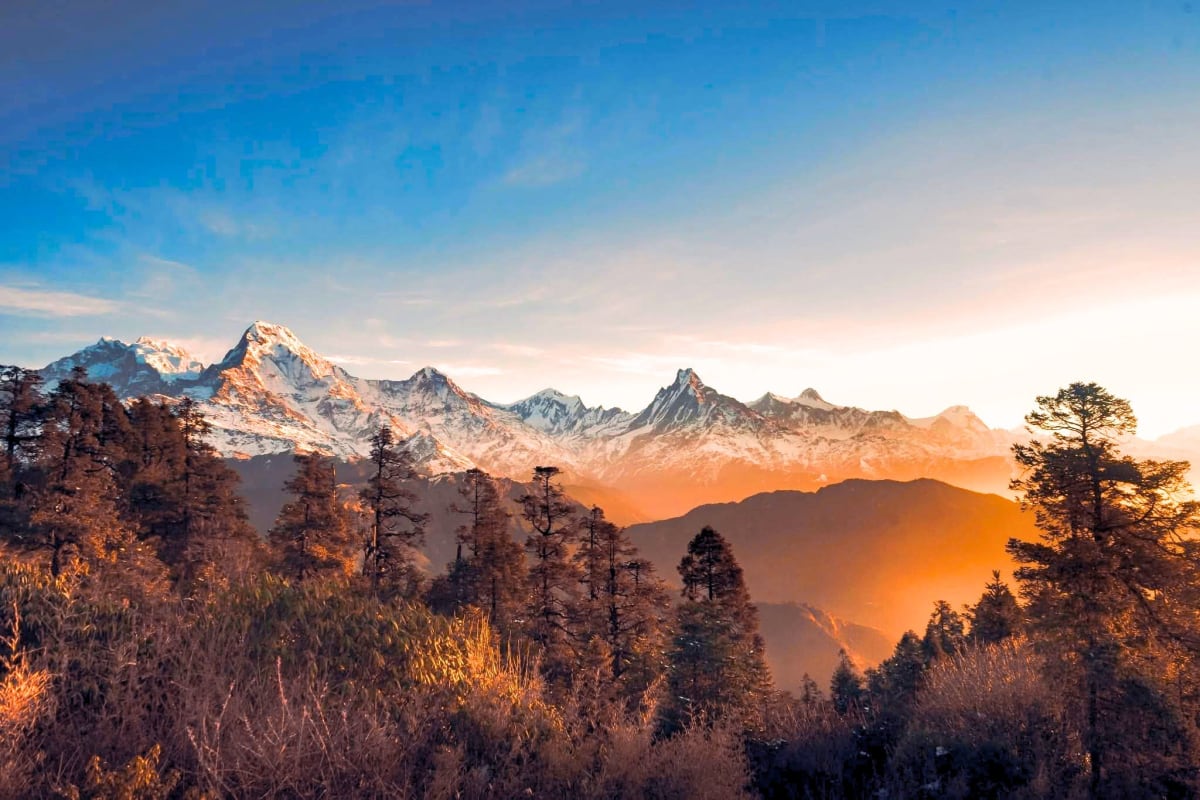
April sits at the edge of the pre-monsoon haze window, and this year the haze arrived a week later than the pattern I have seen since 2008, which gave us four extra days of clear long-range views before the sky thickened around April 16. That single shift changed the whole character of the trip: the group got sharp Everest views from Kala Patthar that a typical late-April departure would have missed. I write one of these reports after most departures I lead, but this one is worth publishing in full because two things in it, the flight delay pattern and the Gorak Shep crowding, are changing how I plan every April departure from here on, not just noting them as one-off bad luck.
Days 1 to 4: Lukla to Namche, a flight delay we didn't expect
We were booked to fly April 8 but sat in Kathmandu until April 10 waiting for a window; Ramechhap's morning fog ran three days straight that week, worse than the seasonal average I quoted trekkers before this trip. We held the group in Kathmandu rather than risk a rushed itinerary, and the two lost days came out of our built-in buffer, exactly the situation that buffer exists for. The group used the delay for a proper equipment check at the hotel, boot fit, down-jacket condition, and a repeat of the acclimatization briefing, rather than sitting idle, and by the second unplanned night in Kathmandu I could see the frustration easing once people understood the buffer had been built for exactly this. Once airborne on the morning of April 10, the flight itself was uneventful, a clear 28-minute run into Tenzing-Hillary Airport, and Phakding to Namche ran to the standard schedule with no further delay.
Days 5 to 8: Namche to Dingboche, a fuller trail than expected
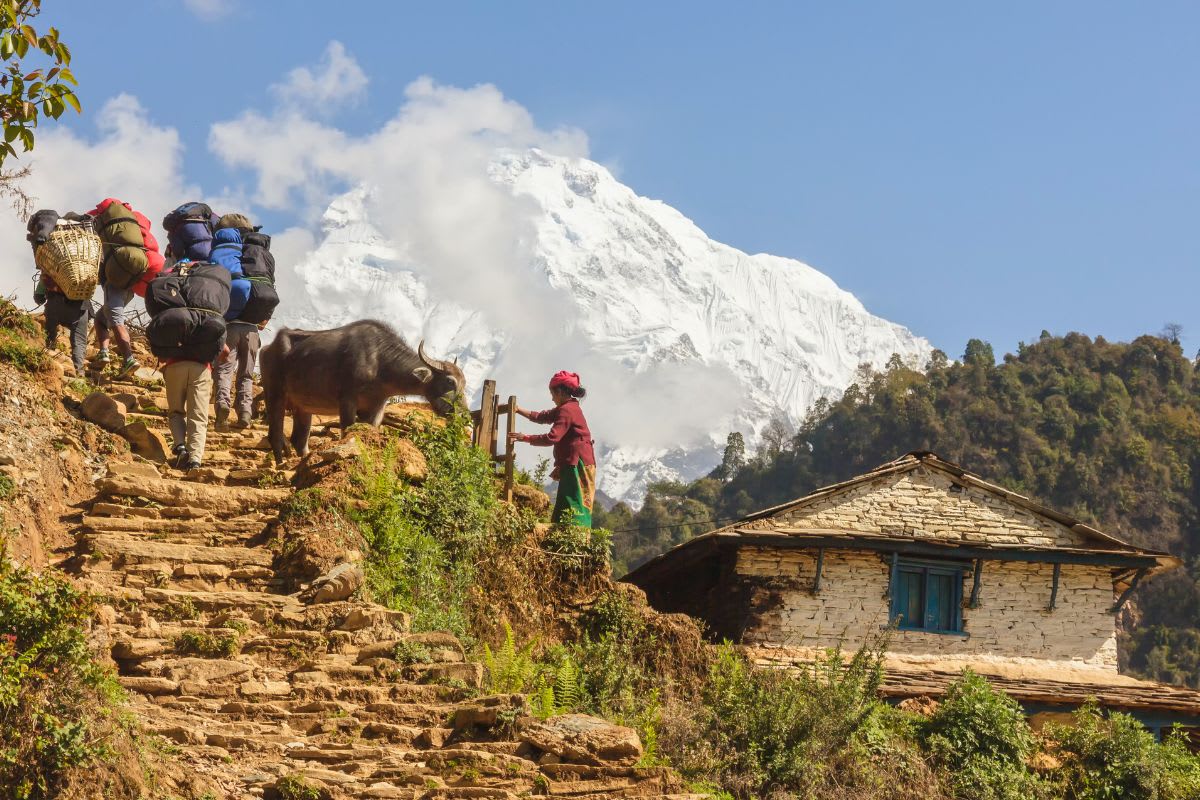
By Tengboche on day 6 it was clear this was a busier April than usual: climbing-season porters and gear convoys share the trail with trekkers from mid-April, and this year's Everest summit push season started early, roughly ten days ahead of where I'd place it in a typical year. The monastery courtyard at Tengboche, usually a quiet stop on the way to Dingboche, had three separate expedition teams passing through the same afternoon we did. Dingboche's lodges were near capacity by day 7, and our guide network held rooms two nights ahead rather than the usual one, a small operational change I am now recommending for all April departures going forward. The acclimatization day at Dingboche (4,410 m) went ahead as planned, a short walk up toward Nangkartshang for the group before an afternoon of rest, and nobody reported symptoms beyond the ordinary breathlessness climbing to altitude.
Days 9 to 12: Lobuche, Gorak Shep, and a bed shortage worse than usual
Gorak Shep on day 11 was the tightest I have seen it outside peak October: three of the four lodges were full by 11 am, and the group only had rooms because our contact there held them from a phone call two days earlier, made the moment I saw how full Dingboche had run. Two other independent groups arriving that afternoon without a reservation ended up sharing a single dining hall floor for the night, which is the exact situation our booking-ahead habit exists to avoid. This is the detail that changed my advice: April, not just October, now needs the same two-village-ahead booking discipline we already use for autumn. I am updating our April EBC guidance to reflect this for the 2027 season, and I've already flagged it to the two other guides who lead our spring departures.
Day 13: Kala Patthar at dawn
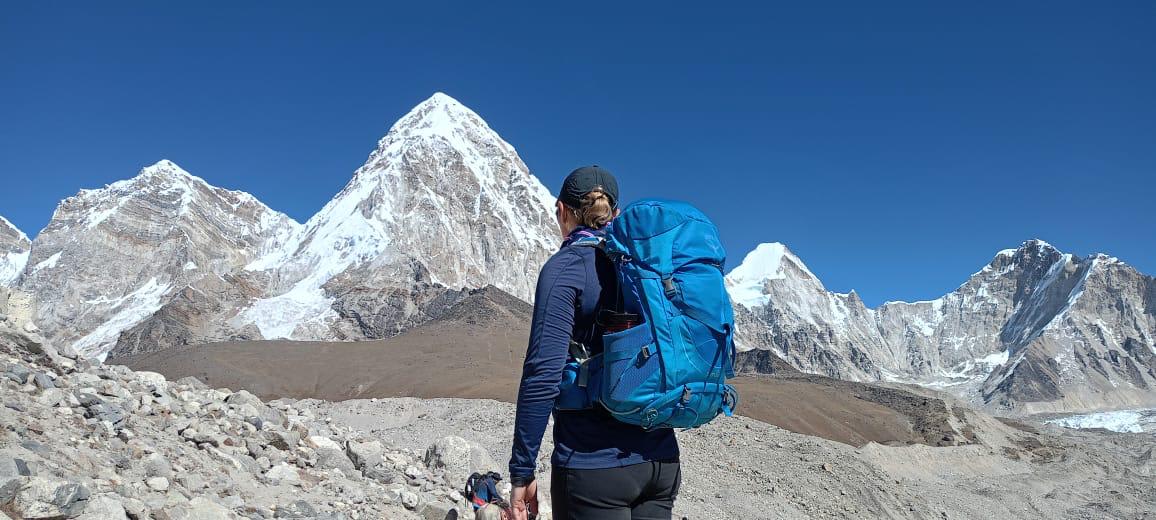
The clear-weather run held through the summit morning. We left Gorak Shep at 4:45 am under a full moon bright enough that headlamps felt almost unnecessary for the first twenty minutes. Standing at 5,545 m at 6:10 am, cloud-free views ran from Everest's summit pyramid across Nuptse and Lhotse to Ama Dablam behind us, the best April visibility I have had on a departure in at least four years. Every member of the group of nine reached the top; the two-day Kathmandu delay meant nobody was rushed on summit morning, which likely helped, and the group spent close to forty minutes at the viewpoint before the wind picked up and we started back down for breakfast at Gorak Shep.
What I am changing for future April departures
Two things: booking Gorak Shep and Dingboche rooms two villages ahead rather than one, starting this season, and building the Lukla contingency buffer to three days rather than two for April specifically, since this is the second consecutive April with a multi-day fog delay at Ramechhap. Neither change adds cost to the itinerary; both just move a phone call earlier in the schedule. Full current planning guidance sits on the Everest Base Camp trek page and is updated from reports like this one, and I'll be writing the same kind of report after our next autumn departure to see whether the crowding pattern holds through October too.
The walk out
The descent from Gorak Shep to Lukla ran four days with no surprises worth reporting, which after the first twelve days of this particular trip felt notable in itself. Appetite came back fast for most of the group once we dropped below Dingboche, and the two trekkers who'd struggled most with sleep at altitude both mentioned getting a full night's rest again by Namche. We flew out of Lukla on schedule on day 17, the only clean, on-time leg of the whole itinerary's flight sectors, which the group found more funny than frustrating by that point.