
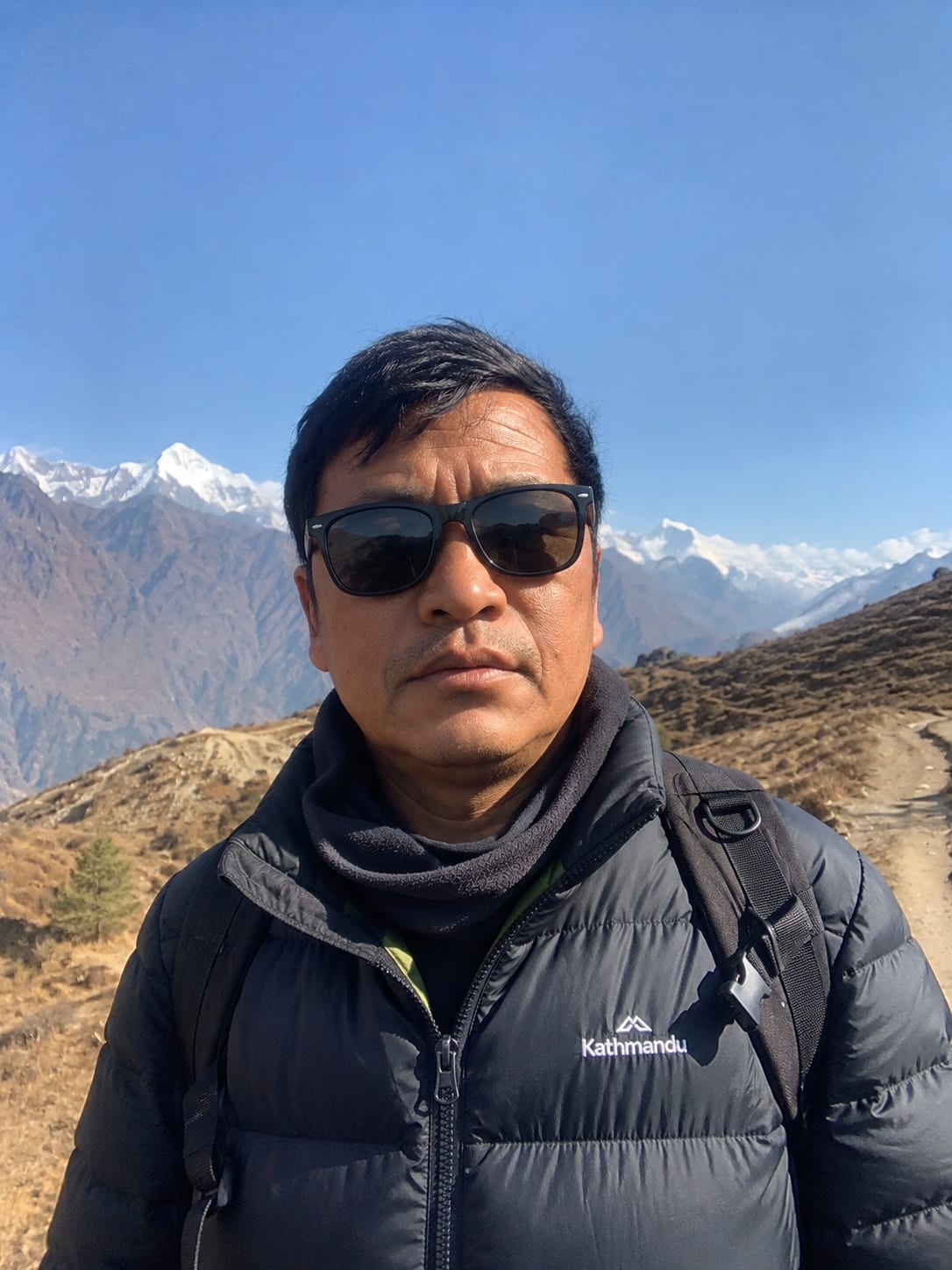
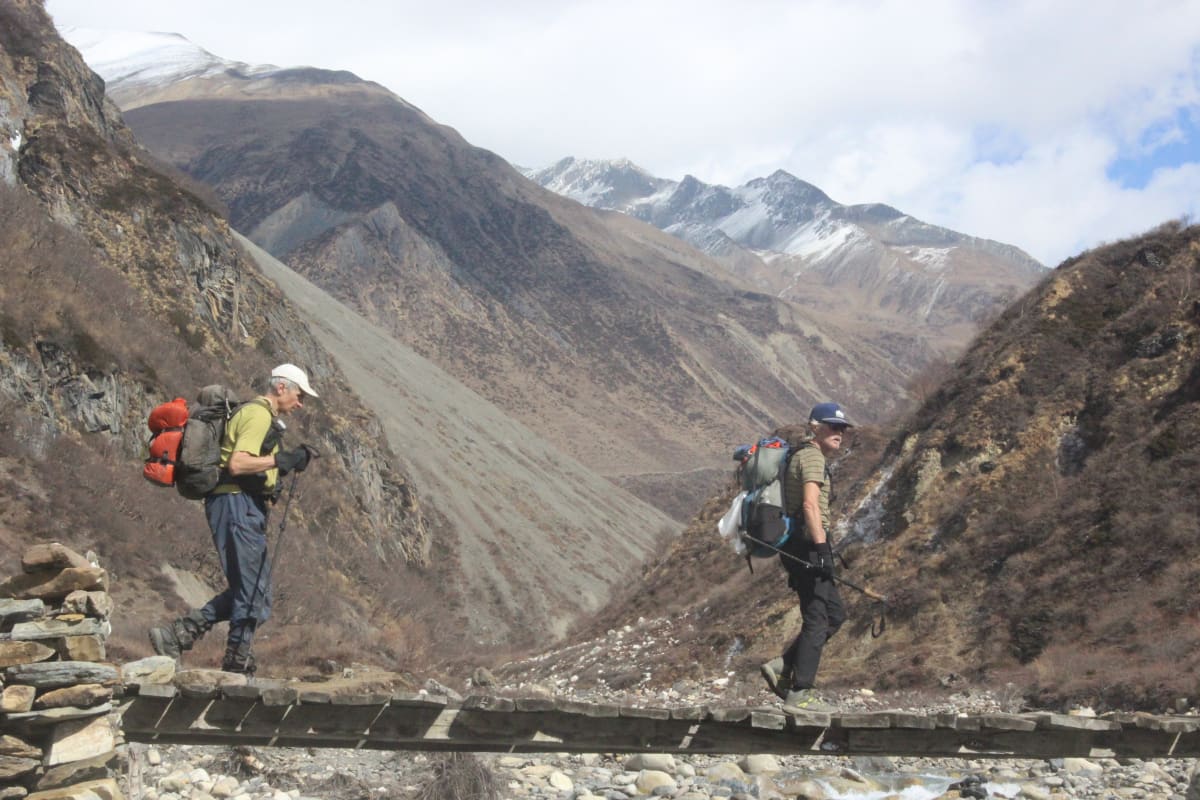
This is a first-person trail report from Mingma Tendi Sherpa's March 2026 Manaslu Circuit departure, his 17th Larkya La crossing, covering a snowfall hold at Dharamsala and the resupply reality of a restricted zone. The group of six left Machha Khola on March 12 and reached Dharapani on March 27, three days behind the filed 14-day itinerary because of 45 cm of snow that fell above 4,000 m on March 20 and 21. Two things drove the decisions that week: a restricted-area permit that fixes your dates before you leave Kathmandu, and a Dharamsala lodge network that closes for the winter and reopens with almost no food stock in early March.
What follows is the departure day by day through the hold and the crossing, not a generic itinerary description, with the specific weather and logistics this group faced.
In this guide 6
- 01 Why early-March departures carry more risk than the calendar suggests
- 02 Days 1 to 8: Machha Khola to Samdo, an ordinary week
- 03 March 20 and 21: 45 cm at Dharamsala, and the call to wait
- 04 What the extra day cost the group
- 05 March 22: crossing the Larkya La
- 06 What this changes for early-season Manaslu planning
Why early-March departures carry more risk than the calendar suggests
March sits at the front edge of the spring window, and the Larkya La at 5,106 m holds winter snowpack longer than the lower valleys suggest. Sama Gaun and Samdo were dry and warm by day 6 of this trip, 12 to 18 C at midday, which is exactly the pattern that makes groups underestimate what is happening 1,200 m higher at Dharamsala. I have led many crossings of this pass, and this is only the third time I have held a group a full extra day for snow, but two of those three holds came in March specifically.
Days 1 to 8: Machha Khola to Samdo, an ordinary week
The Budhi Gandaki gorge from Machha Khola to Jagat ran clear on March 12 and 13, no landslide sections active this early in the year. Namrung's checkpoint on day 4 logged us on schedule, and Sama Gaun at 3,530 m on day 5 gave the group its first full view of the Manaslu massif under a cloudless sky. The acclimatization day at Samdo (3,875 m) on day 8 included the Tibet border viewpoint hike, and I radioed Dharamsala that afternoon the way I do on every departure to confirm beds, a call that on this trip carried a different answer than usual.
March 20 and 21: 45 cm at Dharamsala, and the call to wait
The lodge owner at Dharamsala reported snow falling steadily from the evening of March 19, and by the morning of March 20 the accumulation above 4,200 m measured close to 45 cm, confirmed when we walked up from Samdo that day and post-holed the last hour into camp. Fresh snow on the Larkya La's north-facing approach raises avalanche risk on slopes the trail crosses below the pass, and a group crossing blind into that load is the single most common cause of Manaslu accidents in the shoulder months. I made the call at Dharamsala on the evening of March 20 to hold a full day rather than push for the pass at 3:30 am as scheduled, and told the group directly why: four to five hours of exposed traverse above 4,700 m is not a place to guess about snow stability.
The rest day on March 21 was not idle. Two porters descended to Samdo and back for extra kerosene and dal, since Dharamsala's own stock, restocked only in mid-March after the winter closure, was not built for an unplanned extra night for six trekkers plus staff. Snow settled through the day under clear skies, and by afternoon the lodge owner and I agreed the overnight refreeze would firm the surface enough for a safe morning crossing. This is the part of restricted-zone trekking that surprises first-time Manaslu clients most: there is no calling ahead to extend a hotel booking in Kathmandu, no rerouting around a closed section. Dharamsala is the only sleeping point before the pass, and the permit's filed exit date at Sama Gaun does not adjust itself for weather.
What the extra day cost the group
The hold pushed our Larkya La crossing from March 21 to March 22 and consumed the itinerary's built-in spare day at Kathmandu before we had even left the mountains. Our restricted-area permit, filed for a 14-day window at the USD 75 per week winter-to-spring rate, ran one day past its stamped exit date at Sama Gaun, which meant a same-day extension paid in cash at the standard weekly rate rather than a prorated single day, an operator cost I built into this departure's margin line rather than passing to the group. Two clients had booked international flights for March 28 with only a one-day Kathmandu buffer; both needed same-day rebooking fees once we reached phone signal at Sama Gaun's checkpoint, a detail I now flag harder at the pre-departure briefing for every March booking. Food stock at Dharamsala for the extra night ran to instant noodles and tea rather than the usual dal bhat, which nobody complained about once they understood why.
March 22: crossing the Larkya La
The 3:45 am start on March 22 found firm, refrozen snow underfoot, exactly the surface the extra day was meant to produce. We reached the 5,106 m cairn at 8:20 am under clear skies and light wind, and the descent toward Bimthang crossed the loose moraine section in microspikes, standard kit for this route in March. All six clients crossed without incident, and the pulse oximeter readings I logged at the pass top were the best of the trip, nobody below 84% saturation. Bimthang that evening was warm enough for the group to eat dinner outside for the first time in a week, a small thing that mattered after four cold camps.
What this changes for early-season Manaslu planning
One change: starting with this season, I am recommending a built-in contingency day specifically for departures scheduled before April 1, priced and permitted from the start rather than borrowed from the Kathmandu buffer. March carries real spring warmth in the lower valleys and real winter snowpack at Dharamsala at the same time, and treating the two as one season is the planning mistake that put this group's Kathmandu buffer at zero before the trip was even over. Trekkers considering an early Manaslu Circuit departure should budget flight-change flexibility for the two days after the scheduled finish, not just the one. The altitude sickness prevention guide covers the oximeter protocol we ran through the hold, unchanged from any other departure, but the snow call itself was a judgment this specific March required.
