Nepal Travel Packages
Manaslu Circuit Trek

Manaslu Circuit Trek

★★★★★ 4.9 (98 reviews)
Manaslu, Nepal 14-16 days Strenuous Max 5,106 m
Duration
14-16 days
Max altitude
5,106 m
Difficulty
Strenuous
Group size
Up to 10
Total distance
~177 km
Elevation gain
7,100 m
Best season
late September to November, March to May
Avg daily walk
6-7 hours
Starts in
Machha Khola (869 m, drive from Kathmandu)
Ends in
Dharapani (1,860 m, jeep to Kathmandu)
Accommodation
Teahouse lodges; tented backup held at Dharamsala
✓ TAAN & NMA licensed guides ✓ Permits included, no hidden fees ✓ Small group departures
Group departure · per person
USD1,550
Permits, guide, porter, lodging & food included
Departure date
Email Nepal
Permits and logistics fully arranged
Licensed guide included on every departure
Direct WhatsApp line to your guide

The Manaslu Circuit is a 14 to 16 day restricted-area teahouse trek in Nepal's Gorkha district that circles Manaslu (8,163 m), the world's eighth-highest mountain, and crosses the Larkya La at 5,106 m. Because the route runs inside a restricted zone, Nepal's Department of Immigration requires a minimum of two trekkers with a licensed guide, and the restricted-area permit costs USD 100 per person per week from September to November and USD 75 per week from December to August, on top of the Manaslu Conservation Area Permit (NPR 3,000) and the Annapurna Conservation Area Permit (NPR 3,000) needed for the exit through Dharapani. A 2026 group departure costs USD 1,250 to 1,750 per person with all four permits included.

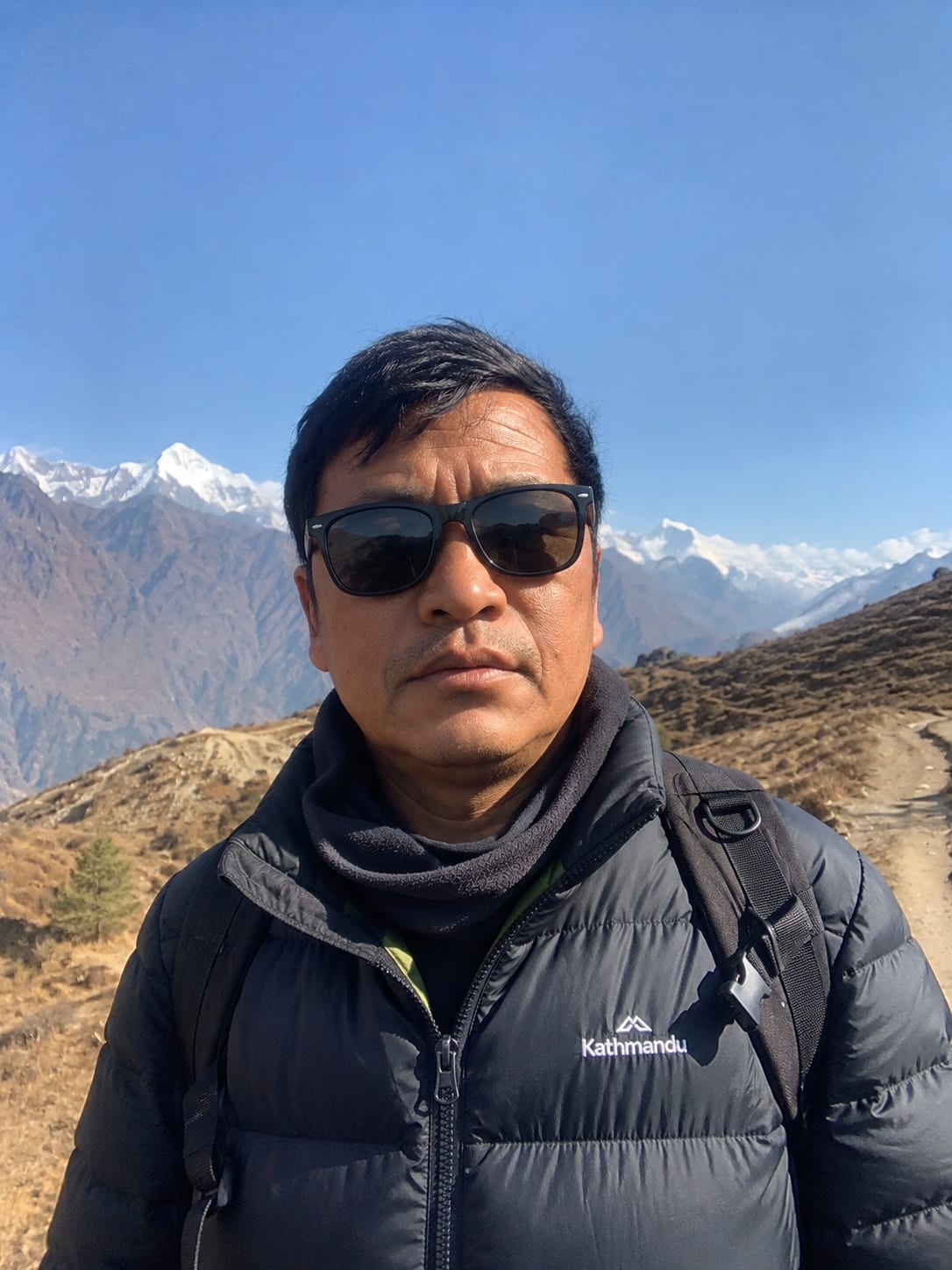
Mingma Tendi Sherpa, who has led 17 Manaslu Circuit departures since 2014, wrote this page and files the permit paperwork for every group himself. The sections below cover the restricted-permit mechanics and the five-checkpoint sequence from Jagat to Dharapani, a full cost breakdown against the USD 1,250 to 1,750 range, season data for the Larkya La, and the bed situation at Dharamsala (4,460 m), the one night on the circuit where capacity decides your crossing day.

Highlights

What our guides know that others don't.

1

Checkpoint sequence

Jagat, Philim, Namrung, Sama Gaun, Dharapani; guide must be present at each

2

Dharamsala bed capacity

About 40 lodge beds plus tents at 4,460 m; full by 2 pm in October

Live from the trail

Updated 2 Jul 2026

Monsoon closure: Budhi Gandaki gorge landslide-active

Monsoon rain has made the gorge trail between Machha Khola and Jagat landslide-active, with two sections rerouted onto temporary paths as of late June. We run no Manaslu departures until the third week of September, and the Department of Immigration permit desk confirms the winter rate of USD 75/week applies through August for anyone considering an early shoulder-season entry. Dharamsala lodges reopen mid-September.

How do the Manaslu restricted-area permits work in 2026?

Four permits cover the circuit in 2026: the Manaslu Restricted Area Permit at USD 100 per person per week from September to November (USD 75 per week from December to August), the Manaslu Conservation Area Permit at NPR 3,000, the Annapurna Conservation Area Permit at NPR 3,000, and no TIMS card, which the restricted permit replaces on this route. The restricted permit is issued only by the Department of Immigration in Kathmandu, only through a registered trekking operator, and only for groups of two or more trekkers accompanied by a licensed guide. Solo applicants are refused at the counter, which is why our departure calendar guarantees a minimum group of two on every date.

Processing takes one working day when passports, visas, and two photos per trekker reach our office by 10 am, and the permit lists your exact entry and exit dates, so itinerary changes inside the restricted zone are not possible after issue. Week counting starts at the Jagat checkpoint and ends at Sama Gaun's exit stamp, meaning a standard 14-day circuit consumes exactly two permit weeks. The full document list, photo specs, and fee tables sit in our Manaslu restricted-area permit requirements guide, which Mingma Tendi Sherpa updates after every rule change from the Department of Immigration.

How much does the Manaslu Circuit cost in 2026?

TAAN-registered operators quoted USD 1,250 to 1,750 for a 14-day group Manaslu Circuit in spring 2026; private departures ran USD 1,600 to 2,200. Permits alone account for USD 246 of that at autumn rates, the highest fixed permit load of any teahouse trek in Nepal outside Upper Mustang, and the table below shows the remaining lines. A quote under USD 1,100 usually means the operator is splitting one guide across two booking groups at the checkpoints, which fails the Department of Immigration's one-guide-per-group rule and can strand you at Jagat.

Transport is the cheapest major line: shared jeeps from Kathmandu to Machha Khola and back from Dharapani total USD 100 to 160, against USD 360 or more for the Lukla flights an Everest trek requires. Guide and porter wages follow TAAN's 2026 recommended rates of USD 35 to 40 and USD 25 per day. Budget an extra NPR 3,000 to 5,000 in cash for hot showers (NPR 300 to 500) and device charging (NPR 200 to 400), since there are no ATMs past Arughat on the entire circuit.

Where the price goes · per person
Manaslu Restricted Area Permit, 2 weeks (Sept-Nov)USD 75/week from December to August$200
MCAP + ACAP conservation entriesNPR 3,000 each at 2026 rates$46
Kathmandu-Machha Khola and Dharapani-Kathmandu jeepsShared 4WD; private jeep adds USD 120-180$100–160
Licensed guide (mandatory, shared in group)USD 35-40/day including guide's food, lodging, insurance$220–300
Porter, one per two trekkersUSD 25/day, 20 kg shared load limit$300–350
Teahouse room, 13 nightsNPR 500-1,500/night, highest at Samdo and Dharamsala$65–130
Food and drinking waterDal bhat NPR 550-1,000 by altitude$300–420
Company margin, permit filing, staff equipment$150–250

Which checkpoints and liaison rules apply on the circuit?

Five checkpoints control the restricted zone in 2026: Jagat (entry stamp), Philim (MCAP check), Namrung (police post), Sama Gaun (exit stamp for the restricted permit), and Dharapani (ACAP check on the way out). Your licensed guide must be physically present with the full permit set at each one, and officers match faces to passport photos at Jagat and Namrung, so the group walks together on checkpoint days rather than spreading out at individual pace. Our guides carry two photocopy sets per trekker because the Philim post keeps one on file.

Liaison rules sit with the operator, not the trekker: we file the day-by-day itinerary with the Department of Immigration at issue, and the checkpoints log your dates against it. Arriving at Sama Gaun after your filed exit week triggers an on-the-spot permit extension at the same weekly rate, paid in USD cash by the guide, which is one of the contingency costs built into our margin line. Side trips to Manaslu Base Camp and the Pungyen Gompa valley are legal without extra paperwork because both start and end at Sama Gaun inside the same permit week.

When is the best season for the Manaslu Circuit?

Late September to November is the main window, with October carrying roughly half the circuit's annual trekkers and the restricted permit at its USD 100 weekly rate. March to May is the second season, quieter and USD 25 per week cheaper, with rhododendron forest in bloom below Namrung and more snow lying on the Larkya La into early April. Our 17 departures split about 60/40 between autumn and spring, and both seasons delivered crossings on the planned day in over 85% of cases.

December to February crossings are possible for experienced groups but the pass closes after any significant snowfall, sometimes for weeks, and Dharamsala's lodges shut from mid-December. The monsoon months of June to mid-September rule the route out for a different reason: the Budhi Gandaki gorge between Machha Khola and Jagat is the most landslide-active trail section we operate anywhere in Nepal. Monsoon clients go to rain-shadow treks during monsoon in Upper Mustang instead, where those same months are the prime season.

How difficult is the Manaslu Circuit?

Strenuous is our grading: 177 km, 7,100 m of cumulative ascent, walking days of 6 to 7 hours, and a single-day pass crossing that runs 8 to 10 hours over the 5,106 m Larkya La. No section is technical, but the trail is rougher than the Everest and Annapurna classics, with exposed staircase sections in the Budhi Gandaki gorge and a loose-moraine descent from the pass toward Bimthang that takes crampon-free microspikes in early spring. A fitness benchmark: back-to-back 18 km hill days with 1,000 m of ascent carrying 6 kg, comfortably, before you book.

Altitude management on the circuit follows the Himalayan Rescue Association's guideline of gaining no more than 500 m of sleeping altitude per day above 3,000 m, which is why our itinerary holds acclimatization days at both Sama Gaun (3,530 m) and Samdo (3,875 m) before the high camp at Dharamsala. Acute mountain sickness (AMS) symptoms and our descent protocols are covered in the altitude sickness prevention guide, and every guide carries a pulse oximeter with twice-daily checks from Namrung onward.

What are the beds at Dharamsala, and how does the Larkya La crossing run?

Dharamsala (4,460 m), the only sleeping point before the pass, holds about 40 lodge beds in two stone buildings plus a tent field, and in October the beds are gone by 2 pm. Our groups secure beds by radioing ahead from Samdo the previous afternoon, and we carry four backup tents with sleeping mats on every October departure, which is a line item most cheaper operators cut. Whoever sleeps badly at Dharamsala pays for it the next day, so the room plan here matters more than anywhere else on the circuit.

Crossing day starts between 3 and 4 am to beat the wind that funnels over the Larkya La from late morning, reaching the 5,106 m prayer-flag cairn in 4 to 5 hours and Bimthang (3,720 m) after a further 3 to 4 hours of moraine descent. Helicopter evacuation from the pass area is only possible in the morning calm window, which is why our insurance requirement specifies coverage to 5,500 m and why we check policies before departure against the criteria in helicopter evacuation insurance coverage. The large majority of our departures cross on the scheduled day; the rare delays have been October snowfall holds of one day each at Samdo.

What sleeping-altitude schedule keeps the Manaslu Circuit safe?

A 500 m per day sleeping-altitude gain above 3,000 m, with a rest day at every 1,000 m of net climb, is the schedule the acclimatization guide sets for every route we run, and the Manaslu Circuit follows it exactly through the two rest days at Sama Gaun and Samdo. The table below shows how sleeping altitude actually climbs from Namrung to the pass.

Night Sleeping altitude Gain from previous night
Namrung 2,630 m n/a
Sama Gaun 3,530 m 900 m
Sama Gaun (rest) 3,530 m 0 m
Samdo 3,875 m 345 m
Samdo (rest) 3,875 m 0 m
Dharamsala 4,460 m 585 m
Larkya La crossing / Bimthang 3,720 m descent

The Namrung-to-Sama Gaun day is the one place the 500 m guideline gets stretched, to 900 m, which is why the very next day is a full rest at Sama Gaun rather than a shorter push. Every guide on our Manaslu departures carries a pulse oximeter and logs oxygen saturation at breakfast and dinner from Namrung onward, and a reading that will not recover after a night's rest triggers the same immediate-descent protocol covered in the altitude sickness prevention guide, regardless of how the itinerary is scheduled to run.

What should you pack for the Manaslu Circuit beyond the standard list?

The Nepal trekking packing list covers the core kit every teahouse trek needs, a four-season sleeping bag rated to -15 C comfort chief among it, but Manaslu adds items the standard list doesn't. Microspikes matter on the Larkya La's moraine descent toward Bimthang, especially in early spring when snow still lies on the north side, and a heavier-than-usual pair of liner gloves earns its weight on the 3:30 am pass start, when temperatures at Dharamsala sit well below the teahouse-only routes this site runs.

Cash is the item trekkers most often pack too little of: there are no ATMs past Arughat on the entire circuit, and Dharamsala's tea and snacks, the Sama Gaun bakery, and Wi-Fi at Sama Gaun and Samdo are all cash-only in Nepali rupees. Budget NPR 8,000 to 12,000 in small notes for the trek beyond the fixed package cost, since a torn or old NPR 1,000 note is often refused this far from a bank.

Elevation profile High point 5,106 m
1,0002,0003,0004,000869 m123456784,460 m910111,860 m12DAY
Acclimatization night High point

Day by Day

14-day itinerary, every detail planned.

Day1
Trip Day
Drive Kathmandu to Machha Khola (869 m)
869m alt.

The 8 to 9 hour jeep drive follows the Prithvi Highway to Dhading Besi, then rough road up the Budhi Gandaki to Machha Khola. Permits are checked for the first time at the Arughat conservation post en route.

869 m
Day2
Trip Day
Machha Khola to Jagat (1,340 m)
~6h walking15 km
1,340m alt.
Day3
Trip Day
Jagat to Deng (1,860 m)
~6h walking19 km
1,860m alt.
Day4
Trip Day
Deng to Namrung (2,630 m)
~6h walking17 km
2,630m alt.
Day5
Trip Day
Namrung to Sama Gaun (3,530 m)
~6h walking16 km
3,530m alt.
Day6
Acclimatization
Acclimatization day in Sama Gaun
~5h walking
3,530m alt.

What's Included

Transparent, all-in pricing.

Included in your price

Manaslu Restricted Area Permit, 2 weeks (Sept-Nov)
MCAP + ACAP conservation entries
Kathmandu-Machha Khola and Dharapani-Kathmandu jeeps
Licensed guide (mandatory, shared in group)
Porter, one per two trekkers
Teahouse room, 13 nights
Food and drinking water
Company margin, permit filing, staff equipment

Not included

Nepal entry visa fee (USD 30-125, paid on arrival)
Travel insurance with helicopter evacuation cover
Personal trekking gear and equipment
Tips for your guide and porter
Bottled drinks, wifi, and device charging at teahouses
Meals in Kathmandu outside the itinerary

Dates & prices

Upcoming departures.

Start dateEnd datePrice / personAvailability
20 Sept 20263 Oct 2026USD 1,550Guaranteed · 4 leftEnquire
4 Oct 202617 Oct 2026USD 1,550Guaranteed · 6 leftEnquire
18 Oct 202631 Oct 2026USD 1,550Open · 8 leftEnquire
1 Nov 202614 Nov 2026USD 1,450Open · 8 leftEnquire
7 Mar 202720 Mar 2027USD 1,400Open · 8 leftEnquire

Verified reviews

What travellers say.

4.9/5 from 98 reviews on TripAdvisor, checked July 2026

★★★★★

Mingma had our restricted permits sorted before we even landed, and watching other groups argue at the Jagat checkpoint made it obvious why that matters. The 3:30 am start over the Larkya La was brutal and correct: we were on the pass by 8 and the wind arrived on schedule an hour later. Beds waiting at Dharamsala when walk-ins were being sent to tents.

KN
Klara Novak · Czech Republic
22 Apr 2026
★★★★★

Did the circuit in late October with the group of four. The acclimatization day at Samdo, hiking toward the Tibet border viewpoint, made the crossing feel manageable rather than desperate. Concrete details other operators didn't mention: no ATMs after Arughat, NPR 500 lodge Wi-Fi at Sama Gaun, and the buckwheat bread in Tilije. All true, all useful.

TB
Tom Bradshaw · Australia
30 Oct 2026

Why Nepal Travel Packages

Built on published proof, not adjectives.

A named, licensed guide before you book

Full name, photo, NMA or TAAN license number, and a direct WhatsApp line. The guide on the page is the guide on the trail.

Itemized pricing, not a lump sum

Permits, guide, porter, lodging, and food broken out on every trip page. You see exactly where the price comes from.

Trail conditions updated monthly

Dated field reports from the guides running the route this season, not boilerplate written once and left to go stale.

Permits handled, not hidden

Every permit fee, checkpoint, and paperwork rule is filed for you and published in the guides — no surprise admin at Lukla.

FAQ

Common questions

Can I trek the Manaslu Circuit solo?+

No. The Department of Immigration issues Manaslu restricted-area permits only to groups of two or more trekkers with a licensed guide, applied for through a registered operator, and the Jagat checkpoint turns away anyone without a compliant permit. Solo travelers join one of our scheduled group departures, which is exactly what the minimum-two rule exists to make possible; every date on our calendar already carries at least two confirmed trekkers before it opens for further booking.

What happens if the Larkya La is snowbound?+

October snowfall has occasionally closed the pass for one day on our departures, and the itinerary's spare day 14 absorbs exactly that kind of hold at Samdo or Dharamsala. A multi-day closure forces a return down the Budhi Gandaki the way you came, since there is no alternative exit from Samdo, and the restricted permit extension for the extra days is paid at the standard weekly rate. This retreat scenario has not occurred on our departures since 2019.

Can I add Tsum Valley to the circuit?+

Yes, the combined route takes 21 to 24 days and needs one extra document: the Tsum Valley restricted permit at USD 40 per person per week, filed in the same Department of Immigration application. The Tsum turn-off at Lokpa sits on day 3 of the circuit itinerary, so the side valley slots in before the main climb to Sama Gaun. Both restricted permits run on separate week counts, which our office calculates date by date at booking.

Is there phone signal or Wi-Fi on the circuit?+

NTC 4G works patchily to Namrung and briefly at Sama Gaun; Ncell is near-useless past Philim. Lodge Wi-Fi exists at Sama Gaun and Samdo for NPR 500 to 700 per day and fails in cloud, so plan for message-only contact for the middle week. Our guides carry a satellite communicator on every departure for weather calls and emergencies.

What insurance do I need for Manaslu?+

A policy covering trekking to 5,500 m with helicopter evacuation is mandatory on our departures, checked against the policy wording before we file permits. Evacuation from the Larkya La area costs USD 4,000 to 6,000 uninsured and is only flyable in the morning wind window, both reasons we treat the paperwork as seriously as the permits. The helicopter evacuation insurance coverage guide lists policies our clients have claimed against successfully.

Why do I need both MCAP and ACAP for one trek?+

The circuit crosses two conservation areas: the Manaslu Conservation Area from Philim to the Larkya La, and the Annapurna Conservation Area from Bimthang out to Dharapani. Each NPR 3,000 entry is checked separately, MCAP at Philim and ACAP at Dharapani, and neither is sold at the checkpoints themselves in 2026, so both must be issued in Kathmandu before departure.

How fit do I need to be for the Manaslu Circuit?+

Comfortable with back-to-back 6-7 hour hill days carrying a 6 kg daypack, including one full day of 8-10 hours over the Larkya La. Prior high-altitude experience helps but is not required; the itinerary's two rest days at Sama Gaun and Samdo do the acclimatization work. A few months of hiking with a loaded pack beforehand is a better predictor of how the pass day feels than gym fitness alone.

Is Manaslu quieter than the Annapurna Circuit?+

Yes, noticeably. The restricted-area permit and its two-trekker-plus-guide requirement keep numbers well below the Annapurna Circuit's, especially since the Annapurna route gained road access on much of its lower half. Sama Gaun and Samdo still feel like working villages rather than trekking infrastructure, and the Larkya La sees a fraction of Thorong La's daily crossing traffic in the same season.

Can I do Manaslu without much prior trekking experience?+

Yes, if your general fitness is solid, but Manaslu is a harder first trek than Everest Base Camp or the Annapurna Circuit's easier sections, since the trail is rougher and the Larkya La crossing day runs 8 to 10 hours with no shortcut once you commit to it. We recommend at least one prior multi-day trek, or a structured fitness build-up in the months before departure, for anyone treating this as their first Himalayan route rather than their third or fourth.

What's the guide-to-client ratio on a Manaslu departure?+

One licensed guide per group regardless of size, with an assistant guide added once a group passes 6 to 7 trekkers, and one porter for every two trekkers throughout. This ratio is set by the same TAAN staffing standard that governs our other restricted-area departures, and it's checked at each of the five permit checkpoints, where officers confirm the guide named on the paperwork is the one physically present with the group.

Can I extend the Manaslu Circuit with a rest day if I need one?+

Yes. Day 14's Kathmandu buffer is built for exactly this, but if you need extra time on the trail itself rather than in the capital, our office can add a night at Sama Gaun or Samdo before booking, adjusting the restricted-permit week count accordingly. Requesting this after permits are filed is harder, since the dates are fixed on the document, so raise it during booking rather than mid-trek.