
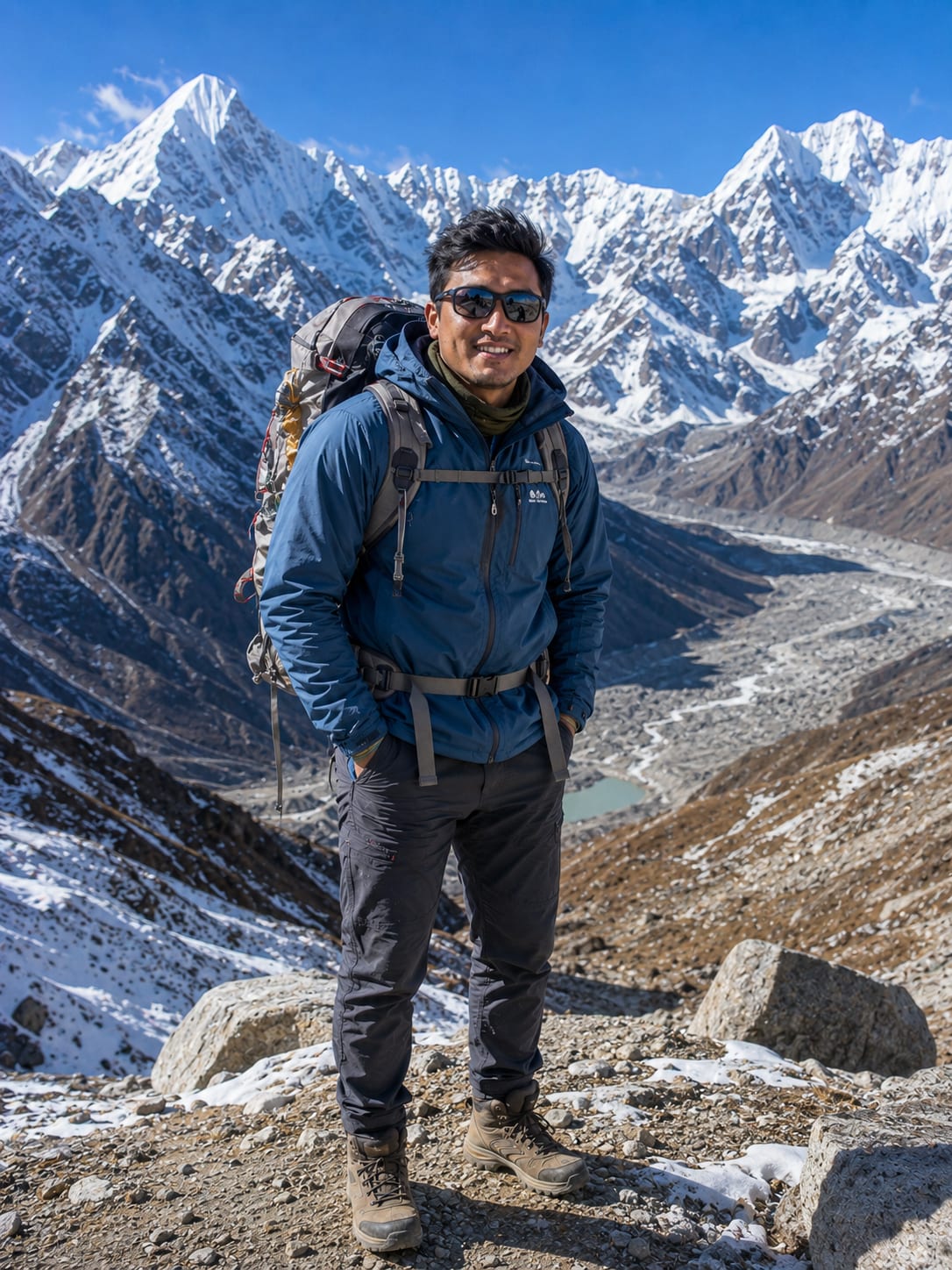
 Written & led by Ramesh Thapa
 Estimated per-person rate for this size — your guide confirms the exact quote.
The Kailash Mansarovar Yatra is a 13-day pilgrimage from Nepal to Mount Kailash (6,638 m) and Lake Mansarovar (4,588 m) in Tibet, flying via Nepalgunj and Simikot to the Hilsa border crossing, then completing the 52 km kora around Kailash over the Dolma La, published between 5,590 m and 5,669 m. Group pricing for this category of trip typically falls in the USD 1,800 to 3,500 per person range, an approximate market band rather than a fixed quote, since it moves with the Chinese Group Visa and permit fees, group size, and whether the Simikot-Hilsa sector is flown by helicopter. Ramesh Rai, our Permits & Logistics Manager, coordinates the Nepal-side Humla restricted-area permit and the documentation the Chinese Group Visa application requires.
Highlights
What our guides know that others don't.
Summit status
Never climbed; circumambulation only, out of religious respect
Nepal-side permit
Humla is itself a restricted area, separate from the Tibet permits
In pictures
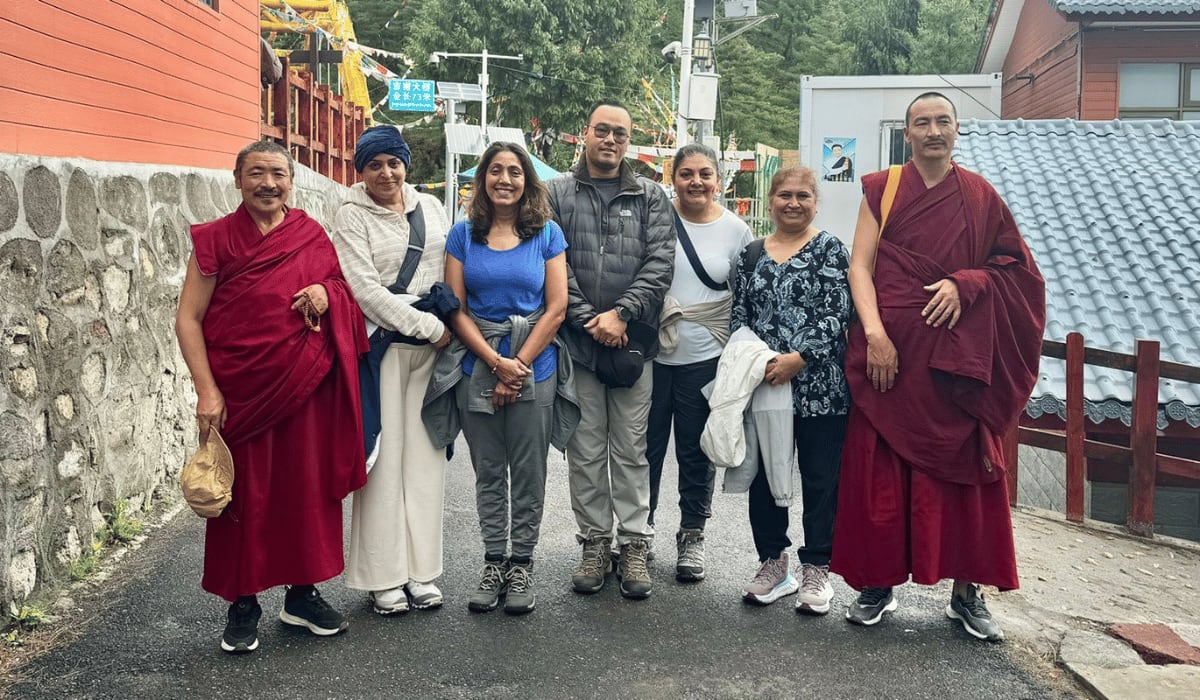
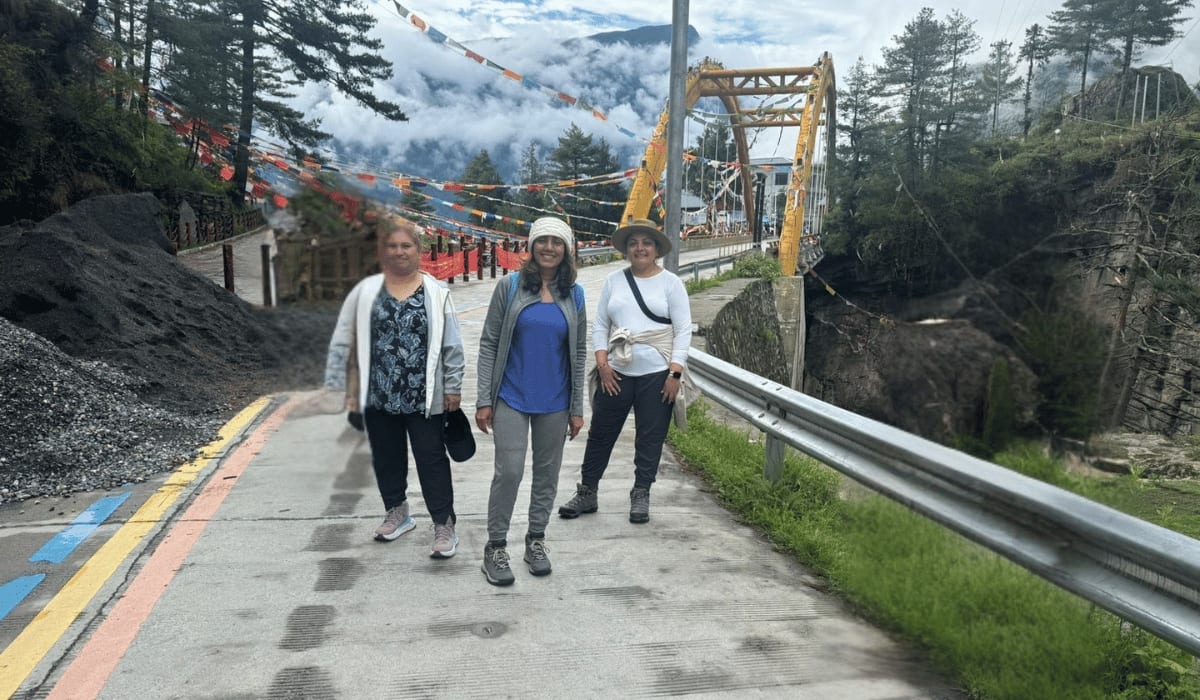
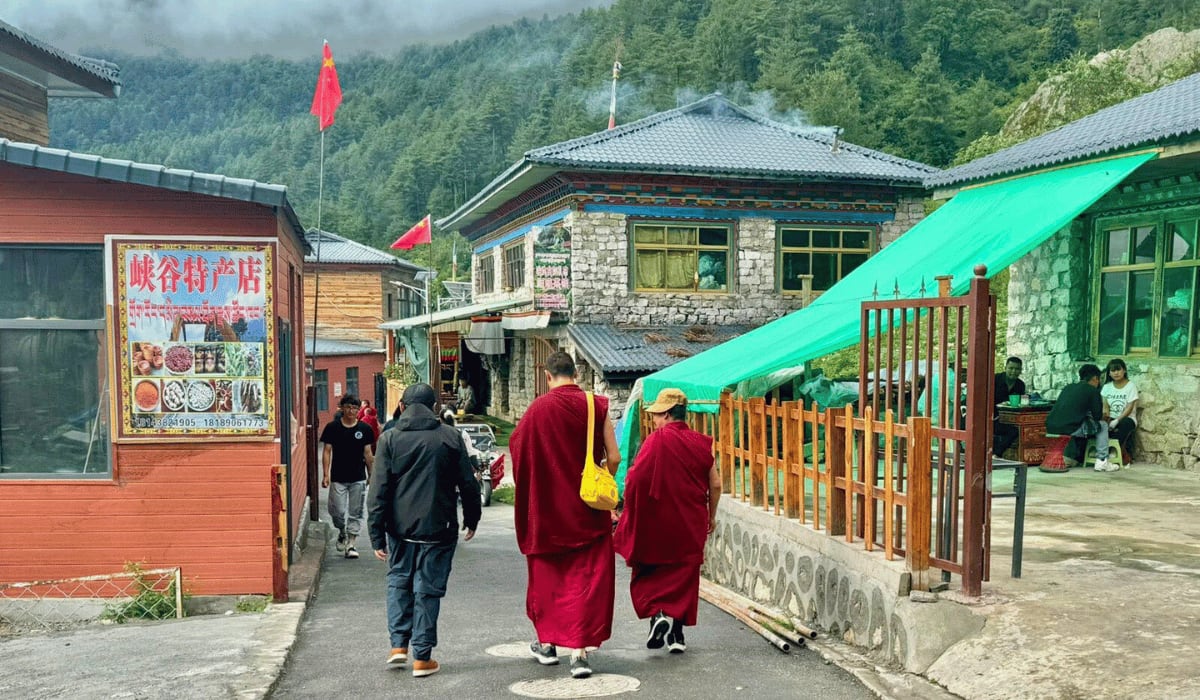
Kailash Mansarovar Yatra gallery
What does the Kailash kora actually involve?
The Kailash kora is a circumambulation of the mountain, conventionally given as 52 km, walked over three days by most pilgrims and completed entirely on foot or, for those unable to walk the full distance, with the help of hired yaks, horses, or porters available at Darchen. The route climbs from Darchen (4,670 m) to Dirapuk on day one, crosses the Dolma La, published between 5,590 m and 5,669 m, on day two, the hardest single day of the entire trip, then descends to Zutulpuk before returning to Darchen on day three.
Published figures for this route disagree with each other more than most, and it is worth knowing which numbers are soft. The kora's length is given as 48 km by the Indian government's own Kailash Mansarovar guidebook, as 53 km by Wikipedia, and as 52 km across the commercial trade, which is the figure this page uses and the one with the least authoritative backing behind it. The Dolma La is worse: the Indian government's 2026 yatra itinerary prints 5,590 m while its own 2006 guidebook describes an 18,600-foot pass, about 5,669 m, so a single government's two documents differ by nearly 80 m. None of this changes what the day feels like, but any page quoting these to the metre without saying where the number came from is presenting a contested figure as a settled one.
Circling Kailash is the pilgrimage itself, not a means to an end: the mountain has never been climbed, and no permit exists to attempt a summit, since Hindu, Buddhist, Jain, and Bon tradition all hold the peak as sacred ground rather than a mountaineering objective. Pack animals and porter support genuinely are available at Darchen for pilgrims who cannot walk the full three days, a real and common accommodation rather than a compromise, and older or less mobile travelers use this option regularly.
How do you get to Kailash from Nepal?
Two routes reach Kailash from Nepal, and the shorter one is what most group departures use. The Nepalgunj-Simikot-Hilsa route flies from Kathmandu to Nepalgunj, then Nepalgunj to Simikot in Humla district, then transfers to Hilsa on the Nepal-Tibet border, most commonly by helicopter given the terrain between Simikot and Hilsa. From Hilsa, the group crosses into Purang (also called Taklakot) on the Tibetan side, then drives via Lake Mansarovar to Darchen, the town at Kailash's base. This route runs roughly 13 days round trip from Kathmandu.
The longer route flies or drives from Kathmandu to Lhasa, then travels overland via Shigatse and Saga to Darchen, a journey of 15 days or more that takes in far more of central Tibet, including Everest's north side, along the way. We run both: this page covers the Simikot-Hilsa route, and the 15-day Lhasa and Everest north route covers the longer overland approach.
The choice between the two routes comes down to time and what else you want from the trip. The Simikot-Hilsa route is faster and more direct, built around Kailash and Mansarovar themselves rather than a broader Tibet circuit, and it keeps the flight sectors shorter and the group's time at extreme altitude more contained. The Lhasa route suits a pilgrim who wants Kailash Mansarovar as part of a fuller Tibet trip, with the Potala Palace, Jokhang Temple, and the drive past Everest's north face along the way, and who has the extra week or more the longer route needs.
What permits and visa does Kailash Mansarovar actually require?
A Chinese Group Visa, issued only to a registered group through a licensed agency and never to an individual traveler applying independently, is the foundation of the whole process, alongside a Tibet Travel Permit and an Alien's Travel Permit specifically for Ngari Prefecture, the restricted region Kailash and Mansarovar sit within. This is a fundamentally different system from the TIMS card and national park entries covered elsewhere on this site for Nepal treks: Tibet Autonomous Region permits no independent travel anywhere, and every step of the process runs through the agency, not the traveler.
On the Nepal side, a separate requirement applies before you even reach the border: Simikot sits in Humla district, itself a restricted area inside Nepal requiring its own Restricted Area Permit, arranged through the Nepal Department of Immigration. Full detail on the Group Visa process, required documents, and realistic processing timelines is in the Kailash Mansarovar permits and visa guide.
How difficult is the Kailash Mansarovar Yatra?
Strenuous is the honest grading: the trip holds pilgrims at 4,500 to 5,000 m for most of its length, and the Dolma La crossing on kora day two is a genuinely hard high-altitude day regardless of prior trekking experience. The altitude, not technical terrain, is what makes this trip demanding; the kora trail itself is a walking path rather than a climbing route, but sustained days above 4,500 m with limited acclimatization time before the pass crossing catch travelers who arrive without any prior high-altitude experience.
Acclimatization time is built around the Purang and Mansarovar stops before the group ever reaches Darchen, following the same sleeping-altitude discipline used on every high route this site covers, detailed in the altitude sickness prevention guide. Pilgrims who cannot complete the full walking kora still have a real option in hired yaks or porters at Darchen, which is why this pilgrimage draws a wider age range of travelers than a comparable trekking peak would.
Group fitness matters differently here than on a standard Nepal trek: the itinerary moves the whole group together across the three kora days, so a slower pace on the Dolma La crossing affects the day's overall timing for everyone, not just the individual finding it hard. Our guides pace the Dolma La day deliberately slowly from the pre-dawn start rather than pushing for speed, since arriving at the pass and descending safely matters far more than the time it takes to get there. A trekker who has managed a demanding high pass on a Nepal route, the Thorong La on the Annapurna Circuit or the Larkya La on Manaslu, has a reasonable sense of what the Dolma La day will feel like, even though the elevation here runs higher than either.
What is the religious significance of Kailash and Mansarovar?
Mount Kailash is sacred to four living traditions: Hindus regard it as the abode of Shiva, Tibetan Buddhists associate it with the deity Demchok (Chakrasamvara), Jains hold it as the site where Rishabhanatha, the first Tirthankara, attained liberation, and practitioners of Bon, Tibet's indigenous religion, consider it the spiritual heart of the world in their own cosmology. This shared sanctity, rather than any single tradition's exclusive claim, is part of what makes the kora a meeting point for pilgrims of genuinely different faiths walking the same path around the same mountain.
Lake Mansarovar, at 4,588 m, holds its own distinct significance in Hindu tradition as the "mind lake" born from Brahma's thoughts, and ritual bathing in its water is a central act for many Hindu pilgrims on this trip, weather and water temperature permitting. Buddhist and Bon pilgrims typically circle the lake rather than bathe in it, and both traditions treat the lake and mountain as a paired site rather than two separate destinations.
Nearby Rakshastal, a second lake close to Mansarovar, carries a contrasting association in Hindu tradition as a "demon lake," linked to the demon king Ravana, and most itineraries simply pass its shore without the ritual stop Mansarovar itself receives. The two lakes sitting so close together, one revered and one avoided, is itself part of what pilgrims often describe as a striking feature of the landscape here, distinct from anything on a standard Nepal trekking route.
What should you pack for Kailash Mansarovar?
The core layering system from the Nepal trekking packing list applies directly here, a four-season sleeping bag, a warm insulated jacket, and a waterproof shell, since Tibet's high plateau nights stay cold even in the May-to-September season this trip runs. Sun protection matters more here than on most Nepal routes given the plateau's thin, dry air and near-constant strong UV at 4,500 m and above, so high-SPF sunscreen, glacier-rated sunglasses, and lip balm with sun protection are standard kit rather than optional extras.
A personal first-aid kit with any prescribed altitude medication, discussed with a doctor before departure, matters more on this trip than on a standard Nepal trek because medical facilities in Purang and Darchen are minimal, and the nearest serious medical care sits a genuine distance away across the border. Cash in Chinese yuan for the Tibet portion of the trip is worth carrying, since card payment infrastructure is limited outside Lhasa. A basic phrasebook or translation app helps too, since English is far less widely spoken across rural Tibet than in Nepal's main trekking regions, and the guide handling the Tibet-side logistics is often the only fluent English speaker the group interacts with day to day.
What facilities are actually available at Darchen and on the kora?
Darchen has basic guesthouses, small shops, and simple restaurants, enough to prepare for the kora but well short of Kathmandu or Lhasa's infrastructure, and this is the last point with reliable phone signal before the circuit begins. On the kora itself, Dirapuk and Zutulpuk each have a small guesthouse or tea-house-style lodge offering basic beds and simple food, similar in spirit to a Nepal teahouse but noticeably more basic, plus a small number of tented camp options some operators use instead.
Toilets on the kora are simple, and hot showers are not available at either overnight stop, a real detail worth setting expectations around before departure rather than discovering on the trail. Bottled or treated water, snacks, and a headlamp for the pre-dawn Dolma La start are worth carrying personally even though the route passes through settlements, since supply at Dirapuk and Zutulpuk is limited and not guaranteed to match every dietary need. Electricity for charging devices is intermittent at best on the kora itself, so a power bank carried from Darchen is worth the extra weight.
Who should think carefully before booking this pilgrimage?
Anyone with a diagnosed heart or lung condition, uncontrolled high blood pressure, or a history of severe altitude sickness should discuss this specific trip with a doctor before booking, since the Dolma La crossing is a harder single altitude exposure than most Nepal treks this site covers, including Everest Base Camp. The sustained days at 4,500 m and above, not just the pass itself, are what make this trip a genuine medical consideration rather than a routine travel decision for anyone with an existing condition.
This is also not the right first high-altitude trip for someone with zero prior experience above 3,000 m, given the limited acclimatization days compared with a longer Nepal itinerary and the minimal medical facilities along the Tibet-side route. Pilgrims with some prior trekking experience at altitude, even a shorter Nepal trek beforehand, arrive better prepared for how their body responds before committing to the Dolma La crossing.
Does travel insurance work the same way here as on a Nepal trek?
Not quite. A policy needs to explicitly cover both the Chinese-administered Tibet Autonomous Region and altitude to at least 5,700 m, since a standard Nepal-only trekking policy, even one with strong Everest Base Camp coverage, may exclude China entirely or cap out below the Dolma La's elevation. Confirm this distinction with the insurer directly rather than assuming a Nepal-focused policy carries over, the same altitude-ceiling check covered in the helicopter evacuation insurance coverage guide, but applied to a genuinely different jurisdiction.
Evacuation logistics differ too: a medical emergency on the Tibet side of the route is a China-side evacuation, coordinated with Chinese authorities rather than a Nepal-based helicopter operator, which is part of why Ramesh Rai confirms every group's insurance documentation as part of the visa paperwork rather than leaving it to individual travelers to sort out after booking.
Waypoints mark named stops on the route; the line between them is a straight-line approximation, not a surveyed trail. Map data © OpenStreetMap contributors.
Day by Day
13-day itinerary, every detail planned.
Arrival day in Kathmandu, with a group briefing covering the Chinese Group Visa documentation, the Nepal-side Humla permit, and a full kit check before the group flies west the following day.
What's Included
Transparent, all-in pricing.
Included in your price
Not included
Why Nepal Travel Packages
Built on published proof, not adjectives.
A named, licensed guide before you book
Full name, photo, NMA or TAAN license number, and a direct WhatsApp line. The guide on the page is the guide on the trail.
Itemized pricing, not a lump sum
Permits, guide, porter, lodging, and food broken out on every trip page. You see exactly where the price comes from.
Trail conditions updated monthly
Dated field reports from the guides running the route this season, not boilerplate written once and left to go stale.
Permits handled, not hidden
Every permit fee, checkpoint, and paperwork rule is filed for you and published in the guides — no surprise admin at Lukla.
Keep exploring
Related packages
Planning
Related guides
FAQ
Common questions
Do I need a special visa for Kailash Mansarovar?+
Yes, a Chinese Group Visa, issued only to a registered group through a licensed agency, not as an individual tourist visa. You also need a Tibet Travel Permit and an Alien's Travel Permit for Ngari Prefecture, all arranged by the operator. Full detail is in the Kailash Mansarovar permits and visa guide.
Do I have to walk the entire 52 km kora?+
No. Most pilgrims walk the full circuit over three days, but hired yaks, horses, and porters are genuinely available at Darchen for anyone unable to walk the whole distance, particularly older travelers or those managing the Dolma La crossing more cautiously. This isn't a fallback option, it's a normal part of how the kora is done by a meaningful share of pilgrims each season.
How high does the Kailash Mansarovar Yatra go?+
The trip's highest point is the Dolma La pass on kora day two, published between 5,590 m and 5,669 m depending on the source, higher than Everest Base Camp on the Nepal side either way. Lake Mansarovar sits at 4,588 m, and most of the trip holds at 4,500 m or above, which is why acclimatization time at Purang and Mansarovar is built into the itinerary before the kora begins.
Can Mount Kailash be climbed?+
No. Kailash has never been summited, and no permit exists to attempt one; the mountain is sacred to Hinduism, Tibetan Buddhism, Jainism, and Bon, and climbing it is not permitted out of religious respect. The kora, walking around the mountain rather than up it, is the pilgrimage itself.
Why does this trip need a different permit process from a Nepal trek?+
Because Tibet is administered by China, not Nepal: the TIMS card and national park entries that cover Nepal treks on this site don't apply here. The Kailash Mansarovar Yatra needs a Chinese Group Visa, a Tibet Travel Permit, and a Ngari Alien's Travel Permit, plus a separate Nepal-side Restricted Area Permit for Humla district, since Simikot itself sits inside a restricted zone within Nepal.
What's the best time of year for Kailash Mansarovar?+
May through September, before Tibet's winter closure and after the coldest early-spring weeks. Most group departures concentrate in this window, when the Simikot-Hilsa and Tibet-side road and flight conditions are most reliable.
What are the toilet and shower facilities like on the kora?+
Basic. Dirapuk and Zutulpuk each have simple guesthouse-style facilities, with no hot showers at either stop, closer to a very basic Nepal teahouse than a standard hotel. Darchen itself has slightly better facilities before the kora begins, and this is worth planning around rather than assuming Nepal teahouse standards will carry over.
Is this trip safe for someone with a heart condition?+
This needs a doctor's assessment before booking, not a general answer: the Dolma La crossing is a harder single altitude exposure than Everest Base Camp, and anyone with a diagnosed heart or lung condition, uncontrolled blood pressure, or a history of severe altitude sickness should discuss this specific itinerary with a physician first, given how limited medical facilities are along the Tibet-side route.