Helicopter evacuation insurance coverage is travel insurance that pays for a helicopter rescue and medical evacuation from altitude, and for Nepal treks it must cover the maximum elevation of your route, since a rescue from the Khumbu can cost USD 2,000 to 6,000. Standard travel policies often exclude high-altitude trekking or cap evacuation below the cost of a real Himalayan rescue, which is why the coverage detail matters more than the headline price. Mingma Tendi Sherpa, our safety lead, wrote this guide from coordinating four helicopter evacuations above 5,000 m, reviewed by lead guide Passang Dawa Sherpa.
The sections below cover the altitude tiers a policy must state, what an evacuation actually costs, how direct billing differs from reimbursement, the exclusions to check, and the climbing cover that trekking policies leave out.
In this guide 7
- 01 What altitude must my policy cover?
- 02 What does a helicopter evacuation actually cost?
- 03 How does direct billing differ from reimbursement?
- 04 What exclusions should I check?
- 05 What extra cover do climbing peaks need?
- 06 What should a policy actually cost, and what documents does departure require?
- 07 What actually happens during a real evacuation?
What altitude must my policy cover?
Your policy must explicitly cover trekking to the maximum altitude of your route, because insurers set altitude ceilings and a claim above the stated limit is refused. Policies typically tier at 4,000 m, 5,000 m, and 6,000 m, so an Everest Base Camp trekker reaching 5,545 m at Kala Patthar needs cover to at least 5,600 m, and an Island Peak climber needs 6,500 m cover. Read the certificate wording, not the marketing: "covers trekking" is meaningless without a stated altitude, and the standard adventure add-on on many policies stops at 4,000 m or 4,500 m.
This altitude match is the single most common gap we see. A trekker booking the Everest Base Camp trek on a policy capped at 4,500 m has no valid cover for the exact section where a rescue is most likely. Confirm the ceiling in writing before you fly.
What does a helicopter evacuation actually cost?
A helicopter evacuation from the Nepal high country costs USD 2,000 to 6,000 depending on the pickup altitude, the distance to a Kathmandu hospital, and whether a staged flight is needed. A rescue from the upper Khumbu, around Gorak Shep at 5,164 m, sits at the upper end because of the altitude and the fuel-stop logistics, while a pickup from a lower valley costs less. The figure covers the flight; hospital treatment in Kathmandu is a separate cost your medical cover must handle.
These are real numbers, not worst-case scares: our four coordinated evacuations above 5,000 m each fell inside this range. The cost is why a policy with a low evacuation cap, say USD 1,000, is effectively no cover for a Himalayan trek, even if it says "helicopter rescue included."
How does direct billing differ from reimbursement?
Insurers handle evacuation costs in one of two ways, and the difference matters when you are the one being rescued. Direct-billing insurers, such as dedicated rescue providers, pay the helicopter operator directly on authorization, so the trekker is not out of pocket. Reimbursement insurers require the trekker or operator to pay the helicopter company first, then claim the cost back afterward with the airline's certification. In Nepal, helicopter companies increasingly ask for a guarantee before lifting, so a direct-billing policy or a rescue membership removes friction at the worst possible moment.
Trekkers commonly carry policies from providers like World Nomads, Global Rescue, or IMG, presented here neutrally rather than as a recommendation; the right choice depends on your residence and route. Whichever you hold, confirm before departure whether it direct-bills or reimburses, and give our office the policy number so we can trigger a rescue fast.
What exclusions should I check?
Beyond the altitude ceiling, check three exclusions that catch trekkers out. First, some policies exclude evacuation that is not "medically necessary," which can be disputed if a trekker is flown out for severe AMS rather than a diagnosed emergency, so look for altitude-illness cover by name. Second, many policies exclude any activity involving ropes, ice axes, or crampons, which rules out the Island Peak climb and any peak climbing, covered below. Third, trip-delay cover is worth having for the Lukla flight, since a weather cancellation can force a paid helicopter transfer.
Reading these exclusions before you buy is the difference between a policy that pays and one that argues. The altitude-illness cover in particular should be stated explicitly, because a generic medical policy may treat a preventable altitude evacuation as excluded.
What extra cover do climbing peaks need?
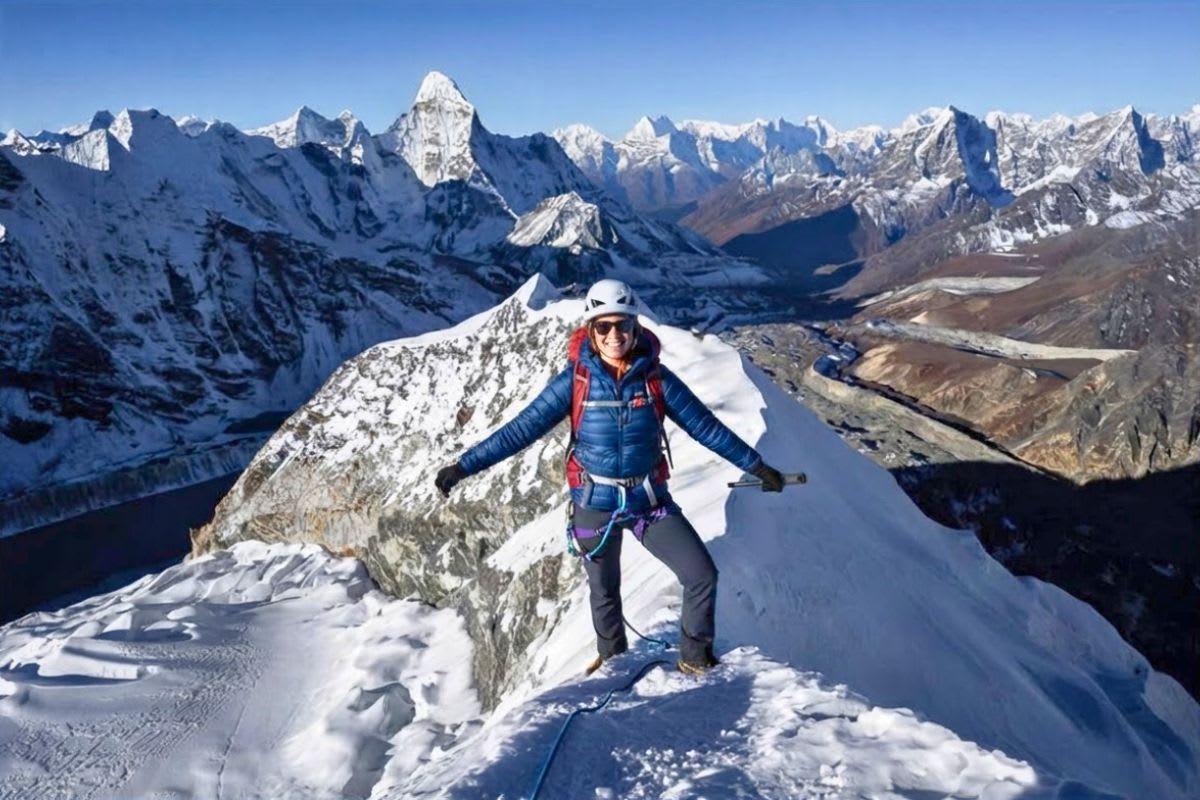
Peak climbing needs mountaineering cover that trekking policies specifically exclude, because any activity using ropes, ice axes, and crampons falls outside standard trekking terms. The Island Peak climb at 6,189 m requires a policy that covers mountaineering to at least 6,500 m with helicopter evacuation, not the trekking cover that suffices for Everest Base Camp. Dedicated expedition insurers and rescue memberships offer this tier; general travel insurers usually do not.
The distinction is legal, not marketing: a claim for a roped-climbing accident on a trekking policy is refused on the activity exclusion alone, regardless of altitude. Climbers should confirm both the altitude ceiling and the roped-activity inclusion in writing, and our office can advise on providers that cover NMA trekking peaks.
What should a policy actually cost, and what documents does departure require?
Adequate cover for a standard trekking route, 5,500-6,000 m ceiling, direct billing, 30-day duration, typically runs USD 80 to 150 depending on age and provider; mountaineering-tier cover for a climbing peak runs USD 150 to 300 for the same duration because of the roped-activity and higher-altitude terms. A policy priced well below these ranges is worth reading closely, since the saving usually comes from a lower altitude ceiling, a lower evacuation cap, or a reimbursement structure rather than genuinely cheaper equivalent cover.
Before departure, our office asks every client for three things: the insurer's name and policy number, the 24-hour emergency contact number printed on the policy, and written confirmation of the altitude ceiling if it isn't obvious from the certificate. We hold this on file for the whole trip specifically so a guide can start a rescue call within minutes rather than searching for a client's policy details while they're the one needing evacuation.
What actually happens during a real evacuation?
A guide who suspects a client needs evacuation calls our office and the insurer's emergency line simultaneously, since authorization speed is what determines how fast a helicopter actually lifts. A direct-billing policy with the ceiling and roped-activity terms already confirmed authorizes in minutes; a policy with any ambiguity in its wording can delay a flight by hours while the insurer's desk verifies cover, which is the exact scenario the altitude-ceiling and exclusion checks above exist to prevent.
Once airborne, the helicopter takes the patient to a Kathmandu hospital equipped for altitude illness and trauma, not the nearest lodge, and our office coordinates with family or emergency contacts from that point. All four of our coordinated evacuations followed this sequence, and in each case the deciding factor in how quickly the flight left was whether the policy's cover had already been confirmed in writing before the trip started, not anything that happened on the mountain itself.
FAQ
Common questions
Do I need special insurance for trekking in Nepal?+
Yes, you need travel insurance that explicitly covers trekking to your route's maximum altitude with helicopter evacuation, because standard policies often cap adventure cover at 4,000 m or exclude it. A rescue from the Khumbu costs USD 2,000 to 6,000, so a policy with a low evacuation cap is effectively no cover. Confirm the altitude ceiling in the certificate wording before you fly.
How much does a helicopter rescue in Nepal cost?+
A helicopter evacuation from the Nepal high country costs USD 2,000 to 6,000, with rescues from the upper Khumbu at the higher end because of altitude and fuel-stop logistics. This covers the flight only; Kathmandu hospital treatment is separate and needs its own medical cover. These figures match our four coordinated evacuations above 5,000 m.
Does my trekking insurance cover peak climbing?+
Almost never: trekking policies specifically exclude activities using ropes, ice axes, and crampons, so a climb like Island Peak needs dedicated mountaineering cover to at least 6,500 m. A claim for a roped-climbing accident on a trekking policy is refused on the activity exclusion regardless of altitude. Climbers must confirm both the altitude ceiling and roped-activity inclusion in writing.
What is the difference between direct billing and reimbursement?+
Direct-billing insurers pay the helicopter operator directly on authorization, so you are not out of pocket, while reimbursement insurers require you to pay first and claim back later. In Nepal, helicopter companies increasingly want a guarantee before lifting, so direct billing or a rescue membership removes friction during a rescue. Confirm which your policy uses and give our office the policy number before departure.