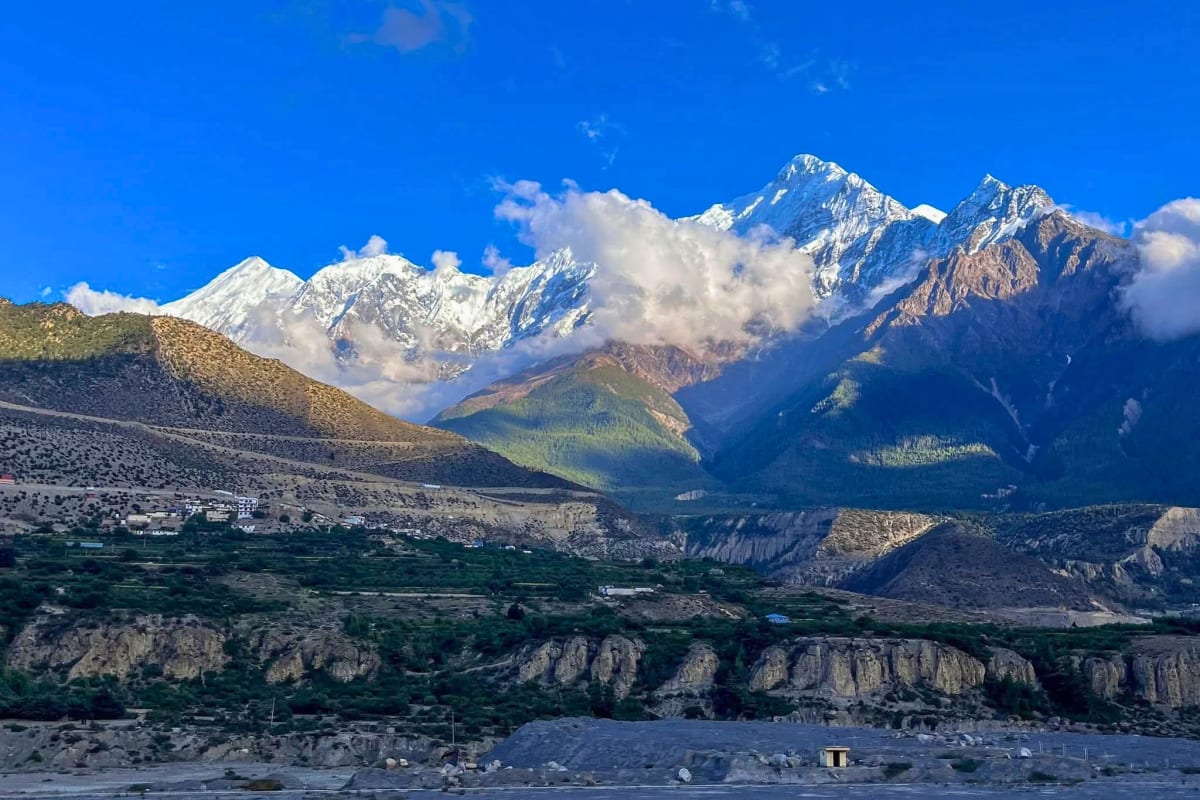
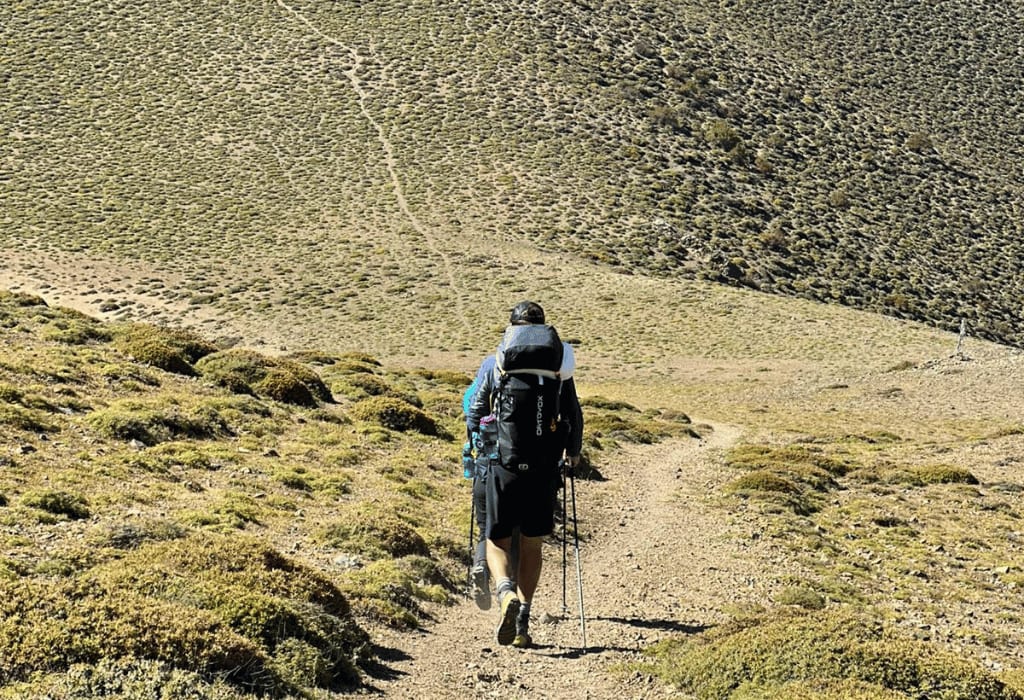
The Annapurna Circuit and the Manaslu Circuit are Nepal's two classic Himalayan circuit treks, each crossing a high pass on a teahouse trail, differing chiefly in permit system, altitude, and how many other trekkers share the route. The Annapurna Circuit climbs to 5,416 m at the Thorong La over 14 days for USD 1,100 to 1,600 in 2026, needing only the Annapurna Conservation Area Permit and a TIMS card. The Manaslu Circuit climbs to 5,106 m at the Larkya La over 14 days for USD 1,250 to 1,750, and it adds a restricted-area permit priced at USD 75 to 100 per person per week on top of two conservation area entries. Mingma Tendi Sherpa, who leads Annapurna Circuit departures and Manaslu Circuit departures, wrote this comparison from both permit desks and both trails.
The sections below compare permit cost and mechanics, altitude and difficulty, and crowding, then give a direct recommendation by traveller type.
In this guide 8
- 01 How do the two circuits compare at a glance?
- 02 Which permit system costs more and takes more planning?
- 03 Which pass is higher, and which trek is harder?
- 04 Which trek is quieter?
- 05 How does teahouse quality compare between the two routes?
- 06 Our recommendation
- 07 Does the best season differ between the two routes?
- 08 Which suits a first-time high-altitude pass crosser better?
How do the two circuits compare at a glance?
Full attribute-by-attribute detail sits on the Annapurna Circuit and Manaslu Circuit trip pages; the table below summarizes the difference.
| Annapurna Circuit | Manaslu Circuit | |
|---|---|---|
| Duration | 14 days | 14 days |
| Max altitude | 5,416 m (Thorong La) | 5,106 m (Larkya La) |
| Permits | ACAP + TIMS, about USD 38 total | Restricted permit USD 75-100/week + MCAP + ACAP |
| Minimum group | None fixed; licensed guide required | 2 trekkers + licensed guide, mandatory |
| Group cost (2026) | USD 1,100-1,600 | USD 1,250-1,750 |
| Crowding | Busier; the established classic | Quieter; restricted status limits traffic |
Which permit system costs more and takes more planning?
Manaslu's restricted-area permit is the bigger commitment of the two. It costs USD 100 per person per week from September to November and USD 75 per week from December to August, filed only through a registered agency, and it can only be filed through a registered agency with a licensed guide, though since March 2026 it no longer requires a second trekker. The Annapurna Circuit needs only the Annapurna Conservation Area Permit (NPR 3,000) and a TIMS card (NPR 2,000), a combined NPR 5,000, about USD 38, issued over the counter in Kathmandu or Pokhara.
That gap adds roughly USD 150 to 250 to a Manaslu departure before guide or lodging costs enter the picture. Full mechanics for both sit in the Manaslu restricted-area permit requirements guide and the Nepal trekking permits master guide.
Which pass is higher, and which trek is harder?
The Thorong La tops out 310 m higher than Manaslu's Larkya La, 5,416 m against 5,106 m, and both are single hard pass days that follow two prior acclimatization nights. Manaslu's difficulty comes less from altitude and more from terrain and duration: the route covers 177 km with 7,100 m of cumulative ascent against the Circuit's 160 km and 6,200 m, and its Budhi Gandaki gorge includes exposed staircase sections the Circuit's road-shortened lower half no longer has. Both grade strenuous, and neither demands technical climbing skill.
Acclimatization structure differs too: the Annapurna Circuit rests two nights at Manang (3,540 m), while the Manaslu Circuit holds separate rest days at Sama Gaun (3,530 m) and Samdo (3,875 m) before the Dharamsala high camp. Pacing and prevention for either crossing are covered in the altitude sickness prevention guide.
Which trek is quieter?
Manaslu carries far fewer trekkers than the Annapurna Circuit, one of Nepal's original teahouse classics that draws a correspondingly bigger crowd at Manang and Thorong Phedi in October. Manaslu's restricted status and its permit cost filter out casual bookings, so a Sama Gaun or Dharamsala teahouse rarely fills the way its Annapurna equivalent does even in peak season. The jeep road that now reaches Manang has also made the Circuit's lower half a busier, vehicle-shared trail, a change Manaslu's roadless gorge has not seen.
Solitude on the Manaslu Circuit comes at the direct cost of the restricted permit, so the two routes are really a trade between money and crowding.
How does teahouse quality compare between the two routes?
The Annapurna Circuit's lower half now runs alongside a jeep road, and the lodges that grew up to serve that traffic offer more variety, hot showers on demand, and wider menus than a decade ago, a direct byproduct of the same road that also brought vehicle noise and dust to sections of trail. Manaslu's teahouses have expanded steadily too, but rooms are generally simpler, menus shorter, and hot showers less reliably available past Sama Gaun, since the restricted-area status has kept the lower-traffic economics from supporting the same pace of lodge investment.
Neither route requires camping equipment, and both offer solid, if basic, accommodation at every overnight stop; the difference is closer to "developed teahouse trek" versus "teahouse trek still catching up to its own permit-driven demand" than to any real comfort gap.
Our recommendation
Choose the Manaslu Circuit if solitude matters more than budget: its restricted permit and minimum-group rule filter out casual traffic, and the reward is a quieter trail with a wilder, less developed character. Choose the Annapurna Circuit if you want the established, cheaper, more road-accessible route, with simpler permit paperwork and the Thorong La's higher pass as the trek's singular achievement. First-time Nepal trekkers on a tighter budget consistently choose Annapurna; those returning for a second high-pass circuit, or who specifically want fewer other trekkers on the trail, choose Manaslu and budget the extra USD 150 to 250 the restricted permit adds.
Does the best season differ between the two routes?
Both circuits share the same two peak windows, March-to-May and September-to-November, since both cross a high pass that needs the same stable weather. The gap shows up inside those windows rather than between them: Manaslu's restricted permit pricing steps up in the September-to-November tier specifically, USD 100 a week against USD 75 the rest of the year, so a Manaslu booking timed for the shoulder edges of autumn or a spring departure carries a real cost saving the Annapurna Circuit's flat permit fee doesn't offer.
| Consideration | Annapurna Circuit | Manaslu Circuit |
|---|---|---|
| Permit cost swings by season | No, flat NPR 5,000 year-round | Yes, USD 100/week Sep-Nov vs USD 75/week rest of year |
| Winter viability | Thorong La can close with heavy snow | Larkya La similarly weather-dependent |
| Best value window | October-November, accepting crowds | March-April or early December, avoiding the autumn permit premium |
Which suits a first-time high-altitude pass crosser better?
The Annapurna Circuit is the gentler introduction to a high-pass crossing for a genuinely first-timer: its bigger trekker volume means more teahouse capacity, more porters and guides on the trail generally if something goes wrong, and a jeep-road lower section that offers an easier bail-out option than Manaslu's roadless gorge does. Manaslu's restricted-area guide requirement means a first-timer is never crossing the Larkya La without a licensed guide either, but the practical margin for error, lodge capacity, other groups nearby, rescue infrastructure density, still favors the busier Annapurna route.
Trekkers who've already crossed one Himalayan high pass and want a quieter second circuit are the ideal Manaslu candidate; a genuine first-time high-pass trekker is usually better served starting on Annapurna and returning for Manaslu once they know how their own body handles a 5,000-plus-metre crossing.
FAQ
Common questions
Is the Manaslu Circuit harder than the Annapurna Circuit?+
Manaslu is slightly harder on cumulative terms despite its lower pass: it covers 177 km with 7,100 m of ascent against the Circuit's 160 km and 6,200 m, and its gorge trail has rougher, more exposed sections than the Circuit's road-shortened lower half. The Annapurna Circuit's Thorong La is the higher single pass at 5,416 m against 5,106 m. Neither trek requires technical climbing skill.
Can I trek either circuit solo?+
No, not unguided, though a solo trekker can now do either. The Annapurna Circuit requires a licensed guide under the 2023 TIMS rule, and the Manaslu Circuit requires a licensed guide and a registered-agency booking under its restricted-area rules; since March 2026 neither route requires a second trekker. Both are covered in the solo trekking guide requirement guide.
Which trek has better mountain views?+
Manaslu gives closer, more sustained views of an 8,000 m peak, since the route circles Manaslu itself (8,163 m) for days. The Annapurna Circuit trades that proximity for range and variety, crossing from the Marsyangdi valley's forest into the arid Kali Gandaki gorge with views of Annapurna II, Gangapurna, and Dhaulagiri along the way. Both deliver genuine high-Himalayan scale.
Which route has better teahouses?+
The Annapurna Circuit's lower half now runs alongside a jeep road, and its lodges offer more variety and reliable hot showers as a result. Manaslu's teahouses are simpler and shorter on menu options past Sama Gaun, a direct effect of the restricted permit keeping visitor numbers, and lodge investment, lower. Both are genuine teahouse treks; neither needs camping gear.