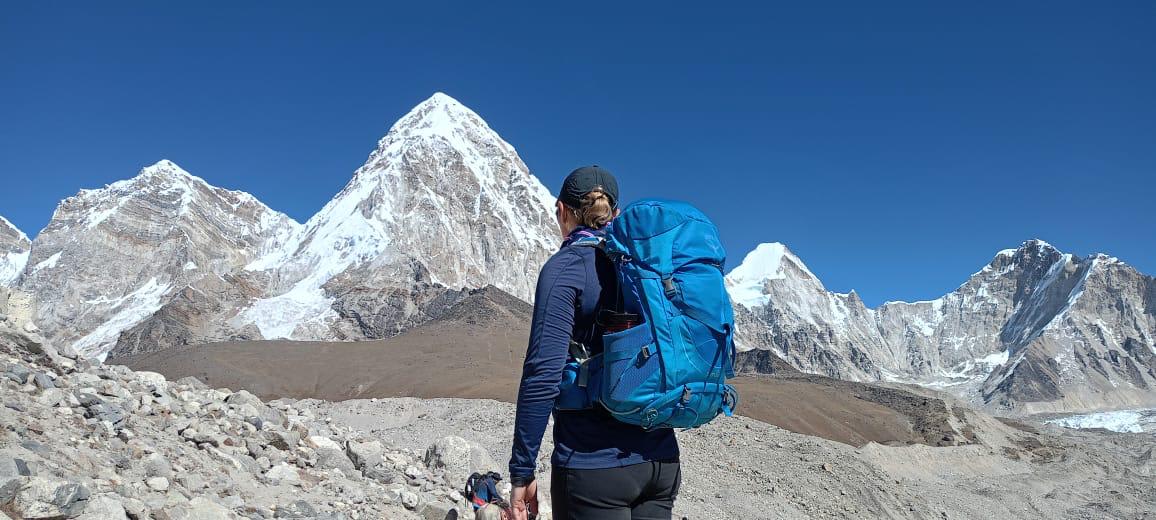
The Gokyo Lakes Trek and the Everest Three Passes Trek share the same Khumbu valley, but Gokyo is a 12-day lake-focused route with no technical pass while Three Passes is an 18-day circuit that adds Everest Base Camp and three passes above 5,300 m, including the Gokyo valley itself. Gokyo climbs to 5,357 m at Gokyo Ri for USD 1,150 to 1,650 in 2026; Three Passes climbs to 5,545 m at Kala Patthar, crossing the Kongma La (5,535 m), Cho La (5,420 m), and Renjo La (5,360 m), for USD 1,900 to 2,600. Passang Dawa Sherpa, who leads Gokyo departures and Three Passes crossings, wrote this comparison from both routes.
The sections below explain what actually differs between the two, how much harder Three Passes is, and how much more it costs, then give a direct recommendation by experience level and time budget.
In this guide 8
- 01 How do the two routes compare at a glance?
- 02 What's actually different about the two routes?
- 03 How much harder is the Three Passes?
- 04 How much more does the Three Passes cost, and is it worth it?
- 05 How should you train differently for Three Passes?
- 06 Our recommendation
- 07 How does teahouse capacity and booking lead time differ?
- 08 Which is the better choice for a second Everest-region trip?
How do the two routes compare at a glance?
| Gokyo Lakes | Three Passes | |
|---|---|---|
| Duration | 12 days | 18 days |
| Max altitude | 5,357 m (Gokyo Ri) | 5,545 m (Kala Patthar); 3 passes to 5,535 m |
| Passes crossed | None | Kongma La, Cho La, Renjo La |
| Includes | Gokyo valley only | Gokyo valley + Everest Base Camp + 3 passes |
| Group cost (2026) | USD 1,150-1,650 | USD 1,900-2,600 |
| Experience needed | None beyond general trek fitness | Prior nights above 4,500 m expected |
What's actually different about the two routes?
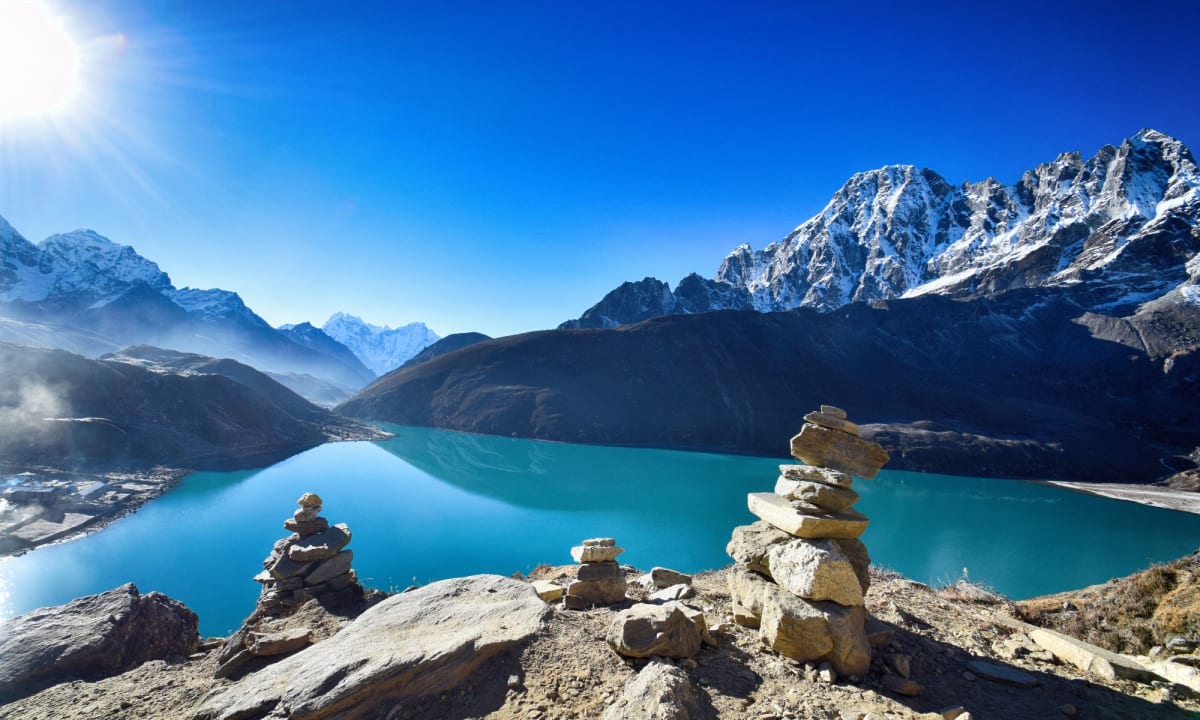
Three Passes is, in practical terms, Gokyo plus Everest Base Camp plus three technical passes, not a separate route so much as a fuller circuit that absorbs Gokyo's own itinerary inside it. Both treks share the first six days through Namche Bazaar, Tengboche, and Dingboche, and both visit the turquoise lakes and climb Gokyo Ri at 5,357 m for the same panorama of Everest, Lhotse, Makalu, and Cho Oyu. Where Gokyo turns back toward Lukla from the lakes, Three Passes continues over the Renjo La, back through the Khumbu to Chhukung, over the Kongma La to Lobuche, and on to Everest Base Camp and Kala Patthar before finishing over the Cho La.
Trekkers who want the lakes and nothing more should not confuse the two: Gokyo's 12 days give none of the base camp or Kongma La and Cho La sections that make up more than a third of the Three Passes itinerary.
How much harder is the Three Passes?
Three Passes crosses three cols above 5,300 m on largely consecutive days, a compounding fatigue and altitude load that Gokyo, with its single 5,357 m viewpoint climb, never approaches. We ask Three Passes clients for prior nights above 4,500 m before booking, a requirement Gokyo does not carry, because a first-timer's altitude response is unknown and the wrong place to discover it is at 5,535 m on the Kongma La. The Cho La adds a short glacier crossing where microspikes and a rope come out from October through May, a technical element with no equivalent anywhere on the Gokyo itinerary.
Fitness benchmarks scale with the gap: Gokyo's 92 km and 4,980 m of ascent are demanding but achievable for a fit first-time trekker, while Three Passes' 166 km and 9,800 m of ascent sit closer to the hardest standard treks we run. Altitude planning for either route follows the guidance in the altitude sickness prevention guide.
How much more does the Three Passes cost, and is it worth it?
Three Passes costs USD 1,900 to 2,600 against Gokyo's USD 1,150 to 1,650, a gap driven almost entirely by six extra days of guide and porter wages plus the microspikes and rope carried for the Cho La. Both treks share the identical Lukla flight cost, so duration and technical gear, not permits, account for the difference. For trekkers who have the extra week and the required altitude experience, the added cost buys the full Khumbu circuit rather than one section of it.
How should you train differently for Three Passes?
Three Passes asks for a longer, more altitude-specific preparation window than Gokyo, since three consecutive high-pass days compound fatigue in a way a single Gokyo Ri climb does not. We recommend building toward multiple back-to-back long days on rough terrain rather than isolated hard hikes, since the trek's real test is sustaining output on day 12 as much as day 2. Gokyo's preparation is closer to standard trek fitness: cardio base and some multi-day hiking experience covers most first-timers without a specialized altitude block beforehand.
Porter and logistics support also scales with the route: Three Passes typically travels with a slightly larger support team given the longer duration and the technical gear carried for the Cho La, while Gokyo runs with the standard staffing ratio used across the Khumbu's other teahouse treks. Neither route requires a dedicated climbing guide beyond the standard trekking guide, since neither the Kongma La, Cho La, nor Renjo La demands anything past the roped, microspike-assisted crossing our guides handle directly.
Our recommendation
Choose the Gokyo Lakes Trek if you have two weeks or less and want the turquoise lakes and Gokyo Ri panorama without committing to a technical pass or Everest Base Camp itself. Choose the Everest Three Passes Trek if you have three weeks, prior nights above 4,500 m, and want the complete Khumbu circuit in one trip. Time-limited trekkers on a first Everest-region visit consistently choose Gokyo; experienced trekkers who have already done EBC or Gokyo separately, and want everything in one itinerary, choose Three Passes.
How does teahouse capacity and booking lead time differ?
Gokyo's lakeside villages, Machhermo and Gokyo itself, carry adequate teahouse capacity for the trek's steady but lighter traffic, and a departure booked four to six weeks out typically confirms without difficulty outside the absolute October peak. Three Passes puts more pressure on a narrower set of lodges, since Lobuche, Dzongla, and the Chhukung side both see Three Passes trekkers converging with standalone EBC traffic on the same nights, and the trek's remote Kongma La and Cho La approach villages have fewer beds to begin with than the busier main trail. Booking a Three Passes departure eight to ten weeks ahead is the safer margin, especially for an October or April start.
This capacity difference is also why our guides build slightly more schedule flexibility into a Three Passes itinerary, since a single closed lodge at Dzongla or a stormbound Cho La crossing has fewer alternate routing options than the same disruption would on Gokyo's simpler out-and-back structure.
Which is the better choice for a second Everest-region trip?
For a trekker who has already done Everest Base Camp on a prior visit, Gokyo makes a genuinely fresh second trip: different valley, different lakes, the same Gokyo Ri summit view from a different angle, without repeating ground already covered. Three Passes suits a returning trekker differently, since it re-covers the EBC approach as one section of a longer circuit rather than skipping it, so a trekker who specifically wants to avoid retreading the standard EBC trail on a second visit is better served choosing Gokyo alone over the full Three Passes circuit.
Trekkers building toward a specific long-term goal, an NMA climbing peak or a multi-week Everest region season, tend to treat Three Passes as the capstone trek that ties Gokyo, Base Camp, and the connecting high country into one continuous route, which is the strongest single case for choosing it over doing Gokyo and EBC as two separate, shorter trips.
FAQ
Common questions
Does the Three Passes trek include Gokyo Lakes?+
Yes, the Three Passes itinerary crosses the Renjo La into the Gokyo valley, visits the same turquoise lakes, and climbs Gokyo Ri (5,357 m) as part of its 18-day circuit, alongside Everest Base Camp and two further passes. A trekker who does Three Passes sees everything the standalone Gokyo trek offers, plus more.
Do I need prior high-altitude experience for the Three Passes?+
We ask for prior nights above 4,500 m, ideally on a Nepal or comparable high trek, before booking Three Passes, because the trek crosses three cols above 5,300 m on largely consecutive days. Gokyo carries no such requirement and suits a strong first-time trekker, since its single high point at Gokyo Ri (5,357 m) is a there-and-back day hike rather than a sustained multi-day crossing sequence.
Which trek has better views?+
Both reach the same Gokyo Ri panorama of Everest, Lhotse, Makalu, and Cho Oyu, so neither trek is short on views. Three Passes adds the close-up Khumbu Icefall view from Everest Base Camp and the sunrise summit view from Kala Patthar, which Gokyo alone does not include.
Do I need extra gear for the Three Passes that Gokyo doesn't require?+
Yes. The Cho La's short glacier crossing needs microspikes and a fixed rope, carried by the crew from October through May, plus a slightly heavier cold-weather layer for the pass mornings. Gokyo's itinerary needs nothing beyond the standard teahouse-trek kit covered in the Nepal trekking packing list.