Nepal Travel Packages
Gokyo Lakes Trek

Gokyo Lakes Trek

★★★★★ 4.8 (126 reviews)
Everest, Nepal 12-14 days Moderate-Strenuous Max 5,357 m
Duration
12-14 days
Max altitude
5,357 m
Difficulty
Moderate-Strenuous
Group size
Up to 12
Total distance
~92 km
Elevation gain
4,980 m
Best season
March to May, October to early December
Avg daily walk
4-6 hours
Starts in
Lukla (2,860 m)
Ends in
Lukla (2,860 m)
Accommodation
Teahouse lodges throughout
✓ TAAN & NMA licensed guides ✓ Permits included, no hidden fees ✓ Small group departures
Group departure · per person
USD1,350
Permits, guide, porter, lodging & food included
Departure date
Email Nepal
Permits and logistics fully arranged
Licensed guide included on every departure
Direct WhatsApp line to your guide

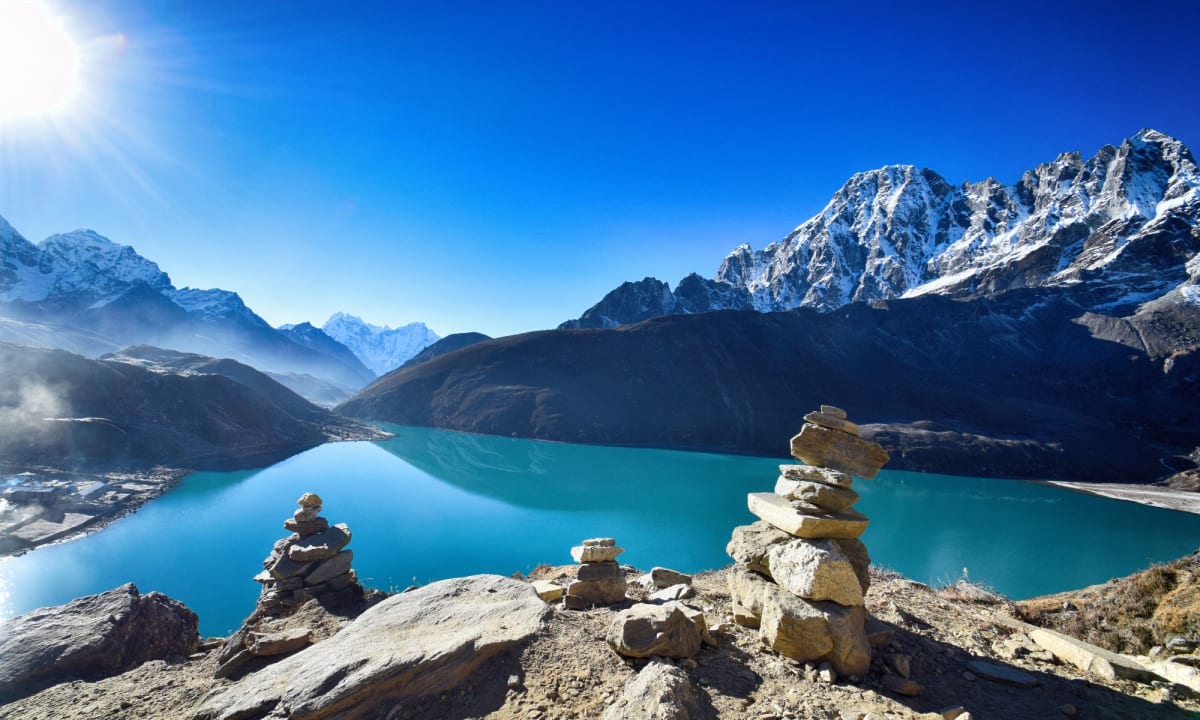
The Gokyo Lakes Trek is a 12 to 14 day teahouse trek in Nepal's Khumbu region that climbs Gokyo Ri at 5,357 m above a chain of six turquoise glacial lakes on the edge of the Ngozumpa Glacier, the longest glacier in the Nepal Himalaya. A 2026 group departure costs USD 1,150 to 1,650 per person including the Khumbu Pasang Lhamu Rural Municipality permit (NPR 2,000) and Sagarmatha National Park entry (NPR 3,000). The route shares its first three days with the Everest Base Camp trail, then turns northwest above Sanasa into the Gokyo valley, where Sagarmatha National Park entry counts from October 2025 recorded roughly one trekker for every five on the base camp trail.

Passang Dawa Sherpa, who carried loads on this trail as a 16-year-old porter and has led 29 Gokyo departures since 2009, wrote this page and updates its trail conditions monthly in season. The sections below cover the two-permit paperwork, a cost breakdown against the USD 1,150 to 1,650 range, lake freeze dates by month, the Ngozumpa glacier crossing conditions that decide whether a Cho La link is on, and the Fifth Lake day that most itineraries skip.

Highlights

What our guides know that others don't.

1

Ngozumpa glacier crossing conditions

45-90 min Gokyo-Dragnag crossing, re-cairned each season as melt ponds shift

2

Fifth Lake day logistics

14 km round trip past Thonak Tsho, no lodges or water beyond Gokyo, noon turnaround

Live from the trail

Updated 2 Jul 2026

Monsoon status: valley quiet, lakes at full melt color

Monsoon rain is falling daily below Dole and the Phakding to Monjo section is leech-active. The lakes are ice-free and at their summer color, but afternoon cloud has covered Cho Oyu by 11 am on most days this fortnight. Two Gokyo lodges remain open through the low season; the Ngozumpa crossing cairns will be re-set in late September as usual. Next scheduled departure: October 4.

What permits does the Gokyo Lakes Trek require in 2026?

Two permits cover the entire Gokyo route in 2026: the Khumbu Pasang Lhamu Rural Municipality permit at NPR 2,000 (about USD 15) and the Sagarmatha National Park entry at NPR 3,000 (about USD 23). The paperwork is identical to the base camp trail because both routes sit inside the same park and municipality; no separate Gokyo permit exists. The municipality permit is issued only in Lukla or at the Monjo checkpoint, while the park ticket can be bought in advance at the Nepal Tourism Board office in Kathmandu.

Both documents are checked at Monjo on the walk in, and rangers at the Dole trail junction spot-check them again in high season. Photographs, payment currency, and checkpoint details match the base camp route and are covered in the full Everest Base Camp permit costs guide. Solo trekkers should read the Khumbu-specific rules in our solo trekking guide requirement page before booking flights.

How much does the Gokyo Lakes Trek cost in 2026?

TAAN-registered operators quoted USD 1,150 to 1,650 for a 12-day group Gokyo departure in spring 2026; private departures ran USD 1,450 to 2,000. Our group price sits inside that range, and the table below shows the line items. Quotes under USD 1,000 usually cut the porter or skip the Machhermo night that keeps the ascent profile safe, while quotes above USD 2,200 are funding a Kathmandu hotel upgrade rather than anything on the trail.

The Lukla flight at USD 360 to 440 round trip is the largest single line, the same fixed fare band as the base camp route. Gokyo's lodge economics run slightly cheaper than Gorak Shep's: a room at the lakeside lodges costs NPR 800 to 1,200 against NPR 1,500 at Gorak Shep, and dal bhat tops out near NPR 1,100. Water strategy still matters, since the municipality's plastic rules ban bottled water sales above Namche and purification tablets cover the whole route for about USD 15.

Guide and porter wages follow the same TAAN 2026 recommended rates as every route in the Khumbu, USD 35 to 40 and USD 25 per day respectively, and a Gokyo guide's fee buys the same standing lodge relationships that matter on the base camp trail, just with less competition for rooms. A private departure at the USD 1,450-2,000 tier runs on its own schedule with a dedicated guide rather than a fixed group date, the same private-versus-group tradeoff covered on the Everest Base Camp Trek page.

Where the price goes · per person
Permits (Khumbu municipality + Sagarmatha NP)NPR 5,000 total at 2026 rates$38
Kathmandu/Ramechhap-Lukla flights, round tripFixed USD fare band for foreign nationals$360–440
Licensed guide (shared in group)USD 35-40/day including guide's food, lodging, insurance$280–400
Porter, one per two trekkersUSD 25/day, 20 kg shared load limit$200–260
Teahouse room, 11 nightsNPR 500-1,200/night, highest at Gokyo's lakeside lodges$55–115
Food and drinking waterDal bhat NPR 600-1,100; bottled water banned above Namche$250–380
Company margin, logistics, staff equipment$110–230

When is the best time to see the Gokyo lakes turquoise?

October to early December and March to May are the two windows we run scheduled Gokyo departures, and the lake color drives the choice more than temperature. Dudh Pokhari, the third lake at Gokyo village, holds its deepest turquoise from late September until the surface freezes in mid-December, and the frozen white phase lasts until late March. Our January and February departures still summit Gokyo Ri in clear air, but clients photograph ice sheets rather than blue water, a trade we state plainly at booking.

Monsoon months from June to mid-September bring daily rain below 4,000 m and afternoon cloud that swallows the Cho Oyu skyline, so we route those enquiries to rain-shadow treks during monsoon instead. Winter logistics, including which Gokyo lodges stay open through February, sit in our trekking Nepal in winter guide; two lakeside lodges kept rooms available all last winter.

Flight terminal choice tracks the season here exactly as it does on the base camp trail: Ramechhap (Manthali), a 4 to 5 hour drive from Kathmandu, carries most Lukla traffic in the October and spring high seasons, while winter departures with lower passenger volume generally fly from Kathmandu directly. Both airports share the same single-window morning schedule, since afternoon cloud closes the Khumbu valley's visual approach on every route in the region; full flight reliability data by month is in our Lukla flight guide.

How difficult is the Gokyo Lakes Trek?

Moderate-strenuous is our grading: 92 km round trip, 4,980 m of cumulative ascent, walking days of 4 to 6 hours, and 8 nights above 3,400 m. The trail is a maintained yak path with no scrambling, and daily hours run shorter than the base camp route. The two hard efforts are the 800 m Namche hill on day 2 and the Gokyo Ri climb itself, 607 m of switchbacks from the village that takes 2 to 3 hours pre-dawn.

Altitude is the route's real filter, and one stage needs honesty: the Namche to Dole day gains 598 m of sleeping altitude, the only day on this itinerary that exceeds the Himalayan Rescue Association's 500 m guideline above 3,000 m. We manage it with a slow 6-hour pace over Mong La and oxygen saturation checks at dinner in Dole. The IPPG rescue post at Machhermo (4,470 m) runs a free 3 pm altitude talk in season that we build into day 5; symptoms and our descent protocols are in the altitude sickness prevention guide.

Our guides score symptoms twice daily above 4,000 m using the Lake Louise scale, rating headache, gastrointestinal upset, fatigue, and dizziness from 0 to 3 each; a score of 6 or higher means descent, full stop. The two emergency forms we train for are HAPE (fluid in the lungs, breathlessness at rest, a wet cough) and HACE (fluid on the brain, confusion, a stumbling gait), and both are treated the same way regardless of cause: immediate descent, oxygen if available, evacuation. The Namche-to-Dole day is exactly the kind of stage where a rushed pace turns a manageable symptom into a serious one, which is why we hold it to 6 hours even when a fitter group could move faster.
What are the Ngozumpa glacier crossing conditions?

The Ngozumpa Glacier is a 36 km debris-covered glacier flowing south from Cho Oyu, and the 45 to 90 minute crossing between Gokyo and Dragnag is the route's one section that changes every season. Melt ponds open, drain, and collapse their banks each summer, so the crossing line is re-cairned every October by lodge staff from both sides; the line mapped in a 2024 guidebook no longer exists on the ground. On our May 2026 departure the crossing took 55 minutes on a stable line, but the first week after a snowfall the cairns disappear and route-finding without a guide who has crossed that season becomes genuinely risky.

Trekkers linking Gokyo to the Cho La (5,420 m) and the base camp trail cross here on the morning they leave Gokyo, which is why we check conditions with Dragnag lodge owners the evening before. The crossing itself involves no ice contact, only moraine rubble and short 20 m climbs in and out of hollows, and microspikes are unnecessary in any month. Anyone planning the full link should read the Cho La notes on our Three Passes page, since that pass, unlike this crossing, does carry seasonal ice.

Is the Fifth Lake day worth adding at Gokyo?

Thonak Tsho (4,870 m) and Ngozumpa Tsho (4,990 m), the fourth and fifth lakes, sit 14 km round trip north of Gokyo with no lodges, no tea stops, and no reliable water on the trail. The reward is Scoundrel's Viewpoint above the fifth lake, the only spot on this route where Everest, Lhotse, Makalu, and Cho Oyu line up over the full length of the Ngozumpa Glacier; Gokyo Ri shows the same peaks but foreshortens the glacier. The walking is gentle moraine shelf, 6 to 7 hours total, and we grade it easier than the Ri despite the distance.

A noon turnaround at the fifth lake is our fixed rule, because afternoon wind funnels down-valley from Cho Oyu and the return to Gokyo takes 2.5 hours with no shelter. Groups carry 2 liters of water each and packed lunches from the lodge kitchen. Our 14-day itinerary includes this day after Gokyo Ri; the 12-day version makes it an optional swap for the Ri when clients have already climbed a 5,300 m viewpoint elsewhere.

What are teahouses like in the Gokyo valley, and what should you pack?

Gokyo's lakeside lodges price rooms at NPR 800 to 1,200 a night, slightly cheaper than Gorak Shep's peak-season rate on the base camp trail, and the same teahouse economics apply: eat dinner and breakfast on-site and the room rate often drops or disappears entirely. Dole and Machhermo carry more basic rooms lower in that range, while the highest villages, Gokyo itself, sit at the top of it. A four-season sleeping bag rated to at least -15 C comfort matters here as much as on any Khumbu route, since lakeside bedrooms at 4,750 m are unheated even though the dining hall stays warm by stove until around 9 pm.

Connectivity follows the same pattern as the rest of the Khumbu: Everest Link WiFi cards (NPR 600 for 10 GB) reach Dole, Machhermo, and the main Gokyo lodges, while mobile signal fades above Dole and disappears entirely on the Fifth Lake trail. Device charging costs NPR 300 to 500 at Gokyo, where lodges run on solar. Beyond the sleeping bag, the packing priorities are sun protection for the open moraine sections around the lakes and trekking poles for the Namche-to-Dole climb and its long return descent; the full checklist is in the Nepal trekking packing list.

Elevation profile High point 5,357 m
3,0003,5004,0004,5002,610 m123454,750 m6789102,860 m11DAY
Acclimatization night High point

Day by Day

12-day itinerary, every detail planned.

Day1
Trip Day
Fly Kathmandu/Ramechhap to Lukla (2,860 m), trek to Phakding
~3h walking8 km
2,610m alt.

The 30-minute mountain flight lands at Tenzing-Hillary Airport by mid-morning in normal conditions, with the Khumbu's peaks visible from the window on a clear day. The first walking day descends 250 m over 8 km along the Dudh Koshi to Phakding, a deliberate warm-up of about 3 hours.

2,610 m8 km~3h
Day2
Trip Day
Phakding to Namche Bazaar (3,440 m)
~6h walking11 km
3,440m alt.
Day3
Acclimatization
Acclimatization day in Namche Bazaar
~4h walking
3,440m alt.
Day4
Trip Day
Namche to Dole (4,038 m) via Mong La
~6h walking11 km
4,038m alt.
Day5
Trip Day
Dole to Machhermo (4,470 m)
~4h walking7 km
4,470m alt.
Day6
High Point
Machhermo to Gokyo (4,750 m) past the first lakes
~5h walking7 km
4,750m alt.

What's Included

Transparent, all-in pricing.

Included in your price

Permits (Khumbu municipality + Sagarmatha NP)
Kathmandu/Ramechhap-Lukla flights, round trip
Licensed guide (shared in group)
Porter, one per two trekkers
Teahouse room, 11 nights
Food and drinking water
Company margin, logistics, staff equipment

Not included

Nepal entry visa fee (USD 30-125, paid on arrival)
Travel insurance with helicopter evacuation cover
Personal trekking gear and equipment
Tips for your guide and porter
Bottled drinks, wifi, and device charging at teahouses
Meals in Kathmandu outside the itinerary

Dates & prices

Upcoming departures.

Start dateEnd datePrice / personAvailability
4 Oct 202615 Oct 2026USD 1,350Guaranteed · 4 leftEnquire
18 Oct 202629 Oct 2026USD 1,350Open · 7 leftEnquire
1 Nov 202612 Nov 2026USD 1,250Open · 9 leftEnquire
7 Mar 202718 Mar 2027USD 1,300Open · 8 leftEnquire
11 Apr 202722 Apr 2027USD 1,300Open · 9 leftEnquire

Verified reviews

What travellers say.

4.8/5 from 126 reviews on TripAdvisor, checked July 2026

★★★★★

Gokyo Ri at sunrise was the single best view of three Nepal trips, and the Fifth Lake day was even better because we saw four other people all day. Pemba slowed the Namche to Dole stage right down and checked our oxygen at dinner, which my partner needed. The Machhermo altitude talk is worth planning around.

EF
Elena Fischer · Germany
26 Apr 2026
★★★★

Mid-March meant the third lake was still half frozen and the nights at Gokyo were properly cold, which the team had warned me about twice before I booked. Trail was near empty, lodges relaxed, summit morning clear. Four stars only because I would pick late April next time for the water color.

JW
James Whitford · Australia
15 Mar 2026

Why Nepal Travel Packages

Built on published proof, not adjectives.

A named, licensed guide before you book

Full name, photo, NMA or TAAN license number, and a direct WhatsApp line. The guide on the page is the guide on the trail.

Itemized pricing, not a lump sum

Permits, guide, porter, lodging, and food broken out on every trip page. You see exactly where the price comes from.

Trail conditions updated monthly

Dated field reports from the guides running the route this season, not boilerplate written once and left to go stale.

Permits handled, not hidden

Every permit fee, checkpoint, and paperwork rule is filed for you and published in the guides — no surprise admin at Lukla.

FAQ

Common questions

Is the Gokyo Lakes Trek harder than Everest Base Camp?+

The two routes grade the same on paper: moderate-strenuous, with Gokyo topping out 7 m lower on Gokyo Ri (5,357 m) than EBC's Kala Patthar (5,545 m) and covering 38 fewer kilometers. Gokyo's one harder feature is the 598 m sleeping-altitude gain from Namche to Dole, which exceeds the 500 m guideline and needs a slow pace. Trekkers who managed a previous 4,000 m trip comfortably handle either route.

Can I combine Gokyo with Everest Base Camp?+

The Cho La (5,420 m) links Gokyo to the base camp trail at Dzongla and adds 4 to 5 days, turning this into a 16 to 17 day circuit. The pass carries seasonal ice on its eastern glacier and the Ngozumpa crossing conditions decide whether the link runs at all after fresh snow. Groups wanting all three passes should look at our Everest Three Passes Trek instead, which includes the Cho La with proper contingency days.

Do I need a guide for the Gokyo Lakes Trek in 2026?+

The Khumbu is governed by its rural municipality rather than TAAN's national guide rule, and solo trekking remained legal there as of the July 2026 update of this page. The Ngozumpa crossing and the un-lodged Fifth Lake day are the two sections where a guide earns the fee in route-finding terms. Rule details are in our solo trekking guide requirement page.

When do the Gokyo lakes freeze?+

Dudh Pokhari at 4,750 m freezes over in mid-December and stays white until late March, with the smaller upper lakes freezing earlier and thawing later. The deepest turquoise runs from late September to early December, which is why October departures book out first. Winter trekkers still get clear summit views from Gokyo Ri and near-empty lodges, covered in our trekking Nepal in winter guide.

Is there phone signal and Wi-Fi in the Gokyo valley?+

Everest Link prepaid Wi-Fi cards (NPR 600 for 10 GB) work in Dole, Machhermo, and the main Gokyo lodges, while NTC 4G fades above Dole and Ncell is unreliable past Namche. Budget NPR 300 to 500 per device charge at Gokyo, where lodges run on solar. There is no connectivity of any kind on the Fifth Lake trail.

What altitude sickness support exists on this route?+

The IPPG rescue post at Machhermo (4,470 m) staffs volunteer doctors in the October-November and March-May seasons and runs a free daily altitude talk at 3 pm. Our guides log client oxygen saturation twice daily from Dole onward and carry a group pulse oximeter and first-aid kit rated for AMS response. Full symptom lists and our descent triggers are in the altitude sickness prevention guide.

What should I pack specifically for Gokyo?+

The same four-season sleeping bag rated to -15 C comfort that every high Khumbu route needs, plus sun protection for the open moraine around the lakes and trekking poles for the Namche-to-Dole climb. Gokyo's lakeside rooms run NPR 800 to 1,200 a night, and WiFi/charging costs match the rest of the Khumbu. The full route-independent checklist is in the Nepal trekking packing list.

How much does WiFi and charging cost in the Gokyo valley?+

Everest Link cards (NPR 600 for 10 GB) reach Dole, Machhermo, and the main Gokyo lodges; mobile signal fades above Dole. Device charging costs NPR 300 to 500 at Gokyo, where lodges run on solar with limited daily storage. There is no connectivity of any kind on the Fifth Lake trail, so download maps and messages before leaving Gokyo that day.

Should I fly from Kathmandu or Ramechhap for the Gokyo trek?+

Ramechhap (Manthali), a 4 to 5 hour drive from Kathmandu, handles most Lukla traffic during the October and spring high seasons; winter departures generally fly from Kathmandu directly as passenger volume drops. Your operator confirms the terminal a day or two before departure once the airline sets the schedule, the same system used on every Everest-region route.

What training should I do before the Gokyo Lakes Trek?+

Build toward hiking 12 to 15 km with 700 to 800 m of cumulative ascent on back-to-back weekend days, carrying a 5 to 6 kg daypack, in the two to three months before departure. The demands are close to Everest Base Camp's, since both routes share similar daily hours and total ascent; stair climbing or hill repeats work when mountains aren't nearby. Fitness prepares you for the walking, not the altitude, which is why the acclimatization schedule above is non-negotiable regardless of conditioning.