
 Written & led by Ramesh Thapa
 Estimated per-person rate for this size — your guide confirms the exact quote.
The Kathmandu Valley Extended Heritage Tour is a 2-day guided tour of all seven of the valley's UNESCO World Heritage monument zones, Kathmandu, Patan, and Bhaktapur Durbar Squares, Swayambhunath, Boudhanath, Pashupatinath, and Changu Narayan, run with a licensed city guide and private vehicle across two consecutive days. A 2026 tour costs USD 90 to 150 per person for a shared small group, or USD 180 to 280 per person for a fully private departure, and both nights are spent back in Kathmandu rather than overnighting in Patan or Bhaktapur. Day one follows the company's standard 1-day Heritage Day Tour route; day two adds the three UNESCO sites that tour doesn't reach.
Ramesh Rai, who coordinates Kathmandu logistics for the company, built this extended version for clients with a genuine two-day buffer around a trek — an arrival day plus a flight-delay contingency day, or no trek at all, just an interest in seeing the full set of the valley's protected heritage sites rather than half of them.
Highlights
What our guides know that others don't.
Full valley coverage
The only package on this site covering all 7 of the valley's UNESCO monument zones in one bookable itinerary, rather than one or the other
Bhaktapur entry fee
The single most expensive site entry on either day, reflecting the Bhaktapur Municipality's own separate ticketing structure from Kathmandu's
In pictures
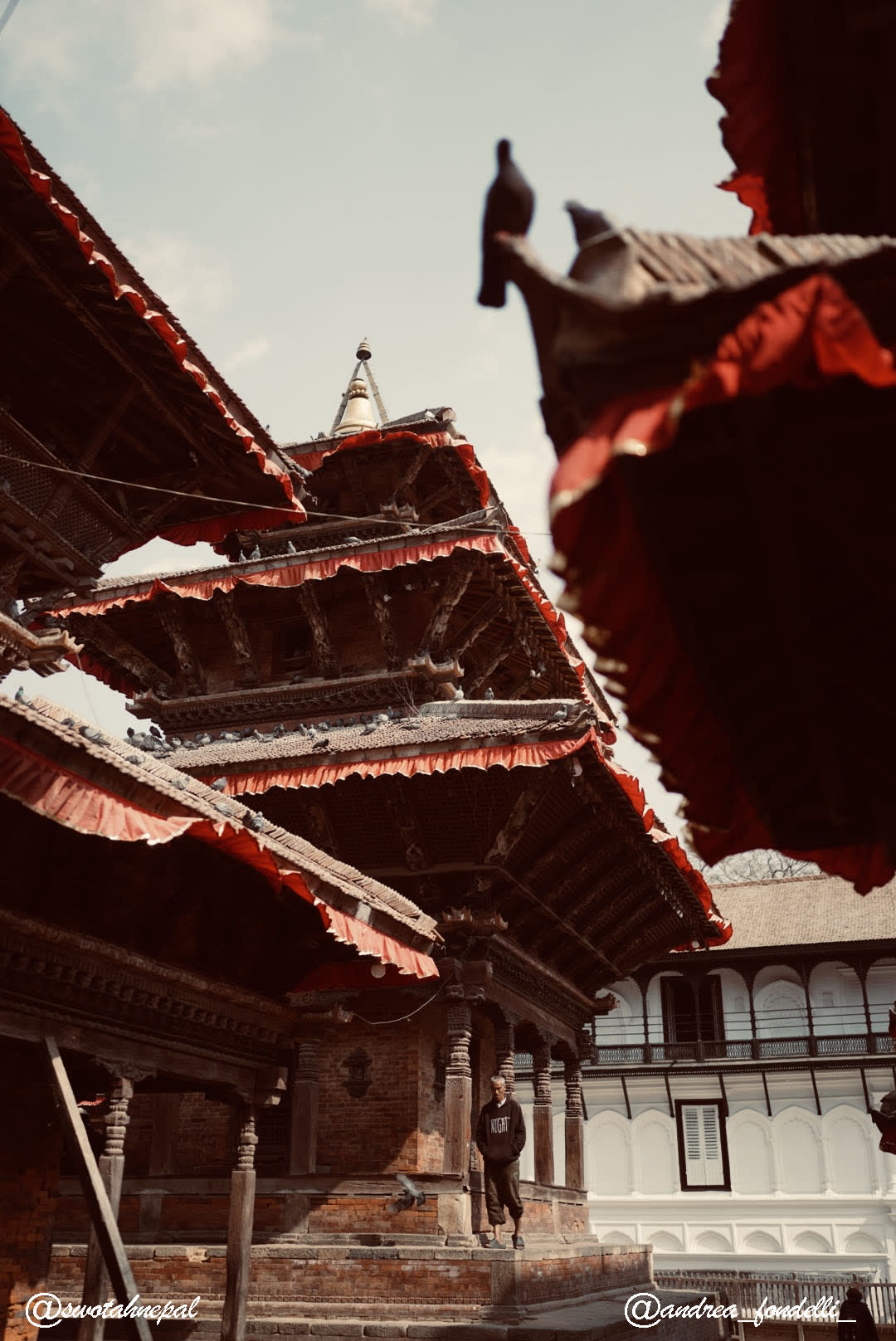
Kathmandu Valley Extended Heritage Tour gallery
What does day two of the Extended Heritage Tour actually add?
Day two adds the three UNESCO monument zones the standard 1-day tour doesn't reach: Patan Durbar Square, Bhaktapur Durbar Square, and the Changu Narayan temple complex, visited in that order across a full second day. These three sites sit east and south of central Kathmandu, close enough together that the day runs as one continuous loop rather than backtracking, starting with Patan just across the Bagmati River and finishing at Changu Narayan's hilltop roughly an hour east of Bhaktapur.
Day one, by contrast, follows the company's own 1-day Heritage Day Tour exactly: Kathmandu Durbar Square in the morning, Swayambhunath at midday, then Boudhanath and Pashupatinath in the afternoon. Clients who've already done the 1-day tour on a prior trip to Nepal can book day two alone as a half-day or full-day add-on, covered further in the FAQs below, rather than repeating day one unnecessarily.
Why is Patan Durbar Square worth a separate visit from Kathmandu's?
Patan Durbar Square, just across the Bagmati River from central Kathmandu, developed as the seat of its own independent Malla kingdom for centuries before the valley's three city-states unified, so its palace and temple complex reflects a distinct royal lineage rather than an extension of Kathmandu's. The square's centerpiece, the Krishna Mandir, is a 17th-century stone temple built entirely without wood, unusual in a valley where timber-and-brick construction dominates, and its carved stone friezes depict scenes from the Mahabharata and Ramayana across its tiers.
Patan is also the valley's living center for Newar bronze-casting and repoussé metalwork, a craft tradition still practiced today in small family-run workshops within a few minutes' walk of the square, where artisans hand-hammer ritual objects and statuary using techniques passed down within specific family lineages across generations. Our guides build in time to visit one of these workshops, which gives day two a hands-on craft dimension day one's palace-and-stupa circuit doesn't include.
The former royal palace complex bordering the square now houses the Patan Museum, widely regarded as the best-curated museum in the Kathmandu Valley, with restored courtyards displaying religious bronze and stone statuary alongside detailed explanations of Newar casting technique, a useful complement to the workshop visit for clients who want the craft's history alongside seeing it practiced. The square's other temples, the octagonal Krishna Mandir aside, include the Bhimsen Temple and the Vishwanath Temple with its pair of stone elephants flanking the entrance, giving Patan the densest concentration of individually distinct temple architecture of any single square in the valley.
What makes Bhaktapur different from Kathmandu and Patan?
Bhaktapur, roughly an hour's drive east of central Kathmandu, is the best-preserved of the valley's three former royal capitals, having escaped the heaviest of Kathmandu's modern urban sprawl and retained more of its Malla-era brick streetscape intact. Its Durbar Square centerpiece is the five-story Nyatapola Temple, built in 1702 and standing as Nepal's tallest pagoda at just over 30 m, guarded by five pairs of stone figures on its staircase that each represent ten times the strength of the pair below.
Beyond the main square, Bhaktapur's Pottery Square gives day two its most tactile stop: potters still throw clay on traditional stick-spun wheels in the open street, drying finished pieces directly on the pavement in the sun, a working craft district rather than a museum display. Bhaktapur charges the highest single entry fee of any site on either day, a separate municipal ticketing structure from Kathmandu's own, reflecting the city's independent heritage-preservation funding model.
The palace complex itself holds two further landmarks our guides cover in sequence: the 55-Window Palace, built under King Bhupatindra Malla in the early 18th century with a carved wooden facade running the length of the building, and the Golden Gate beside it, a gilded copper archway widely regarded as the finest example of repoussé metalwork in the valley and the ceremonial entrance Malla kings once used. Taumadhi Square, a short walk from the main Durbar Square and home to the Nyatapola Temple itself, and Dattatreya Square further east round out a city where heritage architecture extends well beyond a single central plaza, spreading across several distinct neighborhoods rather than concentrating in one place the way Kathmandu's own Durbar Square does.
What is Changu Narayan, and why does the tour end there?
Changu Narayan sits on a forested hilltop above Bhaktapur at roughly 1,541 m, the valley's oldest documented temple site, with stone inscriptions dating to the 5th century that make it a primary source for early Nepali history rather than just an old building. The temple itself, dedicated to Vishnu in his Narayan form, is reached by a short drive followed by a modest uphill walk, and its courtyard holds some of the finest surviving examples of Licchavi-era stone and metalwork sculpture in the country, centuries older than most of what's on display at the day's other stops.
Day two closes here deliberately: Changu Narayan draws far fewer visitors than Bhaktapur's main square, so the tour ends on its quietest, least crowded stop rather than its busiest, and the hilltop setting gives a final valley view before the drive back to Kathmandu. Clients specifically interested in Nepal's earliest surviving stone and metalwork architecture, rather than a second full day of city-square sightseeing, tend to find this the most rewarding single stop of the two days.
Why aren't three former royal capitals in one valley just a repeat of each other?
Kathmandu, Patan, and Bhaktapur each developed as the seat of an independent Malla kingdom for centuries before Prithvi Narayan Shah's Gorkha conquest of 1768-69 unified the valley under one crown, so each city's palace and temple architecture reflects a genuinely separate royal lineage and patronage history rather than one capital's heritage repeated three times over. Kathmandu's Durbar Square centers on the Hanuman Dhoka palace and its wood-and-brick Newar temple architecture; Patan's centers on Hindu stone craftsmanship and a living metalwork tradition; Bhaktapur's centers on the tallest pagoda in the country and a still-working pottery district.
This is the single biggest reason this extended tour exists as its own package rather than an arbitrary add-on: covering all seven of the valley's UNESCO monument zones in one bookable, two-day itinerary is something no other package on this site offers, since the standard 1-day tour by design covers only Kathmandu's own four sites. A client who wants the full picture of the valley's Malla-era heritage, not just Kathmandu's slice of it, is the specific traveler this extended version is built for.
The distinction shows up clearest in what each square's craftsmen were actually known for historically: Kathmandu's Newar builders specialized in wood-and-brick pagoda construction at royal scale, Patan's in stone carving and bronze casting refined enough that the city's metalworkers were commissioned across the valley and beyond, and Bhaktapur's in monumental pagoda engineering, the Nyatapola's five-tier structure has survived multiple major earthquakes, including 2015, largely intact, a genuine engineering achievement rather than a coincidence of luck. Seeing all three in sequence over two days makes that specialization legible in a way that visiting only one square, or reading about the valley's history in the abstract, doesn't.
How much does the Kathmandu Valley Extended Heritage Tour cost in 2026?
TAAN-registered city guides quoted USD 90 to 150 per person for a shared small-group two-day tour in 2026, or USD 180 to 280 per person for a fully private departure. The table above breaks the cost into four lines: the guide fee across both days, the vehicle and driver, all seven site entry tickets, and lunch on both days, which isn't included in the base price. Entry tickets alone run roughly USD 38 to 45 per person at foreigner rates across all seven sites combined, day one's four plus day two's three.
Bhaktapur's own entry fee is the single largest line item within that ticket total, since Bhaktapur Municipality sets and collects its own site fee independently of the Kathmandu Metropolitan City structure that covers Kathmandu Durbar Square and Pashupatinath. Group tours split the guide and vehicle cost across however many travelers join, typically two to six people, the same shared-cost structure as the 1-day tour; a private departure costs more per person but sets its own pace across both days rather than following a fixed group schedule.
| Licensed city guide, 2 full days | $50–80 |
| Private vehicle and driver, 2 full daysDay 2's Bhaktapur and Changu Narayan legs add roughly 25 km over day 1's route | $70–110 |
| Site entry tickets, all 7 sites, foreigner rateDay 1's 4 sites plus Patan (~NPR 1,000), Bhaktapur (~NPR 1,800), and Changu Narayan (~NPR 300) | $38–45 |
| Lunch, both daysNot included in the group price; paid on the day, Patan or Bhaktapur on day 2 | $12–24 |
How is entry priced across all seven UNESCO sites, and does nationality matter?
Nepal's UNESCO-listed heritage sites use a three-tier entry structure across both days: foreigners pay the highest rate, SAARC-nation citizens pay a reduced rate, and Nepali citizens enter almost every site free, set independently by whichever municipal or trust authority administers each site rather than by a single national schedule. Kathmandu Durbar Square and Pashupatinath fall under Kathmandu Metropolitan City and the Pashupati Area Development Trust respectively, Patan and Bhaktapur each set their own municipal fee, and Changu Narayan's is set separately again, which is why our cost breakdown above lists each site's fee individually rather than assuming one flat rate covers all seven.
Tickets are purchased at each site's gate on the day rather than pre-booked online, so carrying a passport or a clear photocopy is worth doing for any site that spot-checks nationality at the counter. Bhaktapur's ticket in particular is valid for the calendar day of purchase only and isn't designed for multi-day re-entry, which matters less on this two-day itinerary than it would for a client trying to visit Bhaktapur twice on separate trips.
How physically demanding is the two-day tour?
Easy is the honest grading for both days combined: six of the seven stops sit on flat or gently stepped ground, and only two climbs interrupt that pattern, Swayambhunath's 365 stone steps on day one and Changu Narayan's shorter, gentler hilltop walk on day two. Neither requires technical fitness, and Changu Narayan's climb is genuinely modest compared to Swayambhunath's, a paved path rather than a steep stone staircase.
Kathmandu Valley's elevation range across both days, 1,400 to roughly 1,541 m, carries no altitude risk of any kind, so heat and walking stamina across two consecutive days matter more than technical difficulty. Spring afternoons, March through May, can reach the low 30s Celsius on day two's more open Bhaktapur square and Changu Narayan hilltop, so our guides schedule the Changu Narayan walk for the cooler late-morning slot and build in shaded rest stops at Bhaktapur's temple courtyards.
When is the best time for the Extended Heritage Tour?
Year-round is the honest answer since none of the seven sites close for season, though October through April gives the clearest air for Changu Narayan's hilltop valley view and Swayambhunath's panorama, before pre-monsoon haze builds from April onward. Both days start around 8:30 am to beat the mid-morning crowds that build at Kathmandu Durbar Square, Patan, and Bhaktapur alike, all three of which see meaningfully more domestic and international visitors after 10 am.
Bhaktapur in particular carries its own festival calendar, including Bisket Jatra each April, which draws large crowds and changes the square's normal pacing substantially; clients touring during a major Bhaktapur festival should ask in advance since photo opportunities and walking routes through the square shift when it's at capacity.
Who should book the extended two-day version instead of the standard one-day tour?
Clients with a genuine two-day buffer around a trek, an arrival day plus the flight-delay contingency day most Everest and Annapurna itineraries already build in, get the most value from booking both days together rather than splitting them across separate trips to Nepal. It also suits non-trekking companions or family members traveling alongside a trekking group, who want a fuller two-day cultural program rather than a single rushed day, and repeat visitors who've already done the standard 1-day tour on an earlier trip and specifically want the three sites that tour doesn't reach.
A single free day still points to the standard 1-day Heritage Day Tour rather than trying to compress all seven sites into one long day, since Kathmandu's four sites alone already fill a full day's pacing without adding Patan, Bhaktapur, and Changu Narayan on top.
Clients booking a trek with a genuinely open pre- or post-trek window, rather than a single spare day, are the ones who see the most value here: the extended tour turns two otherwise idle hotel days into a complete second theme, craft and Malla-era history on day two, rather than repeating the palace-and-stupa pattern of day one. Since neither day requires any acclimatization or altitude planning, both slot cleanly around any trek on this site's schedule without affecting the trek's own itinerary.
What should you bring for the Kathmandu Valley Extended Heritage Tour?
This tour needs none of the trekking gear covered in the Nepal trekking packing list, since it never leaves the valley floor across either day. Modest clothing covering shoulders and knees remains the one real requirement at every temple site on both days, alongside slip-on footwear that comes off easily at the entrances where shoes aren't permitted inside.
A sun hat and sunscreen matter on day two specifically, since Bhaktapur's open Durbar Square and the Changu Narayan hilltop offer less shade than day one's stops, and comfortable closed-toe shoes are worth packing for Changu Narayan's uphill walk over the more open, gently graded stone path there. A small day bag for water and a camera covers most of what clients actually carry, and Patan's metalwork workshops and Bhaktapur's pottery square are worth carrying extra local currency for, since small handmade pieces bought directly from the artisan tend to be priced only in Nepali rupees rather than quoted in dollars the way souvenir-shop items near Boudhanath often are.
Waypoints mark named stops on the route; the line between them is a straight-line approximation, not a surveyed trail. Map data © OpenStreetMap contributors.
Day by Day
2-day itinerary, every detail planned.
Hotel pickup at 8:30 am in Thamel starts the day at Kathmandu Durbar Square, covering the Hanuman Dhoka palace and Malla-era temples for about 90 minutes. A short drive reaches Swayambhunath by mid-morning for the 365-step climb to the stupa and its valley panorama. After a midday lunch break, the afternoon covers Boudhanath's stupa walk, then Pashupatinath's cremation-ghat area with guided etiquette context, closing with the drive back to the hotel by early evening.
What's Included
Transparent, all-in pricing.
Included in your price
Not included
Why Nepal Travel Packages
Built on published proof, not adjectives.
A named, licensed guide before you book
Full name, photo, NMA or TAAN license number, and a direct WhatsApp line. The guide on the page is the guide on the trail.
Itemized pricing, not a lump sum
Permits, guide, porter, lodging, and food broken out on every trip page. You see exactly where the price comes from.
Trail conditions updated monthly
Dated field reports from the guides running the route this season, not boilerplate written once and left to go stale.
Permits handled, not hidden
Every permit fee, checkpoint, and paperwork rule is filed for you and published in the guides — no surprise admin at Lukla.
Keep exploring
Related packages

FAQ
Common questions
What's the difference between the 1-day and 2-day Kathmandu tours?+
The 1-day Heritage Day Tour covers four UNESCO sites, Kathmandu Durbar Square, Swayambhunath, Boudhanath, and Pashupatinath. This 2-day extended version adds the valley's other three, Patan Durbar Square, Bhaktapur Durbar Square, and Changu Narayan, covering all seven of the valley's UNESCO monument zones across two days.
Can I book just day two if I've already done the 1-day tour?+
Yes. Clients who've already completed the standard 1-day Heritage Day Tour on an earlier trip can book day two, Patan, Bhaktapur, and Changu Narayan, on its own as a full-day add-on. Ask your booking coordinator to arrange the single day rather than the full two-day package.
Do we stay overnight in Bhaktapur or Patan?+
No. Both nights are spent back at your Kathmandu hotel; the tour returns to Kathmandu by early evening on both days rather than overnighting elsewhere in the valley.
Why is Bhaktapur's entry fee higher than the other sites?+
Bhaktapur Municipality sets and collects its own site entry fee independently of the Kathmandu Metropolitan City structure that covers Kathmandu Durbar Square and Pashupatinath, which makes it the single highest individual ticket price across both days of this tour.
Is Changu Narayan worth the extra drive?+
For travelers specifically interested in Nepal's earliest surviving stone and metalwork architecture, yes: it's the valley's oldest documented temple site, with 5th-century inscriptions, and draws far fewer visitors than Bhaktapur's main square. Travelers who'd rather spend that time on more city-square sightseeing can skip it and extend the Bhaktapur stop instead.
Can this tour combine with a trek before or after?+
Yes, this is exactly how most clients use it: fitting both days into the arrival period before a trek starts, or into a longer buffer window after a flight delay on the return. Ask your booking coordinator to slot the two days into whichever part of your existing trekking schedule sits open.
Is this tour suitable for children or older travelers?+
Yes. Both days are rated easy, stay at or below 1,541 m with no altitude risk, and involve only two modest climbs, Swayambhunath's stone steps and Changu Narayan's shorter hilltop walk. The pacing across two days is generally easier on younger children or older travelers than trying to fit all seven sites into a single long day.
Can the order of sites on either day be changed?+
Yes. The sequence described above is our standard flow, timed around each site's crowd pattern and opening hours, but groups can request a different order, skip a site to spend more time at another, or swap the Patan workshop visit for extra time at the Patan Museum. Let your guide know preferences the evening before day two so the vehicle and ticket logistics can adjust.
What's the single best site if I could only see one from day two?+
Most first-time visitors get the most out of Bhaktapur, since its Durbar Square, Pottery Square, and side squares like Taumadhi give the fullest sense of a preserved Malla-era city in one stop. Travelers with a specific interest in metalwork or early Nepali history should prioritize Patan or Changu Narayan instead; our guides can help you choose based on what drew you to book the extended tour in the first place.