
Choose the Tamang Heritage Trail if altitude risk and cultural depth matter most; choose the Langtang Valley Trek if you want the region's highest views and don't mind the extra 800 to 1,800 m of climbing. Both start and end at Syabrubesi (1,550 m) on the same 7 to 8 hour drive from Kathmandu, use the identical Langtang National Park permit (NPR 3,000) plus TIMS card (NPR 2,000), and run in the same October-to-December and March-to-May seasons. Tamang Heritage costs USD 550 to 800 over 7 days; Langtang Valley costs USD 650 to 950 over 7 days.
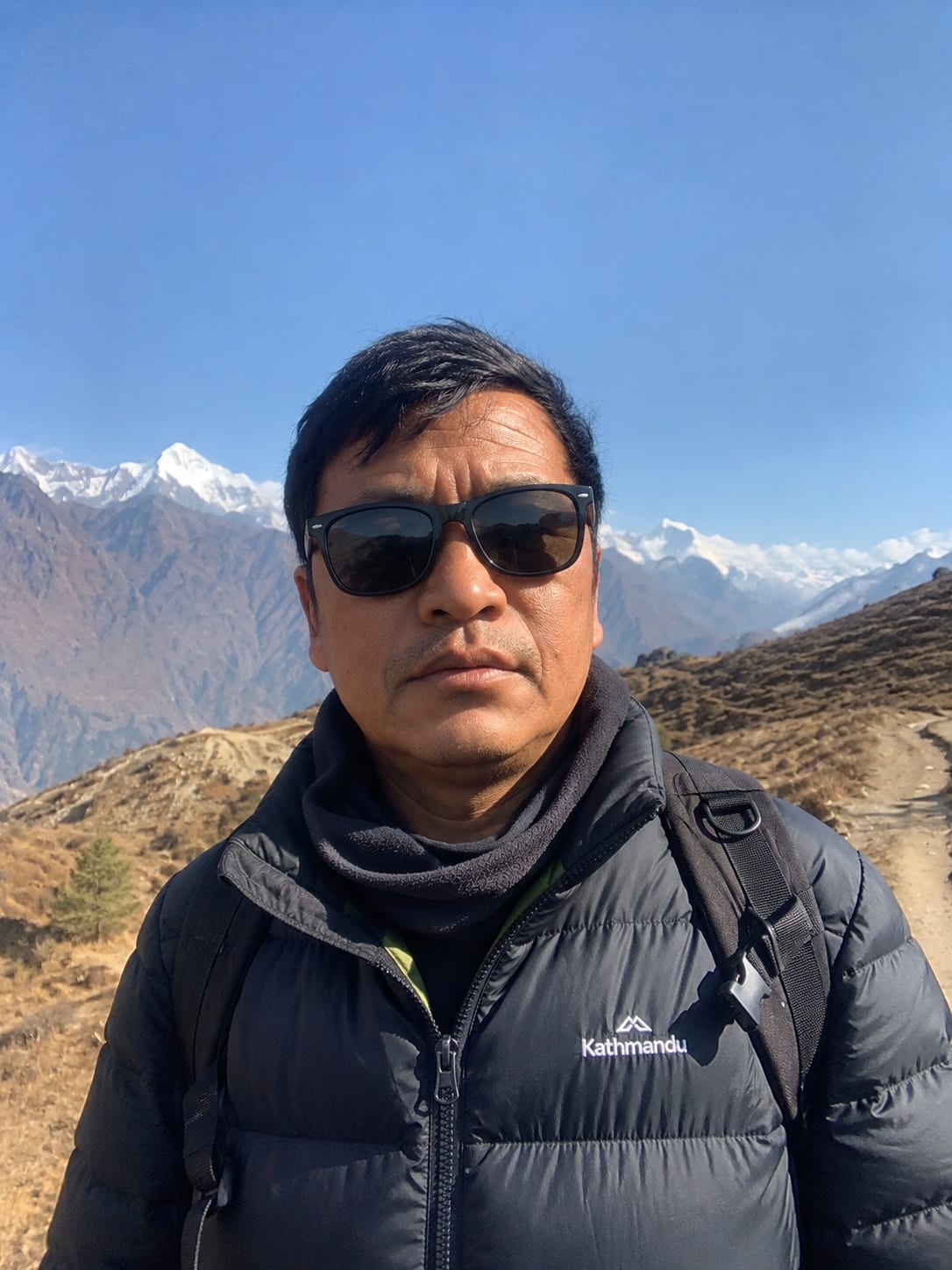
Mingma Tendi Sherpa, born in Gatlang, the Tamang Heritage Trail's first major village, has guided both routes and led the company's first departure back into Langtang Valley after the 2015 earthquake. The sections below compare altitude and acclimatization, accommodation, cost, and which trekker each route actually suits.
In this guide 6
How do the two treks compare at a glance?
| Tamang Heritage Trail | Langtang Valley Trek | |
|---|---|---|
| Duration | 7 days | 7 days |
| Max altitude | 3,165 m (Nagthali) | 3,870 m (Kyanjin Gompa); 4,984 m (Tserko Ri, optional) |
| Difficulty | Moderate | Moderate |
| Daily walking | 4-6 hours | 5-6 hours |
| Group cost (2026) | USD 550-800 | USD 650-950 |
| Accommodation | Mix of teahouses and Tamang homestays | Teahouse lodges throughout |
| Focus | Tamang village culture, Tatopani hot springs | Glacial valley, Langtang Lirung, yak-cheese factory |
Which trek carries more altitude risk?
Langtang Valley carries meaningfully more altitude risk than Tamang Heritage, since its Kyanjin Gompa base sits 705 m higher than Tamang Heritage's Nagthali ceiling, and the optional Tserko Ri summit day adds another 1,114 m on top of that. Acute mountain sickness risk rises sharply above 3,500 m, a threshold Tamang Heritage never crosses and Langtang Valley crosses on its fourth day. Neither trek is technical, and both follow maintained teahouse trails, but Langtang Valley's altitude means a genuine acclimatization day is built into its schedule at Kyanjin Gompa before the Tserko Ri push, detailed in the altitude sickness prevention guide.
Tamang Heritage's lower ceiling is why we recommend it over Langtang Valley for first-time trekkers, families, or anyone who wants a real Himalayan trek without altitude planning becoming part of the trip. A trekker who has never spent a night above 3,000 m gets a genuinely different risk profile on the two routes, not just an easier version of the same one.
How does accommodation differ between the two routes?
Tamang Heritage runs on a mix of standard teahouses and community homestays, Briddim and Thuman host trekkers in family Tamang homes with meals cooked on the household stove, while Gatlang and Tatopani offer both options side by side. Langtang Valley runs entirely on teahouse lodges, the same infrastructure used across most of Nepal's classic trekking routes, with no homestay option anywhere on the trail. This is the clearest non-altitude difference between the two: Tamang Heritage sells direct contact with Tamang family life as part of the itinerary, while Langtang Valley sells scenery and a higher mountain objective.
The homestay nights on Tamang Heritage trade some privacy for a genuinely different evening experience, sitting around a household fire with a guide translating conversation, which no lodge-based trek on this site replicates. Trekkers who specifically want that cultural immersion should not treat it as a minor detail when choosing between the two routes.
How much does the price gap actually reflect?
Tamang Heritage's USD 550 to 800 group rate runs below Langtang Valley's USD 650 to 950 mainly because of the shorter duration, one to two fewer days of guide and porter wages, rather than any difference in permit cost, since both routes use the identical Langtang National Park and TIMS combination at NPR 5,000 total. Food costs also run slightly lower on Tamang Heritage since its lower altitude means shorter porter-and-yak supply chains than Langtang Valley's push above 3,800 m.
Neither route involves a mountain flight, which is the real reason both undercut Everest and Annapurna pricing regardless of which one you choose; the Nepal trek costs guide breaks down that comparison across every region this site operates in. A private departure adds roughly USD 200 to 300 per person on either route, since the fixed guide and jeep-transfer costs split across fewer travelers, and the gap between group and private pricing runs proportionally similar on both treks despite Langtang Valley's higher base cost.
Does the season window favor one route over the other?
Both treks share the same two windows, October to December and March to May, but they don't behave identically within them. Tamang Heritage's lower 3,165 m ceiling holds up reasonably well even at the edges of these windows, late November or early March, since altitude-related weather risk barely applies below that height. Langtang Valley's Tserko Ri summit day is more sensitive to exact timing: fresh October snow or a late-season cold snap in early March can close the 4,984 m viewpoint even when the valley trek below it remains fully open, so a Langtang Valley booking aimed specifically at Tserko Ri benefits more from a mid-window date than Tamang Heritage does.
Which trek suits which traveler?
A first-time trekker, a family with older children, or anyone prioritizing cultural depth over altitude achievement should book Tamang Heritage: its 3,165 m ceiling and 4 to 6 hour walking days make it one of the more accessible multi-day treks in Nepal, and the homestay nights deliver something a lodge-only itinerary can't. A trekker who has already done a lower-altitude route, or who specifically wants Langtang Lirung's glacial scenery and the achievement of a near-5,000 m summit day, should book Langtang Valley instead.
Groups with more time sometimes combine a shortened version of both into a single 12-day itinerary, joining the two trailheads at Syabrubesi. That combination needs no extra permit beyond the shared park entry and TIMS, and is worth discussing directly with your guide if a single route doesn't cover everything you want from the Langtang region.
FAQ
Common questions
Is Tamang Heritage easier than Langtang Valley?+
Yes. Tamang Heritage tops out at 3,165 m against Langtang Valley's 3,870 m (4,984 m with the optional Tserko Ri climb), which means substantially lower altitude sickness risk and no dedicated acclimatization day required. Daily walking hours are similar on both, so the difficulty gap comes almost entirely from altitude.
Can I do both treks on one trip?+
Yes, a combined 12-day itinerary joining both trailheads at Syabrubesi is possible and needs no extra permit beyond the shared Langtang National Park entry and TIMS card. Ask your guide to scope this as a customized package rather than booking two separate fixed departures.
Which trek has better cultural experiences?+
Tamang Heritage, by a clear margin. Its homestay nights in Briddim and Thuman put trekkers directly in Tamang family homes with meals cooked on the household stove, an experience Langtang Valley's teahouse-only accommodation doesn't offer anywhere on the route.
Do both treks use the same permits?+
Yes. Both use the identical Langtang National Park entry (NPR 3,000) and TIMS card (NPR 2,000), issued at the same Kathmandu or Dhunche checkpoints. Neither needs a restricted-area permit despite Tamang Heritage passing close to villages near the Tibetan border.