Nepal Travel Packages
Langtang Valley Trek

Langtang Valley Trek

★★★★★ 4.8 (88 reviews)
Langtang, Nepal 7-10 days Moderate Max 4,984 m
Duration
7-10 days
Max altitude
4,984 m
Difficulty
Moderate
Group size
Up to 12
Total distance
~65 km
Elevation gain
3,600 m
Best season
October to December, March to May
Avg daily walk
5-6 hours
Starts in
Syabrubesi (1,550 m)
Ends in
Syabrubesi (1,550 m)
Accommodation
Teahouse lodges throughout
✓ TAAN & NMA licensed guides ✓ Permits included, no hidden fees ✓ Small group departures
Group departure · per person
USD820
Permits, guide, porter, lodging & food included
Departure date
Email Nepal
Permits and logistics fully arranged
Licensed guide included on every departure
Direct WhatsApp line to your guide

The Langtang Valley Trek is a 7 to 10 day teahouse trek in the region closest to Kathmandu that follows the Langtang Khola to Kyanjin Gompa at 3,870 m below the 7,227 m Langtang Lirung. A 2026 group departure costs USD 650 to 950 per person including the Langtang National Park permit (NPR 3,000) and a TIMS card (NPR 2,000). It starts with a 7 to 8 hour drive to Syabrubesi rather than a flight, which makes it the lowest-cost classic trek in Nepal, and its optional Tserko Ri climb reaches 4,984 m.

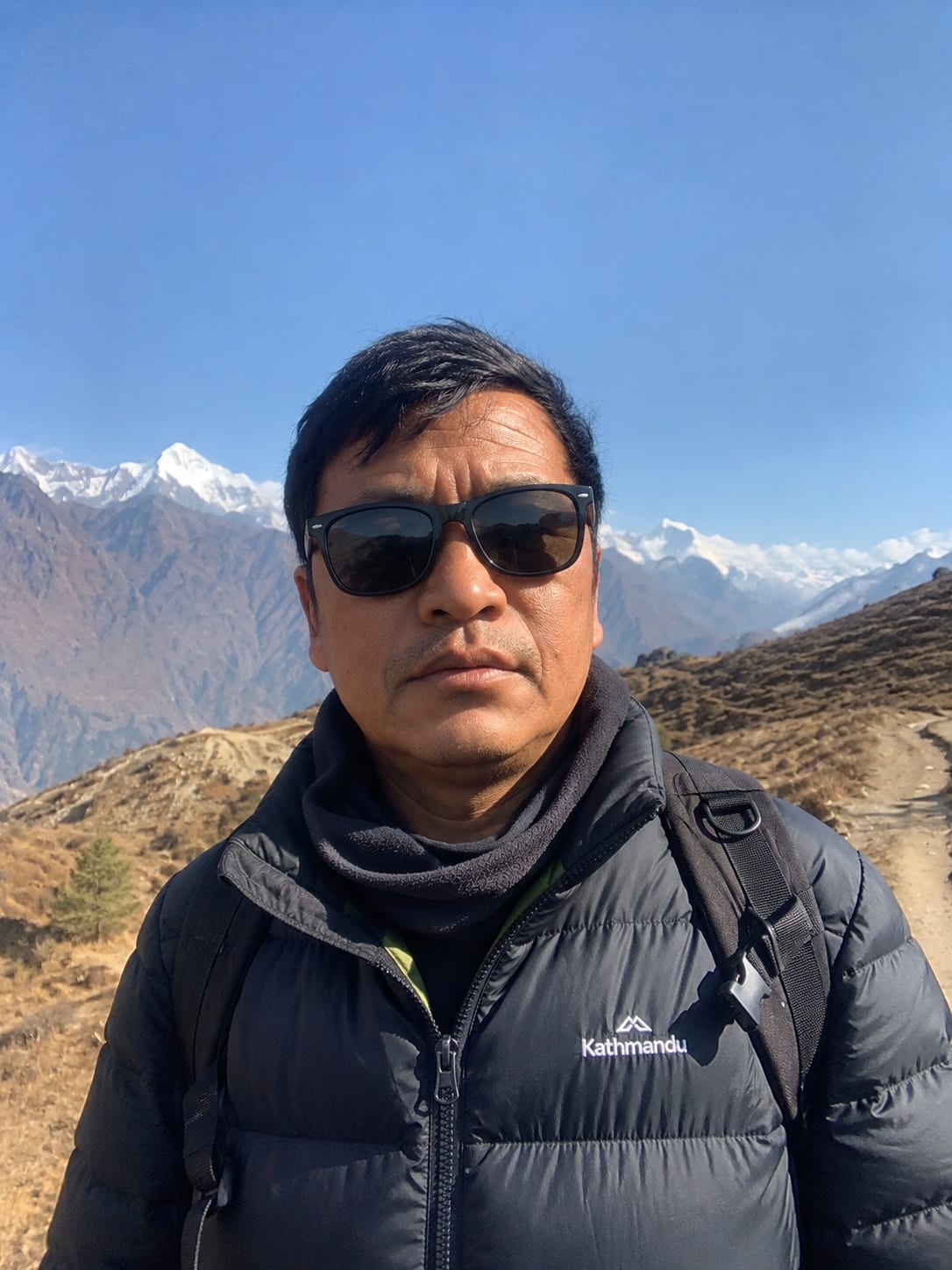
Mingma Tendi Sherpa led the company's first departure back into Langtang after the 2015 earthquake buried the main village, and has tracked the rebuild season by season since, village by village, lodge by lodge. The sections below cover the two permits, a full cost breakdown against the USD 650 to 950 range, the sleeping-altitude schedule and acclimatization plan, what to pack beyond the site's standard list, and the village-by-village rebuild status the guidebooks have not caught up with.

Highlights

What our guides know that others don't.

1

Rebuild status by village

Langtang village rebuilt uphill of the 2015 slide; lodges fully operating

2

Yak cheese at Kyanjin

Working cheese factory since 1955; a Langtang staple

Live from the trail

Updated 2 Jul 2026

Monsoon status: valley green, drive road slippery

Monsoon rain is falling in the valley with leeches in the lower forest to Lama Hotel. The Syabrubesi road can be slow after heavy rain with occasional small slides cleared quickly. We schedule departures for the drier windows. Next scheduled departure: early October.

What permits does the Langtang Valley Trek need?

Two permits cover Langtang in 2026: the Langtang National Park entry at NPR 3,000 and a TIMS card at NPR 2,000. Both are issued at the Nepal Tourism Board in Kathmandu or at the Dhunche park checkpoint on the drive in, and they take Nepali rupees and photographs. No restricted-area permit applies, so Langtang is straightforward to arrange despite its remote feel.

The full Nepal permit map, including the licensed-guide rule that applies on national-park routes like this one, is in the Nepal trekking permits master guide. The park permit is checked at Dhunche and again at the park entrance above Syabrubesi.

How much does the Langtang Valley Trek cost in 2026?

TAAN-registered operators quoted USD 650 to 950 for a group Langtang departure in 2026, the lowest of the classic multi-day treks because there is no mountain flight. The table shows the breakdown, and the transfer line is a Kathmandu jeep or bus rather than a USD 360 Lukla ticket, which is the whole reason Langtang undercuts Everest and Annapurna. Guide and porter days are modest on a 7-day trip.

The absence of a flight also removes the weather-delay risk that inflates Everest contingency budgets. What you trade for the low cost is the long, rough drive to Syabrubesi, covered in the FAQ. This is the value trek for a first Himalayan experience, and that value pricing is why Langtang Valley is curated into the site's Budget Nepal Travel Packages.

Where the price goes · per person
Permits (Langtang NP + TIMS)NPR 5,000 total at 2026 rates$38
Kathmandu-Syabrubesi transfer, both waysLocal bus to private jeep$30–90
Licensed guide (shared in group)USD 35-40/day, 7-10 days$180–280
Porter, one per two trekkersUSD 25/day, 20 kg shared load$130–200
Teahouse room, 6-8 nightsNPR 300-800/night$35–80
Food and drinking waterDal bhat NPR 450-800 by altitude$160–280
Company margin, logistics, staff equipment$80–170

What is the rebuild status village by village?

Langtang village, buried by a landslide triggered by the 2015 earthquake that killed more than 300 people, has been rebuilt slightly uphill of the original site and its lodges are fully operating in 2026, the rare on-the-ground detail guidebooks still get wrong. Kyanjin Gompa above it was less damaged and runs a full complement of lodges and its 1955 yak-cheese factory. The lower villages of Lama Hotel and Ghodatabela rebuilt earlier and have been running for years.

Mingma led the first company departure back into the valley in 2016 and knows which lodge families returned and which did not. Trekking Langtang directly supports that recovery, which is part of why we prioritize the region. The memorial at Langtang village is a quiet, worthwhile stop.

How hard is the Tserko Ri climb?

Tserko Ri at 4,984 m is the trek's one strenuous day, a 1,100 m climb and descent from Kyanjin Gompa that most groups start before dawn to catch clear morning views over Langtang Lirung and the Tibetan border peaks. It is optional: trekkers who prefer can climb the lower Kyanjin Ri (4,300 m) instead for a shorter but still spectacular panorama. Neither summit needs technical skill, only fitness and a steady pace at altitude.

The rest of the trek is graded moderate, a steady valley ascent with no pass, which makes Tserko Ri the deciding factor in how hard your Langtang trip feels. Altitude at nearly 5,000 m is the real test, and our guides watch for symptoms on the climb, covered in the altitude sickness prevention guide.

What sleeping-altitude schedule does the Langtang Valley Trek follow?

The 500 m sleeping-altitude rule governs this itinerary the same way it governs every route above 3,000 m that we run, with the Kyanjin Gompa layover day standing in for a dedicated rest day. The table below shows the actual progression from Lama Hotel to the valley's high point.

Night Sleeping altitude Gain from previous night
Lama Hotel 2,480 m n/a
Langtang village 3,430 m 950 m
Kyanjin Gompa 3,870 m 440 m
Kyanjin Gompa (Tserko Ri day) 3,870 m 0 m

The Lama Hotel to Langtang village day gains 950 m in one push, well over the 500 m guideline, which is a known stretch in this itinerary and the reason the following day to Kyanjin Gompa is deliberately short at 440 m. Most trekkers tolerate the jump well because the starting altitude is still relatively low, but our guides watch closely for headache or poor sleep that first night in Langtang village and will slow the schedule for anyone showing early symptoms rather than push on to Kyanjin as planned.

What should you pack for the Langtang Valley Trek?

The Nepal trekking packing list covers the four-season sleeping bag, layered clothing, and broken-in boots every teahouse trek on this site needs, and Langtang's profile doesn't demand much beyond that core list, no restricted-zone camping gear, no technical climbing kit. The one route-specific addition is a warmer layer than the trek's moderate altitude might suggest: Kyanjin Gompa's teahouse rooms sit unheated at 3,870 m, and the pre-dawn Tserko Ri start is genuinely cold even in the reliable October window.

Trekking poles are worth the pack space on the Lama Hotel to Langtang village day, where the trail gains 950 m in a single push, and on the long Kyanjin-to-Lama-Hotel descent that reverses it on the way out. Device charging costs NPR 200 to 400 per charge above Lama Hotel, so a power bank saves cash across the week.

How does Langtang Valley compare to Gosaikunda and the Tamang Heritage Trail?

All three routes share the Langtang region's defining advantage, no mountain flight, but they diverge sharply on altitude and focus. Gosaikunda extends the Langtang Valley itinerary over the 4,610 m Laurebina La to a sacred alpine lake, adding real altitude and four to five days to the standard trip. The Tamang Heritage Trail stays lower, topping out at 3,165 m, and trades mountain scale for village-to-village cultural depth in Tamang settlements and hot-spring stops at Tatopani, covered in full in Tamang Heritage vs Langtang Valley.

Langtang Valley itself sits between the two: higher and more classically scenic than Tamang Heritage, with Tserko Ri's 4,984 m optional summit, but without Gosaikunda's pilgrimage-lake payoff or its extra altitude commitment. Trekkers choosing between the three should weigh time available and altitude tolerance first; all three run through the same Syabrubesi gateway and can be booked as a single extended itinerary on request.

Who leads Langtang Valley departures, and why does that matter here specifically?

Mingma Tendi Sherpa, our Senior Guide and Safety Lead, led the company's first departure back into Langtang after the 2015 earthquake and has returned every season since to track which lodge families rebuilt and which villages are genuinely back to full capacity. That matters more here than on a route with no disaster history: guidebook information on Langtang has lagged the actual rebuild for years, and a guide who has watched the valley recover village by village catches details a static description misses, which teahouse in Langtang village reopened this season, whether a particular family's kitchen is running again.

This is also why Langtang carries a different kind of E-E-A-T weight than a route like Everest Base Camp, where the challenge is altitude and logistics rather than a community's recovery timeline. Every Langtang departure we run puts money directly into that recovery, and Mingma treats the trek's guiding as inseparable from that responsibility rather than as a separate concern from the trekking itself.

What does a typical day of trekking in Langtang actually feel like?

Days run 4 to 6 hours of walking on a single well-defined trail up the Langtang Khola valley, with no route-finding decisions and no pass to navigate, which makes this one of the more relaxed itineraries this site operates outside its short cultural tours. Breakfast at the teahouse runs 7 to 7:30 am, the day's walking finishes by early-to-mid afternoon, and the remaining daylight is unstructured, tea, cards, reading, or a short walk around whichever village the group has reached.

The valley's single-trail structure also means route options are limited compared with a region like Annapurna's web of interconnecting trails, but that simplicity is part of what makes Langtang approachable for a first Himalayan trek: there's one clear path in and the same path back out, with Kyanjin Gompa as the natural turnaround point where the scenery, the monastery, and the cheese factory reward the week's walking before the return begins.

Elevation profile High point 4,984 m
2,0002,5003,0003,5001,550 m1233,870 m4561,550 m7DAY
Acclimatization night High point

Day by Day

7-day itinerary, every detail planned.

Day1
Trip Day
Drive Kathmandu to Syabrubesi (1,550 m)
1,550m alt.

A 7 to 8 hour drive north on the Pasang Lhamu Highway climbs over the Kathmandu valley rim before dropping to the Bhote Koshi at Syabrubesi, the roadhead village where the trek begins. The rough final section, unpaved for the last hour, is the trade-off for skipping a mountain flight, and most groups treat the day as travel rather than trekking.

1,550 m
Day2
Trip Day
Syabrubesi to Lama Hotel (2,480 m)
~6h walking12 km
2,480m alt.
Day3
Trip Day
Lama Hotel to Langtang village (3,430 m)
~6h walking14 km
3,430m alt.
Day4
High Point
Langtang village to Kyanjin Gompa (3,870 m)
~4h walking7 km
3,870m alt.
Day5
Acclimatization
Tserko Ri (4,984 m) and rest at Kyanjin
~6h walking
3,870m alt.
Day6
Trip Day
Kyanjin Gompa to Lama Hotel (2,480 m)
~6h walking21 km
2,480m alt.

What's Included

Transparent, all-in pricing.

Included in your price

Permits (Langtang NP + TIMS)
Kathmandu-Syabrubesi transfer, both ways
Licensed guide (shared in group)
Porter, one per two trekkers
Teahouse room, 6-8 nights
Food and drinking water
Company margin, logistics, staff equipment

Not included

Nepal entry visa fee (USD 30-125, paid on arrival)
Travel insurance with helicopter evacuation cover
Personal trekking gear and equipment
Tips for your guide and porter
Bottled drinks, wifi, and device charging at teahouses
Meals in Kathmandu outside the itinerary

Dates & prices

Upcoming departures.

Start dateEnd datePrice / personAvailability
6 Oct 202612 Oct 2026USD 820Guaranteed · 6 leftEnquire
20 Oct 202626 Oct 2026USD 820Open · 8 leftEnquire
17 Nov 202623 Nov 2026USD 800Open · 9 leftEnquire
23 Mar 202729 Mar 2027USD 800Open · 10 leftEnquire

Verified reviews

What travellers say.

4.8/5 from 88 reviews on TripAdvisor, checked July 2026

★★★★★

An underrated trek and superb value. Mingma's connection to the valley and its recovery made it deeply moving, especially the Langtang memorial. Tserko Ri at dawn was one of the best mornings of my life.

HB
Hannah Brooks · United Kingdom
19 Apr 2026
★★★★★

Close to Kathmandu, affordable, and beautiful. The drive is long but the valley is worth it. The yak cheese at Kyanjin is genuinely good. A great first Himalayan trek.

YT
Yuki Tanaka · Japan
28 Mar 2026

Why Nepal Travel Packages

Built on published proof, not adjectives.

A named, licensed guide before you book

Full name, photo, NMA or TAAN license number, and a direct WhatsApp line. The guide on the page is the guide on the trail.

Itemized pricing, not a lump sum

Permits, guide, porter, lodging, and food broken out on every trip page. You see exactly where the price comes from.

Trail conditions updated monthly

Dated field reports from the guides running the route this season, not boilerplate written once and left to go stale.

Permits handled, not hidden

Every permit fee, checkpoint, and paperwork rule is filed for you and published in the guides — no surprise admin at Lukla.

FAQ

Common questions

How rough is the drive to Syabrubesi?+

The 7 to 8 hour drive is scenic but bumpy, especially the final descent to Syabrubesi where the road is unpaved and winding. A private jeep is more comfortable than the local bus and worth the extra cost for most trekkers. This drive replaces a mountain flight, which is why Langtang costs less than Everest or Annapurna.

Is Langtang safe after the 2015 earthquake?+

Yes, the valley reopened for trekking within a year and its lodges have run normally for years. Langtang village was rebuilt uphill of the 2015 landslide site, and the trail is fully restored. Trekking the valley directly supports the community's recovery, which is part of why we prioritize the region.

Do I need to worry about altitude in Langtang?+

Kyanjin Gompa at 3,870 m is high enough for mild altitude effects, and the optional Tserko Ri climb reaches 4,984 m, so acclimatization matters on the upper valley. Our schedule keeps sleeping-altitude gains moderate and our guides watch for symptoms on the Tserko Ri day. Prevention detail is in the altitude sickness prevention guide.

Can Langtang be combined with Gosaikunda?+

Yes, an extended itinerary links the Langtang Valley with the sacred Gosaikunda lakes over the Laurebina La (4,610 m), adding four to five days. It needs no extra permit beyond the same park entry and TIMS. We offer this as a longer 12-day option for trekkers who want both the valley and the high lakes.

How fit do I need to be for the Langtang Valley Trek?+

Comfortable with 5-6 hour days over 7 to 10 days covers the standard itinerary, with one bigger push, 950 m of gain from Lama Hotel to Langtang village on day 3. Tserko Ri is the one genuinely strenuous day if you choose to climb it; the rest of the trek is a steady, moderate valley walk with no pass and no technical terrain.

Is Langtang Valley a good first Himalayan trek?+

Yes, it's one of the better first-timer options this site runs: no restricted-area permit complexity, no mountain flight risk, a lower cost than Everest or Annapurna, and an altitude ceiling that stays manageable unless you choose the optional Tserko Ri climb. First-time trekkers who want Himalayan scale without the full commitment of a 12-16 day route often start here.

What's the yak cheese factory at Kyanjin Gompa?+

A Swiss-Nepal dairy development cooperative built the factory in 1955 to process yak and chauri milk from the valley's herds into cheese, one of the earliest development projects of its kind in the Nepal Himalaya. It still operates today, and the cheese, sold at the factory and in Kyanjin's lodges, is a genuine local product rather than a tourist novelty.

Do I need a guide for Langtang Valley?+

Nepal's licensed-guide requirement applies to Langtang the same as every national-park trekking route, covered in the solo trekking guide requirement guide. Beyond the legal requirement, a guide's value on this specific route includes knowing which Langtang village lodge families returned after the 2015 rebuild and coordinating the Kyanjin Gompa cheese-factory and monastery visits around the group's schedule.

Is Langtang Valley good for families or a first trek with children?+

Yes, more than most of this site's routes: the standard itinerary's altitude ceiling at Kyanjin Gompa (3,870 m) is manageable for teenagers and fit older children if the optional Tserko Ri day is skipped, the daily walking hours are moderate at 5 to 6 hours, and the no-flight overland approach removes the one logistics risk, a missed mountain flight, that complicates family scheduling on Everest-region trips. It's one of the routes we point families toward first when they ask which trek suits a mixed-age group.

What wildlife might I see on the Langtang Valley Trek?+

Langur monkeys are commonly seen in the forested lower valley between Syabrubesi and Lama Hotel, and the Langtang National Park is also habitat for the red panda, though sightings of it are rare and not something to plan a trip around. Himalayan tahr and occasionally blue sheep appear on the higher slopes above Kyanjin Gompa, more often spotted on the Tserko Ri climb than on the valley floor itself.

How does Langtang Valley fit into this site's package segments?+

Its low fixed cost and no-flight logistics put it in the Budget Nepal Travel Packages segment alongside Poon Hill and Mardi Himal. It sits just outside the Family Nepal Travel Packages segment's 3,300 m ceiling, since even the standard itinerary without Tserko Ri sleeps at Kyanjin Gompa's 3,870 m, so families wanting a lower-altitude first trip should look at Poon Hill or the Kathmandu Valley and Pokhara options curated there instead.

How does the food change as you go up the Langtang Valley?+

Syabrubesi and Lama Hotel carry the widest menus, dal bhat, noodle soup, fried rice, momos, and lower-altitude extras like pizza or pasta. Selection narrows above Langtang village, and by Kyanjin Gompa dal bhat, noodle soup, and eggs are the practical core, alongside the valley's own yak cheese, a genuine local specialty rather than a trekker novelty. The full altitude-pricing pattern that applies here is covered in the teahouse food guide.

What travel insurance does the Langtang Valley Trek need?+

A standard trekking policy covering activity to at least 4,000 m and emergency evacuation is sufficient for the core itinerary, since Kyanjin Gompa's 3,870 m stays well under the 5,500 m threshold our higher restricted-area routes require. Anyone adding the optional Tserko Ri climb to 4,984 m should confirm their policy's altitude ceiling covers that specific day, not just the valley floor, before departure.

Is there Wi-Fi or phone signal in the Langtang Valley?+

NTC mobile signal reaches most of the valley including Kyanjin Gompa, more reliably than on Nepal's more remote restricted-area routes, and lodge Wi-Fi is available at an added charge in most villages from Lama Hotel upward. This makes Langtang one of the better-connected treks this site runs, useful for travelers who need to stay reachable during a shorter holiday window.

What's the best short extension if I only have 7 days but want more than the valley alone?+

The standard 7-day Langtang Valley itinerary already fits a one-week holiday window including travel days, but trekkers with a day or two to spare often add a night at Lama Hotel or Langtang village rather than rushing the descent, giving the upper valley's Tserko Ri day more recovery time before the flight home. The fuller Gosaikunda extension needs a genuine extra 4-5 days and is a separate booking decision rather than a quick add-on.

Why does the itinerary sleep at Langtang village rather than pushing straight to Kyanjin Gompa?+

Splitting the Lama Hotel to Kyanjin Gompa distance across two nights, at Langtang village and then Kyanjin, keeps each day's sleeping-altitude gain closer to the 500 m guideline than a single long push would manage, even though the first of those two days still runs 950 m. Compressing the schedule to save a day is possible for very fit groups, but it removes the buffer that currently absorbs an off day without forcing a change to the rest of the itinerary.

Can I visit Langtang Valley as a day trip from Kathmandu?+

No. Syabrubesi itself is 7 to 8 hours from Kathmandu by road, and the trek proper starts beyond it, so there's no realistic single-day version of this itinerary. The shortest genuine Langtang experience on this site is the full 7-day trip to Kyanjin Gompa and back; anyone wanting a true one-day trip from Kathmandu should look at the Kathmandu Valley Heritage Day Tour instead.