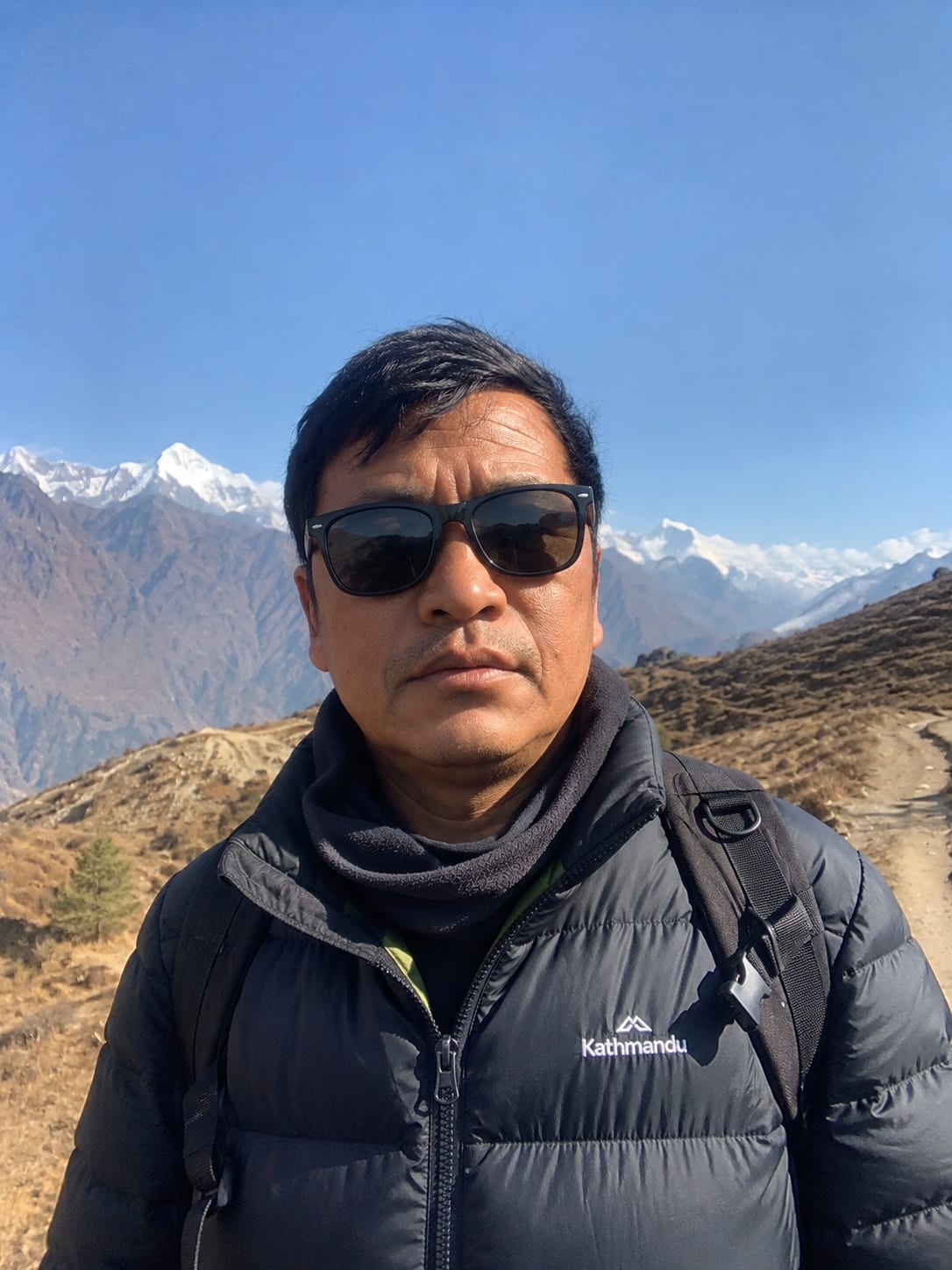
Vegetarian food on the Manaslu Circuit means dal bhat at NPR 550 to 1,000 depending on altitude, available at every teahouse along the route since lodges have run the full 14-day circuit since 2010, with meat scarce above 3,000 m the same way it is on every other Nepal trekking route. Mingma Tendi Sherpa, our Senior Guide and Safety Lead, guides Larkya La crossings and logs client nutrition alongside his acclimatization protocols, and wrote this guide from those meal-by-meal records specific to Manaslu's villages.
This guide narrows the site's general food on a Nepal trek guide to Manaslu specifically, since the region's restricted-area status and remote supply chain create a different pricing and availability picture than the Everest or Annapurna classics. The sections below cover Manaslu's actual dal bhat pricing by village, what's realistically on the menu at each stage of the circuit, and the two practical details, cash and the Larkya La crossing day, that matter more here than on a standard teahouse trek.
In this guide 5
- 01 How does Manaslu's food pricing compare to Everest and Annapurna?
- 02 What's actually on the menu at each stage of the circuit?
- 03 Is dal bhat vegetarian and vegan by default on Manaslu?
- 04 Why does cash matter more for food on this route than on Everest or Annapurna?
- 05 How should you fuel the Larkya La crossing day specifically?
How does Manaslu's food pricing compare to Everest and Annapurna?
Dal bhat on the Manaslu Circuit runs NPR 550 to 1,000 depending on altitude, by our own departure cost records, sitting between the Everest route's NPR 600 to 1,200 band and the lower Langtang or Annapurna Base Camp band of NPR 450 to 900. This middle position reflects Manaslu's actual supply chain: the route is lodge-served since 2010, unlike the camping-based whale regions further west, but every ingredient above Machha Khola still arrives by porter or mule with no road access, keeping prices above the cheaper, more road-accessible circuits.
The restricted-area status doesn't change food pricing directly, since the permit fee and the meal price are entirely separate systems, but the terrain that justifies the restricted classification, remote, mountainous, no road network, is the same terrain that pushes ingredient costs up village by village. Sama Gaun (3,530 m) and Samdo (3,875 m), the two highest villages before the Larkya La, sit at the top of that NPR 550-1,000 band, while lower villages like Jagat and Deng price closer to NPR 550.
What's actually on the menu at each stage of the circuit?
Lower villages, Machha Khola through Namrung, roughly the first four trekking days, carry the widest menu: dal bhat, noodle soup, fried rice, and momos alongside pizza-style items and pasta, since these villages sit closest to road access at Arughat. From Lho and Sama Gaun onward, the menu narrows the same way it does on any Nepal route above 3,000 m: dal bhat, noodle soup, and eggs become the practical core, with pizza and pasta items thinning out or disappearing as every extra ingredient variety means another sack a mule has to carry higher.
Sama Gaun and Samdo, both within a day of the Tibet border, occasionally carry Tibetan-influenced items beyond the standard teahouse menu, thukpa noodle soup and Tibetan bread variations with local flavor differences from the standard Khumbu or Annapurna version, though this varies lodge by lodge rather than being guaranteed. Dharamsala, the high camp at 4,460 m before the pass, runs the circuit's most limited kitchen, since its roughly 40 beds and tent overflow mean a smaller, more basic menu focused on dal bhat and hot drinks rather than variety.
Is dal bhat vegetarian and vegan by default on Manaslu?
Yes, dal bhat is vegetarian by default at every Manaslu teahouse, the lentil soup, rice, and vegetable curry combination carries no meat unless specifically ordered as an add-on, and the unlimited refill policy that applies across Nepal applies here too. Meat dishes exist on lower-village menus but thin out fast above 3,000 m for the same refrigeration reason they do everywhere in Nepal: fresh meat doesn't survive the trek up without a cold chain the route doesn't have.
Vegan trekkers do nearly as well as vegetarians, since requesting dal bhat without its ghee garnish removes the one dairy element from an otherwise plant-based plate, and the vegetable curry and rice underneath carry no eggs or dairy on their own. This matches the pattern on every teahouse route in Nepal; Manaslu isn't a harder circuit for vegetarian or vegan trekkers than Everest or Annapurna, just a pricier one at the higher villages.
Why does cash matter more for food on this route than on Everest or Annapurna?
There are no ATMs past Arughat on the entire Manaslu Circuit, a genuinely different constraint from the Everest or Annapurna classics, so every meal from day two onward is a cash transaction with no card-payment fallback anywhere on the route. Budget cash for 13 to 15 nights of food, plus the hot showers (NPR 300 to 500) and device charging (NPR 200 to 400) most trekkers add on top, before leaving Kathmandu or the last ATM in Arughat, since running short of cash mid-circuit has no on-trail fix.
This is a practical planning point specific to Manaslu's food budget, not a general Nepal trekking rule: the Everest and Annapurna routes both carry limited ATM access in their main villages, Namche and Manang respectively, that Manaslu simply doesn't have anywhere on its restricted-zone section.
How should you fuel the Larkya La crossing day specifically?
The Larkya La crossing runs 8 to 10 hours from Dharamsala over the 5,106 m pass to Bimthang, the circuit's longest single day, and it starts at 3:30 am before Dharamsala's kitchen is fully staffed for a full breakfast service. Eating a substantial dal bhat dinner the evening before at Dharamsala, rather than relying on a light pre-dawn breakfast alone, is the practical fueling strategy our guides recommend for this specific day, since dal bhat's rice and lentil combination sustains a long exertion better than a quick porridge does.
Carry trail snacks, nuts, dried fruit, energy bars brought from Kathmandu, for the crossing day itself, since Dharamsala's kitchen and Bimthang's arrival service don't cover a 9-hour walking window with no lodge stop in between. This is the one day on the circuit where bringing your own food genuinely matters, unlike the rest of the route where teahouse meals cover every need without supplementing.
FAQ
Common questions
Is dal bhat vegetarian on the Manaslu Circuit?+
Yes, by default. Dal bhat's lentil soup, rice, and vegetable curry combination carries no meat unless specifically added, and it's available at every teahouse along the full 14-day circuit, with unlimited refills of rice, lentils, and vegetables at most lodges.
How much does food cost on the Manaslu Circuit?+
Dal bhat runs NPR 550 to 1,000 depending on altitude, by our own departure records, between the Everest route's NPR 600 to 1,200 band and the lower Langtang or Annapurna Base Camp band of NPR 450 to 900. Sama Gaun and Samdo, the two highest villages before the pass, sit at the top of that range.
Are there ATMs on the Manaslu Circuit for buying food?+
No. There are no ATMs past Arughat on the entire circuit, so every meal from day two onward is a cash-only transaction. Budget cash for the full trek, plus hot showers and device charging, before leaving Kathmandu or the last ATM in Arughat.
What should I eat before crossing the Larkya La?+
A substantial dal bhat dinner at Dharamsala the evening before, since the 3:30 am start comes before a full breakfast service and the 8 to 10 hour crossing day has no lodge stop in between. Carry trail snacks from Kathmandu for the crossing itself, the one day on the circuit where teahouse meals alone don't cover the full day.
