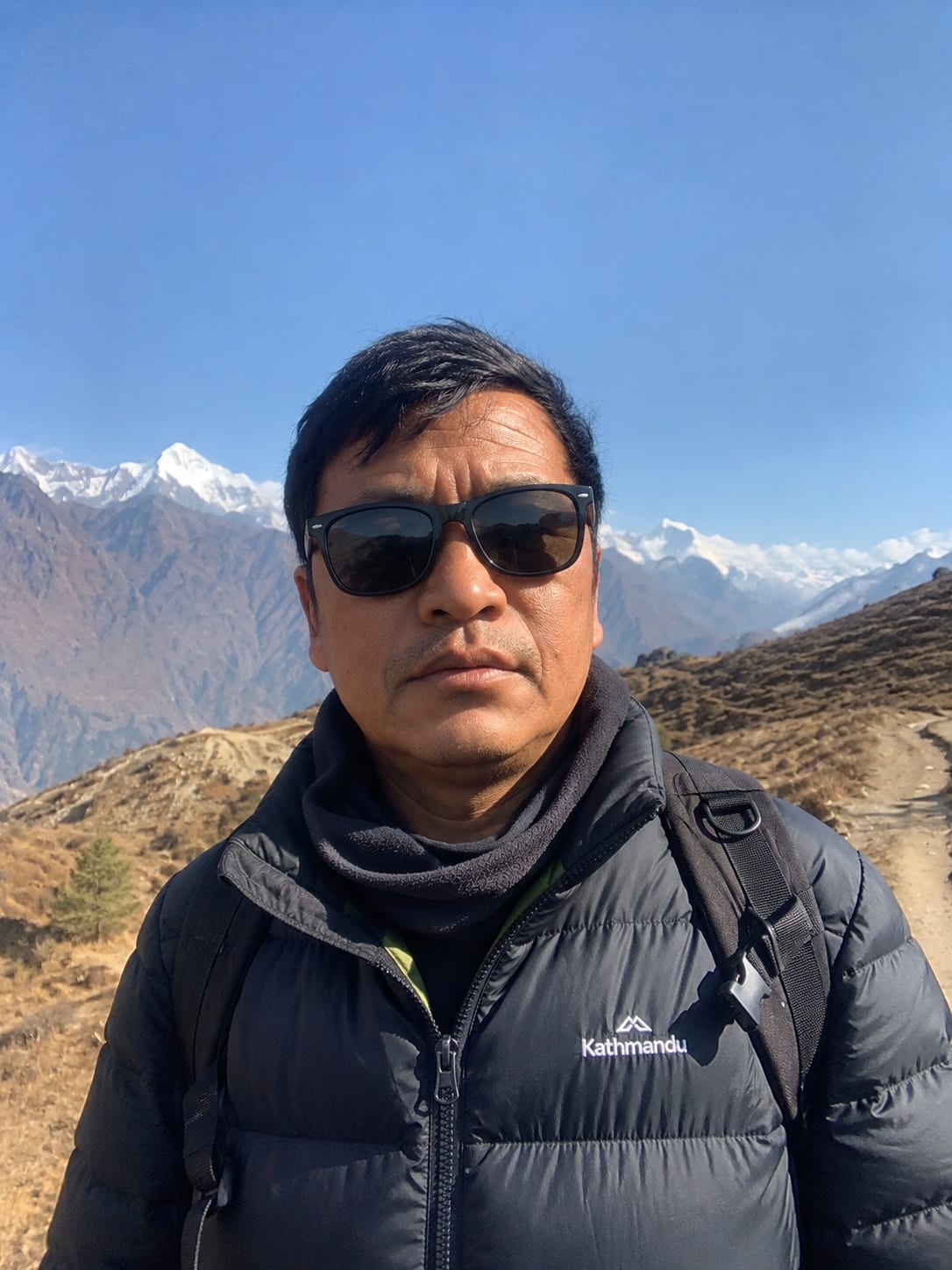
Dal bhat is Nepal's national meal, a plate of lentil soup, steamed rice, and vegetable curry served with an unlimited refill policy at nearly every teahouse on every trekking route in the country. A plate costs NPR 450 to 1,200 depending on route and altitude, and the free refills make it the highest-calorie option per rupee on any teahouse menu. Mingma Tendi Sherpa, our Senior Guide and Safety Lead, has logged client nutrition and hydration protocols across departures in Langtang, Manaslu, and the Annapurna Circuit, and wrote this guide from those meal-by-meal records.
The sections below cover why guides recommend dal bhat specifically, the standard teahouse menu pattern, how prices climb with altitude, vegetarian and dietary options, and the water safety rules that go with every meal.
In this guide 5
Why is dal bhat the trekking staple every guide recommends?
Dal bhat pairs a bowl of lentil soup with steamed rice, a vegetable curry, and often a pickle or pappadum, and nearly every teahouse in Nepal serves a version of it for lunch and dinner. Refills of rice, lentils, and vegetables come free at most lodges, a policy trekkers call "dal bhat power, 24 hour" on the trail, and that refill model is the practical reason most guides steer clients toward it over a single-serving dish. A trekker walking 5 to 7 hours a day burns through calories a fixed-portion plate of noodles cannot replace without a second order.
Reliability matters as much as calories. Every teahouse from Lukla to Gorak Shep, and from Besisahar to Manang, stocks the same core ingredients, rice, lentils, and seasonal vegetables, so dal bhat is available at altitudes where a pizza or a burger simply is not. Guides on our departures order it as the default dinner precisely because kitchens rarely run out of its ingredients, even on a lodge's busiest night.
What does a typical teahouse menu look like?
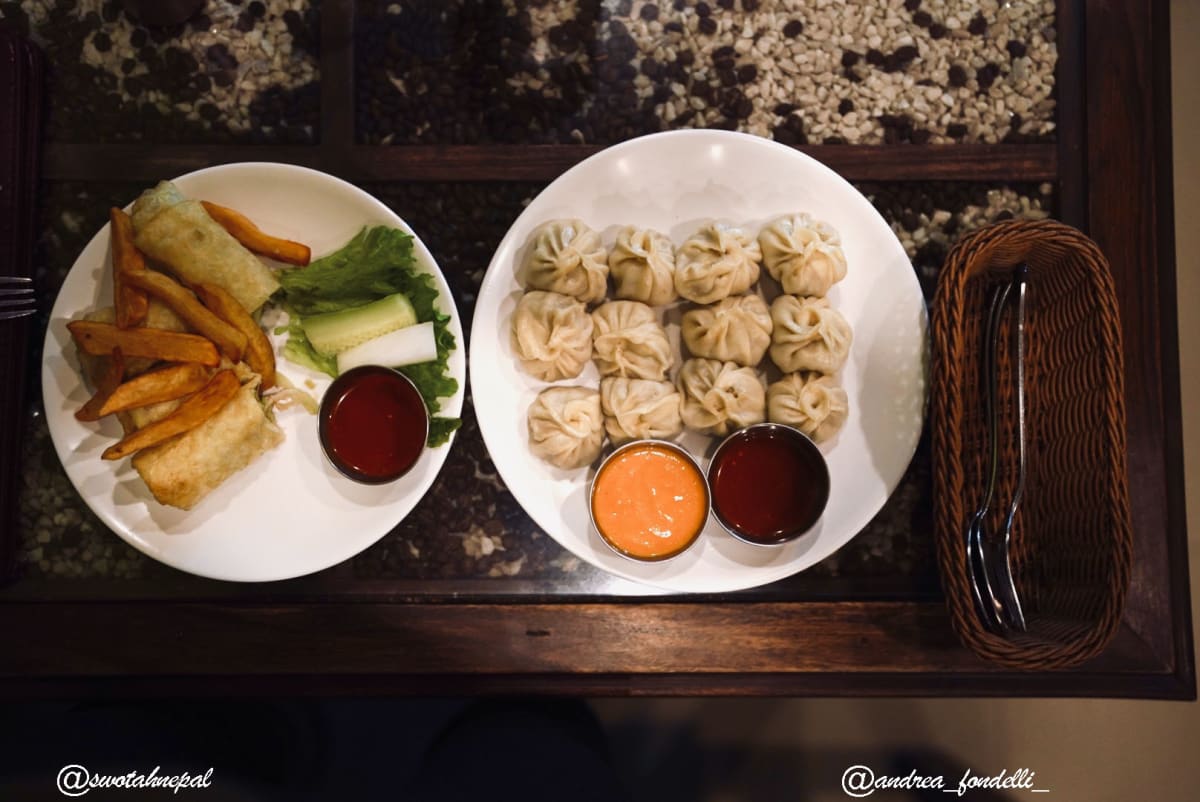
Teahouse menus follow a near-identical pattern across Everest, Annapurna, Langtang, and Manaslu, built around dal bhat, noodle soup, fried rice, and momos, the steamed or fried dumplings found on nearly every laminated menu card. Lower-altitude villages below 3,000 m add pizza-style items, pasta, and the occasional burger, ingredients still cheap enough to truck or fly in without a heavy markup. Breakfast options repeat the same short list everywhere: porridge, eggs cooked to order, Tibetan bread, and pancakes with honey or jam.
Menu selection thins as altitude rises, since every extra ingredient variety means another sack a porter or yak has to carry up. Above 4,000 m on most routes, the pizza and pasta items either disappear or triple in price, and dal bhat, noodle soup, and eggs become the practical core of what is actually available rather than what is printed on the card.
How does food pricing change with altitude?
Dal bhat runs NPR 600 to 1,200 on the Everest route by our own price checks from 2024 to 2026, the highest band in the country because every ingredient above Lukla arrives by porter or yak with no road access. Lower-altitude, road-accessible routes price meaningfully cheaper: Langtang Valley and Annapurna Base Camp both run NPR 450 to 900 for the same plate, and short routes like Poon Hill, closer still to road access, run NPR 450 to 800. A single ingredient sack costs the same in Kathmandu wherever it starts, so the final price reflects the number of days it spends on a human or animal back before it reaches a kitchen.
This altitude-driven pricing is consistent enough to plan a food budget around: a two-week Everest itinerary should budget the top of the NPR 600 to 1,200 band for the final third of the trek, while a Langtang or Poon Hill trip rarely crosses NPR 900 even at its highest villages. Bottled water follows the same logic and climbs even faster, which is one reason most guides carry purification tablets instead.
What are the vegetarian and dietary options on a Nepal trek?
Vegetarian trekkers eat well on every standard route, since dal bhat itself is vegetarian by default and meat dishes are the exception rather than the rule above 3,000 m, where fresh meat rarely survives the trek up without refrigeration. Vegan trekkers do almost as well, since dal bhat's ghee garnish is easy to request without, and the vegetable curry and rice underneath carry no dairy or egg. Gluten-free trekkers have a harder time, since Tibetan bread and most breakfast items use wheat flour, though rice-based dal bhat and boiled potatoes remain safe defaults at every altitude.
Food allergies beyond gluten need advance planning, since teahouse kitchens rarely track cross-contamination the way a Western restaurant does. Our guides carry a written allergy note in Nepali for any client with a serious allergy, handed to each lodge kitchen on arrival, a simple step that avoids relying on a rushed conversation at altitude.
Is the drinking water safe at teahouses?
Untreated tap and stream water is unsafe at every altitude on every route, because livestock graze upstream of nearly every village in Nepal. Purification tablets or a SteriPEN treat teahouse-supplied water for about USD 15 across a full trek, a fraction of what bottled water costs once it climbs above Namche or Manang, where several municipalities now restrict bottled water sales outright to cut plastic waste. Boiled water, sold by the lodge as a hot drink or a filled thermos, is a safe and widely available alternative that also warms cold hands before a morning departure.
Pairing purified water with dal bhat's salt and electrolyte content is part of the same hydration protocol our guides run on every departure above 3,000 m, alongside the acclimatization schedule covered in the altitude sickness prevention guide. Dehydration compounds altitude symptoms, so treating water correctly is as much a safety habit as a food one.
Route-specific food notes worth reading alongside this guide: the Everest region food guide covers Sherpa-specific dishes like shyakpa and tsampa that don't appear the same way on other routes, and the rain-shadow trekking guide covers Upper Mustang's own distinct high-desert food culture, both worth reading before a route-specific departure.
FAQ
Common questions
Can vegetarians and vegans eat well on a Nepal trek?+
Yes, dal bhat is vegetarian by default and available at every teahouse, and requesting it without ghee covers most vegan needs. Meat is scarce above 3,000 m anyway, since fresh meat rarely survives the trek up without refrigeration, so vegetarian trekkers are rarely the exception on the trail.
Why do guides say 'dal bhat power, 24 hour'?+
It refers to the free refill policy on rice, lentils, and vegetables that most teahouses offer with a dal bhat order, and to the meal's reputation for sustaining a full day of 5 to 7 hours of walking. Guides use the phrase to encourage clients toward the meal with the best calories-per-rupee value on the trail.
Is bottled water available at every altitude?+
Bottled water is sold at most teahouses but grows expensive fast, and several municipalities, including parts of the Khumbu above Namche, now restrict its sale to cut plastic waste. Purification tablets or a SteriPEN treat lodge water for about USD 15 across an entire trek, a cheaper and more reliable option at altitude.
What if I have a food allergy?+
Tell your guide and agency before departure so a written note, ideally in Nepali, can go to each lodge kitchen on arrival. Teahouse kitchens rarely track cross-contamination the way a Western restaurant does, so relying on a verbal request alone at altitude is riskier than confirming in writing in advance.
