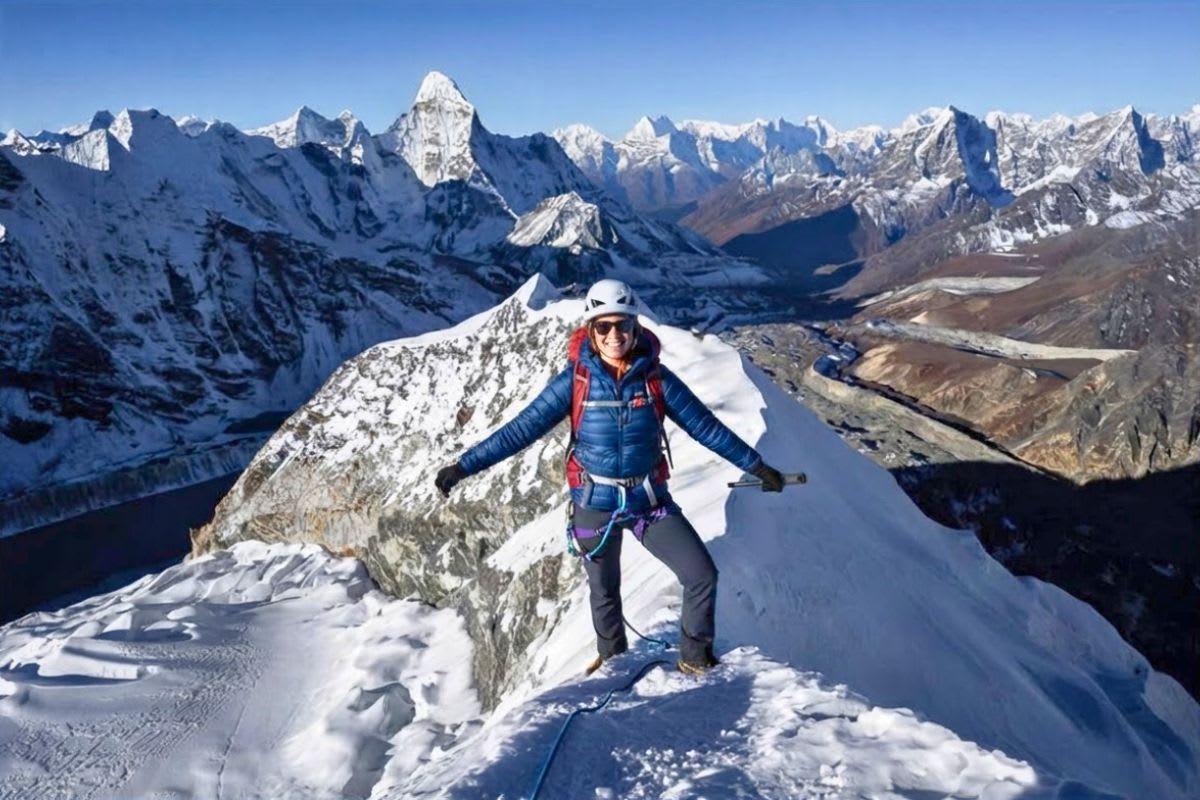
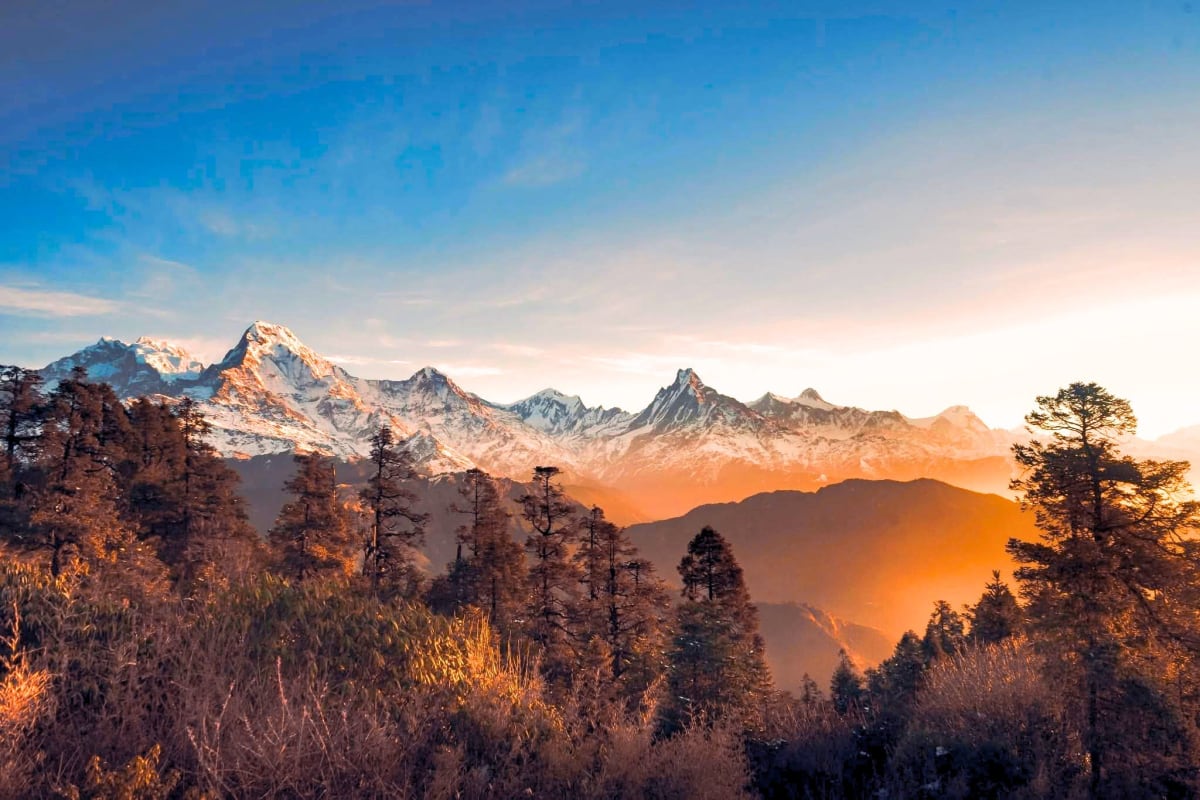
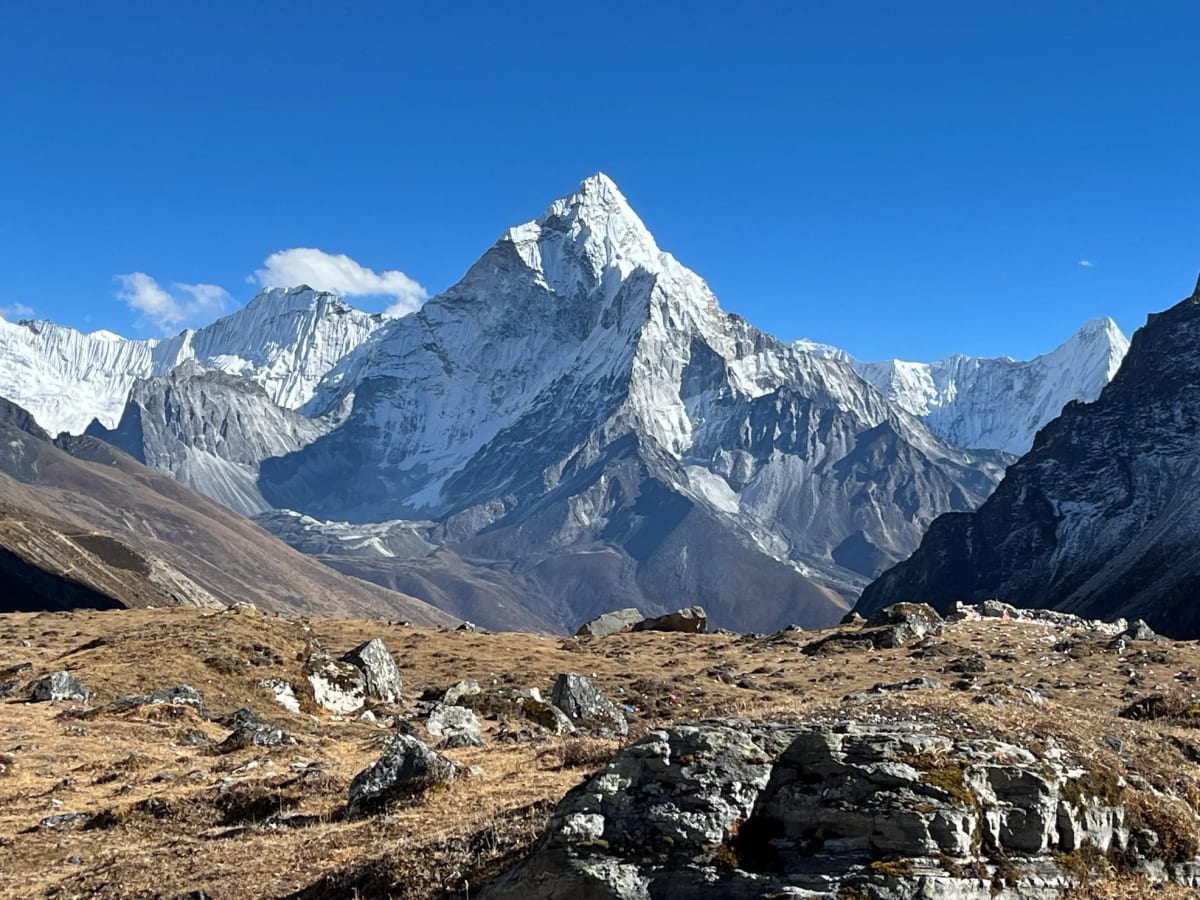
Island Peak is the standard first Himalayan climb; Ama Dablam is a genuine mountaineering expedition that expects Island Peak, or equivalent experience, behind you first. The gap between them is not close: Ama Dablam runs roughly twice as long, costs close to four times as much, and climbs sustained technical rock and ice across three high camps that Island Peak's single fixed-rope headwall doesn't approach. This comparison treats that gap honestly rather than presenting the two as a simple either-or choice.
Passang Dawa Sherpa, who holds an NMA trekking guide licence, leads both climbs, and caps Ama Dablam expeditions at six to eight climbers. The sections below cover the real cost and time gap, the experience each climb actually requires, the technical difference in what you're climbing, and how to know which one you're ready for.
In this guide 6
- 01 How do the two climbs compare at a glance?
- 02 Why is Ama Dablam roughly four times the cost of Island Peak?
- 03 Do you need prior climbing experience for either one?
- 04 What actually makes Ama Dablam more technical than Island Peak?
- 05 Do the two climbs need different insurance?
- 06 Which climb should you choose?
How do the two climbs compare at a glance?
Ama Dablam is a 28-day technical expedition to 6,812 m costing USD 9,500-13,000 that expects prior climbing experience; Island Peak is a 14-day trekking peak to 6,189 m costing USD 2,400-3,300 that teaches its climbing skills at base camp. The two are not different tiers of the same product.
| Ama Dablam Expedition | Island Peak Climb | |
|---|---|---|
| Duration | 28 days | 14 days |
| Summit altitude | 6,812 m | 6,189 m |
| Difficulty | Technical expedition; sustained ice and rock, 3 high camps | Technical trekking peak; single fixed-rope headwall |
| Prerequisite | Prior technical experience or a completed trekking-peak summit | None; skills taught at base camp |
| Group cost (2026) | USD 9,500-13,000 | USD 2,400-3,300 |
| Permit | Expedition royalty, USD 400-500 (negotiated) | NMA trekking-peak permit, USD 250 spring / USD 125 autumn |
| Group size cap | 8 | 8 |
Why is Ama Dablam roughly four times the cost of Island Peak?
The cost gap comes from guide ratio, route-fixing crew, and expedition length, not from Ama Dablam being a taller mountain. Ama Dablam runs close to a one-to-one or two-to-one climbing guide ratio and fixes rope across three separate high camps, Camp 1 near 5,700 m, Camp 2 near 6,000 m, Camp 3 near 6,300 m, each needing its own route-fixing and logistics chain. Island Peak uses a shared climbing guide model and fixes rope on a single headwall section above one high camp at 5,100 m. Ama Dablam's 28 day length against Island Peak's 14 to 16 also roughly doubles every per-day cost line: teahouse and expedition catering, base camp staffing, and guide wages all scale with time on the mountain.
Island Peak's NMA trekking-peak permit (USD 250 in spring, USD 125 in autumn) is a published, flat seasonal fee. Ama Dablam's expedition royalty through Nepal's Department of Tourism and the NMA is negotiated case by case, typically USD 400 to 500, and worth confirming directly with your operator before booking rather than assuming a fixed number.
Do you need prior climbing experience for either one?
Island Peak needs none. We teach crampon technique, ice-axe use, and jumar ascending on fixed rope at base camp before the summit push, which is exactly why it's Nepal's most popular first Himalayan climb. A fit trekker with good hillwalking fitness and no prior mountaineering can complete it on our base-camp training alone.
Ama Dablam is different. We ask every climber for either genuine prior technical experience, roped glacier travel, steep snow and ice, multi-pitch rock, or a completed trekking-peak summit such as Island Peak, before confirming a booking. This isn't a formality: the route's Camp 2 to Camp 3 section, known locally as the Yellow Tower and Grey Tower, is sustained fixed-line climbing on steep rock and ice where fatigue and unfamiliar rope movement create real risk. Climbers who haven't tested themselves on a fixed rope or a steep snow slope should build that experience on a trekking peak first, covered in the climbing fitness preparation guide and the climbing permits and NMA royalties guide.
What actually makes Ama Dablam more technical than Island Peak?
Island Peak's crux is a single 100 to 150 m fixed-rope headwall on 45 to 50 degree snow and ice, climbed once on the way up and once on the way down, followed by a corniced summit ridge. Ama Dablam's technical ground runs continuously from Camp 2 to Camp 3 and again on summit day, multi-pitch rock and ice climbed on fixed rope with a jumar and, in places, direct aid, a different order of technical difficulty entirely. Ama Dablam also carries a real objective hazard Island Peak doesn't have: Camp 3 sits directly below the mountain's hanging serac, and guides limit time there and time the passage through it to the coldest, most stable hours.
Both climbs use the same Everest-region acclimatization approach through Namche Bazaar and the Khumbu trail before turning off toward their respective peaks, so the early trekking days feel similar. The difference shows up entirely once the technical climbing starts.
Do the two climbs need different insurance?
Yes, and this is a real gap that catches climbers out. Island Peak needs a policy covering mountaineering to 6,500 m with helicopter evacuation, since standard trekking insurance excludes roped climbing; evacuation from the upper Khumbu on this route can run USD 3,000 to 6,000. Ama Dablam needs a materially higher tier: coverage to 7,000 m with evacuation specifically from a technical high camp, since a rescue from Camp 2 or Camp 3 requires a longline or specialized technical extraction rather than a standard helicopter landing, and can cost significantly more than a Khumbu trekking evacuation. Both are detailed in the helicopter evacuation insurance coverage guide, but climbers moving from Island Peak to Ama Dablam should not assume their existing policy still applies; the coverage tier has to be upgraded, not just extended.
Which climb should you choose?
Choose Island Peak if this is your first Himalayan climb, you have no prior mountaineering experience, and you want a genuine technical objective without a multi-year commitment to build up to it. Choose Ama Dablam if you already have real climbing experience, roped travel, steep ice, multi-pitch rock, or have summited Island Peak or a similar trekking peak and want the next real step up. Climbers who summited Island Peak comfortably and want more should read this as confirmation they're on the right track, not as a reason to skip straight to Ama Dablam without more time on rope first if their only prior experience is a single trekking-peak summit.
FAQ
Common questions
Is Ama Dablam harder than Island Peak?+
Yes, substantially. Island Peak's crux is a single fixed-rope headwall taught to first-time climbers at base camp. Ama Dablam's technical ground runs continuously from Camp 2 to Camp 3 on sustained rock and ice, and we require prior technical experience or a completed trekking-peak summit before accepting a booking.
Should I climb Island Peak before Ama Dablam?+
Yes, unless you already have equivalent prior technical mountaineering experience. Island Peak, Lobuche East, or a similar fixed-rope trekking peak is the standard proving ground: it tests jumar ascending, crampon technique, and comfort on exposed rope at altitude before Ama Dablam's longer, more technical route.
Why does Ama Dablam cost so much more than Island Peak?+
Ama Dablam's guide ratio runs close to one-to-one or two-to-one against Island Peak's shared-guide model, and it fixes rope across three high camps instead of one headwall, over roughly twice the trip length. Those three factors, guide ratio, route-fixing crew, and duration, account for the full cost gap.
Can a beginner climb Ama Dablam with a private guide?+
No. The prior-experience requirement applies regardless of guide-to-client ratio, since the risk on Camp 2 to Camp 3's technical ground comes from the climber's own rope skills and fatigue management, not from guide availability. A private booking doesn't remove the prerequisite.
Does my Island Peak insurance policy cover Ama Dablam too?+
No. Ama Dablam needs a materially higher insurance tier than Island Peak, coverage to 7,000 m with evacuation specifically from a technical high camp, since a Camp 2 or Camp 3 rescue requires a longline or specialized extraction rather than a standard helicopter landing. Climbers moving from one climb to the other need to upgrade their policy, not assume the old one still applies.