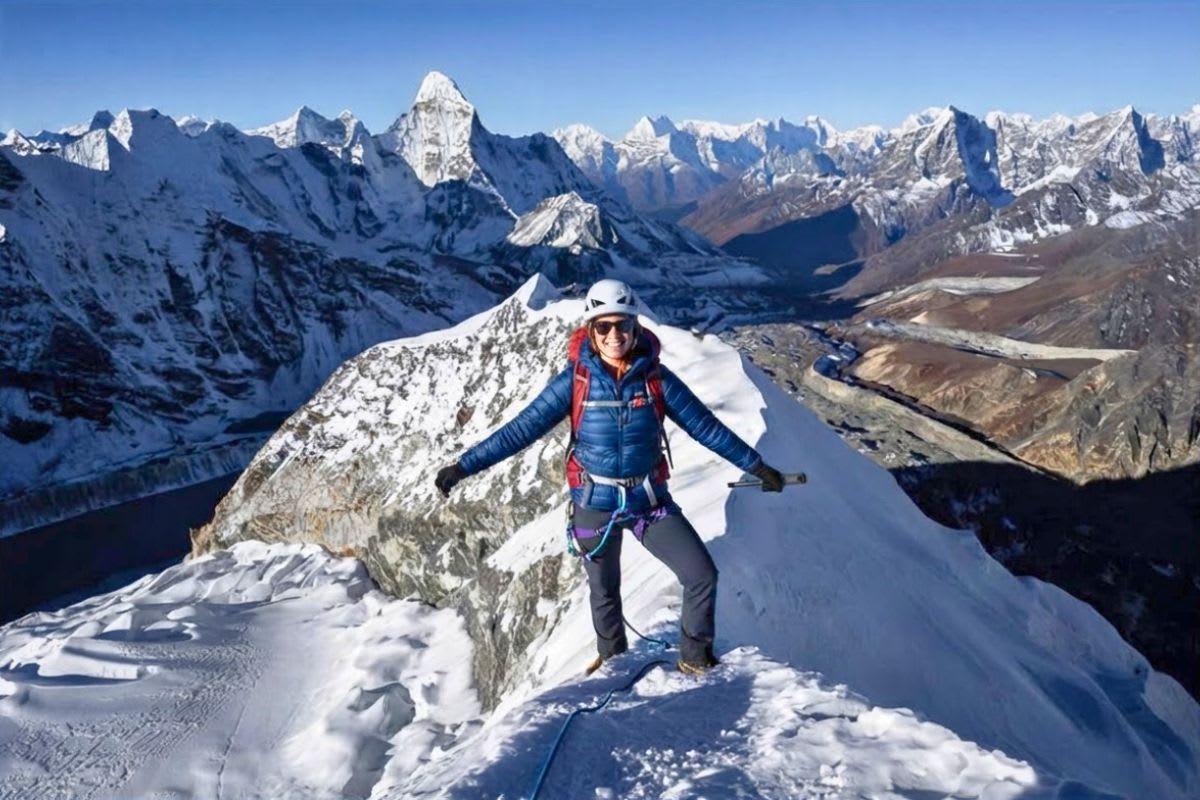
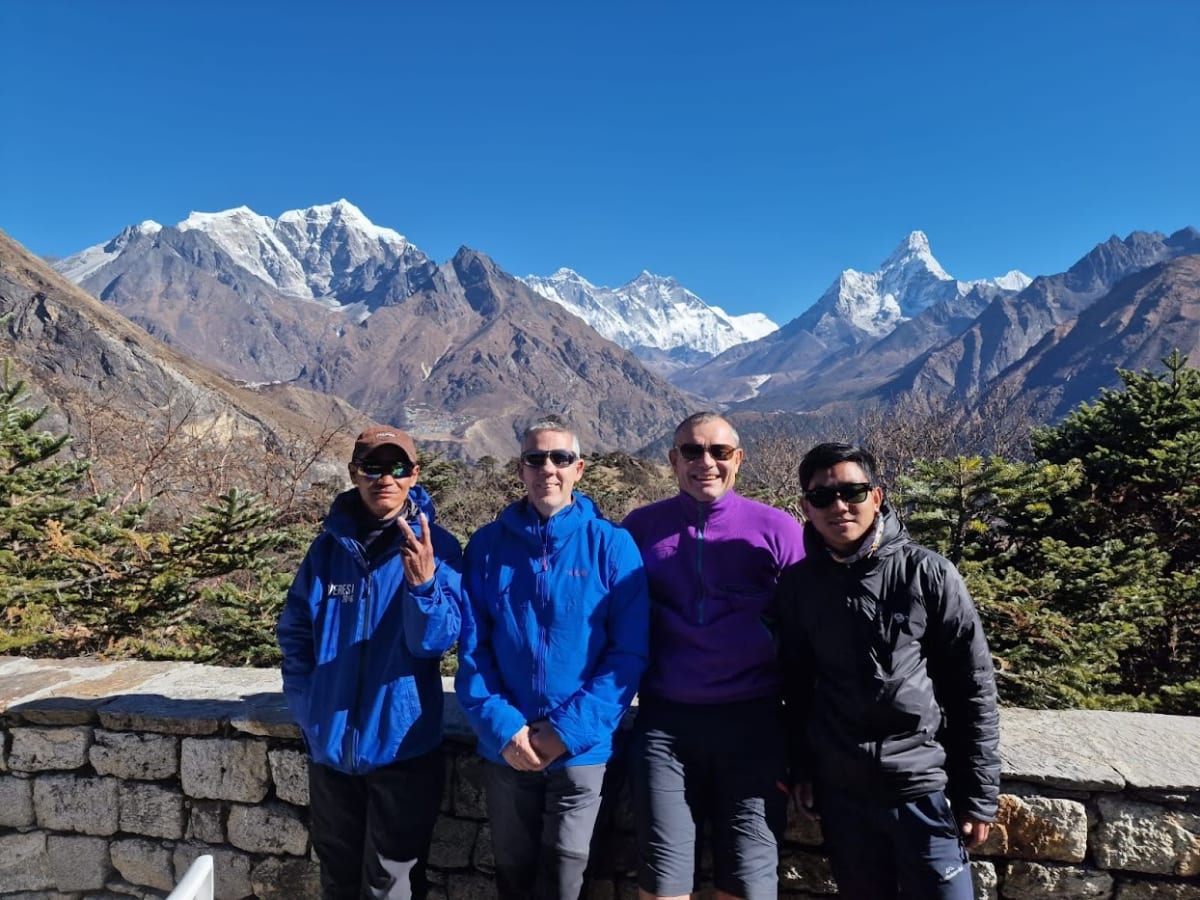
Fitness preparation for a first Himalayan climb is a three to four month training block of endurance hiking, leg strength, and cardiovascular work that readies a fit trekker for the long summit days on a 6,000 m trekking peak. Summit day on Island Peak or Mera runs 10 to 14 hours with 1,000 m or more of ascent at altitude, so the goal is sustained endurance, not gym strength. Passang Dawa Sherpa, who has guided beginner climbers up Island Peak 23 times, wrote this from watching who summits and who turns back.
The sections below cover the endurance base, the leg and core work, the altitude reality that fitness cannot fully solve, and a realistic benchmark for readiness.
In this guide 5
What fitness does a first Himalayan climb demand?
A first climb demands endurance above all, because the summit day is long and the terrain is relentless rather than intense. Summit day on a beginner peak means a midnight start, 1,000 to 1,200 m of ascent, a fixed-rope headwall, and a descent, totalling 10 to 14 hours of movement at altitude. The training that prepares for this is sustained aerobic work, not short high-intensity efforts, because the climb never sprints but never stops either.
The best single preparation is back-to-back long hikes with a loaded pack, which trains the exact system the climb taxes. A climber who can hike comfortably for six to eight hours on consecutive days carrying 8 kg has the endurance base the summit day needs.
What training should the block include?
A three to four month block should build three elements: an aerobic endurance base, leg and core strength, and hill-specific conditioning. Aerobic work means two to four sessions a week of running, cycling, or brisk hiking, building to sessions of two hours or more, so the cardiovascular system handles sustained output. Leg strength from squats, lunges, and step-ups protects the knees on the long descents that injure more climbers than the ascents do. Core work steadies the load on steep ground and fixed ropes.
The keystone session is a weekly long hike, ideally on hills with a loaded pack, extended over the block toward the six-to-eight-hour summit-day length. Stair-climbing or hill repeats substitute where hills are not available. The peak choices this training prepares for are compared in the beginner climbing peaks guide.
How should the training block be structured week to week?
A 12 to 16 week block builds in three phases, each roughly a month, moving from base fitness to climb-specific conditioning. Weeks 1 to 4 establish the aerobic base: two to three sessions a week of running, cycling, or hiking at a conversational pace, alongside two short strength sessions covering squats, lunges, and step-ups at moderate load. This phase is deliberately unglamorous, since its job is raising the ceiling the later phases will push against.
Weeks 5 to 10 add volume and the loaded long hike. The weekly long hike grows from two hours to four or five, with a daypack loaded to 6 to 8 kg, and strength sessions add single-leg work and weighted step-ups to build the stability a rocky descent demands. A midweek hill-repeat or stair session, 45 minutes to an hour, adds the higher-intensity stimulus the weekend long hike alone doesn't provide. By week 10 a climber should be comfortable with a six-hour day on rough terrain.
Weeks 11 to 14 taper the volume slightly while holding intensity, since the goal shifts from building fitness to arriving at the expedition rested rather than depleted. The final long hike sits two to three weeks before departure, not the week before, so the body has time to absorb the training rather than travel fatigued. A short pre-departure check-in, ideally the specific back-to-back-day benchmark below, confirms readiness before booking non-refundable flights.
Why can't fitness solve altitude?
Fitness prepares the muscles and heart but cannot train the body's response to reduced oxygen, which is why a very fit climber can still be turned back by altitude on a peak a moderate one summits. Altitude adaptation is physiological and individual, and it is managed by a paced acclimatization schedule, not by training harder. This is the single most important thing a first-time climber must accept: arriving fit is necessary but not sufficient, and the acclimatization approach does the rest.
The schedules that build altitude tolerance on each climbing route are in the acclimatization schedule guide, and the warning signs to respect are in the altitude sickness prevention guide. A climber who trains the endurance and respects the acclimatization has done both halves of the preparation.
What is a realistic readiness benchmark?
A realistic benchmark for a first 6,000 m peak is the ability to hike 15 to 20 km with 1,000 m of ascent on back-to-back days carrying 8 kg, finishing the second day with energy to spare. A climber who can do that has the endurance base for the summit day, assuming a sound acclimatization schedule. Reaching that benchmark takes most reasonably active people three to four months of focused training from a moderate starting fitness.
Fitness beyond that benchmark helps but is not the deciding factor; altitude, weather, and pacing decide summit days once the endurance base is there. The insurance that covers a climb to the summit height, which every climber needs regardless of fitness, is covered in the helicopter evacuation insurance coverage guide.
FAQ
Common questions
How fit do I need to be to climb Island Peak?+
You should be able to hike 15 to 20 km with 1,000 m of ascent on back-to-back days carrying 8 kg, finishing with energy to spare. Summit day runs 10 to 14 hours with over 1,000 m of ascent at altitude, so endurance matters more than strength. Most active people reach that benchmark with three to four months of focused training.
How long should I train for a Himalayan climb?+
Plan a three to four month training block from a moderate starting fitness, built around a weekly long hike with a loaded pack plus aerobic and leg-strength sessions. The goal is sustained endurance for the long summit day, not gym strength. Fitness prepares the body but cannot train altitude tolerance, which the acclimatization schedule handles.
Should I stop training right before the expedition?+
Taper, don't stop. Reduce volume in the final two to three weeks before departure while keeping some intensity, and schedule your last long training hike two to three weeks out rather than the week before flying. Arriving at the expedition rested from a proper taper matters more than squeezing in one final hard session.