Nepal Travel Packages
Yala Peak Climb

Yala Peak Climb

★★★★★ 4.8 (19 reviews)
climbing, Nepal 12-13 days Moderate-Strenuous Max 5,732 m
Duration
12-13 days
Max altitude
5,732 m
Difficulty
Moderate-Strenuous
Group size
Up to 12
Total distance
~75 km
Elevation gain
4,200 m
Best season
April to May, October to November
Avg daily walk
4-6 hours
Starts in
Syabrubesi (1,550 m)
Ends in
Syabrubesi (1,550 m)
Accommodation
Teahouse lodges, tented high camp
✓ TAAN & NMA licensed guides ✓ Permits included, no hidden fees ✓ Small group departures
Group departure · per person
USD1,650
Permits, guide, porter, lodging & food included
Departure date
Email Nepal
Permits and logistics fully arranged
Licensed guide included on every departure
Direct WhatsApp line to your guide

Yala Peak is a 5,732 m trekking peak in Nepal's Langtang region, reached via Kyanjin Gompa, and it is the gentlest of Nepal's Mountaineering Association trekking peaks, a crampon walk with minimal steep climbing rather than a technical ascent. A 2026 group departure costs USD 1,400 to 1,900 per person including the NMA climbing permit at a flat USD 70, one of the lowest trekking-peak royalties Nepal issues, and the Langtang National Park entry (NPR 3,000). The 12 to 13 day itinerary follows the Langtang Valley trek to Kyanjin Gompa (3,870 m), then climbs to a high camp before the summit push, with no glacier travel or fixed-rope pitch required for most parties.

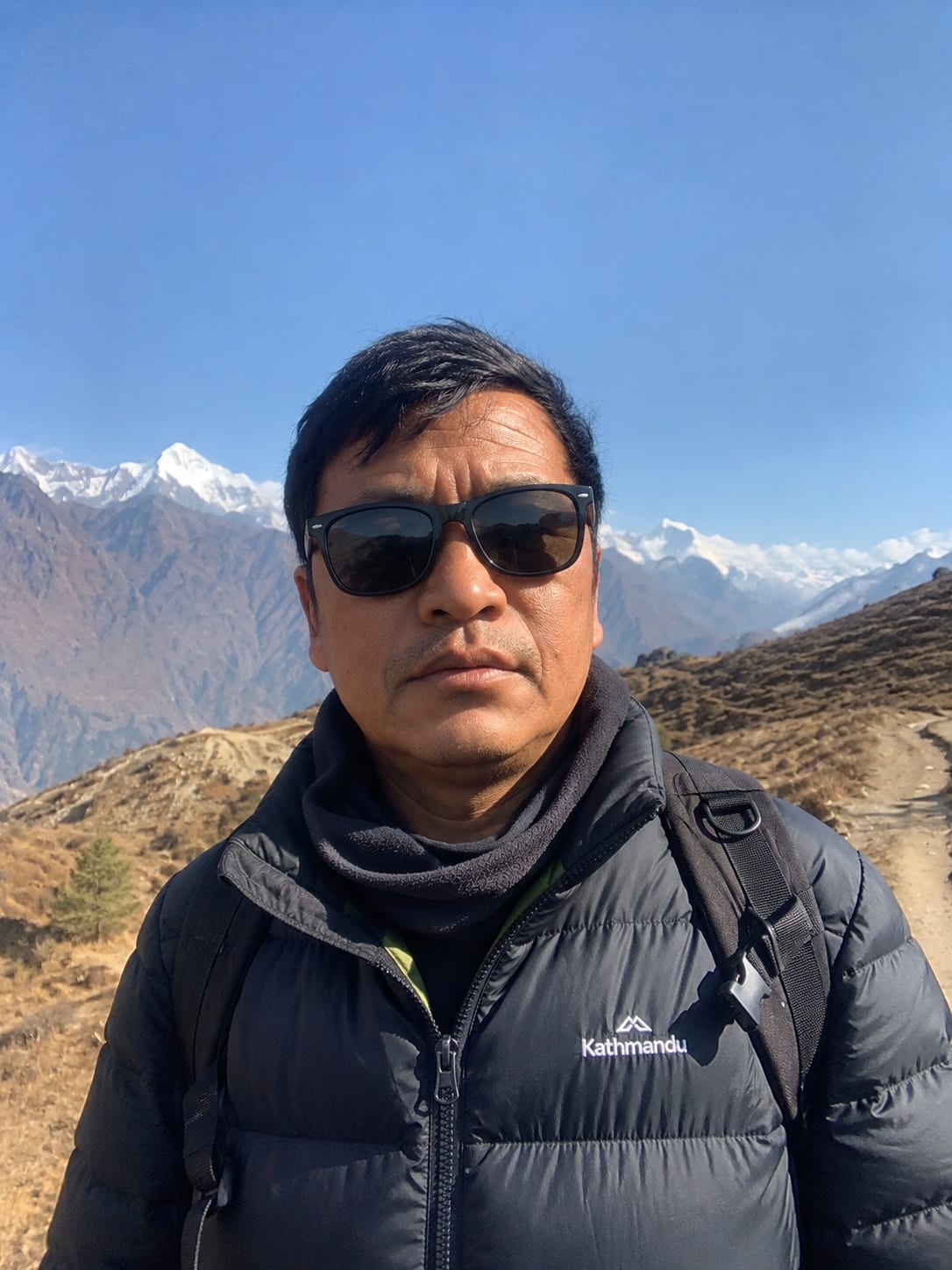
Mingma Tendi Sherpa, the company's Langtang specialist with 14 years guiding the region, leads Yala Peak expeditions from Kyanjin Gompa. The sections below cover the low-cost NMA permit, a cost breakdown against the USD 1,400 to 1,900 range, why Yala suits climbers with no technical background, and the non-technical summit day that makes it Nepal's most accessible first climb.

Highlights

What our guides know that others don't.

1

Royalty tier

Flat USD 70 year-round, the lowest NMA trekking-peak royalty, versus the seasonal USD 125-250 Group B tier

2

High-camp option

Fit parties sometimes summit direct from Kyanjin Gompa without a high camp; we run a two-camp ascent for altitude safety

Live from the trail

Updated 2 Jul 2026

Monsoon status: climb on hold, unstable snow

The summit slope above Yala Base Camp carries wet, unstable monsoon snow through the summer, and we do not run Yala Peak departures in the monsoon. The Langtang Valley trek itself stays open, but the climbing portion reopens for scheduled ascents in early October once the snowpack firms. Next scheduled departure: early October.

What permit does the Yala Peak climb require?

Yala Peak needs two permits in 2026: the Nepal Mountaineering Association climbing permit at a flat USD 70, and the Langtang National Park entry at NPR 3,000. The flat royalty is a real distinction from the Khumbu's Group B peaks: Island Peak, Lobuche East, and Mera Peak all carry a seasonal USD 125 to 250 fee, while Yala's USD 70 applies year-round with no spring surcharge. The permit still runs through a registered agency, though the paperwork is lighter than a Khumbu climbing peak since no separate municipality permit applies in Langtang.

Langtang National Park covers the entire approach from Syabrubesi to Kyanjin Gompa, so a single entry fee carries the whole trek and climb. The wider NMA fee structure across all trekking peaks is set out in the climbing permits and NMA royalties guide.

Why is Yala Peak Nepal's gentlest trekking peak?

Yala Peak earns its reputation because the summit push is a crampon walk on a moderate snow slope with almost no steep sections, unlike the fixed-rope headwalls on Island Peak and Lobuche East. No glacier crossing, ladder section, or rope-anchor technique is required for most parties, which is why Mingma Tendi Sherpa recommends Yala as a genuine first climb for trekkers with zero mountaineering background. Fitness and comfort at 5,732 m matter more than any technical skill on this peak.

This is a real objective, only a gentler one: Yala rewards trekkers who want an actual summit and a rope-free crampon experience without committing to headwall training. Climbers deciding between Yala and a more technical peak can compare all four standard first climbs in the beginner climbing peaks in Nepal guide. The gentleness is a design choice in the route itself, not a lowered standard of guiding: Mingma runs the same oxygen-saturation monitoring and pacing discipline above 4,700 m on Yala that he runs on Langtang's harder trekking routes, because altitude risk doesn't scale down just because the technical grade does.

What technical skills does the base-camp training cover?

The skills session at Yala Base Camp (5,000 m) runs one to two hours and covers crampon fitting and walking technique on snow and firm ice, basic ice-axe use for balance and self-arrest, and moving as a roped team across the moderate summit slope. None of this is drilled to the depth an Island Peak or Lobuche East headwall demands, since Yala's terrain never asks for a jumar ascent or a hanging rappel, but the session is not skipped or rushed: Mingma checks every climber's crampon fit personally and runs a short practice slope before clearing anyone for summit day.

Climbers arrive with a wide range of backgrounds, some having never worn crampons before, and the session is built around that reality rather than assuming prior exposure. A guide-to-client ratio of roughly one guide per four climbers on the skills session keeps individual attention high enough to correct technique before it matters on the mountain, not after. This is the same training-then-climb structure every NMA trekking peak on this site uses, scaled to what Yala's terrain actually requires rather than padded out to look more demanding than the route is.

How does Yala Peak fit into a longer Nepal climbing progression?

Yala Peak works as a genuine entry point into Nepal's climbing peaks, and climbers who enjoy it often move on to Island Peak (6,189 m) or Mera Peak (6,476 m) next, both of which add a fixed-rope headwall Yala doesn't have. The jump from Yala to either of those peaks is real: a climber comfortable on Yala's crampon walk still needs to learn jumar ascending and rappel technique before a headwall climb, which is exactly what Island Peak and Lobuche East teach at their own base camps. Yala doesn't shortcut that training, it simply doesn't require it yet.

For climbers with an eventual expedition peak like Ama Dablam in view, Yala is a reasonable first step but not a sufficient one on its own; Ama Dablam's prerequisite is genuine technical rope experience or a completed trekking-peak summit with sustained fixed-line climbing, which points more directly at Island Peak or Lobuche East than at Yala. Mingma discusses realistic next steps with every Yala client who asks, based on how they moved on the summit slope and how they handled the altitude, rather than giving the same generic answer to everyone.

How much does the Yala Peak climb cost in 2026?

TAAN-registered operators quoted USD 1,400 to 1,900 for a group Yala Peak departure in 2026, the lowest range of any NMA trekking peak we operate, reflecting the flat USD 70 permit and the shorter 12 to 13 day itinerary. The climbing-guide line stays lighter than a Khumbu peak because Yala's terrain needs less technical management, and transport runs by road from Kathmandu to Syabrubesi rather than a Lukla flight, which removes a cost line entirely. Group climbing gear is minimal: crampons, an ice axe, and a short fixed line for the final approach.

A private Yala Peak departure runs USD 1,750 to 2,400 per person. Climbers combining a modest budget with a genuine summit rarely find a better match than Yala among Nepal's NMA peaks.

Where the price goes · per person
NMA climbing permitFlat rate, no seasonal tiers$70
Langtang National Park entryNPR 3,000$23
Kathmandu-Syabrubesi transport, round tripLocal bus or private jeep, road not flight$50–90
Climbing guide plus support (shared)NMA-licensed guide, lighter technical demand than Khumbu peaks$380–560
Porters and high-camp support crew11-12 nights of load carrying$180–280
Teahouse rooms, food, high-camp catering10-11 nights plus one tented high camp$260–400
Group climbing gear, crampon and rope rentalCrampons, ice axe, short fixed line for the final approach$120–200

How does the Kyanjin Gompa acclimatization work?

Yala Peak's acclimatization runs through the standard Langtang Valley trek: Lama Hotel (2,470 m), Langtang village (3,430 m), and Kyanjin Gompa (3,870 m), with a rest day at Kyanjin Gompa before the climb. The rest day includes an optional hike to Kyanjin Ri (4,773 m) or Tserko Ri (5,033 m), both of which push climbers above 4,700 m before the peak's 5,732 m summit, a useful altitude preview. This gradual profile is why Yala suits climbers who have not tested themselves above 5,000 m before.

Because the approach gains altitude more gradually than the Khumbu's peaks, sleeping-altitude jumps stay within the standard 500 m-per-night guidance for most of the trek. The rest-day placement and pacing logic are detailed further in the acclimatization schedule guide.

What should you pack for the Yala Peak climb?

Yala Peak's packing list layers standard Langtang trekking gear with a smaller technical kit than a headwall peak like Island Peak needs. The trekking base follows the Nepal trekking packing list: a four-season sleeping bag rated to at least -15 C, since Kyanjin Gompa's teahouses and the tented high camp are both unheated, warm layers, and broken-in waterproof boots stiff enough to take a crampon securely. Climbing-specific gear is lighter than a headwall peak needs: crampons and an ice axe (rented in Kathmandu or supplied by the operator, as noted in the cost table), a climbing helmet, and a harness for the roped-team sections, but no jumar or ascender, since Yala's terrain never requires rope-climbing technique.

Sun protection matters more than on a typical teahouse trek because the summit slope and the high camp both sit on open snow with intense UV reflection: glacier glasses rather than standard sunglasses, a high-SPF sunscreen applied to the lips and nostrils as well as the face, and a buff for wind protection on the exposed ridge near the summit. A headlamp with spare batteries is essential for the pre-dawn summit start, and a spare pair of gloves is worth carrying, since wet gloves at 5,700 m are a genuine discomfort the trip's short duration doesn't allow much time to recover from.

What does summit day on Yala Peak involve?

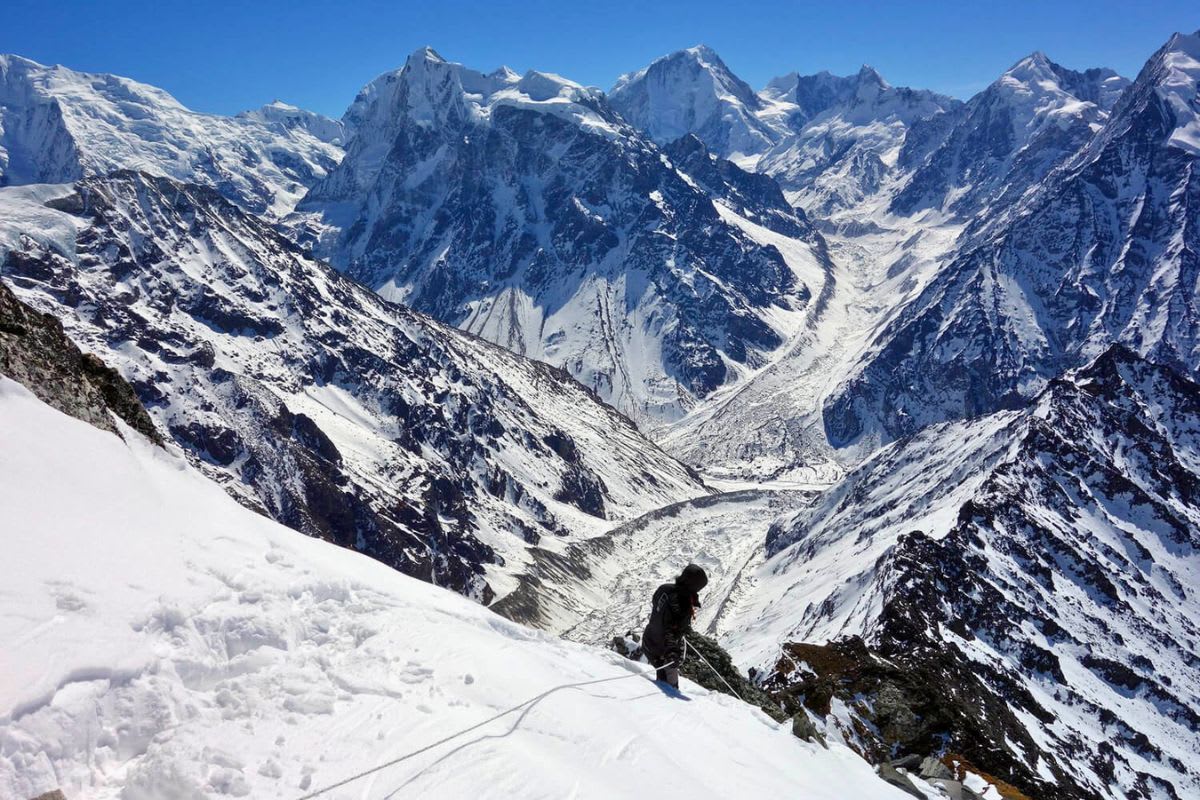
Summit day on Yala Peak starts from a high camp near 5,000 m and climbs a moderate snow slope in crampons to the 5,732 m summit, typically four to five hours up with sweeping views of Langtang Lirung (7,227 m) and the Langtang range. No fixed-rope headwall or ladder crossing interrupts the climb, and most parties move roped together only as a precaution rather than out of technical necessity. Some strong, well-acclimatized groups summit directly from Kyanjin Gompa in one long push, but we run a two-camp ascent for a safer pace and better summit odds.

The descent to Kyanjin Gompa the same day is standard, since the climb is short enough not to need a second high-camp night. Insurance still needs to cover mountaineering above 5,500 m, the coverage tier explained in the helicopter evacuation insurance coverage guide.

What weather affects a Yala Peak summit attempt?

Yala Peak's summit slope faces conditions that are milder than a Khumbu peak's but still genuinely weather-dependent: morning wind on the exposed upper section typically builds through the day, which is why every departure targets a pre-dawn start and aims to be off the summit slope before late morning. Spring departures (April-May) contend with occasional afternoon cloud building off the Langtang valley, usually clearing by the following dawn, while autumn departures (October-November) tend to run the most stable, driest windows of the year. Neither season carries the extreme cold of a Khumbu 6,000 m peak, since Yala's lower summit altitude and shorter exposure time reduce the temperature and wind-chill risk relative to Island Peak or Mera.

Snow condition on the summit slope matters more than wind for a non-technical route like this one: firm, consolidated snow makes the crampon walk straightforward, while fresh, unconsolidated snow after a storm can turn the same slope into slower, more tiring travel and occasionally postpones a summit attempt by a day. This is exactly what the built-in contingency day on day 9 exists to absorb, and Mingma makes the call on summit-day timing based on conditions observed from base camp that morning rather than a fixed departure-day schedule set weeks in advance. The monsoon closure described in the condition update below reflects the same logic applied at a seasonal scale: unstable snow makes the route genuinely unsafe, not just less pleasant, so we simply don't run summer departures.

Elevation profile High point 5,732 m
2,0003,0004,0005,0001,550 m123455,000 m6789101,550 m11DAY
Acclimatization night High point

Day by Day

13-day itinerary, every detail planned.

Day1
Trip Day
Drive Kathmandu to Syabrubesi (1,550 m)
122 km
1,550m alt.

The road journey along the Trishuli river opens the Langtang approach. Rooms and gear checks happen in Syabrubesi that evening.

1,550 m122 km
Day2
Trip Day
Syabrubesi to Lama Hotel (2,470 m)
~6h walking14 km
2,470m alt.
Day3
Trip Day
Lama Hotel to Langtang village (3,430 m)
~6h walking13 km
3,430m alt.
Day4
Trip Day
Langtang village to Kyanjin Gompa (3,870 m)
~4h walking8 km
3,870m alt.
Day5
Acclimatization
Acclimatization day in Kyanjin Gompa
~5h walking
3,870m alt.
Day6
High Point
Kyanjin Gompa to Yala Base Camp (5,000 m)
~4h walking5 km
5,000m alt.

What's Included

Transparent, all-in pricing.

Included in your price

NMA climbing permit
Langtang National Park entry
Kathmandu-Syabrubesi transport, round trip
Climbing guide plus support (shared)
Porters and high-camp support crew
Teahouse rooms, food, high-camp catering
Group climbing gear, crampon and rope rental

Not included

Nepal entry visa fee (USD 30-125, paid on arrival)
Travel insurance with helicopter evacuation cover
Personal trekking gear and equipment
Tips for your guide and porter
Bottled drinks, wifi, and device charging at teahouses
Meals in Kathmandu outside the itinerary

Dates & prices

Upcoming departures.

Start dateEnd datePrice / personAvailability
12 Oct 202624 Oct 2026USD 1,650Guaranteed · 5 leftEnquire
2 Nov 202614 Nov 2026USD 1,650Open · 8 leftEnquire
18 Apr 202730 Apr 2027USD 1,750Open · 10 leftEnquire
9 May 202721 May 2027USD 1,750Open · 11 leftEnquire

Verified reviews

What travellers say.

4.8/5 from 19 reviews on TripAdvisor, checked July 2026

★★★★★

My first climb over 5,000 m and Yala Peak was the perfect introduction, no ropes needed beyond a short precautionary section near the top. Mingma's pacing through the Langtang valley meant nobody in our group struggled with the altitude. Standing below Langtang Lirung at sunrise on summit day is a memory I still think about.

CD
Claire Dubois · France
3 May 2026
★★★★

Booked Yala as a low-cost first peak before trying something harder next year and it delivered exactly that. The crampon session at base camp was thorough even though the terrain barely needed it. Kyanjin Gompa's cheese factory and monastery made the rest days genuinely enjoyable, not just filler.

TW
Tom Whitfield · United Kingdom
19 Apr 2026

Why Nepal Travel Packages

Built on published proof, not adjectives.

A named, licensed guide before you book

Full name, photo, NMA or TAAN license number, and a direct WhatsApp line. The guide on the page is the guide on the trail.

Itemized pricing, not a lump sum

Permits, guide, porter, lodging, and food broken out on every trip page. You see exactly where the price comes from.

Trail conditions updated monthly

Dated field reports from the guides running the route this season, not boilerplate written once and left to go stale.

Permits handled, not hidden

Every permit fee, checkpoint, and paperwork rule is filed for you and published in the guides — no surprise admin at Lukla.

FAQ

Common questions

Do I need prior mountaineering experience for Yala Peak?+

No prior mountaineering experience is required. Yala Peak is a crampon walk on a moderate snow slope with minimal steep climbing, and we teach the basic skills at base camp. Reasonable trekking fitness and comfort at 5,732 m are what matter most.

Is Yala Peak too easy to be worth climbing?+

No, Yala Peak is a genuine 5,732 m summit with real views of Langtang Lirung and the Langtang range, not a lesser objective. It simply removes the technical demands of a fixed-rope headwall, which makes it the right choice for climbers who want a summit without steep-climbing training. Many experienced trekkers choose Yala specifically for its uncomplicated summit day.

How does Yala Peak compare to Island Peak or Mera Peak?+

Yala Peak is lower at 5,732 m and technically easier than both, with no fixed-rope headwall and a shorter 12 to 13 day itinerary against Island Peak and Mera Peak's 14 to 18 days. Island Peak and Lobuche East add a rope-and-jumar headwall; Mera Peak is higher and a bigger altitude test. Yala suits a first-time climber best, and the full comparison is in the beginner climbing peaks in Nepal guide.

What permits does Yala Peak need?+

Yala Peak needs the NMA climbing permit at a flat USD 70, one of the lowest trekking-peak royalties in Nepal, plus the Langtang National Park entry at NPR 3,000. No separate municipality permit applies in Langtang, unlike the Khumbu peaks. A registered agency arranges both before the trek starts.

What insurance do I need for Yala Peak?+

You need a policy covering mountaineering above 5,500 m with helicopter evacuation, since standard trekking insurance excludes roped climbing even on a non-technical peak like Yala. Evacuation options in Langtang are more limited than in the Khumbu, so confirming coverage before departure matters. Coverage tiers are detailed in the helicopter evacuation insurance coverage guide.

What skills training happens before the Yala Peak summit push?+

A one-to-two hour session at Yala Base Camp covers crampon fitting and walking technique, basic ice-axe self-arrest, and roped-team movement on the practice slope near camp. Mingma checks every climber's technique individually before clearing anyone for summit day, regardless of prior experience.

Where does Yala Peak lead if I want to climb something harder next?+

Island Peak (6,189 m) or Mera Peak (6,476 m) are the natural next steps, both adding a fixed-rope headwall Yala doesn't have. A completed Yala summit builds altitude confidence but not headwall skills, so plan on base-camp rope training again for either of those climbs rather than assuming Yala fully prepares you.

Can I see Everest or other 8,000 m peaks from Yala Peak?+

No. Yala's summit views center on Langtang Lirung (7,227 m) and the surrounding Langtang range, and on a clear day Shishapangma across the Tibetan border; Everest and the Khumbu peaks aren't visible from this position. Climbers wanting 8,000 m views from a trekking peak should look at Island Peak or Lobuche East instead, both in the Khumbu.

What's the best season for Yala Peak, spring or autumn?+

Both work well. Autumn (October-November) tends to run the most stable, driest windows of the year, while spring (April-May) sometimes carries afternoon cloud off the Langtang valley that usually clears by the next dawn. Neither season carries the extreme cold of a Khumbu 6,000 m peak, given Yala's lower summit altitude and shorter exposure time.

How does snow condition affect a Yala Peak summit attempt?+

Firm, consolidated snow makes the crampon walk to the summit straightforward, while fresh snow after a storm can slow the climb and occasionally postpones an attempt by a day. The itinerary's built-in contingency day at Kyanjin Gompa exists to absorb exactly this, and the guide makes the final call on summit-day timing from conditions observed that morning rather than a fixed schedule.

Is Langtang village recovered from the 2015 earthquake?+

Yes, largely. Langtang village, where this itinerary overnights on day 3, was rebuilt after the 2015 earthquake and avalanche, and lodge infrastructure through the valley to Kyanjin Gompa has been steadily restored since. The rebuilding is visible in newer construction along the main village street, and the valley's teahouse network is now considered fully operational for trekking and climbing groups.

What's the group size on a Yala Peak departure?+

Groups run up to 12 climbers, larger than the six-to-eight cap on an expedition peak like Ama Dablam, since Yala's non-technical terrain doesn't demand the same tight guide-to-climber ratio. A guide-to-client ratio of roughly one guide per four climbers applies specifically during the base-camp skills session, where individual technique correction matters most.

Can I combine Yala Peak with the standard Langtang Valley trek?+

Yes, the first four days of this itinerary follow the same route as the standard Langtang Valley trek through Lama Hotel and Langtang village to Kyanjin Gompa, so trekkers who want the valley's scenery without committing to the climb can book that shorter trip instead and add the peak later if they decide to. Conversely, Langtang Valley trekkers already at Kyanjin Gompa occasionally extend into a Yala Peak climb on request, subject to gear availability and an honest fitness check with the guide before committing.

Is Yala Peak rentable gear or do I need to buy my own?+

Crampons, ice axe, and the short fixed line for the final approach can all be rented in Kathmandu before departure, and rental costs are included in the group climbing gear line of the cost breakdown above. Buying your own is only worth it if you plan further climbs afterward, since a single Yala Peak departure doesn't justify the investment for most first-time climbers.