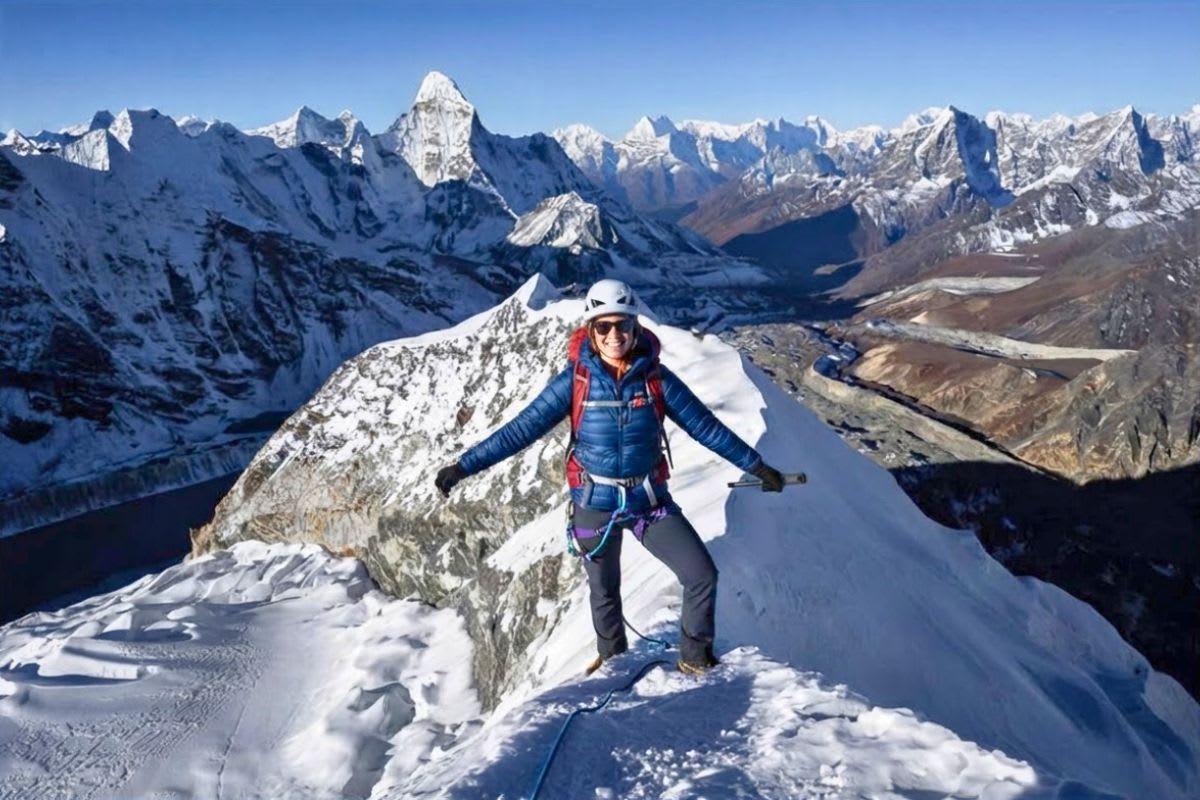
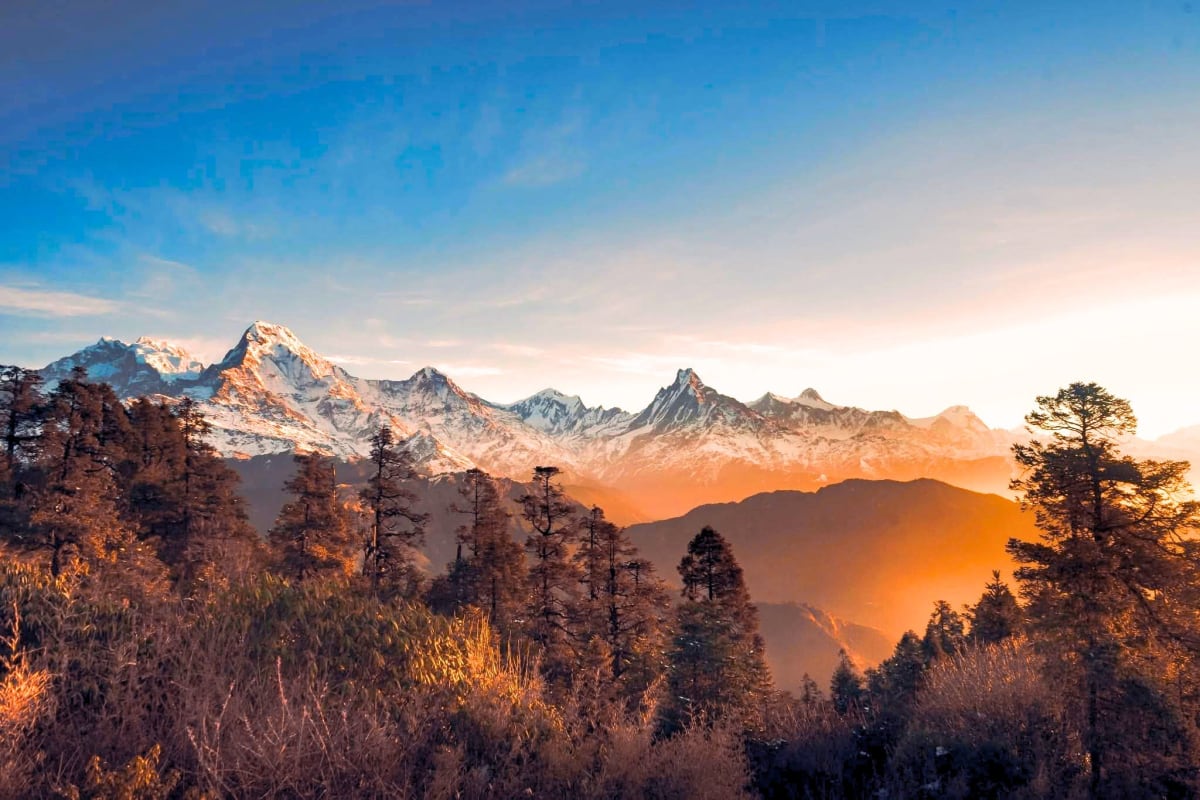

A beginner climbing peak in Nepal is a Nepal Mountaineering Association trekking peak that a fit trekker can summit after a base-camp skills course, and the four standard first climbs are Yala Peak (5,732 m), Island Peak (6,189 m), Lobuche East (6,119 m), and Mera Peak (6,476 m). None requires prior mountaineering experience, though all demand hill fitness and a tolerance for altitude, and NMA permits run USD 70 to 250 by peak and season. Passang Dawa Sherpa, who leads our Island Peak, Mera Peak, and Lobuche East expeditions, wrote this comparison alongside Mingma Tendi Sherpa, the company's Langtang specialist who leads Yala Peak, to match climbers to the right first peak.
The sections below compare the four on altitude, technical difficulty, and the skills each demands, so you can choose a first Himalayan climb that fits your experience.
In this guide 5
Which beginner peak should you climb first?
The four standard beginner peaks sort by a trade between altitude and technical difficulty, and the right first climb depends on which you are more ready for. Yala Peak in Langtang is the least technical at 5,732 m, effectively a high walk with crampons and no steep climbing, making it the gentlest introduction. Mera Peak is the highest at 6,476 m and the biggest altitude test, but technically straightforward, a long snow plod rather than a climb. Island Peak at 6,189 m and Lobuche East at 6,119 m are more technical, each with a fixed-rope headwall that teaches real climbing skills.
The choice comes down to what you want from a first peak. For a pure altitude experience with minimal technical demand, Mera. For genuine climbing skills on a summit ridge, Island Peak or Lobuche. For the gentlest possible start, Yala.
How do the four peaks compare?
| Peak | Height | Region | Technical difficulty | Best for |
|---|---|---|---|---|
| Yala Peak | 5,732 m | Langtang | Minimal; crampon walk | Gentlest first climb |
| Mera Peak | 6,476 m | Hinku (Everest) | Low; long snow slopes | Highest, altitude test |
| Lobuche East | 6,119 m | Khumbu | Moderate; fixed-rope headwall | Skills near EBC |
| Island Peak | 6,189 m | Khumbu | Moderate; steeper headwall, ridge | Most popular first 6,000 m |
Island Peak is the most popular first climb because it pairs an achievable technical summit with the classic Everest Base Camp acclimatization approach, so the trip doubles as a full EBC trek. Its route and cost sit on the Island Peak climb page.
What skills do beginner peaks require?
All four peaks teach their skills at base camp before the summit push, so no prior mountaineering background is needed, only fitness and the willingness to learn. The core skills are walking in crampons, self-arrest with an ice axe, and ascending a fixed rope with a jumar, which our guides drill on a training day. Island Peak and Lobuche add fixed-rope headwall technique and clipping past anchors, the more technical end of the beginner range. Yala and Mera need mainly crampon confidence and altitude endurance.
Fitness matters more than technique on all four, because the summit days are long and high. The training that prepares a climber for these peaks is covered in the climbing fitness preparation guide, and the permit costs and NMA royalties for each are in the climbing permits and NMA royalties guide.
Which peak fits your actual experience level?
A climber with no trekking background beyond flat-terrain hiking is better served by Yala Peak than any of the other three, since its minimal technical demand means the expedition can absorb a first-timer's learning curve without the added complication of fixed-rope technique under time pressure. Yala's Langtang approach is also shorter than the Khumbu or Hinku routes to the other peaks, so a climber testing whether high-altitude climbing suits them at all carries less sunk cost if they decide it doesn't.
A climber who has already completed a teahouse trek to 4,000 m or higher, Everest Base Camp or the Annapurna Circuit, for example, and wants to add a genuine climbing skill to that experience is the right profile for Island Peak or Lobuche East. Both assume the climber already knows how their body handles multi-day altitude exposure, so the expedition can spend its energy teaching rope and crampon technique rather than also managing a first encounter with altitude.
A climber chasing the highest number on a first climb, rather than the most technical one, is the Mera Peak profile. Because Mera's difficulty is almost entirely altitude rather than technique, it rewards someone who has already proven they acclimatize well but hasn't yet tested themselves above 6,000 m, more than it rewards someone with strong technical instincts but an unknown altitude response.
How does altitude shape the choice?
Altitude is the real difficulty on every beginner peak, and the higher summits demand more acclimatization even when they are technically easier. Mera Peak at 6,476 m is technically simple but its altitude turns back more climbers than Island Peak's headwall does, because 6,476 m is a serious height for a first climb. All four peaks need a properly paced acclimatization approach, and the schedules per route are in the acclimatization schedule guide.
A sensible progression for many climbers is Island Peak first, for the skills and the manageable altitude, then Mera or a higher objective once the body's altitude response is known. Whichever peak you choose, the insurance must cover mountaineering to the summit height, covered in the helicopter evacuation insurance coverage guide.
FAQ
Common questions
Which is the easiest peak to climb in Nepal?+
Yala Peak in Langtang, at 5,732 m, is the least technical of the standard beginner peaks, effectively a high walk with crampons and no steep climbing. Mera Peak is technically simple too but much higher at 6,476 m, so its difficulty is altitude rather than climbing. For a genuine first climb with real skills, Island Peak is the popular choice.
Do I need experience to climb a Nepal trekking peak?+
No prior mountaineering experience is required for any of the four standard beginner peaks, because the skills are taught at base camp before the summit. You do need hill fitness and a tolerance for altitude, since summit days are long and high. Crampon, ice-axe, and fixed-rope skills are drilled on a training day on the expedition.
Should my first climb be Island Peak or Mera Peak?+
Choose based on what you've already tested, not just preference. If you've completed a high-altitude teahouse trek but want a new technical skill, Island Peak's fixed-rope headwall is the better fit. If you haven't yet tested how your body handles altitude above 6,000 m but climb confidently on easier ground, Mera's altitude-first profile suits you more than Island Peak's technical demands.
Can I climb more than one beginner peak in a single trip?+
Not on a standard single-peak itinerary, since each expedition's acclimatization schedule is built around one summit push. Some climbers return for a second peak in a later season once they know how their body handles altitude, most commonly progressing from Yala or Mera to Island Peak or Lobuche East once they want the added technical challenge.