
The Everest and Annapurna regions are Nepal's two flagship trekking destinations, differing at the region level in access (a Lukla mountain flight against a Pokhara road drive), permit system, cost tendency, and the range of difficulty each region's routes cover. Everest-region routes run from Gokyo Ri at 5,357 m to Island Peak's 6,189 m summit, all requiring the Khumbu Pasang Lhamu Rural Municipality permit and Sagarmatha National Park entry. Annapurna-region routes span a wider band, from Poon Hill's easy 3,210 m to the Annapurna Circuit's strenuous 5,416 m Thorong La, under the Annapurna Conservation Area Permit and TIMS system. Passang Dawa Sherpa, who has led departures across both regions, wrote this region-level comparison for trekkers choosing where to go before picking a specific trek.
The sections below compare access and cost, altitude ceilings, permit systems, and route variety, then give a recommendation by region-level fit rather than a single trek.
In this guide 9
- 01 How do the two regions compare at a glance?
- 02 How does access differ, and what does it cost?
- 03 How high do the routes in each region actually go?
- 04 How do the permit systems differ?
- 05 Which region has the broader route variety?
- 06 How does the scenery actually differ?
- 07 Our recommendation
- 08 How does the food and culture experience differ between the two regions?
- 09 Which region suits a trekker planning multiple Nepal trips?
How do the two regions compare at a glance?
| Everest region | Annapurna region | |
|---|---|---|
| Access | Mountain flight to Lukla | Road drive from Pokhara |
| Altitude range across routes | 5,357-6,189 m (Gokyo Ri to Island Peak) | 3,210-5,416 m (Poon Hill to the Circuit) |
| Permit system | Khumbu municipality NPR 2,000 + Sagarmatha NP NPR 3,000 | ACAP NPR 3,000 + TIMS NPR 2,000 |
| Cost tendency | Higher; Lukla flight adds USD 360-440 | Lower; no flight required for most routes |
| Route variety | EBC, Gokyo, Three Passes, Heli Return, Island Peak climb | Circuit, ABC, Poon Hill, Mardi |
| Difficulty range | Moderate-strenuous to technical | Easy to strenuous |
How does access differ, and what does it cost?
Everest-region trekking starts with a mountain flight to Lukla, a fixed USD 360 to 440 round-trip fare band that no operator can discount and that carries its own reliability profile, 83% on-time in February against 61% in May on our own departure records. Annapurna-region trekking starts with a road drive from Pokhara, cheaper and less weather-dependent, though the Annapurna Circuit and Upper Mustang both offer an optional Jomsom flight at the far end for trekkers short on time. This single access difference is the biggest driver of the cost gap between the two regions: an Everest trek's Lukla flight alone often costs more than an entire Poon Hill departure.
How high do the routes in each region actually go?
Every standard Everest-region route sits above 5,300 m, from Gokyo Ri's 5,357 m up through Everest Base Camp's 5,364 m, Kala Patthar's 5,545 m, and Island Peak's 6,189 m summit, so altitude risk is a factor on every itinerary the region offers. Annapurna-region routes span a genuinely wide band instead, from Poon Hill's 3,210 m, low enough that altitude sickness is barely a concern, up to the Annapurna Circuit's 5,416 m Thorong La, one of the highest trekked passes in Nepal. This difference matters most for first-time trekkers: Annapurna offers an easy entry point Everest simply does not have among its standard routes.
General altitude planning for either region follows the same guidance in the altitude sickness prevention guide.
How do the permit systems differ?
The Khumbu operates its own municipality permit at NPR 2,000 plus Sagarmatha National Park entry at NPR 3,000, a system that replaced TIMS in the Khumbu in 2018 and is issued only in Lukla or at Monjo, never in Kathmandu in advance. The Annapurna region runs on the more common national pairing, the Annapurna Conservation Area Permit at NPR 3,000 and a TIMS card at NPR 2,000, issued in Kathmandu or Pokhara before departure. Both totals land near NPR 5,000, so the systems cost about the same; they differ in where and how they are issued rather than in price. Full detail on both sits in the Nepal trekking permits master guide.
Which region has the broader route variety?
Everest's route network concentrates at the strenuous end: Everest Base Camp, Gokyo, Three Passes, the helicopter-return version, and Island Peak as a climbing extension, all serious undertakings with no genuinely easy option among them. Annapurna's network spreads across the full difficulty spectrum, from Poon Hill's family-friendly four days through Mardi Himal's moderate ridge to the Circuit's strenuous pass crossing, plus Annapurna Base Camp in between. A trekker wanting to build up gradually, easy first, strenuous later, can do that entirely inside the Annapurna region; Everest offers no equivalent ladder.
How does the scenery actually differ?
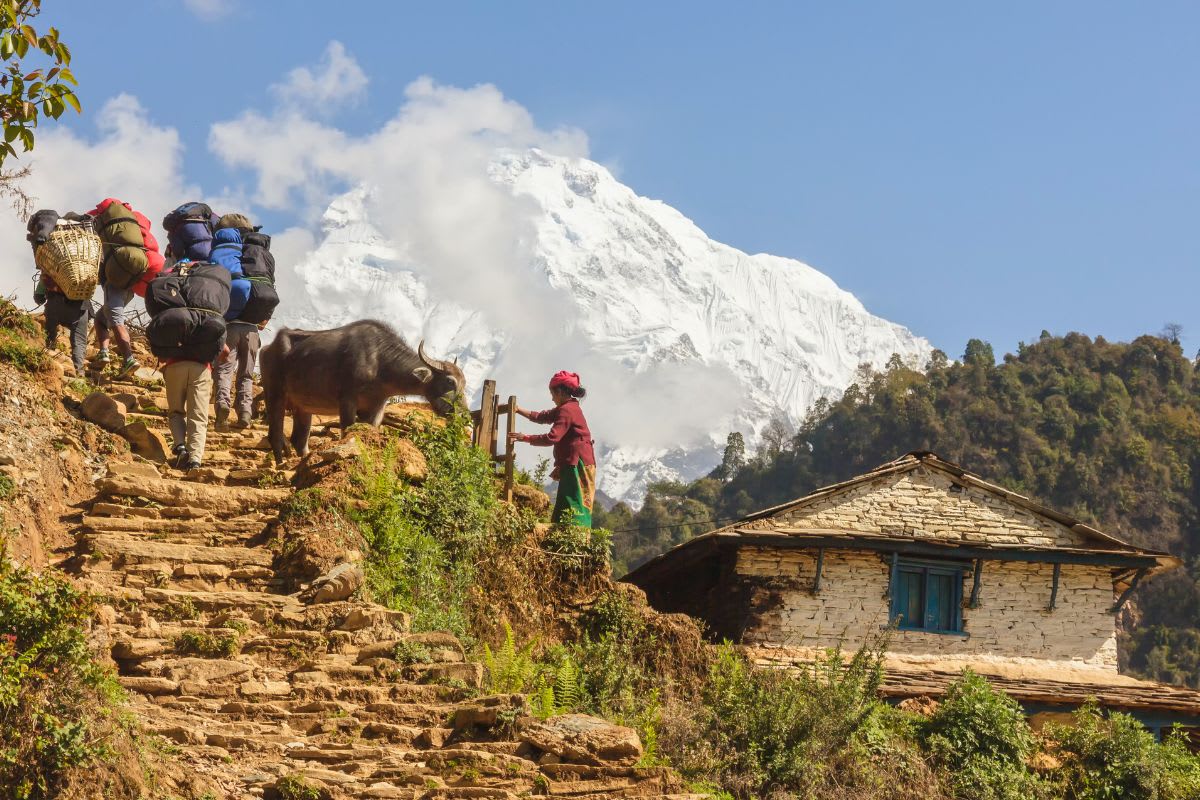
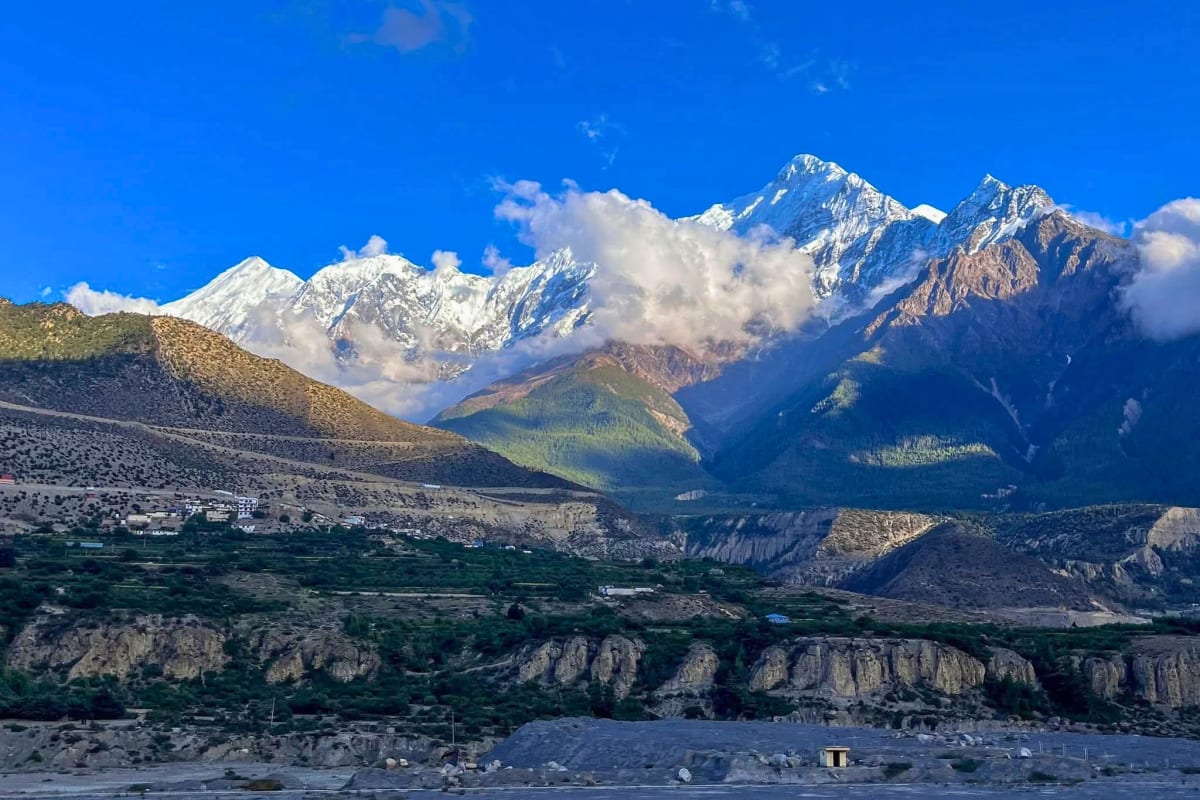
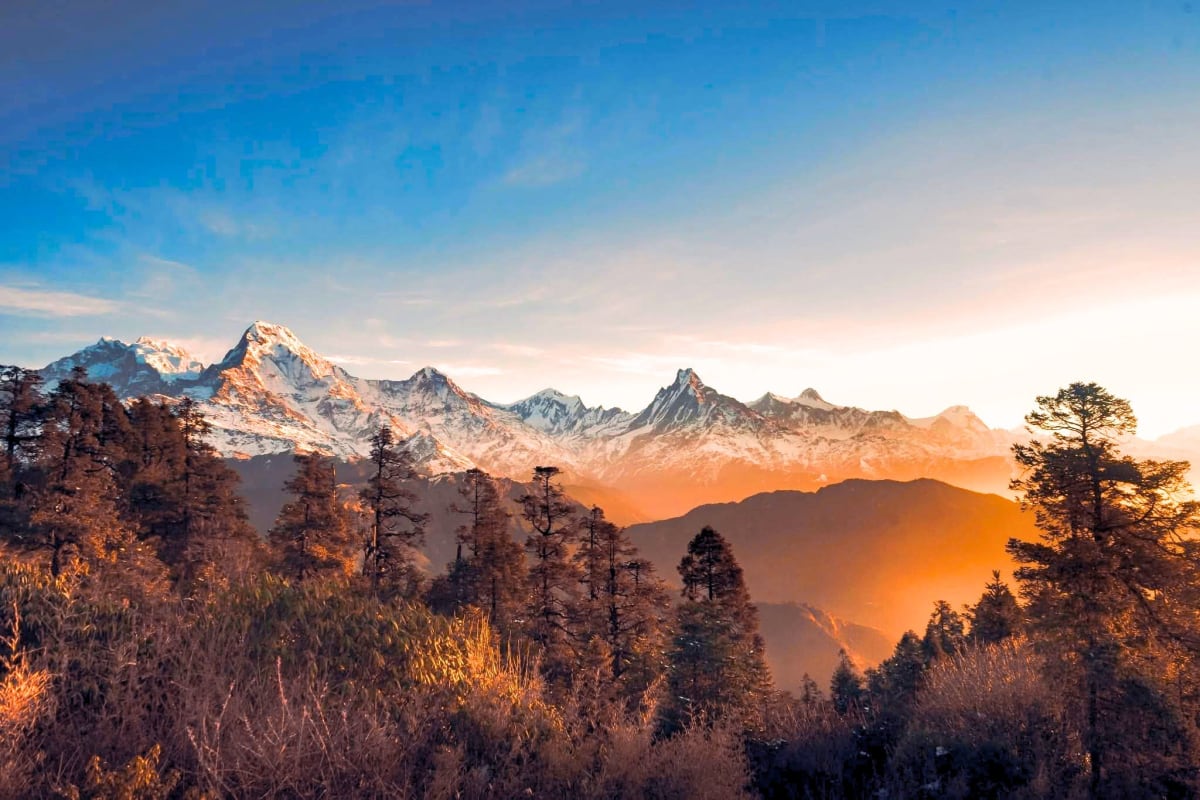
Everest-region trails run through high-alpine, largely treeless terrain above Namche Bazaar, glacial moraine, rock, and ice dominating the landscape from Dingboche onward, a stark high-mountain character that matches the region's reputation. Annapurna-region trails, by contrast, spend more of their distance in rhododendron and pine forest, particularly on the Poon Hill and Ghorepani sections, before opening into higher alpine terrain near the Sanctuary or the Thorong La. A trekker drawn to forested foothills and terraced farmland alongside the high peaks tends to prefer Annapurna's variety; one drawn to a single-minded high-mountain approach tends to prefer Everest's more consistent alpine character throughout.
Our recommendation
Choose the Everest region if the singular pull of the world's highest mountain matters more than budget, and you have the time and money for the Lukla flight and a route that starts strenuous. Choose the Annapurna region if you want road access, a lower cost floor, and the flexibility to pick anywhere from an easy four-day trek to a strenuous three-week circuit inside one region. First-time Nepal trekkers on a budget, or those wanting an easy entry point, are better served starting in Annapurna; trekkers with one trip to spend on a singular Himalayan objective, and the budget for it, choose Everest.
How does the food and culture experience differ between the two regions?
The Everest region carries a concentrated Sherpa Buddhist culture visible at every stop, monasteries, mani walls, and prayer flags threaded through villages that sit above 3,000 m almost without exception, plus a genuinely distinct food culture covered in the Everest region food guide, Sherpa stew, tsampa, and Namche's real bakeries among it. The Annapurna region's culture is more layered because the terrain itself is more varied: Gurung and Magar villages in the lower foothills, a Tibetan-influenced high-desert culture in Upper Mustang and Manang, and a food scene that stays closer to standard Nepali teahouse fare through most of the standard routes.
Neither region is more "authentic" than the other; they reflect genuinely different ethnic geographies, and a trekker drawn to a single, concentrated cultural identity tends to prefer the Everest region's Sherpa character, while one drawn to variety across a single trek tends to prefer Annapurna's layered mix.
Which region suits a trekker planning multiple Nepal trips?
A trekker planning to return to Nepal more than once has a natural sequencing question, and the regions answer it differently: Annapurna's range of difficulty means a single region can host a first easy trip and a much harder return trip years later without ever leaving it, Poon Hill on a first visit, the full Circuit on a third. Everest's route network offers less internal range but more depth, Base Camp, then Gokyo, then the full Three Passes circuit, or an NMA climbing peak like Island Peak once base-camp altitude is a known quantity.
Trekkers building toward a specific long-term goal, an 8,000 m peak someday, or simply the most complete Everest region experience, tend to keep returning to the Khumbu specifically; trekkers who want a different Himalayan region on each visit, having done Everest and Annapurna both, typically look next to Manaslu, Langtang, or one of Nepal's more remote far-western routes.
FAQ
Common questions
Which region is better for a first Nepal trek?+
The Annapurna region suits most first-time trekkers better, since it offers an easy entry point (Poon Hill, 3,210 m) that the Everest region does not have among its standard routes, all of which sit above 5,300 m. First-timers set on Everest specifically should still book EBC; the region just demands more altitude commitment from day one.
Why do Everest treks cost more than Annapurna treks?+
The Lukla flight is the main driver: a fixed USD 360 to 440 round-trip fare that every Everest-region itinerary carries, against Annapurna's road access from Pokhara, which costs a fraction as much. Everest routes are also, on average, longer and reach higher altitude, adding further guide, porter, and lodging days.
Can I do an easy trek in the Everest region?+
Not really. Every standard Everest-region route, including Gokyo, sits above 5,300 m and grades moderate-strenuous or harder, so there is no equivalent to Annapurna's Poon Hill inside the region. Trekkers wanting an easy Everest-region taste generally shorten an itinerary rather than choosing a genuinely easy route, since none exists.
Is one region more scenic than the other?+
They're scenic in different registers rather than one being objectively better. Everest offers a consistent high-alpine character, glacial moraine and rock above Namche, while Annapurna mixes rhododendron forest and terraced farmland with its own high alpine sections near the Sanctuary and Thorong La. Trekkers who want variety across a single trek tend to prefer Annapurna; those who want an unbroken high-mountain approach tend to prefer Everest.