An Everest region trek runs on dal bhat and noodle soup like the rest of Nepal's teahouse routes, but the Khumbu adds Sherpa-specific dishes like shyakpa stew and tsampa porridge, Namche Bazaar's German-run bakeries, and garlic soup as a widely believed altitude folk remedy not found the same way on other routes. Passang Dawa Sherpa, born in Phortse and raised on this exact food culture, wrote this guide from his own Khumbu upbringing rather than general Nepal trekking knowledge.
The general rules on teahouse menus, pricing by altitude, and water safety are covered in the Nepal trek food guide; this guide covers what's specifically Sherpa and Khumbu about eating on the Everest route itself.
In this guide 7
- 01 What Sherpa-specific dishes will I actually find in the Khumbu?
- 02 Is Namche Bazaar's bakery scene real, or a trekker myth?
- 03 Does garlic soup really help with altitude sickness?
- 04 How does the Khumbu's food supply chain actually work?
- 05 What should I actually order on an Everest region trek?
- 06 How much does food actually cost as you climb the Khumbu?
- 07 Are there vegetarian and dietary-restriction options in the Khumbu?
What Sherpa-specific dishes will I actually find in the Khumbu?
Shyakpa, a hearty Sherpa stew of potatoes, meat, and vegetables in a thick broth, and tsampa, roasted barley flour traditionally mixed into porridge or Tibetan-style butter tea, are the two dishes most identifiably Sherpa rather than generic Nepali teahouse fare. Both appear on Khumbu teahouse menus alongside standard dal bhat and noodle soup, usually described plainly as "Sherpa stew" for shyakpa since the Nepali transliteration varies by lodge.
These dishes reflect the Khumbu's Tibetan-influenced food culture directly, since Sherpa ancestry traces to Tibetan migration roughly 500 years ago, a background the Sherpa guides explained article covers in more depth. Trekkers curious about the region's actual food culture, not just what fuels a day's walking, should order shyakpa at least once rather than defaulting to dal bhat every meal.
Is Namche Bazaar's bakery scene real, or a trekker myth?
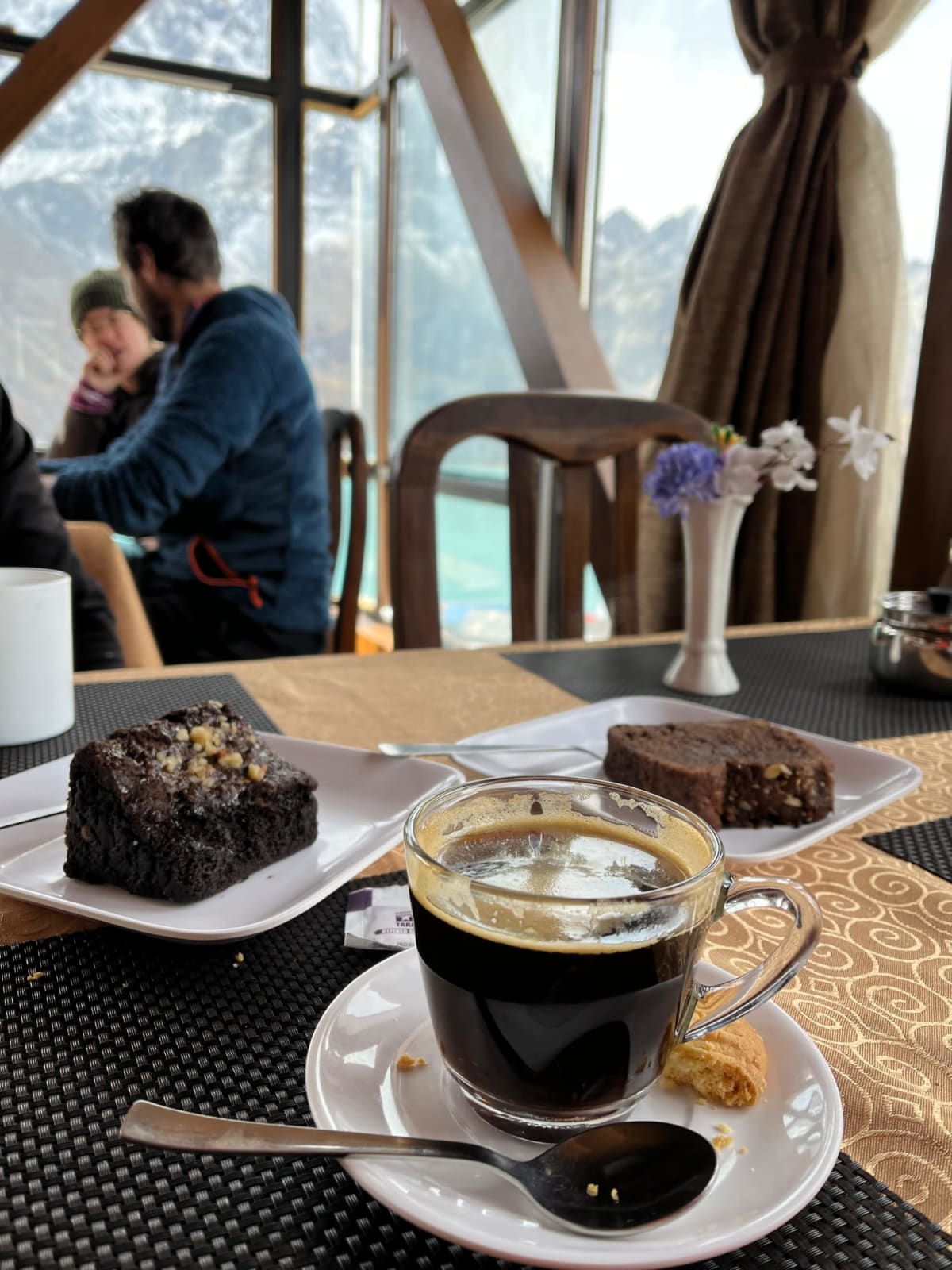
It's real: Namche Bazaar at 3,440 m has multiple genuine bakeries serving fresh cinnamon rolls, apple pie, and espresso-based coffee, a legacy of the trekking industry's decades of foreign visitor demand rather than a modern gimmick. The German Bakery and Namche Bakery both operate daily and represent the last reliably Western-style bakery food most trekkers see before the menu thins above 4,000 m.
This isn't just novelty; the fresh-baked calories genuinely matter on the acclimatization rest day the acclimatization schedules guide covers, since Namche's rest day gives trekkers a rare chance to eat something other than teahouse standards before the route's higher, sparser villages. Above Namche, bakery-quality baked goods become rare and eventually disappear entirely by Dingboche.
Does garlic soup really help with altitude sickness?
Garlic soup is a widely believed folk remedy for altitude symptoms on the Everest route specifically, though it has no confirmed clinical evidence behind it as an altitude-sickness treatment. Nearly every teahouse above Namche serves it, and guides and lodge owners alike recommend it to trekkers reporting early symptoms, a Khumbu-specific tradition not found with the same intensity on Annapurna or Langtang routes.
Our own position is direct: garlic soup is a genuinely warming, hydrating, easy-to-digest dish worth ordering for comfort, but it is not a substitute for the actual acclimatization protocol, descent, or medication a real altitude sickness case needs, covered fully in the altitude sickness prevention guide. Treating garlic soup as a cure rather than a comfort food is the one myth worth correcting directly.
How does the Khumbu's food supply chain actually work?
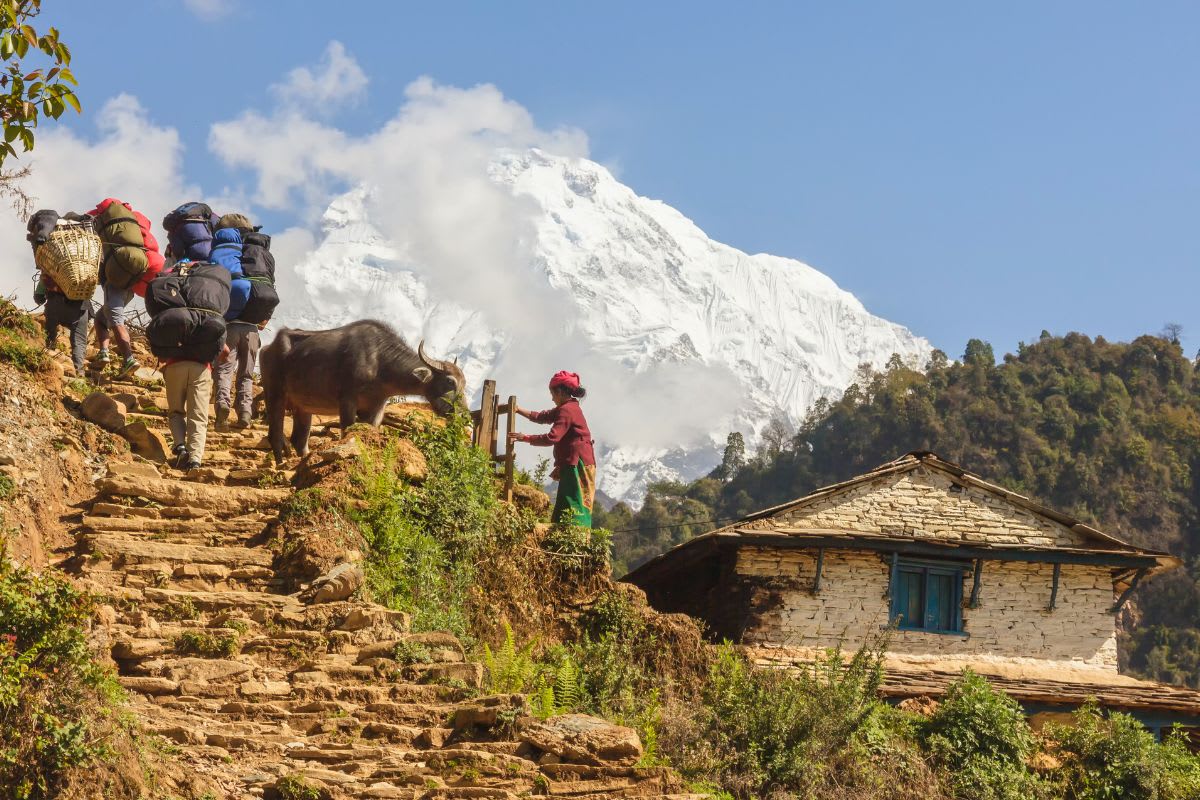
Every ingredient above Lukla arrives by porter or yak train since no road reaches the Khumbu at all, a genuinely different supply chain from Annapurna or Langtang routes where some villages have partial road access. This is why Khumbu teahouse prices run higher than almost anywhere else in Nepal, and why menu variety thins predictably with altitude as carrying an extra ingredient sack becomes a real cost decision for each lodge.
Yak meat and dairy, distinct from the lowland buffalo and cow products found elsewhere in Nepal, appear on Khumbu menus specifically because yaks are the pack animal and dairy source that actually works at this altitude. Yak cheese and yak butter tea show up on teahouse menus above Namche in a way they simply don't on lower-altitude routes.
What should I actually order on an Everest region trek?
Order dal bhat for the free-refill calories on long walking days, shyakpa at least once for a genuinely Khumbu-specific dish, and a bakery item in Namche while it's still available, saving garlic soup for comfort rather than treatment. Above Dingboche, menu choice narrows to dal bhat, noodle soup, and eggs regardless of what's printed on the laminated card, so the real ordering decision happens in the trek's lower, more varied villages.
On our own departures, guides steer first-time Khumbu trekkers toward shyakpa specifically on the Namche or Khumjung night, since it's the one dish that gives a genuine taste of Sherpa food culture before the route's higher villages narrow every menu down to the same reliable, calorie-dense basics. Worth trying alongside it: yak-milk butter tea, salty rather than sweet and an acquired taste for most Western palates, and a bowl of tsampa porridge at breakfast instead of the standard pancakes, a small swap that gives a genuinely different start to a trekking day than the route's usual Western-leaning breakfast menu.
How much does food actually cost as you climb the Khumbu?
The no-road supply chain shows up directly in the bill, and the jump is steep enough to budget for separately from the trek's package price:
| Village | Altitude | Dal bhat (set meal) | Bottled water (1L) |
|---|---|---|---|
| Lukla / Phakding | 2,650-2,800 m | NPR 500-700 | NPR 100 |
| Namche Bazaar | 3,440 m | NPR 700-900 | NPR 150 |
| Dingboche | 4,410 m | NPR 900-1,200 | NPR 250-300 |
| Gorak Shep | 5,164 m | NPR 1,200-1,500 | NPR 350-400 |
A dal bhat that costs NPR 600 in Phakding can cost double that by Gorak Shep, purely because every sack of rice and case of bottled water above that point arrived on a porter's back or a yak's load. Trekkers on our departures carry a personal water filter or purification tablets rather than buying bottled water at altitude, both to cut this specific cost and to reduce plastic waste on a route with no way to recycle it.
Are there vegetarian and dietary-restriction options in the Khumbu?
Yes, and more reliably than trekkers often expect: dal bhat is naturally vegetarian at its core, and the lentil soup, rice, and vegetable curry can be ordered without the meat side dish on request at any teahouse. Vegan trekkers do better than vegetarian ones in one specific way, since yak butter tea and cheese are the main dairy items and are easy to simply not order, while gluten-free trekkers have the hardest time, since noodle soup and most breads use wheat flour and rice-based alternatives are limited above Namche. Guides on our departures flag dietary restrictions to lodge owners ahead of the group's arrival on longer treks, which meaningfully improves what a restricted-diet trekker is offered compared to asking cold at the counter.
FAQ
Common questions
What is shyakpa?+
Shyakpa is a Sherpa stew of potatoes, meat, and vegetables in a thick broth, one of the most identifiably Sherpa dishes on a Khumbu teahouse menu, usually listed simply as "Sherpa stew." It's worth ordering at least once as a genuine taste of the region's own food culture rather than generic Nepali fare.
Does garlic soup actually cure altitude sickness?+
No, it has no confirmed clinical evidence as an altitude-sickness treatment, despite being a widely served Khumbu folk remedy. It's a warming, hydrating, easy-to-digest comfort food worth ordering, but real altitude sickness needs the acclimatization, descent, or medication protocol covered in the altitude sickness prevention guide, not garlic soup alone.
Are Namche Bazaar's bakeries actually good, or just a novelty for tourists?+
They're genuinely good: the German Bakery and Namche Bakery serve fresh cinnamon rolls, apple pie, and espresso-based coffee daily, a real product of decades of trekking-industry demand. It's the last reliably Western-style bakery food before the menu thins considerably above Namche.
Why is food more expensive in the Khumbu than on other Nepal trekking routes?+
Every ingredient above Lukla arrives by porter or yak train since no road reaches the Khumbu at all, unlike Annapurna or Langtang where some villages have partial road access. That no-road supply chain is the direct reason Khumbu teahouse prices run higher than almost anywhere else in Nepal.