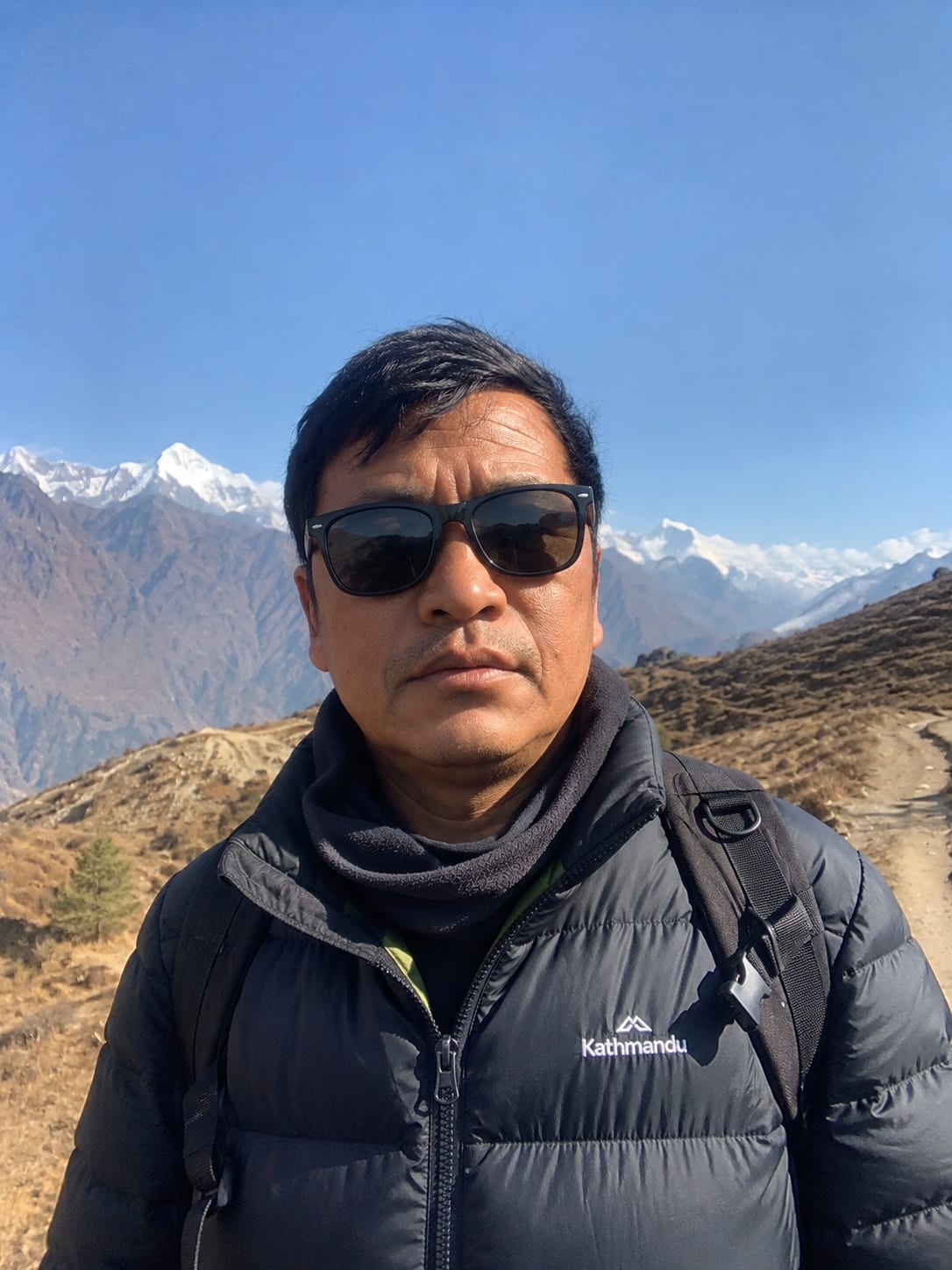
Rain-shadow treks during monsoon are Himalayan routes in valleys the summer rains never reach, chiefly Upper Mustang and Dolpo, where the 8,000 m peaks wring the monsoon dry and leave 250 to 400 mm of annual rain against 2,000 mm to the south. From June to September, when the Everest and Annapurna trails run wet and leech-ridden, these high-desert valleys stay walkable under clear skies. Mingma Tendi Sherpa, who has guided monsoon Mustang departures, wrote this guide from those trips.
The sections below explain how the rain shadow works, which valleys sit inside it, what monsoon trekking there actually looks like, and what to expect on the wet approaches that reach them.
In this guide 5
How does a Himalayan rain shadow work?
A rain shadow forms when a mountain barrier forces moist air upward, wringing out its rain on the windward side and leaving the leeward valleys dry. In Nepal, the Annapurna and Dhaulagiri massifs, both over 8,000 m, block the monsoon that sweeps up from the Bay of Bengal, so the valleys directly north of them receive a fraction of the rain that falls to the south. Upper Mustang gets roughly 250 to 400 mm of rain a year against more than 2,000 mm on the southern slopes of the same range, a tenfold difference across a single ridge line.
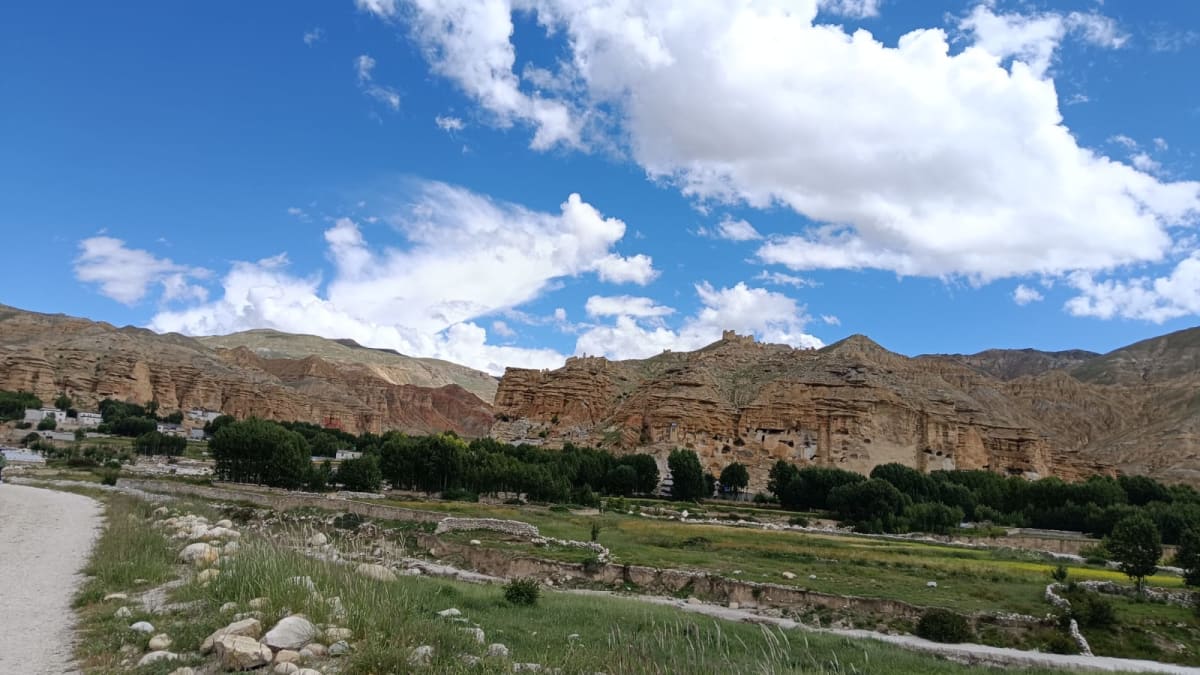
This is a geographic constant, not a lucky spell of weather, which is why rain-shadow trekking can be planned with confidence in the monsoon. The valleys share Tibet's high-desert climate: dry, bright, and windy, with eroded canyon terrain the rain never softened.
Which valleys sit in the monsoon rain shadow?
Two valley systems anchor rain-shadow trekking: Upper Mustang, north of the Annapurna range, and Dolpo, further west behind Dhaulagiri. Upper Mustang is the accessible one, reached by a flight to Jomsom and a restricted permit, and it stays dry and clear through the monsoon months, covered on the Upper Mustang trek page. Dolpo, deeper and wilder, sits behind the same barrier and shares the dry climate, though its access is longer and its infrastructure thinner. The Dolpo region hub covers current route status.
Both are restricted areas requiring a licensed guide and a special permit, which suits the monsoon season because the paperwork and logistics are handled in advance rather than improvised on a wet trail. The upper Nar Phu valley and parts of the Manaslu region also catch partial rain-shadow benefit, though less completely than Mustang and Dolpo. Parts of Nepal's Far West, in the rain shadow of the Api-Saipal range, get a similar though less pronounced dry-season extension, covered in the Far West Nepal season guide. Kanchenjunga, by contrast, sits in far-eastern Nepal with no equivalent 8,000 m barrier blocking the monsoon from the south, so its season runs the standard late-September-to-November and March-to-May windows rather than extending through summer, detailed in the Kanchenjunga trekking season guide.
What does monsoon trekking in the rain shadow look like?
Monsoon trekking in Mustang means dry trails, clear morning skies, and daytime highs around 22 C, with the striking red and ochre canyons at their most vivid under strong summer light. The defining feature is wind, not rain: a strong up-valley wind builds from around midday, carrying dust, so walking is a morning activity and villages are reached by early afternoon. The barley harvest and monastic festivals bring the villages alive in these months, adding a cultural dimension the drier autumn lacks. Barley fields around Lo Manthang and Charang turn a deep gold by August, timed to the same dry window that makes the valley trekkable, and threshing on open rooftops is a common sight on a July or August departure.
The one monsoon factor is the approach, not the trek itself. The flight from Pokhara to Jomsom crosses the monsoon-affected southern slopes and can be delayed a day by cloud, so a buffer day is standard on any monsoon Mustang itinerary. Once north of the barrier at Kagbeni, the weather turns reliably dry.
What are the wet approaches like?
Reaching a rain-shadow valley means crossing the wet side first, and that approach carries the full monsoon character: rain, cloud, and leeches below the barrier. The Pokhara to Jomsom flight minimizes the exposure for Mustang, but any overland approach passes through green, dripping country before the terrain turns to desert. Trekkers should pack for both climates, rain gear and leech socks for the approach, sun and wind protection for the valley.
This two-climate reality is why a guide who knows the transition matters: the shift from monsoon jungle to high desert happens over a single day's travel. For the contrasting dry-season windows, see trekking Nepal in winter, and for the full permit mechanics that govern these restricted valleys, the Nepal trekking permits master guide.
How does a monsoon rain-shadow departure compare on cost and crowding?
A monsoon Upper Mustang departure runs close to autumn pricing rather than discounted like a true off-season trip, since the restricted-area permit fee is fixed year-round and teahouse rates in Lo Manthang and Charang don't drop for the season the way Khumbu lodges do in winter. The saving instead shows up in crowding: where an October Annapurna Circuit departure competes for teahouse rooms with dozens of other groups a day, a July or August Mustang trekker often has Lo Manthang's guesthouses to themselves.
The four monsoon months aren't identical inside the valley, even though all four stay dry:
| Month | Valley conditions | Notable feature |
|---|---|---|
| June | Transitioning dry, barley still green | Fewest festival dates |
| July | Peak dry heat, harvest beginning | Warmest daytime highs |
| August | Barley gold, harvest and threshing | Tiji-adjacent village life at its busiest |
| September | Cooling toward autumn, monsoon retreating south | Overlaps with early rain-shadow-independent trekking |
Trekkers choosing between these four months for photography or cultural interest tend to prefer August for the harvest scenes; those prioritizing the coolest walking temperatures tend to prefer June or September instead.
FAQ
Common questions
Can you really trek in Nepal during the monsoon?+
Yes, in the rain-shadow valleys: Upper Mustang and Dolpo sit behind the 8,000 m Annapurna and Dhaulagiri massifs, which block the monsoon and leave them dry and clear from June to September. The rest of Nepal is wet and leech-ridden in these months, so monsoon trekking means choosing the right valley. The Upper Mustang trek is the most accessible rain-shadow route.
How much less rain does Upper Mustang get?+
Upper Mustang receives roughly 250 to 400 mm of rain a year against more than 2,000 mm on the southern slopes of the same range, a tenfold difference across a single ridge line. This is a geographic constant, not a weather spell, so monsoon trekking there can be planned with confidence. The valley shares Tibet's dry, bright, windy high-desert climate.
What is the catch with monsoon rain-shadow trekking?+
The catch is the approach and the wind, not the valley weather. The Pokhara to Jomsom flight crosses monsoon-affected southern slopes and can be delayed a day by cloud, so a buffer day is standard. Within the valley, a strong up-valley wind builds each afternoon, so walking is a morning activity. Pack for both the wet approach and the dry, windy valley.