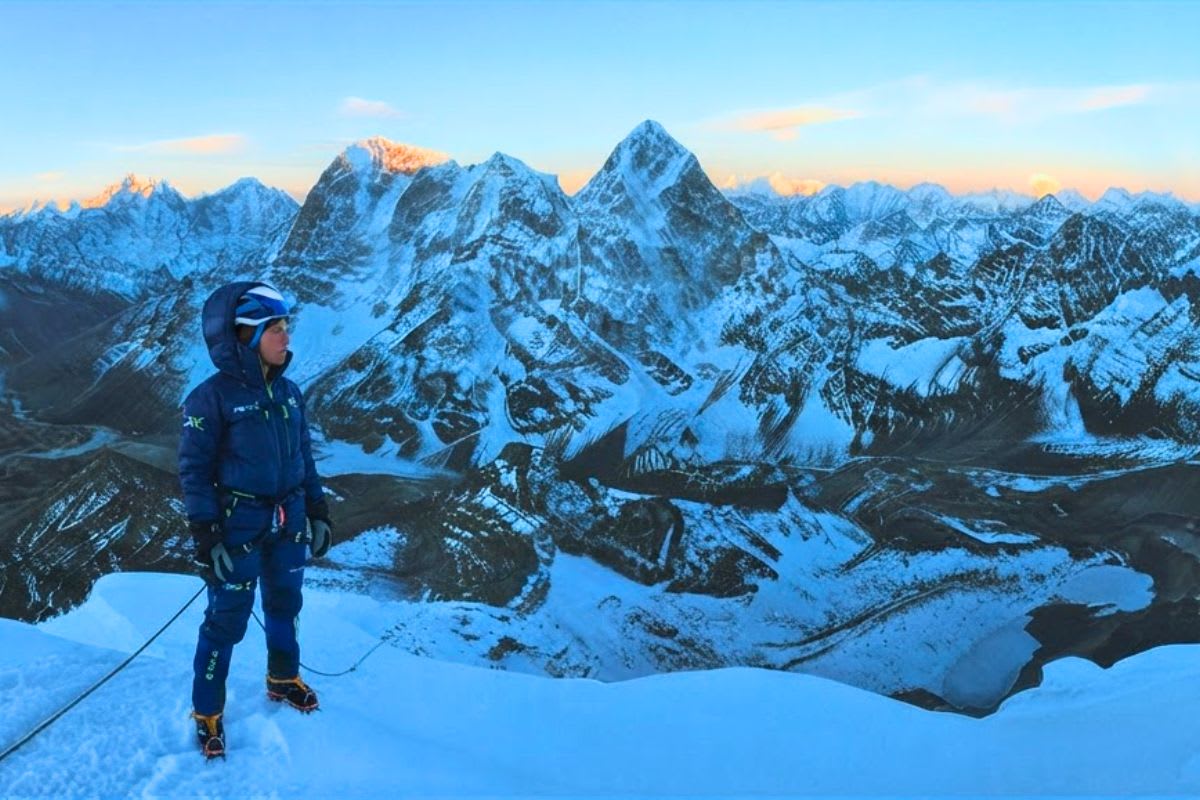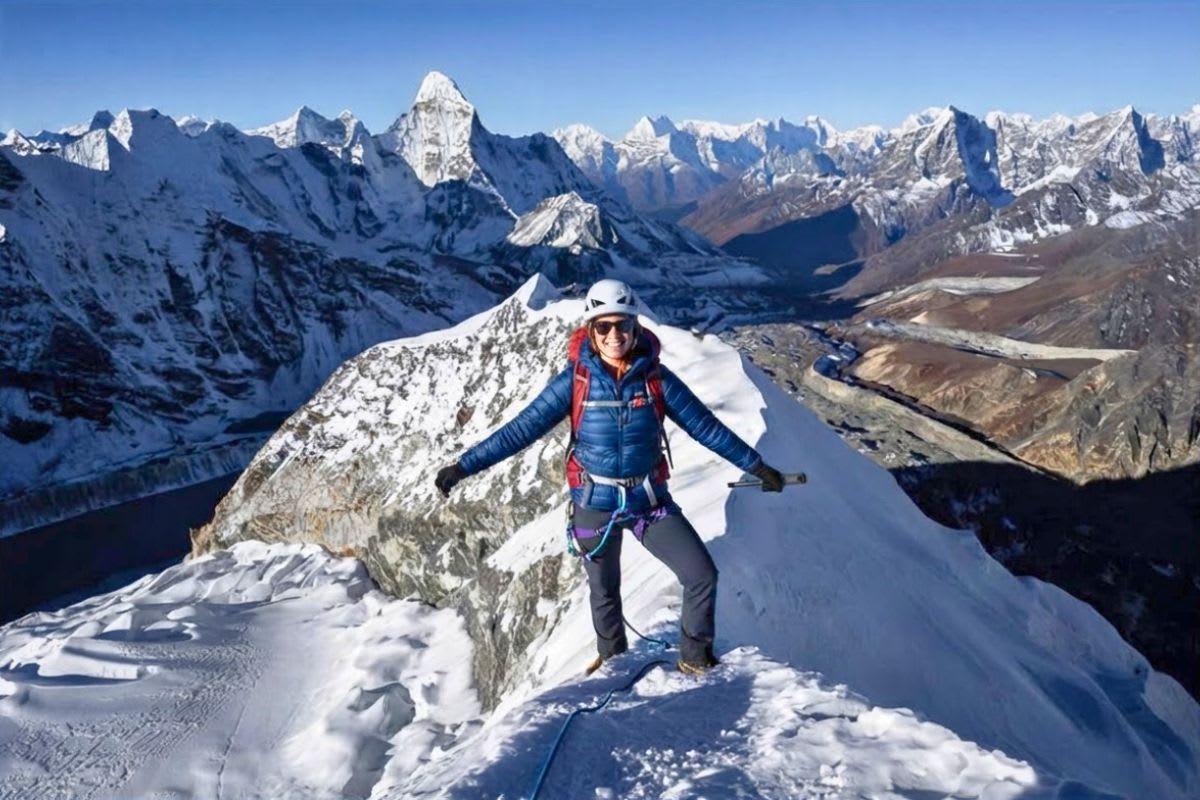
Lobuche East and Island Peak are Nepal's two closest-matched technical trekking peaks, both above 6,100 m, both requiring a fixed-rope headwall, and both approached via the Everest Base Camp trail, so the real difference between them is crowding and cost rather than difficulty. Lobuche East summits at 6,119 m against Island Peak's 6,189 m, a 70 m gap that changes nothing about which climb is harder. Island Peak is Nepal's most popular first Himalayan climb and carries its busiest fixed ropes in season; Lobuche East sits on the same approach with a comparable technical grade and far fewer other climbers. Passang Dawa Sherpa, who guides both peaks, wrote this comparison for climbers weighing a quieter technical objective against the established classic.
The sections below compare technical difficulty, crowding, and cost, then give a direct recommendation for climbers who want the same experience with fewer people on the ropes.
In this guide 9
- 01 How do the two peaks compare at a glance?
- 02 How similar are the two peaks technically?
- 03 What's the real difference: crowding or difficulty?
- 04 Which costs more?
- 05 How does training preparation compare?
- 06 Does one peak have better acclimatization built in?
- 07 Our recommendation
- 08 Does gear availability differ between the two peaks?
- 09 How does the actual summit-day schedule differ?
How do the two peaks compare at a glance?
Lobuche East and Island Peak sit within 70 m of each other in summit altitude, demand the same fixed-rope headwall skills, and cost almost the same, USD 2,500-3,350 against USD 2,400-3,300; the real difference is crowding, not difficulty or price. Full route and permit detail sits on the Island Peak Climb and Lobuche East climb pages.
| Lobuche East | Island Peak | |
|---|---|---|
| Summit altitude | 6,119 m | 6,189 m |
| Duration | 17 days | 14 days |
| Technical grade | Technical; fixed-rope headwall | Technical; fixed-rope headwall |
| Approach | Everest Base Camp trail | Everest Base Camp trail |
| Crowding | Quieter; fewer climbers on the fixed ropes | Busier; Nepal's most popular first climb |
| Group cost (2026) | USD 2,500-3,350 | USD 2,400-3,300 |
How similar are the two peaks technically?
Both peaks demand the same core skill set: crampon technique, ice-axe use, and jumar ascending on a fixed-rope headwall, taught at a base-camp training day before the summit push. Lobuche East's crux sits on a summit ridge above a steep snow and rock headwall, comparable in angle and length to Island Peak's 100 to 150 m fixed-rope section, so a climber prepared for one is prepared for the other. Neither peak asks for prior mountaineering experience beyond the standard base-camp course our guides run, and both sit within reach of a fit trekker with good altitude tolerance.
Climbers should not choose between these two peaks on difficulty grounds, since the technical demand is genuinely comparable.
What's the real difference: crowding or difficulty?
Crowding, not difficulty, is what separates these two peaks in practice. Island Peak is the flagship technical climb on the Khumbu approach, and its fixed ropes carry queues of climbers from multiple operators on peak-season summit mornings, which slows the ascent and adds waiting time on exposed sections. Lobuche East shares the same Everest Base Camp trail for its approach but draws a fraction of the climbers, so a summit morning there typically means a rope section shared with one or two other groups rather than a queue. The fixed-rope etiquette our guides teach, one climber per rope section at a time, matters more on Island Peak simply because there are more climbers to manage it around.
Which costs more?
Neither, in practice: Island Peak runs USD 2,400 to 3,300 and Lobuche East runs USD 2,500 to 3,350 in 2026, a gap too small to be a real deciding factor. Lobuche East's two extra trekking days (16-18 against Island Peak's 14) account for the small difference, since the fixed-rope logistics, guide costs, and permit structure are otherwise comparable between the two. A climber choosing on price alone should look elsewhere in the comparison, at crowding and the exact dates each departure runs, rather than expecting a meaningful cost saving from either peak.
How does training preparation compare?
Both peaks call for the same preparation baseline: a multi-month cardio and strength block, prior multi-day trekking experience, and comfort at altitudes above 5,000 m before the summit push, covered in full in how to train for a first Himalayan climb. Neither peak asks a climber to arrive with prior technical mountaineering experience, since the fixed-rope skills for both are taught at a base-camp training day, but neither is forgiving of arriving unfit either. A climber training for one is, in practice, training for the other; the choice between the two summits doesn't change the preparation plan at all.
Does one peak have better acclimatization built in?
Both approaches share the Everest Base Camp trail's acclimatization schedule, including the standard rest days at Namche Bazaar and Dingboche, before branching to their respective base camps. Island Peak's base camp sits at Chhukung, reached after the same altitude-gain pattern climbers use en route to Everest Base Camp; Lobuche East's base camp sits closer to the main EBC trail itself, near Lobuche village, so both objectives are reachable from a climber's existing Everest Base Camp itinerary with only a short detour rather than a separate approach trek. Neither route compresses the acclimatization schedule to fit the climbing objective in, so the safety profile between the two is effectively identical up to the point each peak's own summit push begins, and our guides run the same twice-daily oxygen-saturation checks on both once the group passes 4,000 m.
Our recommendation
Choose Lobuche East if you want the same fixed-rope technical experience as Island Peak with meaningfully fewer other climbers on the ropes, at essentially the same price. Choose Island Peak if you want Nepal's most established technical trekking peak, with the largest support infrastructure and the most-climbed reputation among first Himalayan climbs. Climbers who have already done Island Peak and want a second technical summit on the same approach, without repeating the crowds, are the clearest case for choosing Lobuche East next.
Does gear availability differ between the two peaks?
Island Peak's popularity means Kathmandu and Namche rental shops stock climbing gear, mountaineering boots, crampons, harnesses, and ice axes, sized and ready for it specifically, since it's the peak most rental inventory is built around. Lobuche East uses the identical gear list, and the same shops rent for it too, but a climber renting last-minute in a busy week should expect Island Peak sizes to be picked over first simply because more climbers are renting for it on the same dates. Booking gear rental in advance through your operator, rather than shopping in person in Namche the week of the climb, removes this risk for either peak.
Our climbing departures for both peaks include the technical gear, rope, harness, crampons, ice axe, in the group cost rather than treating it as a separate rental line, which is one reason the two peaks' quoted prices land as close together as they do.
How does the actual summit-day schedule differ?
Island Peak's summit push starts from high camp around midnight to reach the top by mid-morning before the fixed ropes get crowded and the afternoon wind picks up, a timing made more critical by how many climbers share the same ropes on a peak-season day. Lobuche East's summit day follows a similar midnight-to-morning structure for the same wind and light reasons, but with less time pressure from other climbers on the fixed sections, since a smaller field means less queuing at the headwall's bottleneck points.
Both summit days end with the same descent priority: our guides bring a group down off the technical sections before early afternoon regardless of how the ascent went, since the same afternoon wind and softening snow conditions that make morning climbing safer make afternoon descent progressively riskier on either peak.
FAQ
Common questions
Is Lobuche East easier than Island Peak?+
No, the two peaks carry a comparable technical grade: both require a fixed-rope headwall, crampon technique, and jumar ascending, and Lobuche East's 6,119 m summit sits only 70 m below Island Peak's 6,189 m. The real difference is crowding on the fixed ropes, not difficulty or price, since the two cost almost the same.
Why is Island Peak more crowded than Lobuche East?+
Island Peak is Nepal's most popular first Himalayan climb and the flagship technical peak on the Khumbu approach, so multiple operators run departures on the same peak-season dates, queuing climbers on the fixed ropes. Lobuche East shares the same approach trail but draws far fewer climbers, so summit mornings there rarely see more than one or two other groups.
Can I climb both peaks on the same trip?+
It is possible in principle since both share the Everest Base Camp approach trail, but we do not recommend stacking two technical summit pushes on one expedition because of the cumulative altitude load. Most climbers who want both peaks do Island Peak first, then return for Lobuche East on a later trip.
Do I need prior climbing experience for either peak?+
No prior technical mountaineering experience is required for either Lobuche East or Island Peak; the fixed-rope, crampon, and jumar skills both climbs need are taught at a base-camp training day before the summit push. Fitness and prior high-altitude trekking experience matter more than climbing background for either objective.