Nepal Travel Packages
Lobuche East Climb

Lobuche East Climb

★★★★★ 4.8 (29 reviews)
climbing, Nepal 16-18 days Technical Max 6,119 m
Duration
16-18 days
Max altitude
6,119 m
Difficulty
Technical
Group size
Up to 8
Total distance
~105 km
Elevation gain
7,500 m
Best season
April to May, October to November
Avg daily walk
5-8 hours
Starts in
Lukla (2,860 m)
Ends in
Lukla (2,860 m)
Accommodation
Teahouse lodges, tented high camp
✓ TAAN & NMA licensed guides ✓ Permits included, no hidden fees ✓ Small group departures
Group departure · per person
USD2,850
Permits, guide, porter, lodging & food included
Departure date
Email Nepal
Permits and logistics fully arranged
Licensed guide included on every departure
Direct WhatsApp line to your guide

Lobuche East is a 6,119 m Nepal Mountaineering Association trekking peak in the Khumbu region, reached via the standard Everest Base Camp trail through Namche Bazaar and Dingboche, climbed on a 16 to 18 day expedition with a fixed-rope headwall steeper than Island Peak's in its upper section. A 2026 group departure costs USD 2,500 to 3,350 per person including the NMA climbing permit (USD 250 in spring, USD 125 in autumn), the Khumbu Pasang Lhamu Rural Municipality permit (NPR 2,000), and Sagarmatha National Park entry (NPR 3,000), the same trekking-permit pair the Everest Base Camp trek uses. Because Lobuche village sits directly on the EBC trail, most climbers pair the summit with a side trip to Everest Base Camp (5,364 m) and Kala Patthar (5,545 m) on the way up.

Passang Dawa Sherpa, who has summited Island Peak 23 times and guided the Khumbu for 18 years, leads Lobuche East expeditions from the same Namche and Dingboche acclimatization base he uses on Island Peak. The sections below cover the NMA permit and Sagarmatha paperwork, a cost breakdown against the USD 2,500 to 3,350 range, why the EBC trail approach puts Everest Base Camp and Kala Patthar on the itinerary, and the fixed-rope headwall that makes Lobuche's summit day slightly harder than Island Peak's.

Highlights

What our guides know that others don't.

1

Route overlap

Passes through Lobuche village on the EBC trail; most climbers add Everest Base Camp and Kala Patthar

2

Headwall angle vs Island Peak

Upper headwall pitches to 55-60 degrees on a narrow snow rib, steeper than Island Peak's 45-50 degree section

Live from the trail

Updated 2 Jul 2026

Monsoon status: climb on hold, unstable snow

The summit headwall carries wet, unstable monsoon snow through the summer, and we do not run Lobuche East departures in the monsoon. The route reopens for scheduled climbs in early October once the snowpack firms after the first cold spells. Next scheduled departure: early October.

What permits does the Lobuche East climb require?

Lobuche East needs three permits in 2026: the Nepal Mountaineering Association climbing permit (USD 250 in spring, USD 125 in autumn), the Khumbu Pasang Lhamu Rural Municipality permit at NPR 2,000, and the Sagarmatha National Park entry at NPR 3,000. These are the identical trekking permits the Everest Base Camp trek uses, since Lobuche East shares the same trailhead and trail all the way to Lobuche village. The NMA permit adds the climbing authorization on top and, like every trekking peak, it must be arranged through a registered agency with a licensed climbing guide.

Because Lobuche East carries the same Group B royalty as Island Peak, the season decides the fee more than the peak does: spring costs USD 250, autumn USD 125. The full seasonal fee table and application process sit in the climbing permits and NMA royalties guide.

A registered agency files all three permits together before the expedition, and none is issued directly to an individual climber, the rule that governs every NMA trekking peak. The garbage deposit that comes with the royalty is refundable once the expedition proves it carried its waste out, and our office handles the deposit and its return so climbers don't deal with it directly.

Why does the Lobuche East route include Everest Base Camp and Kala Patthar?

Lobuche village (4,940 m) is a stop on the standard Everest Base Camp trail, so the Lobuche East route puts EBC (5,364 m) and Kala Patthar (5,545 m) within reach before the climb even starts. Most of our groups walk to Gorak Shep, touch Everest Base Camp, and climb Kala Patthar for sunrise as an acclimatization outing before turning toward Lobuche East base camp, so the expedition doubles as a full EBC trek. This overlap is the biggest practical difference from the Island Peak climb, which diverts off the main trail into the Imja valley below Chhukung.

Climbers who want both the Everest Base Camp experience and a technical summit get both without adding trekking days, since the acclimatization schedule already needs the altitude exposure Gorak Shep and Kala Patthar provide. The route rejoins the standard trail for the descent through Pangboche and Namche.

How much does the Lobuche East climb cost in 2026?

TAAN-registered operators quoted USD 2,500 to 3,350 for a group Lobuche East expedition in 2026, close to Island Peak's range but slightly higher because of the steeper headwall and the extra guide attention it demands. The climbing-guide line in the table runs a little above Island Peak's for the same reason: a narrower, steeper rope pitch takes longer to manage per client, so guide-to-client ratios tighten. Group climbing gear also costs more, since the headwall needs a longer fixed-rope run than Island Peak's.

A quote noticeably below this band usually signals a thinner guide ratio on a peak where that ratio matters most. Spring departures pay the higher USD 250 NMA fee, the same seasonal pattern covered in the beginner climbing peaks in Nepal comparison.

A deposit secures the departure date and the NMA permit filing slot, with the balance due ahead of the expedition; the mechanics of how that works, including why a filed climbing permit can't be reversed once submitted, are in the Nepal travel package deposit and payment schedule guide. Book at least six to eight weeks ahead of a peak-season date for the widest choice of departures and time to complete the fitness training a technical headwall like this one rewards.

Where the price goes · per person
NMA climbing permitUSD 250 spring, USD 125 autumn$125–250
Khumbu municipality + Sagarmatha NP permitsNPR 5,000 total$38
Kathmandu/Ramechhap-Lukla flights, round tripFixed USD fare band$360–440
Climbing guide plus support (shared)IFMGA-standard guide, slightly higher for the steeper headwall$720–1050
Porters and high-camp support crewTented camp, cook, kitchen crew$300–460
Teahouse rooms, food, high-camp catering15-16 nights plus tented camp, including the EBC/Kala Patthar side trip$400–620
Group climbing gear, ropes, oxygen standbyFixed ropes and hardware for the steeper headwall$320–540

How does the Namche and Dingboche acclimatization work?

Lobuche East's acclimatization profile is the Everest Base Camp trek's own: Namche Bazaar (3,440 m) and Dingboche (4,410 m) are the two rest days, with an added night at Gorak Shep (5,170 m) before the climb turns toward Lobuche East base camp (5,200 m). This is the most tested acclimatization schedule in the Khumbu, run on thousands of EBC departures a year, and it carries directly into Lobuche East's higher summit. Oxygen saturation checks run twice daily above Dingboche on our departures.

Because the route already reaches 5,545 m at Kala Patthar before the technical climbing starts, climbers arrive at Lobuche East base camp better acclimatized than on a route that goes straight to a peak without an EBC-style approach. The rest-day placement and sleeping-altitude logic are set out in full in the acclimatization schedule guide.

How technical is the Lobuche East summit day?

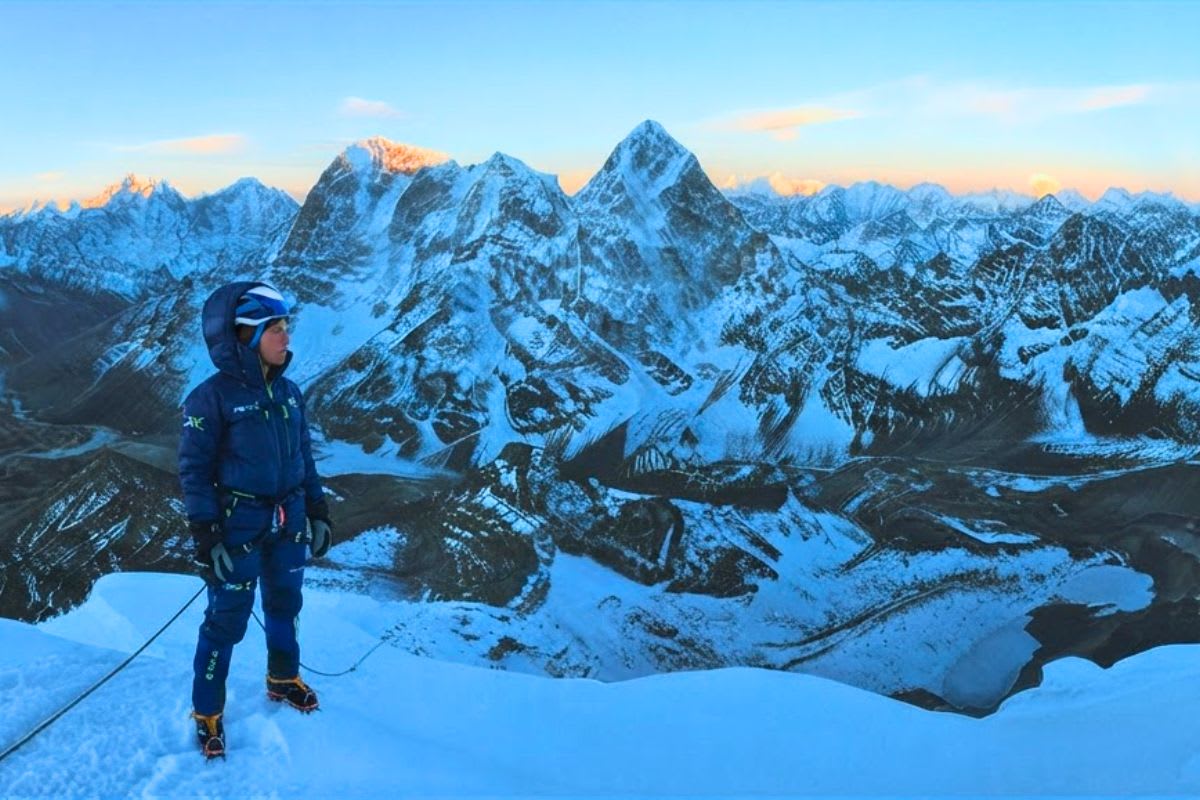
Lobuche East's crux is a fixed-rope headwall that pitches to 55 to 60 degrees on a narrower snow rib than Island Peak's 45 to 50 degree section, making it the more technical of the two popular Khumbu trekking peaks. Climbers jumar the headwall in the dark on a midnight or 1 am start, reach a narrow summit ridge, and stand on the 6,119 m summit around dawn with Everest, Lhotse, and Nuptse close across the valley. One climber occupies a rope section at a time on the headwall, the same fixed-rope etiquette Island Peak uses.

A hard turnaround time governs the climb: if the group is not up the headwall by the set hour, the guide calls the descent regardless of how close the summit looks. Insurance needs to cover technical mountaineering to 6,500 m, detailed in the helicopter evacuation insurance coverage guide.

Our guide-to-client ratio on Lobuche East's summit day runs tighter than Island Peak's, closer to one guide per two climbers, because the narrower headwall pitch takes longer to manage safely per person than Island Peak's wider fixed-rope section. Climbers who found Island Peak's headwall comfortable are well prepared for this step up, but first-time technical climbers should book Island Peak before Lobuche East rather than the reverse, a sequencing our guides recommend even though both peaks carry the same permit tier.

The queue dynamic that shapes a peak-season Island Peak summit morning doesn't apply here in the same way: Lobuche East draws far fewer operators and climbers onto its ropes, so a summit push typically shares the headwall with one or two other groups rather than a longer line waiting at each anchor. This is a genuine trade climbers should weigh alongside the technical step-up, not just a footnote, since rope congestion is its own source of delay and cold exposure on a route where timing already matters.

What's the best season to climb Lobuche East?

April to May and October to November are Lobuche East's two windows, the same seasonal pattern as every NMA trekking peak in the Khumbu. Spring carries the higher USD 250 royalty with longer daylight and generally more settled snow on the headwall; autumn drops to USD 125 with the clearest mountain views of the year, though the narrower headwall can run icier after the season's first cold snaps.

Winter and monsoon climbs aren't offered on Lobuche East, the same policy as Island Peak and Mera: monsoon leaves the headwall under wet, unstable snow, and winter's short daylight and severe cold push the risk past what we schedule for a beginner-accessible technical peak. Because the route shares the Everest Base Camp trail, the trekking portion below Lobuche village stays walkable through more of the year than the technical summit push does.

What happens if the weather doesn't cooperate on summit day?

Every Lobuche East itinerary carries a contingency day at base camp for exactly this reason, so a poor forecast on the scheduled summit date doesn't automatically end the expedition. Pemba's go/no-go call weighs wind and snow conditions on the headwall itself, not the weather visible from base camp, since Lobuche East's narrower, steeper pitch is less forgiving of marginal conditions than Island Peak's wider section. A postponed push moves to the contingency day, and the descent schedule through Pangboche and Namche already carries enough slack to absorb the shift without threatening the Lukla flight.

If neither attempt works out, climbers still complete the full Everest Base Camp and Kala Patthar approach along with the base-camp skills training, which is real value even without a summit. Some climbers treat a missed Lobuche East summit as reason enough to book Island Peak next, since the skills carry over directly and the wider headwall gives an easier second attempt at a similar technical grade; others return for Lobuche East again once schedules allow. Either way, the harder logistics, permits, flights, the EBC approach itself, don't need repeating.

What should you pack for a Lobuche East climb?

Lobuche East needs the standard high-altitude trekking kit from the Nepal trekking packing list plus mountaineering gear: crampon-compatible boots, a harness, an ascender, and a helmet, most climbers rent in Kathmandu rather than buy for one expedition. Because the headwall here is steeper and narrower than Island Peak's, a stiffer boot with a more precise crampon fit is worth prioritizing over a general trekking boot if you're buying rather than renting.

A four-season sleeping bag rated to at least -20 C comfort covers both the Gorak Shep teahouse night and the tented high camp at 5,600 m, since both run colder than a mid-route Khumbu lodge. Glacier glasses matter on the Kala Patthar acclimatization outing as much as on summit day itself, since both involve hours of exposure to open snow glare at altitude.

Gloves matter more on Lobuche East's narrower headwall than on Island Peak's wider one, since precise jumar handling on an exposed rope pitch rewards a thinner, more dexterous liner glove than a bulkier all-purpose mitt allows. Pair it with a heavier insulated outer glove for the pre-dawn cold and carry a spare set of both, since there's no way to fix a lost glove partway up a 55-60 degree pitch in the dark.

Elevation profile High point 6,119 m
3,0003,5004,0004,5005,0005,5002,610 m123456789105,600 m111213142,860 m15DAY
Acclimatization night High point

Day by Day

17-day itinerary, every detail planned.

Day1
Trip Day
Fly to Lukla (2,860 m), trek to Phakding (2,610 m)
~3h walking8 km
2,610m alt.

The mountain flight and gentle descent open the Everest-valley approach, identical to the EBC trek's first day since Lobuche East shares the same trailhead. Most climbers on this route recognize the itinerary from EBC research they've already done, which is part of the appeal.

2,610 m8 km~3h
Day2
Trip Day
Phakding to Namche Bazaar (3,440 m)
~6h walking11 km
3,440m alt.
Day3
Acclimatization
Acclimatization day in Namche
~4h walking
3,440m alt.
Day4
Trip Day
Namche to Tengboche (3,860 m)
~5h walking10 km
3,860m alt.
Day5
Trip Day
Tengboche to Dingboche (4,410 m)
~5h walking11 km
4,410m alt.
Day6
Acclimatization
Acclimatization day in Dingboche
~4h walking
4,410m alt.

What's Included

Transparent, all-in pricing.

Included in your price

NMA climbing permit
Khumbu municipality + Sagarmatha NP permits
Kathmandu/Ramechhap-Lukla flights, round trip
Climbing guide plus support (shared)
Porters and high-camp support crew
Teahouse rooms, food, high-camp catering
Group climbing gear, ropes, oxygen standby

Not included

Nepal entry visa fee (USD 30-125, paid on arrival)
Travel insurance with helicopter evacuation cover
Personal trekking gear and equipment
Tips for your guide and porter
Bottled drinks, wifi, and device charging at teahouses
Meals in Kathmandu outside the itinerary

Dates & prices

Upcoming departures.

Start dateEnd datePrice / personAvailability
10 Oct 202627 Oct 2026USD 2,850Guaranteed · 3 leftEnquire
31 Oct 202617 Nov 2026USD 2,850Open · 6 leftEnquire
15 Apr 20272 May 2027USD 3,000Open · 5 leftEnquire
6 May 202723 May 2027USD 3,000Open · 7 leftEnquire

Verified reviews

What travellers say.

4.8/5 from 29 reviews on TripAdvisor, checked July 2026

★★★★★

Did Island Peak two years ago and wanted something steeper, Lobuche East delivered. The headwall felt noticeably harder than I remembered Island Peak being, narrower and colder before dawn. Getting to stand at Everest Base Camp on the approach was an unexpected bonus.

MB
Marco Bellini · Italy
15 May 2026
★★★★★

Pemba's base-camp training on the fixed rope gave me real confidence before the headwall. Kala Patthar at sunrise two days before summit day was one of the best mornings of the whole trip. A tougher climb than I expected but well within reach with the guide support.

HK
Hana Kobayashi · Japan
22 Apr 2026

Why Nepal Travel Packages

Built on published proof, not adjectives.

A named, licensed guide before you book

Full name, photo, NMA or TAAN license number, and a direct WhatsApp line. The guide on the page is the guide on the trail.

Itemized pricing, not a lump sum

Permits, guide, porter, lodging, and food broken out on every trip page. You see exactly where the price comes from.

Trail conditions updated monthly

Dated field reports from the guides running the route this season, not boilerplate written once and left to go stale.

Permits handled, not hidden

Every permit fee, checkpoint, and paperwork rule is filed for you and published in the guides — no surprise admin at Lukla.

FAQ

Common questions

Do I need prior mountaineering experience for Lobuche East?+

No prior mountaineering experience is required, though Lobuche East is more technical than Island Peak and rewards climbers with some crampon or fixed-rope comfort. We teach crampon, ice-axe, and jumar skills at base camp before the summit push. Good fitness and a completed trekking peak or via ferrata background make the headwall easier, but neither is mandatory.

Is Lobuche East harder than Island Peak?+

Lobuche East's headwall pitches to 55 to 60 degrees on a narrower snow rib, steeper than Island Peak's 45 to 50 degree section, which makes it the more technical of the two. Both peaks are climbed on the same NMA Group B permit and similar acclimatization schedule. Climbers who found Island Peak's headwall comfortable are well prepared for Lobuche East.

Do I get to see Everest Base Camp on this climb?+

Yes, the standard Lobuche East itinerary walks to Gorak Shep, Everest Base Camp (5,364 m), and Kala Patthar (5,545 m) as an acclimatization outing before the technical climb. This is a direct result of Lobuche village sitting on the main EBC trail. Climbers effectively complete a full Everest Base Camp trek before turning to the peak.

What insurance do I need for Lobuche East?+

You need a policy covering mountaineering to 6,500 m with helicopter evacuation, not standard trekking cover, because the fixed-rope headwall is excluded from trekking-only policies. Evacuation from the upper Khumbu can cost USD 3,000 to 6,000. Coverage tiers are detailed in the helicopter evacuation insurance coverage guide.

What permits does Lobuche East need?+

Lobuche East needs the NMA climbing permit (USD 250 spring, USD 125 autumn), the Khumbu Pasang Lhamu Rural Municipality permit (NPR 2,000), and the Sagarmatha National Park entry (NPR 3,000). These are the same trekking permits the Everest Base Camp trek requires, plus the NMA climbing authorization on top. A registered agency files all three before departure.

Should I climb Island Peak or Lobuche East first?+

Island Peak first, if you're choosing between the two as separate trips. Its headwall is wider and less steep than Lobuche East's narrower 55-60 degree pitch, making it the gentler introduction to fixed-rope climbing. Climbers who found Island Peak's rope section comfortable are well prepared to step up to Lobuche East's steeper crux on a later trip.

When is the best season for Lobuche East?+

April to May and October to November, the same two windows as every NMA trekking peak in the Khumbu. Spring gives longer daylight and typically more settled headwall snow for USD 250; autumn gives the clearest views for USD 125, though the narrower headwall can run icier after the season's first cold spells.

How tight is the guide-to-client ratio on summit day?+

Close to one guide per two climbers, tighter than Island Peak's typical two-or-three-to-one ratio, because Lobuche East's narrower headwall pitch takes more per-climber guide attention to manage safely. This is one reason a Lobuche East quote runs slightly above an equivalent Island Peak departure.

What if I don't summit on the first attempt?+

The itinerary carries a contingency day at base camp, and if conditions still don't clear, the expedition doesn't force a marginal attempt. Climbers still complete the full Everest Base Camp and Kala Patthar approach either way, real value on its own, and many book a later departure for a second summit push without repeating the harder logistics.

How big is a typical Lobuche East group?+

Our departures cap at 8 climbers, matched to Island Peak's group size so the tighter one-guide-per-two-climbers ratio described above holds on the narrower headwall. A smaller group also means more individual attention during the base-camp skills training, which matters more here than on a gentler climb like Mera.