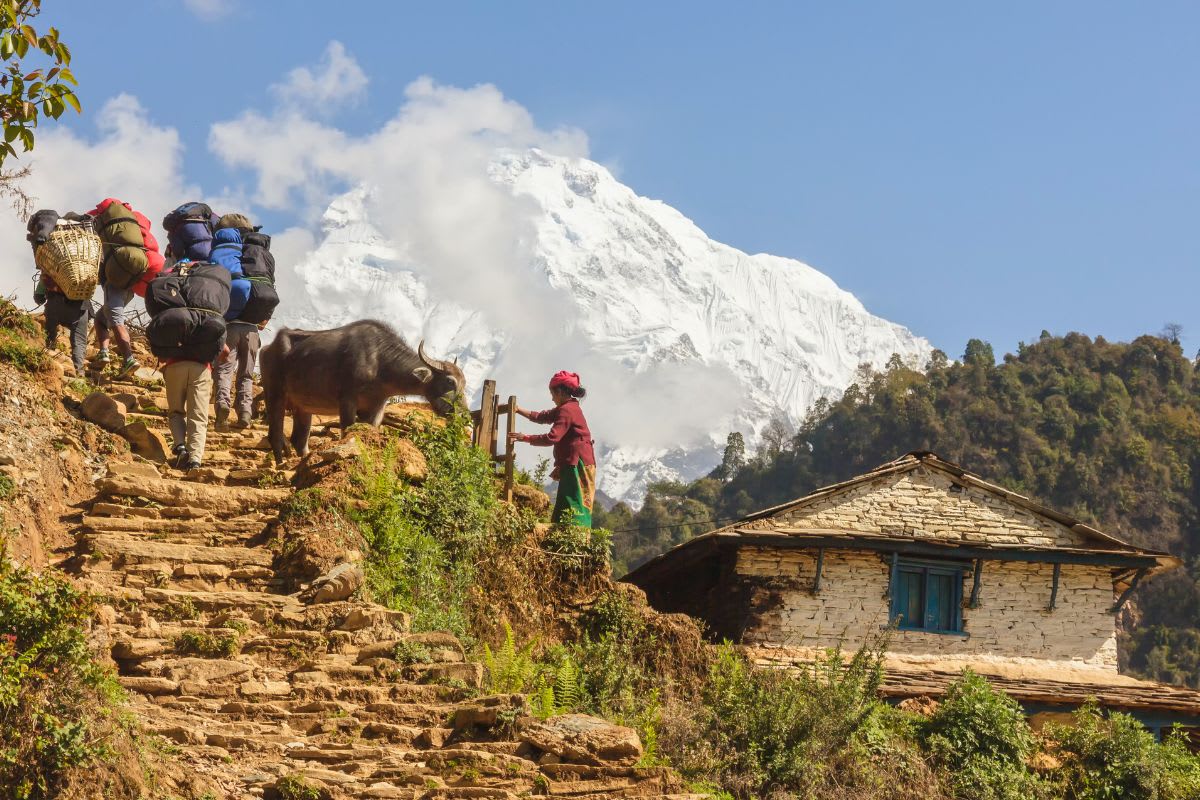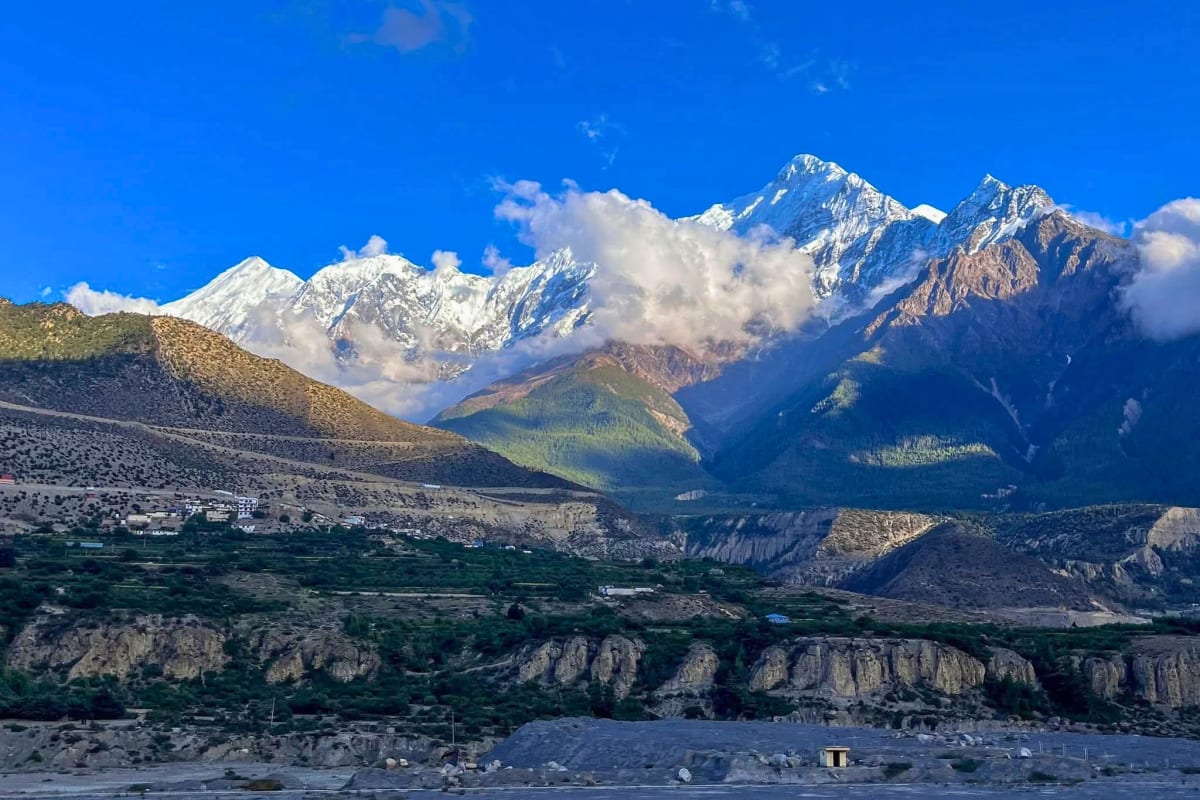
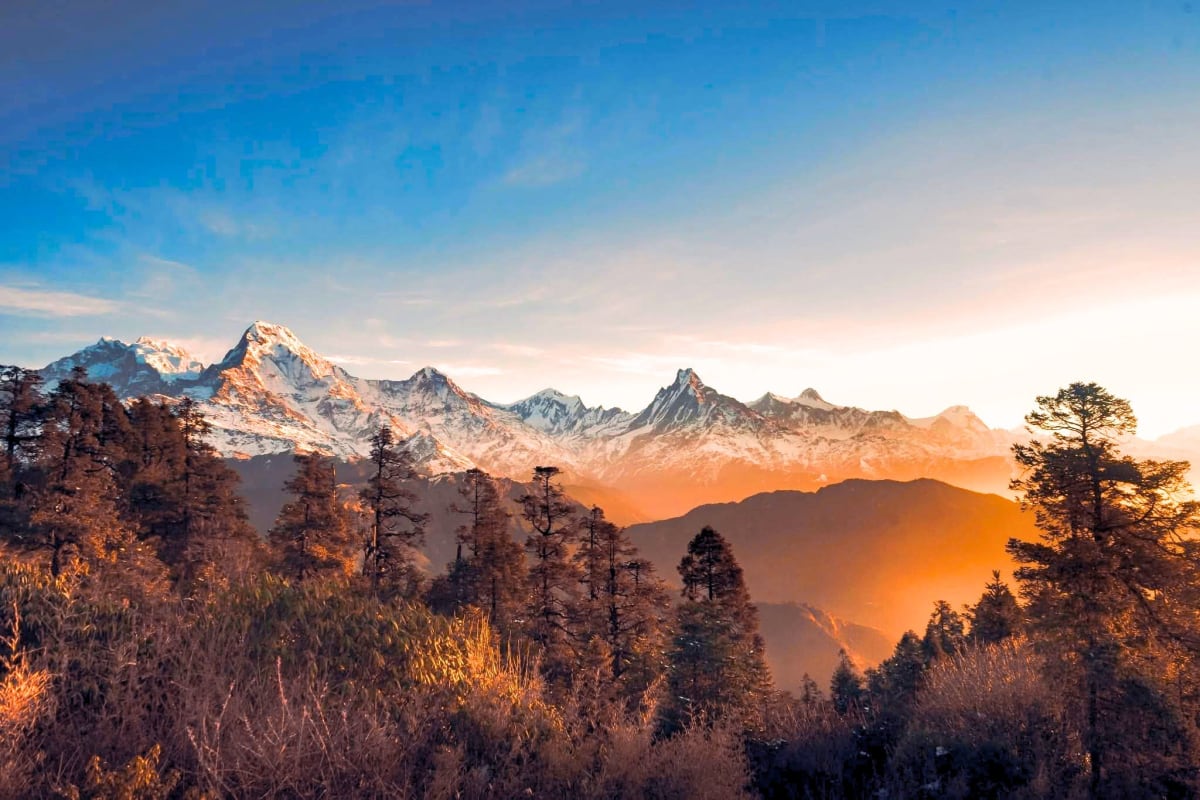
Trekking Nepal in autumn, from late September through November, is the country's traditionally busiest window, pairing post-monsoon clear skies with comfortable daytime temperatures across every major route. October alone carries roughly a third of the year's trekkers on the Everest Base Camp route by our own departure records, and daytime temperatures below 3,000 m run a mild 18 to 24 C through the season. Passang Dawa Sherpa, who has guided Everest departures in every month of the calendar since 2008, wrote this guide from those autumn seasons specifically.
The sections below cover what autumn weather actually delivers, how much of the year's trekking volume October carries, the teahouse crowding that comes with it, temperature data by altitude band, and why October holds its lead even as January and February gain ground.
In this guide 6
- 01 What does trekking Nepal in autumn actually look like?
- 02 How much of the year's trekking happens in October?
- 03 What is the crowding trade-off in autumn?
- 04 What are autumn temperatures by altitude?
- 05 Why does October remain the dominant month despite the winter shift?
- 06 Which specific week in autumn should you actually book?
What does trekking Nepal in autumn actually look like?
Trekking Nepal in autumn means the most stable weather pattern of the year, arriving as soon as the monsoon clears from the hills in mid to late September. The retreating monsoon washes dust out of the air, and the high-pressure system that follows holds through November with little day-to-day variation, so long-range Himalayan views stay sharp for weeks at a stretch. Daytime temperatures below 3,000 m run 18 to 24 C in September and October, dropping gradually as November advances toward winter.
This weather stability is autumn's real selling point over spring, where the pre-monsoon haze of April and May cuts into the same long-range visibility. A trekker choosing between the two seasons for clear summit photography gets better odds in October than in May, though the trade, covered below, is a much busier trail.
How much of the year's trekking happens in October?
October carries roughly a third of the year's trekkers on the Everest Base Camp route, a concentration our own departure and lodge-occupancy tracking since 2024 has confirmed season after season. No other single month comes close to that share, which is why October departures book out first on our calendar and why Lukla flight demand peaks in the same window. The Annapurna region shows the same pattern, with the Circuit and Poon Hill trails at their fullest in the first three weeks of October.
This concentration is not new; it reflects decades of trekking advice recommending the October-November window above all others, advice that autumn's weather largely earns. What has changed is that October is no longer the only strong option, a shift covered in the final section below.
What is the crowding trade-off in autumn?
Teahouse booking pressure is autumn's defining trade-off, and the teahouse booking reality already documented on the Everest route sets the pattern for the whole season. Gorak Shep's four lodges hold roughly 250 beds combined, and they fill by early afternoon through October, pushing late arrivals into dining-hall floor space on the busiest nights. Namche, Dingboche, and Manang carry more total capacity, but their better rooms go first to groups whose guides phoned ahead.
Trail traffic itself compounds the lodge problem, since October sees the most trekkers on the path at once, slowing pace on narrow sections like the Hillary Bridge approach and the Thorong La ascent. Reaching each village by early afternoon, rather than a leisurely late arrival, is the practical rule for anyone trekking independently during this window.
What are autumn temperatures by altitude?
Autumn temperatures fall in a predictable band that narrows as the season moves from September into November.
| Altitude band | September | November |
|---|---|---|
| Below 3,000 m | Days 18-24 C, nights above 8 C | Days cooler, nights in low single digits C |
| 3,000-4,500 m | Days 10-18 C, nights -2 to 5 C | Nights colder at the -2 to 5 C band's lower end |
| Above 4,500 m | Gorak Shep nights -10 to -15 C | Nights slide colder, approaching -20 C |
Below 3,000 m, the September warmth cools into the low single digits by late November. Between 3,000 and 4,500 m, daytime highs stay comfortable for walking, but the coldest nights need a proper insulated jacket after sunset.
Above 4,500 m, the numbers turn serious in a way that mirrors the trek's hardest days. October nights at Gorak Shep run -10 to -15 C, and November nights slide colder still, approaching the -20 C January lows described in trekking Nepal in winter as the season turns. A four-season sleeping bag rated to -15 C comfort covers the October window; a late-November departure benefits from the same -20 C rating winter trekkers carry.
Why does October remain the dominant month despite the winter shift?
October holds its lead for reasons the winter surge does not erase: it combines the year's most stable weather with the shortest gap since the monsoon, and it lines up with Dashain and Tihar, Nepal's two largest Hindu festivals, which bring cultural energy to both the trail villages and Kathmandu itself. A 2026 Nepal Tourism Board release put January arrivals at 92,573, up 15.7% year over year, with February 2026 the highest February on record, proof that winter has become a genuine second option rather than a marginal one. Even so, that growth has not displaced October; it has added a second strong window alongside it.
The honest comparison is not autumn versus winter as right versus wrong, it is crowds and warmth against cold and solitude. Autumn remains busiest because the weather earns it, and winter has grown because trekkers discovered clear skies and empty lodges are available for a trade in temperature, not a trade in views. Both windows now sit on solid data rather than on unexamined tradition.
Which specific week in autumn should you actually book?
Late September and early October give the season's first clear weeks with lighter crowds than the Dashain-Tihar peak, a genuine sweet spot for trekkers who can travel before the festival rush builds. Late October through mid-November is autumn at its busiest and most reliable simultaneously, the trade-off covered above in full. Late November trades some warmth for noticeably thinner crowds as the season winds down toward winter, while still keeping most of autumn's weather stability intact.
A trekker choosing between these three windows should weigh crowd tolerance against how firmly warm nights matter, since the temperature drop from late September to late November is steady and the crowding drop across the same span is steeper still.
FAQ
Common questions
Is autumn still the best time to trek in Nepal?+
Autumn remains the single most reliable window for stable weather and clear long-range views, and October alone carries roughly a third of the year's Everest Base Camp trekkers by our own records. It is no longer the only good window, since winter arrivals have grown sharply, but autumn's combination of warmth and visibility is hard to match.
How crowded are Everest and Annapurna teahouses in October?+
Very crowded at the highest villages. Gorak Shep's four lodges, roughly 250 beds, fill by early afternoon through October, and Manang on the Annapurna Circuit sees the same pressure ahead of the Thorong La. Booking through a guide with standing lodge relationships, or arriving before 1 pm independently, are the two practical fixes.
What should I pack for autumn temperatures?+
A three-season sleeping bag covers most of September and early October below 4,000 m, but any route reaching Gorak Shep or Thorong High Camp needs a bag rated to -15 C for October nights, moving toward -20 C by late November. Full temperature bands by altitude are covered above, and the complete gear list sits in the Nepal trekking packing list.
Is autumn or winter the better choice for a Nepal trek?+
Autumn wins on warmth and trail choice; winter wins on solitude and empty lodges, with January arrivals at 92,573 in a 2026 Nepal Tourism Board release, up 15.7% year over year. Trekkers who prioritize comfort and the widest route selection should choose autumn; those who prioritize quiet trails and can handle -20 C nights should look at winter.