Trekking Nepal in winter, from December to February, means empty trails, the clearest views of the year, and nights to -20 C at 5,000 m, on the lower and mid-altitude routes that stay open while the high passes close. The season is no longer the empty shoulder it once was: a 2026 Nepal Tourism Board release put January arrivals at 92,573, up 15.7% year over year, and February 2026 was the highest February on record. Passang Dawa Sherpa, who runs January and February Everest departures, wrote this guide from those winter trips.
The sections below cover the arrivals surge and why it happened, the temperature reality by altitude, which routes stay open and which close, and the gear that winter demands.
In this guide 5
Why are more trekkers coming to Nepal in winter?
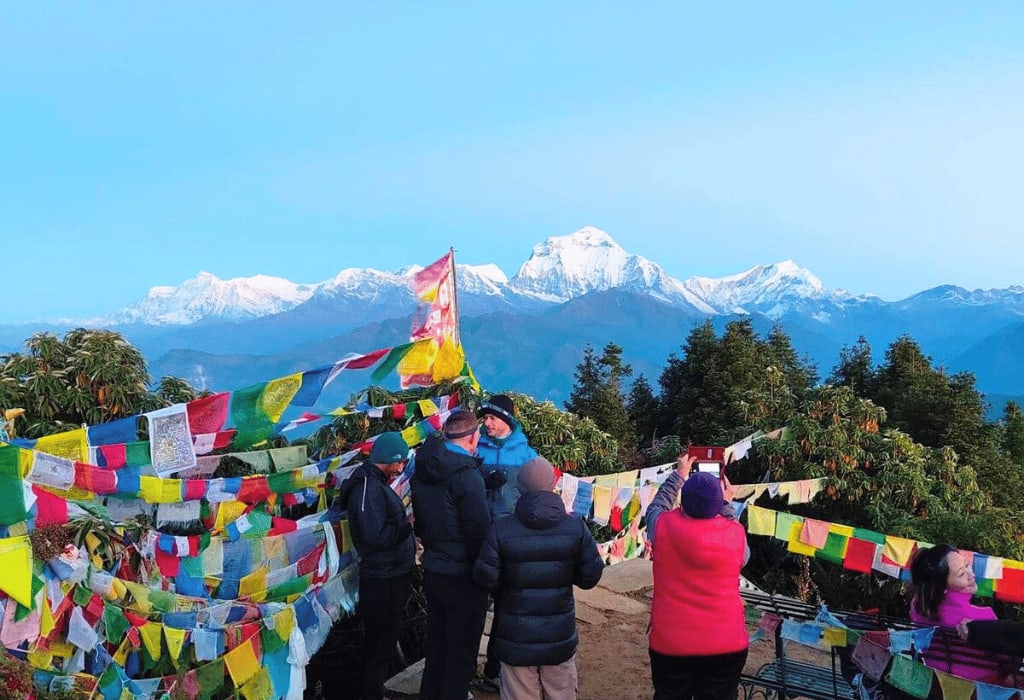
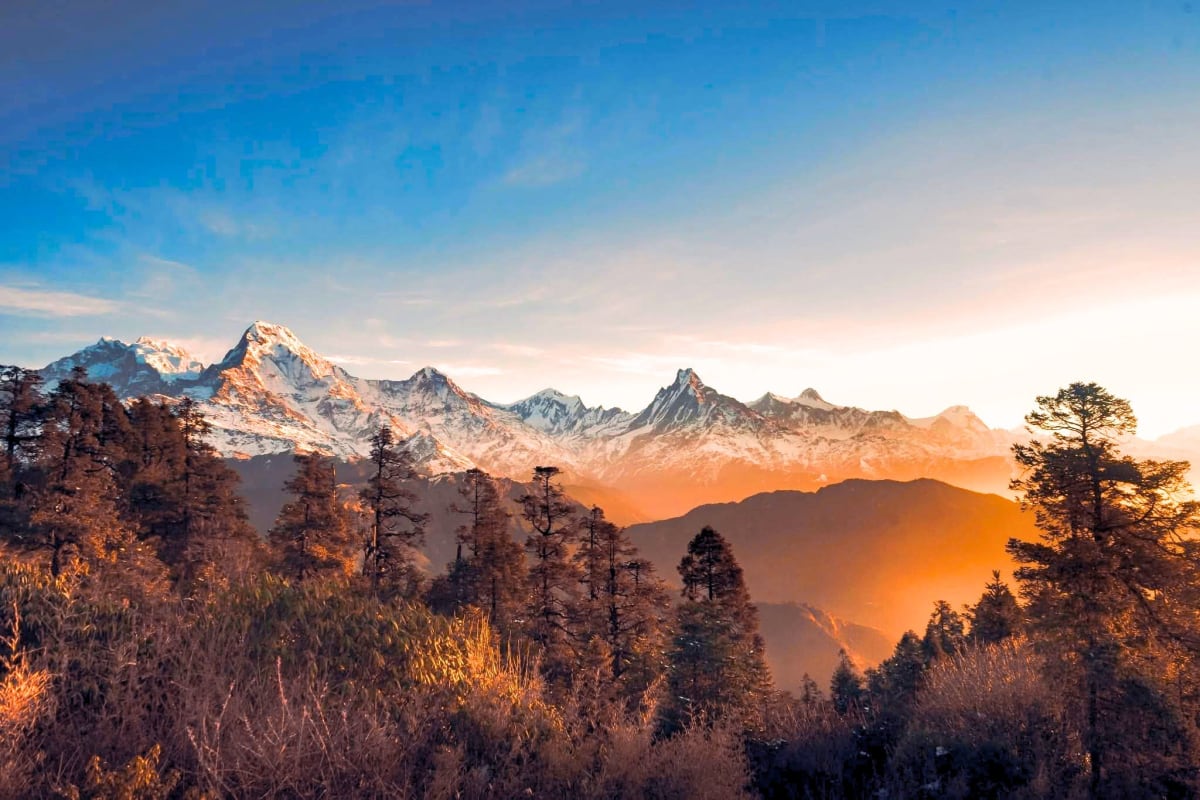
Winter arrivals have climbed sharply because the conditions on the right routes are excellent and the crowds are gone. A 2026 Nepal Tourism Board release put January arrivals at 92,573, up 15.7% year over year, and February 2026 was the highest February on record. Trekkers have worked out what operators long knew: winter delivers the stablest high-pressure weather of the year, so the long-range Himalayan views are the clearest of any season, and the teahouses that turn people away in October have rooms to spare.
The shift matters because most trekking advice still says "October or November," which is now out of date for the lower and mid-altitude routes. The Everest Base Camp trek runs through winter on our schedule, with clear views and near-empty lodges as the trade for the cold.
How cold does winter trekking get?
Winter cold is real but manageable with the right gear, and it varies sharply by altitude.
| Altitude band | Daytime | Night |
|---|---|---|
| Below 3,000 m | 8-15 C in sun | Around freezing |
| 3,000-4,000 m | Mild in sun | -5 to -10 C |
| Above 4,500 m | Cold even in sun | Gorak Shep to -20 C; wind chill on exposed ridges colder still |
Below 3,000 m, winter days stay pleasant in direct sun. Between 3,000 and 4,000 m, daytime temperatures hold up reasonably well even as nights drop sharply. Above 4,500 m, the numbers turn serious in a way that shapes the whole trip: January nights at Gorak Shep on the Everest route reach the table's coldest figure.
Daytime walking is comfortable at every altitude because the winter sun is strong and the air is dry, so the cold is a morning-and-evening problem, not an all-day one. Teahouse dining rooms are heated by stove until about 9 pm; bedrooms are unheated at every altitude, which is the single hardest part of a winter trek.
Which routes stay open in winter?
Lower and mid-altitude routes stay open and shine in winter, while the high passes close. The Poon Hill trek is one of the best winter treks in Nepal, staying low enough to avoid deep snow while giving crisp dawn views. Everest Base Camp, the lower Langtang Valley, and Annapurna Base Camp all run through winter with proper gear. What closes are the high crossings: the Thorong La on the Annapurna Circuit and the Larkya La on Manaslu carry avalanche risk and deep snow, and can shut for the season.
The rain-shadow treks during monsoon valleys of Upper Mustang also work in winter at their lower sections, though the highest are cold and windy. As a rule, if a route tops out below 4,000 m it is a strong winter choice; above 5,000 m it becomes a cold, committing undertaking suited to experienced trekkers.
What gear does winter trekking demand?
Winter demands a step up in insulation over the standard three-season kit, centred on the sleeping system and the extremities. A four-season down sleeping bag rated to -20 C comfort is non-negotiable on any route reaching 4,500 m, because bedrooms are unheated and the January lows are severe. A down jacket, insulated gloves with liners, a warm hat, and a buff for the face handle the morning and evening cold, and microspikes belong in the pack for any icy pass approach. Battery performance drops sharply in these temperatures too, so our guides carry spare power banks kept inside a jacket pocket overnight rather than left in an outer pocket, where lithium batteries lose charge fastest.
Beyond insulation, winter needs the same care as any high trek plus attention to hydration, since the dry cold masks fluid loss. The altitude rules do not change with the season, and our winter departures keep the same acclimatization schedule and twice-daily oxygen checks described in the altitude sickness prevention guide.
How does winter pricing and booking availability compare?
Winter package prices run 10 to 15% below the same route's autumn rate, since teahouse rooms and guide time both cost less to secure outside peak demand; only the fixed Lukla and Jomsom flight fares stay flat year-round. Availability moves the other way: where a popular autumn departure needs booking two to three months out to guarantee teahouse rooms in Namche or Manang, a winter departure on the same route can usually be confirmed two to three weeks ahead.
The three winter months aren't interchangeable, though the gear list stays the same across all of them:
| Month | Character | Booking lead time |
|---|---|---|
| December | Mildest of the three, transitioning from autumn | 3-4 weeks |
| January | Coldest, clearest, quietest trails | 2-3 weeks |
| February | Clear high-pressure pattern, arrivals climbing fast | 4-6 weeks (surge booking now) |
February's rising arrivals numbers mean its booking window has started to close faster than January's despite both months sharing similar temperatures, so a February departure is no longer the last-minute option winter trekking used to be. Trekkers set on a specific December, January, or February departure date should treat that lead time as a floor, not a target, since Namche and Dingboche lodge capacity is finite even in winter's quieter market.
FAQ
Common questions
Can you trek to Everest Base Camp in winter?+
Yes, Everest Base Camp runs through winter with the right gear, and our January and February departures deliver the clearest views of the year and near-empty teahouses. The trade is severe cold, with nights at Gorak Shep reaching -20 C, so a four-season sleeping bag rated to -20 C comfort is essential. The trail itself stays open; only the high passes close.
Which Nepal treks are best in winter?+
Lower and mid-altitude routes are best: Poon Hill, the lower Langtang Valley, Annapurna Base Camp, and Everest Base Camp all run well in winter. What closes are the high crossings, the Thorong La and the Larkya La, which carry avalanche risk and deep snow. As a rule, routes topping out below 4,000 m are strong winter choices.
Is winter trekking in Nepal crowded now?+
Less than autumn but busier than it used to be: a 2026 Nepal Tourism Board release put January arrivals at 92,573, up 15.7% year over year, with February 2026 the highest February on record. Even so, winter trails and teahouses are far quieter than the October peak. The surge reflects trekkers discovering winter's clear views and open lodges.
Do I need different gear for December versus February trekking?+
Not fundamentally: the same four-season sleeping bag and insulated layers cover the whole December-to-February window, though December nights run 2 to 4 C milder than the January-February coldest stretch at altitude, based on our own trip logs, so a December departure has slightly more margin. February's clear high-pressure pattern, the same one behind the arrivals surge, tends to bring the calmest, least windy days of the three winter months.