A Sherpa guide is a licensed trekking or climbing guide who belongs to the Sherpa people, an ethnic group native to the high Khumbu and Solukhumbu valleys of eastern Nepal, and the word is an ethnicity and clan name first, a job title only by extension. Not every Everest-region guide is ethnically Sherpa, and not every Sherpa works as a guide. Passang Dawa Sherpa, our lead guide, was born in Phortse at 3,840 m and holds an NMA trekking guide licence. He wrote this guide from that lived context.
The sections below cover where the confusion between "Sherpa" as a people and "sherpa" as a generic job title started, the real licensing path a guide follows regardless of ethnicity, why the Khumbu produces a disproportionate number of high-altitude specialists, and what the guide relationship actually looks like day to day on a trek.
In this guide 6
- 01 Is "Sherpa" an ethnicity or a job title?
- 02 Are all Everest-region guides ethnically Sherpa?
- 03 What licensing does a guide actually need, regardless of ethnicity?
- 04 Why does the Khumbu produce so many high-altitude specialists?
- 05 What does the guide relationship actually look like day to day?
- 06 What's the respectful way to address and refer to a guide?
Is "Sherpa" an ethnicity or a job title?
Sherpa is an ethnicity first: a Tibetan-origin people who migrated into the Khumbu and Solukhumbu region of eastern Nepal roughly 500 years ago and now number around 150,000 people, most still concentrated in the high valleys below Everest. The lowercase use of "sherpa" as a generic term for any mountain guide or porter is a Western media habit that took hold after the 1953 Everest summit, and it flattens a specific clan and language group into a job description. Passang Dawa Sherpa carries the name as his actual surname, not a professional title, the way "Sherpa" appears on the birth certificate of every ethnic Sherpa in the Khumbu.
This distinction matters on the ground: a trekking company that markets "your personal sherpa" is often describing a porter or a support guide who isn't ethnically Sherpa at all, while a genuinely Sherpa guide may hold a role with no connection to load-carrying whatsoever, from lodge ownership to mountaineering instruction.
Are all Everest-region guides ethnically Sherpa?
No. Many Everest Base Camp guides are ethnically Sherpa because the Khumbu is Sherpa homeland, but licensed guides from Tamang, Gurung, Rai, and other Nepali ethnic groups work the same routes, hold the same NMA and TAAN credentials, and carry the same legal authority to lead a trek. Ethnicity affects a guide's home-region fluency and family network of lodge contacts far more than it affects competence or licensing.
On our own team, Mingma Tendi Sherpa is ethnically Sherpa and grew up in Gatlang in the Langtang region rather than the Khumbu, which is itself a reminder that Sherpa communities exist beyond Everest, in Rolwaling, Langtang, and further afield. A trekker who assumes "Sherpa guide" and "Everest guide" are interchangeable misses that Sherpa identity and regional specialty are two separate facts about a person.
What licensing does a guide actually need, regardless of ethnicity?
Every legally operating trekking guide in Nepal, Sherpa or not, holds an NMA Trekking Guide License from the Nepal Mountaineering Association plus a TAAN registration, the same two credentials whether the route is Everest, Annapurna, or Manaslu. Passang's licence sits on the same registry as a non-Sherpa guide's licence issued the same year; the certification process, a multi-week course covering first aid, route navigation, and client management, doesn't vary by ethnicity.
What does vary is specialization: guides who grow up in a specific valley, Sherpa or otherwise, accumulate a depth of trail-condition knowledge, lodge relationships, and weather pattern familiarity that a generic license alone doesn't confer. This is why our Everest-region content specifically carries Passang's byline rather than a guide whose home region is elsewhere, and it's the same logic behind why Sherpa culture and place matter on the Everest route beyond the license itself.
Why does the Khumbu produce so many high-altitude specialists?
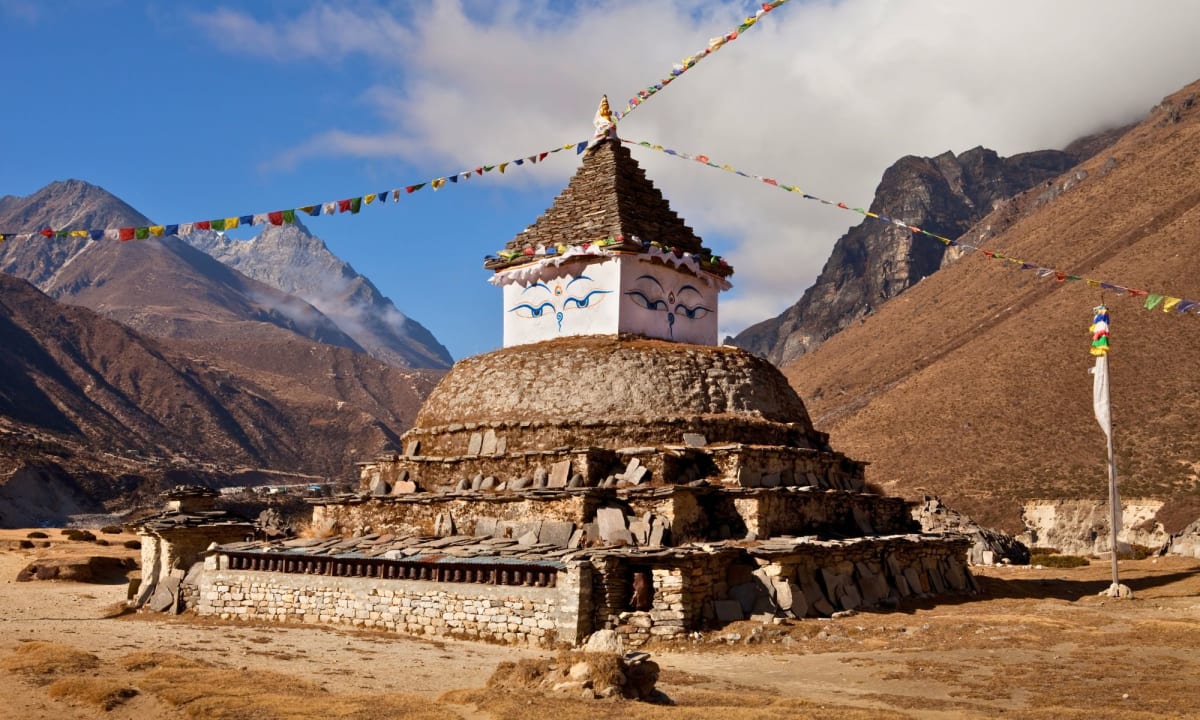
Generations of high-altitude adaptation, both physiological and cultural, concentrate genuine mountaineering expertise in Sherpa communities specifically because the Khumbu sits at elevations most lowland Nepali villages never reach. Sherpa communities have supplied the majority of Everest expedition climbing staff since the 1920s British reconnaissance expeditions, well before commercial trekking existed, and that history built an unmatched density of families with direct high-altitude experience passed down rather than learned in a classroom.
This is a real, measurable pattern, not a stereotype: Sherpa climbers hold the record for most Everest summits by an individual, and Khumbu villages like Phortse, Passang's own birthplace, have produced Everest summiteers at a rate no lowland Nepali village comes close to matching. The pattern reflects genuine altitude physiology research alongside cultural transmission of route knowledge, not an assumption about any one person's ability based on their surname alone.
What does the guide relationship actually look like day to day?
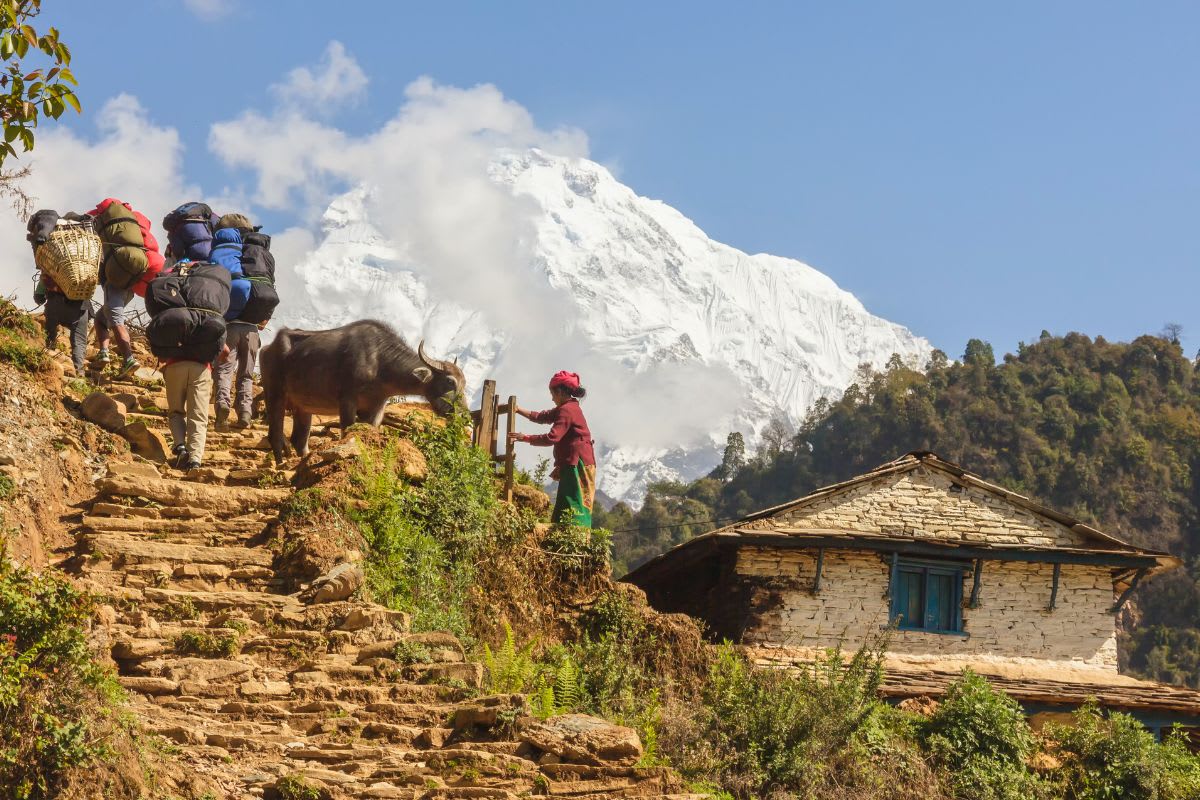
A licensed guide on our departures manages the daily route decision, lodge booking, pace-setting for the group's slowest member, and the first response to any altitude or medical concern, a role that starts before dawn with a weather check and ends after dinner confirming the next day's lodge. This isn't a support role trailing behind clients; it's the operational lead of the trek, backed by the porter team that carries the bulk luggage separately.
Trekkers who've only encountered the word "sherpa" as shorthand for "the person who carries my bag" are describing porter work, a genuinely different job from guiding with its own separate wage structure and skill set, covered in the porter wages and welfare guide. Conflating the two roles, and conflating either with the Sherpa ethnicity itself, is the single most common misunderstanding first-time Everest trekkers arrive with.
What's the respectful way to address and refer to a guide?
Use the guide's actual name, not "our sherpa," the same way a trekker would use a doctor's or driver's name rather than reducing them to their job in casual address. If a guide's surname happens to be Sherpa, as with Passang Dawa Sherpa, that's a name to use normally, not a title standing in for it; if a guide belongs to another ethnic group, calling them "sherpa" generically is both inaccurate and, to many Nepali guides, a mild but real annoyance they've heard for years without saying so directly to clients.
This isn't a strict etiquette rule so much as a small habit that signals a trekker has taken thirty seconds to understand who's actually leading their trip, and it's a habit our guides notice and appreciate quietly rather than ever correcting a client on directly.
FAQ
Common questions
Is every trekking guide in the Everest region ethnically Sherpa?+
No. Many are, since the Khumbu is Sherpa homeland, but guides from Tamang, Gurung, Rai, and other Nepali ethnic groups also hold NMA licenses and lead Everest-region treks. Ethnicity affects home-region knowledge and lodge networks more than it affects legal qualification to guide.
What's the difference between a guide and a porter?+
A guide manages the route, pace, lodge bookings, and medical decisions and holds an NMA Trekking Guide License; a porter carries client luggage on a separate wage structure and doesn't require the same licensing. Calling a porter "your sherpa" conflates two distinct jobs, both of which may or may not be filled by someone ethnically Sherpa.
Why do so many Everest summiteers have the surname Sherpa?+
Sherpa is both an ethnicity and a common surname in the Khumbu, and Sherpa communities have supplied the majority of Everest expedition climbing staff since the 1920s, building generations of high-altitude experience passed down within families. Villages like Phortse have produced Everest summiteers at a rate no lowland Nepali village matches.
Does hiring a Sherpa guide guarantee better service than a non-Sherpa guide?+
No. Licensing, not ethnicity, sets the legal and skill baseline every guide meets. A Sherpa guide brings home-region depth on Everest-area routes specifically, the same advantage a Tamang guide brings on a Langtang route or a Gurung guide brings in the Annapurna foothills, which is a matter of regional specialty rather than ethnic superiority.