Nepal Travel Packages
Kathmandu Valley Wellness Retreat

Kathmandu Valley Wellness Retreat

★★★★★ 4.7 (16 reviews)
Wellness Retreats, Nepal 4-5 days Easy Max 1,400 m
Duration
4-5 days
Max altitude
1,400 m
Difficulty
Easy
Group size
Up to 12
Total distance
~9 km
Elevation gain
200 m
Best season
October to April, year-round at low altitude
Avg daily walk
0-3 hours (optional)
Starts in
Kathmandu (1,400 m)
Ends in
Kathmandu (1,400 m)
Accommodation
Retreat lodge near Boudhanath
✓ TAAN & NMA licensed guides ✓ Permits included, no hidden fees ✓ Small group departures
Group departure · per person
USD650
Permits, guide, porter, lodging & food included
Departure date
Email Nepal
Permits and logistics fully arranged
Licensed guide included on every departure
Direct WhatsApp line to your guide

The Kathmandu Valley Wellness Retreat is a 4 to 5 day fixed-base program of yoga, meditation, and guided cultural visits at 1,400 m near the Boudhanath stupa, with no trekking permits required. A 2026 program costs USD 480 to 800 per person including accommodation, twice-daily practice, and guided visits to Boudhanath and Pashupatinath. Because the retreat stays inside Kathmandu Valley at its own 1,400 m elevation, not a trekking altitude, it runs on the day a flight lands and needs no acclimatization at all.

Ajay Shrestha designed this retreat and trained its resident RYT 500 teacher, who leads daily sessions from a lodge a short walk from Boudhanath, the largest stupa in Nepal. Groups run to a maximum of 12 guests, small enough that the resident teacher adjusts each session to whoever is in the room that day rather than running a fixed curriculum regardless of experience level. External reviewers have rated the program 4.7 out of 5 across 16 reviews checked on TripAdvisor as of July 2026, consistent with the two other low-altitude retreats this company runs.

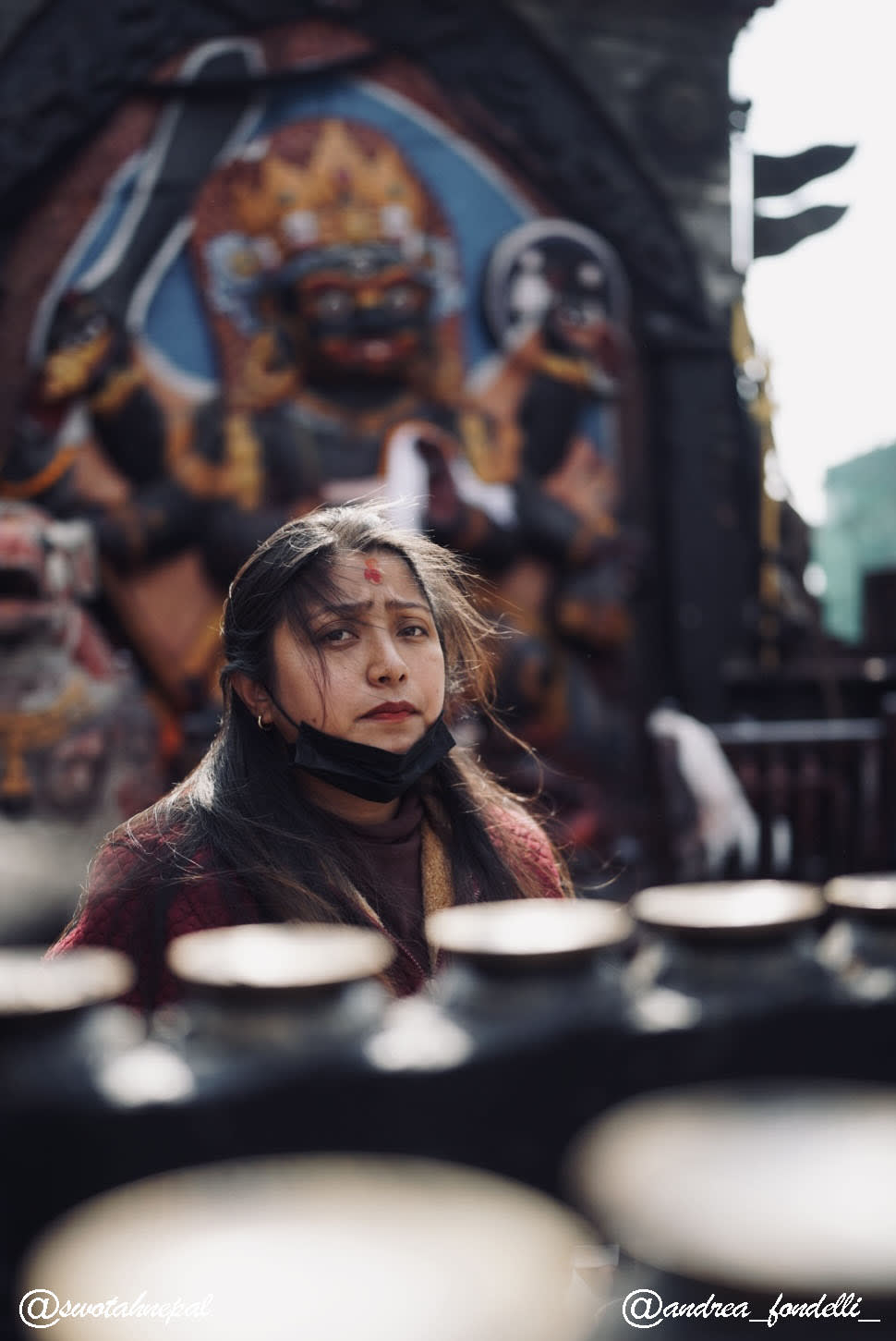
The sections below cover what the program includes, a cost breakdown against the USD 480 to 800 range, the dawn kora walking meditation around Boudhanath, how the retreat pairs Buddhist and Hindu cultural sites with the daily practice, what a typical day actually looks like hour by hour, who leads the sessions, and how this program compares to the company's other low-altitude retreat in Lumbini.

Highlights

What our guides know that others don't.

1

Dawn kora access

Guests join the walking meditation kora circuit around Boudhanath stupa at dawn, before the plaza fills with pilgrims

2

Cultural visits included

Guided Boudhanath and Pashupatinath visits are built into the daily program, not sold as optional add-ons

Live from the trail

Updated 2 Jul 2026

Monsoon status: retreat runs year-round, sessions move under cover on wet mornings

Kathmandu's monsoon brings afternoon rain most days through September, and outdoor kora walks and terrace sessions move under cover when it falls, without affecting the wider program. Boudhanath and Pashupatinath both remain fully open through the monsoon. Departures running year-round.

Who is the Kathmandu Valley Wellness Retreat built for?

This retreat suits travellers who want daily yoga and meditation alongside living Buddhist and Hindu culture, not a lakeside reset or a walking itinerary. Boudhanath, the largest stupa in Nepal, sits a short walk from the retreat lodge, and Pashupatinath, a working Hindu cremation site treated respectfully rather than as a spectacle, is a short taxi ride away. Kathmandu's 1,400 m elevation removes any acclimatization question, so the program can start the morning after an international flight lands.

Travellers who want a lake and mountain backdrop instead should compare the post-trek recovery retreat in Pokhara, which trades cultural density for Phewa Lake and Sarangkot's sunrise. Those wanting the practice paired with foothill walking should look at the yoga trek in the Annapurna foothills instead of a fixed-base program.

What does the Kathmandu Valley Wellness Retreat cost in 2026?

A group program runs USD 480 to 800 per person in 2026, below the Pokhara retreat's USD 600 to 1,100 because the trip runs one to two fewer days and needs no Sarangkot or Peace Pagoda transport. The table below shows the breakdown, and the lodge and resident-teacher instruction lines make up most of the cost, with Boudhanath and Pashupatinath site entry fees adding a small amount on top. No permits, porters, or mountain transfers appear on this bill.

A private program for a couple or solo traveller sits at USD 650 to 1,050 because the teacher's cost spreads across fewer guests. Four days is the practical minimum, covering arrival, the Boudhanath kora, and a Pashupatinath visit; the 5-day version adds the Swayambhunath hill climb. This is one of the lowest-cost wellness programs this company runs, alongside the equivalent Lumbini program, and its short length also places it among the site's Short Nepal Travel Packages.

Where the price goes · per person
Retreat lodge near Boudhanath, 3-4 nightsEn-suite rooms with practice space$130–230
Twice-daily yoga and meditation (RYT 500 resident teacher)Included instruction across the stay$130–220
Meals (sattvic vegetarian menu)$70–130
Guided Boudhanath and Pashupatinath visits, incl. site entry feesLicensed city guide$35–65
Airport and valley transfers$20–40
Program margin, mats, props$50–100

What does the Boudhanath dawn kora walking meditation involve?

Boudhanath's kora is a clockwise walking circuit around the stupa's base, roughly 400 m per lap, that Tibetan Buddhist pilgrims have walked at dawn for generations. Guests join this circuit before 7 am, when the plaza still belongs mostly to monks and elderly pilgrims spinning hand-held prayer wheels rather than the tour groups that arrive by mid-morning. This dawn access is the retreat's defining rare attribute, since no other wellness program on this site sits close enough to a living pilgrimage site to fold it into the morning schedule.

The kora replaces a conventional walking meditation exercise rather than adding to the day's schedule, so it counts as the morning practice session rather than an extra activity. The resident teacher explains the stupa's Tibetan Buddhist symbolism during the walk, connecting the physical circuit to the breath work that follows back at the lodge. Guests who want a longer stay at Boudhanath can return independently in the evening, when butter lamps light the plaza.

How does the retreat combine Pashupatinath and Swayambhunath with the daily practice?

Pashupatinath, a working Hindu cremation site on the Bagmati River, receives a guided half-day visit on the program's second or third day, framed around observation and respect rather than photography of the cremation ghats themselves. A seated meditation session follows at a quieter point along the river, using the site's contemplative atmosphere rather than working against it. This pairing of a cultural visit with a structured session is built into every departure, not offered as an optional extra.

Swayambhunath, known locally as the Monkey Temple, adds a short hill climb of about 365 stone steps on the 5-day version of the program, the only real walking of the retreat beyond the Boudhanath kora. The temple's hilltop position gives the clearest single view of the Kathmandu Valley available on the program. A closing practice session there ties the retreat's cultural and physical elements together before the group returns to the lodge.

Do I need any permits for the Kathmandu Valley retreat?

No trekking permit, national park entry, or TIMS card applies to this retreat, since the entire program stays inside Kathmandu Valley at 1,400 m. Boudhanath and Pashupatinath both charge a small foreign-visitor site entry fee, already folded into the cost breakdown above rather than collected separately. Swayambhunath carries a similar entry fee on the 5-day version.

This is the same permit-free structure as the Pokhara and Lumbini retreats, the simplest paperwork of any program this company runs. Travellers arriving on a tourist visa need nothing beyond the standard Nepal visa-on-arrival process to join. No special documentation is required for the Boudhanath or Pashupatinath visits beyond the group's booking confirmation.

What does a typical day at the Kathmandu Valley Wellness Retreat look like?

A retreat day starts at 6:15 am with tea and light stretching, followed by the main morning session, either the Boudhanath dawn kora on day 2 or a 75-minute vinyasa class on the lodge terrace on other mornings, finishing before 8 am. Breakfast follows, typically buckwheat porridge, fresh fruit, and herbal tea, eaten in the lodge's shared dining room rather than in a rush.

Midday is the program's cultural block on most days, the Pashupatinath visit on day 3 or the Swayambhunath climb on day 4, timed to finish before the early-afternoon heat builds. Guests have 90 minutes to 2 hours of free time after lunch, used for rest, journaling, or an independent walk through the Boudhanath plaza's shops and cafes. The evening session runs 5:30 to 6:30 pm, a yin or restorative class that deliberately winds the body down rather than building further heat, followed by a shared dinner of sattvic vegetarian dishes, dal, seasonal vegetables, and rice, at 7:15 pm. Most guests are in bed by 9:30 pm, since the following morning's session starts early regardless of the day's cultural itinerary.

Who leads the Kathmandu Valley Wellness Retreat, and what is their background?

Ajay Shrestha designed this retreat's structure and trained its resident teacher personally, though Ajay's own guiding base is the Annapurna foothills rather than Kathmandu itself. He holds TAAN guide registration G-1098 and completed a 500-hour Yoga Alliance teacher training in Rishikesh in 2019, the same credential he brings to the Annapurna Yoga Trek and the Poon Hill Yoga Trek. He grew up in Ghandruk at 1,940 m, where his family still runs a trekking lodge, and has led 38 wellness departures since 2017.

The resident teacher who runs day-to-day sessions at the Boudhanath lodge trained directly under Ajay's supervision and follows the same session structure Ajay uses across every program this company runs: sessions scale to whoever is in the room rather than assuming a fixed skill level, and every class ends with a short seated closing rather than stopping abruptly. This continuity of training, one teacher personally certifying the next rather than contracting an unrelated local instructor, is a deliberate choice that keeps every wellness program on this site, from Kathmandu to Pokhara to the mountain yoga treks, teaching from the same underlying method.

How does the Kathmandu Valley Wellness Retreat compare to the Lumbini Meditation Immersion?

Both are fixed-base, permit-free, low-altitude programs designed by Ajay Shrestha, but they differ in focus and setting. This Kathmandu retreat runs 4 to 5 days at 1,400 m with a yoga-forward structure, twice-daily vinyasa and restorative classes balanced against guided visits to three separate cultural sites, Boudhanath, Pashupatinath, and Swayambhunath. The Lumbini Meditation Immersion runs 5 to 6 days at 150 m with a meditation-forward structure concentrated on a single UNESCO World Heritage Site, the Buddha's birthplace, and manages Terai heat rather than Kathmandu Valley's milder climate.

Cost is close but not identical: this retreat runs USD 480 to 800 against Lumbini's USD 550 to 900, since reaching Lumbini adds a flight to Bhairahawa or a longer road transfer that Kathmandu, already the arrival city for nearly every guest, doesn't need. A traveler choosing between the two is really choosing between movement-balanced practice across multiple sites and stillness-focused practice at one, not between a better and a worse option. Guests short on time sometimes ask about combining both; the customized package process can build a combined itinerary, though most guests find either program complete on its own.

How physically demanding is the Kathmandu Valley Wellness Retreat?

This is the easy end of this company's difficulty scale: total walking across the whole program stays under 3 hours a day even on the Swayambhunath climb, the retreat's single hardest stretch, and there's no altitude gain of any consequence anywhere in the 4 to 5 day structure. The 365-step climb to Swayambhunath is the physical high point, comparable to a steep flight of stairs rather than a trekking ascent, and guests who prefer to skip it can take a vehicle most of the way and walk only the final approach.

Compare this to the Annapurna Yoga Trek, which pairs the same twice-daily practice structure with 3 to 5 hours of daily foothill walking and a 600 m ascent cap; this Kathmandu program strips the walking component out almost entirely, leaving twice-daily yoga and meditation as the only physical demand. Guests recovering from an illness, older travelers, or anyone who specifically wants zero walking commitment are better matched here than on any trekking-adjacent wellness program this company runs, including the yoga treks.

What should you know before booking, and what should you pack?

A standard tourist visa, available on arrival at Tribhuvan International Airport for USD 30 to 125 depending on duration, covers this program with no additional paperwork, the same process that applies to every trip this company runs. Rooms at the Boudhanath-area lodge are en-suite with practice space, booked as twin-share by default with a single-room upgrade available at a small supplement noted at booking.

Packing stays simple compared with any trekking program: comfortable, modest clothing suitable for temple visits (shoulders and knees covered at Pashupatinath and Swayambhunath), a yoga mat if you have a strong preference, since the lodge provides mats and props, and layers for cool October-to-February mornings, since Kathmandu's evening temperature can drop to single digits Celsius in winter even though daytime highs stay mild. No specialized gear, footwear, or medical preparation is needed, which is part of what makes this retreat one of the lowest-commitment programs on the site alongside the equivalent Lumbini option.

Why was this retreat built around Boudhanath specifically?

Boudhanath is the largest stupa in Nepal and one of the largest in the world, a UNESCO World Heritage Site since 1979 and the spiritual center for Nepal's Tibetan Buddhist community, many of whom settled in the surrounding neighborhood after 1959. Ajay Shrestha chose this location over a more central Kathmandu base specifically for the dawn kora access, since a lodge anywhere else in the valley would mean a taxi transfer before the morning practice could begin rather than a short walk.

The neighborhood itself is part of what the retreat offers beyond the temple visits: Tibetan bakeries, thangka-painting workshops, and a resident monastic community give guests genuine daily contact with a living religious culture rather than a single scheduled visit to a site otherwise disconnected from where they're staying. Groups typically run 6 to 12 guests, a mix of solo travelers, couples, and occasionally small friend groups, and the shared dining room and evening sessions naturally bring the group together over the course of the stay even though the program itself makes no formal group-bonding activities part of the schedule.

Elevation profile High point 1,400 m
1,400 m12341,400 m5DAY
Acclimatization night High point

Day by Day

5-day itinerary, every detail planned.

Day1
High Point
Arrive Kathmandu (1,400 m), settle at the Boudhanath-area lodge
1,400m alt.

Transfer from the airport to the retreat lodge near Boudhanath, with orientation and a gentle evening restorative session. The valley's own elevation means no acclimatization is needed. Guests arriving on an early flight can rest in a day room before check-in; those landing later join the group directly for the evening session and a shared welcome dinner.

1,400 m
Day2
Acclimatization
Boudhanath dawn kora, full practice day
~2h walking2 km
1,400m alt.
Day3
Trip Day
Pashupatinath cultural visit, afternoon meditation
~2h walking3 km
1,400m alt.
Day4
Trip Day
Swayambhunath (Monkey Temple) morning walk, closing yoga
~2h walking3 km
1,400m alt.
Day5
Trip Day
Closing practice, depart Kathmandu
1,400m alt.

What's Included

Transparent, all-in pricing.

Included in your price

Retreat lodge near Boudhanath, 3-4 nights
Twice-daily yoga and meditation (RYT 500 resident teacher)
Meals (sattvic vegetarian menu)
Guided Boudhanath and Pashupatinath visits, incl. site entry fees
Airport and valley transfers
Program margin, mats, props

Not included

Nepal entry visa fee (USD 30-125, paid on arrival)
Travel insurance with helicopter evacuation cover
Personal trekking gear and equipment
Tips for your guide and porter
Bottled drinks, wifi, and device charging at teahouses
Meals in Kathmandu outside the itinerary

Dates & prices

Upcoming departures.

Start dateEnd datePrice / personAvailability
14 Sept 202618 Sept 2026USD 650Guaranteed · 5 leftEnquire
2 Nov 20266 Nov 2026USD 650Open · 8 leftEnquire
18 Jan 202722 Jan 2027USD 620Open · 9 leftEnquire
8 Mar 202712 Mar 2027USD 680Open · 10 leftEnquire

Verified reviews

What travellers say.

4.7/5 from 16 reviews on TripAdvisor, checked July 2026

★★★★★

Walking the Boudhanath kora at dawn before the practice session was the best part of the whole retreat, monks chanting and prayer wheels turning while the plaza was still quiet. Pashupatinath was handled with real sensitivity by our guide. Four days felt short but complete.

EK
Elena Kowalski · Poland
20 Apr 2026
★★★★★

No jet lag recovery needed since the retreat started the morning after I landed, no altitude to worry about at all. The resident teacher was excellent and the Swayambhunath closing session on day 4 was a perfect final morning. Good value against the Pokhara option.

MC
Marcus Chen · Singapore
8 Feb 2026

Why Nepal Travel Packages

Built on published proof, not adjectives.

A named, licensed guide before you book

Full name, photo, NMA or TAAN license number, and a direct WhatsApp line. The guide on the page is the guide on the trail.

Itemized pricing, not a lump sum

Permits, guide, porter, lodging, and food broken out on every trip page. You see exactly where the price comes from.

Trail conditions updated monthly

Dated field reports from the guides running the route this season, not boilerplate written once and left to go stale.

Permits handled, not hidden

Every permit fee, checkpoint, and paperwork rule is filed for you and published in the guides — no surprise admin at Lukla.

FAQ

Common questions

Do I need any permits for the Kathmandu retreat?+

No, the retreat stays inside Kathmandu Valley and needs no trekking permit, national park entry, or TIMS card. Boudhanath and Pashupatinath both charge a small foreign-visitor site entry fee, already included in the program price. This is the same permit-free structure as the Pokhara and Lumbini retreats.

Is Kathmandu's altitude a concern?+

No, Kathmandu sits at 1,400 m, well below any altitude where acute mountain sickness becomes a factor, so no acclimatization schedule applies. The program can start the morning after an international flight lands. This is one of the reasons the retreat suits travellers who are not trekking at all.

What is the Boudhanath dawn kora?+

The kora is a clockwise walking circuit around the base of Boudhanath stupa, roughly 400 m per lap, that Tibetan Buddhist pilgrims walk at dawn. Guests join before 7 am, when monks and elderly pilgrims dominate the plaza rather than tour groups. The retreat counts this circuit as the morning practice session rather than a separate excursion.

How does this compare to the Pokhara retreat?+

The post-trek recovery retreat in Pokhara runs 5 to 7 days beside Phewa Lake with an optional Sarangkot sunrise hike, trading cultural density for mountain and lake scenery. This Kathmandu retreat runs 4 to 5 days and builds Boudhanath and Pashupatinath into every departure. Both share the same permit-free, low-altitude structure.

Can I visit Pashupatinath respectfully as a tourist?+

Yes, the guided visit is framed around observation and quiet respect rather than photography of the cremation ghats, following the same etiquette used on every Kathmandu itinerary this company runs. A seated meditation session at a quieter point along the Bagmati River follows the visit. Guides brief guests on appropriate conduct before entering the site.

Who actually teaches the sessions if Ajay Shrestha is based in the Annapurna foothills?+

A resident RYT 500 teacher, trained personally by Ajay Shrestha, leads day-to-day sessions at the Boudhanath lodge, following the same session structure Ajay uses across every wellness program this company runs. Ajay designed the retreat's structure and reviews it periodically rather than teaching every departure himself, since his own guiding base is the Annapurna region.

Is this retreat suitable for complete beginners to yoga or meditation?+

Yes, the maximum group size of 12 lets the resident teacher adjust each session to whoever is present, and no prior experience is assumed or required. Sessions scale in intensity rather than assuming a fixed skill level, the same approach used on the company's yoga treks and the Lumbini program.

What is included in the sattvic vegetarian meals?+

Meals follow a sattvic vegetarian pattern built around dal, seasonal vegetables, rice, buckwheat porridge, fresh fruit, and herbal tea, avoiding heavy, processed, or overly spiced dishes in keeping with the retreat's wellness focus. All meals are included in the program price and served in the lodge's shared dining room rather than at outside restaurants. Guests with specific dietary restrictions should flag them at booking so the kitchen can plan around them for the whole stay, not adjust meal by meal.

Can I extend or shorten the standard 4-5 day program?+

Yes, within reason: a 3-day version drops the Swayambhunath visit and keeps Boudhanath and Pashupatinath, while an extension beyond 5 days is usually arranged as a transfer into the Pokhara or Lumbini retreat rather than more days in Kathmandu itself, since the standard itinerary already covers the valley's main sites. Message your guide through the customized package process to adjust the standard structure.

Is this retreat solo-traveler friendly?+

Yes, solo travelers make up a large share of departures, and the twin-share room default doesn't mean solo guests are paired with a stranger unless they choose the lower-cost shared option; a single-room upgrade is available for anyone who prefers privacy. The shared dining room and evening sessions give solo guests natural points of contact with the rest of the group without any scheduled group-bonding activity forcing it.

How far in advance should I book the Kathmandu Valley Wellness Retreat?+

Two to three weeks ahead is usually enough, since this program needs no permit filing or restricted-area paperwork, the lead-time driver on this company's trekking departures. Booking earlier mainly widens the choice of departure dates and improves the odds of a single-room upgrade, which sells out faster than twin-share on popular dates like the September and November departures. Last-minute bookings inside a week are sometimes possible if a scheduled departure hasn't filled, worth asking about directly through WhatsApp or email rather than assuming the calendar is closed without checking.