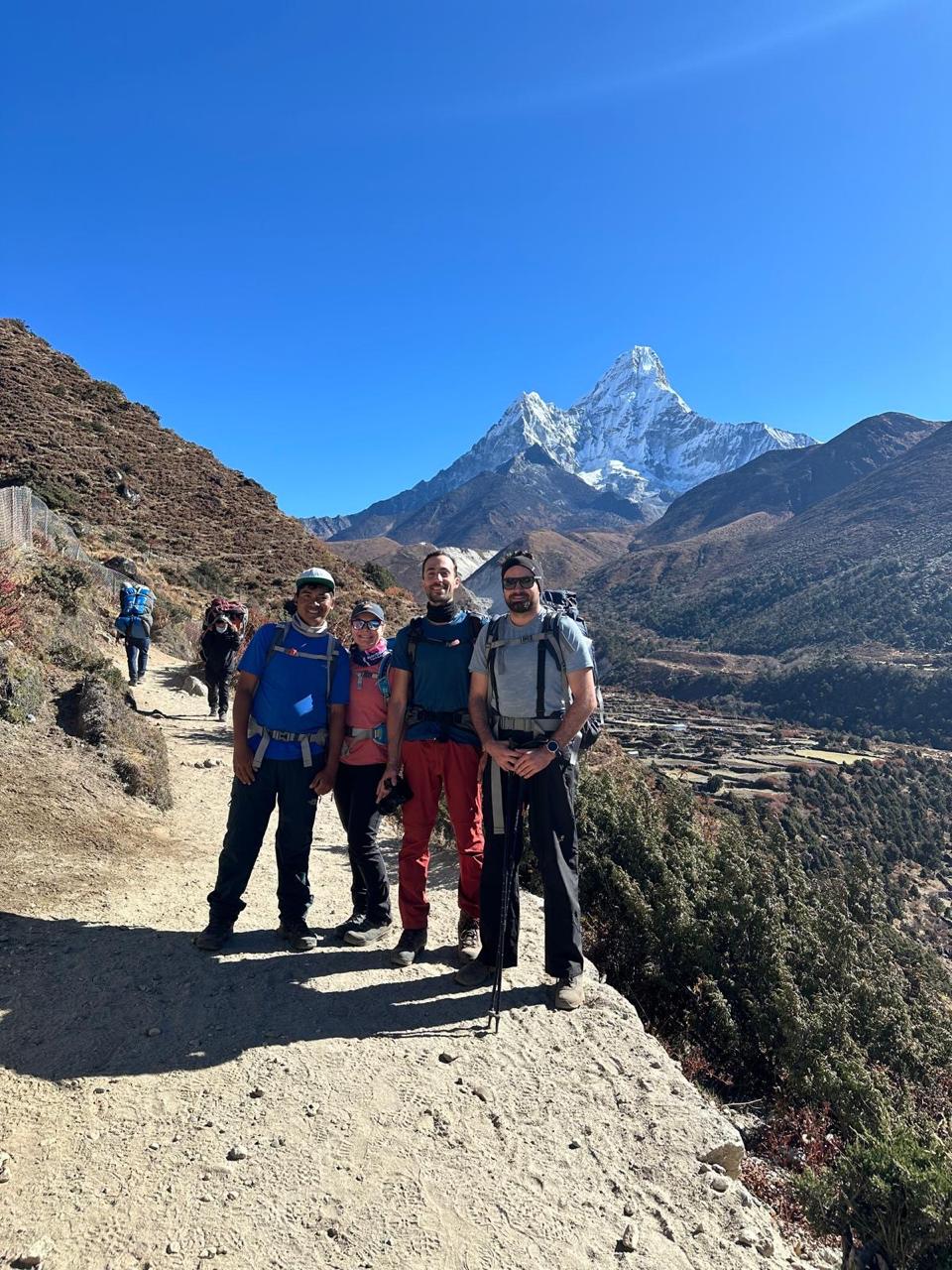
Everest Base Camp is not a recommended trek for children under about 12 to 14, since its 5,364 m maximum altitude and 6,015 m of cumulative ascent carry meaningful altitude risk regardless of a child's fitness, and families wanting a genuine Himalaya trek with younger kids are better served by a lower, shorter route like Poon Hill, which tops out at 3,210 m. Older teenagers with real hiking experience can complete Everest Base Camp on the standard 12-day itinerary, but the decision rests on altitude tolerance and demonstrated stamina, not just age on paper. Passang Dawa Sherpa, who has guided family groups on Everest-region routes across 18 years, and Mingma Tendi Sherpa, our safety lead, wrote and reviewed this guide together.
The sections below cover the realistic minimum age, why altitude risk applies differently to children, how pacing changes for a family itinerary, and which lower-altitude alternatives suit younger kids better.
In this guide 5
What is a realistic minimum age for Everest Base Camp?
Twelve to fourteen is a realistic minimum age for Everest Base Camp, and even within that range, a child's actual hiking experience and altitude tolerance matter more than the number on their birth certificate. A fit, experienced 13-year-old who has hiked multi-day trips at moderate altitude before is a better candidate than an unfit 16-year-old with no hiking background, since the trek's physical demand, 5 to 7 hour walking days across 130 km round trip, tests conditioning directly regardless of age. We do not run scheduled group departures for children under 12 on this route, and private family departures for younger children need an honest conversation with your guide about the specific risks involved before booking.
Younger children, roughly under 10, are far better suited to routes that stay below 3,500 m, where altitude risk drops sharply and daily distances can flex around a child's pace without disrupting a fixed group schedule.
Why does altitude risk apply differently to children than adults?
Acute mountain sickness affects children and adults through the same physiological mechanism, but children, especially younger ones, communicate early symptoms less reliably than adults do, which is the specific risk that matters here, not a difference in underlying vulnerability. A child experiencing a mild headache or nausea at altitude may not report it clearly or may attribute it to being tired rather than recognizing it as an altitude symptom, delaying the descent decision that catches AMS early in an adult trekker. This communication gap is why our guides on any family departure above 3,000 m check in with children more frequently and more directly than they would with adult clients following the same acclimatization schedule covered in the acclimatization schedules guide.
There's no medical evidence that children acclimatize categorically worse than adults at the same ascent rate, but the practical risk of a missed early symptom is real enough that we build in more conservative pacing and more frequent guide check-ins on any family itinerary above 3,000 m, rather than treating a child as a smaller adult on the identical schedule.
How does pacing change on a family itinerary?
A family itinerary with children extends the standard schedule by adding rest days beyond the two fixed acclimatization stops most adult group departures use, and it shortens some walking days rather than holding to the adult-pace 5 to 7 hour standard. Where a standard EBC itinerary might push from Tengboche to Dingboche in one day, a family departure often splits that stretch or adds a lower-effort acclimatization day beforehand, since a slower ascent rate reduces AMS risk for anyone on the schedule and buys more margin for a child's pace specifically. Private, rather than group, departures are the practical way to build this flexibility in, since a fixed group itinerary can't slow down for one family without affecting every other trekker on it.
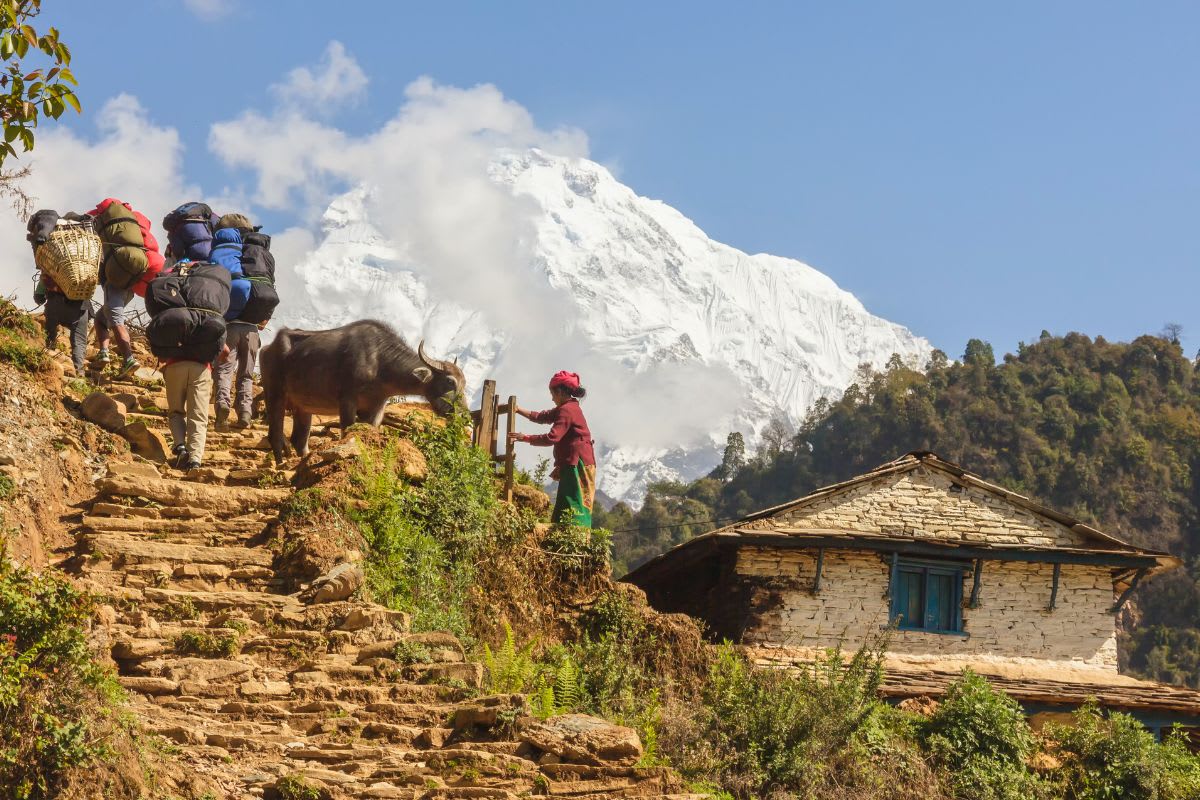
Porters carrying a larger share of a child's gear, and a guide-to-client ratio tighter than the standard group setup, are the two other adjustments that make the most practical difference on a family departure, freeing a child to walk at a natural pace without carrying weight that adds to fatigue.
Which lower-altitude alternatives suit younger kids better?
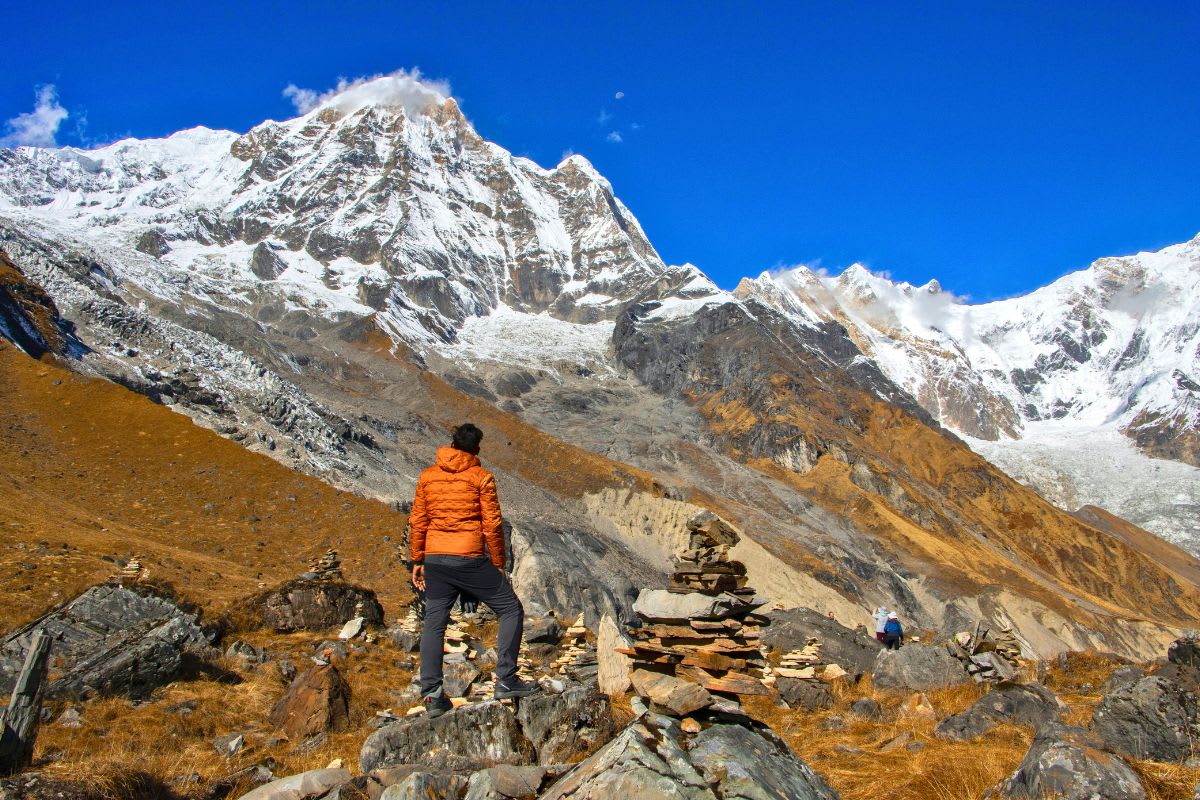
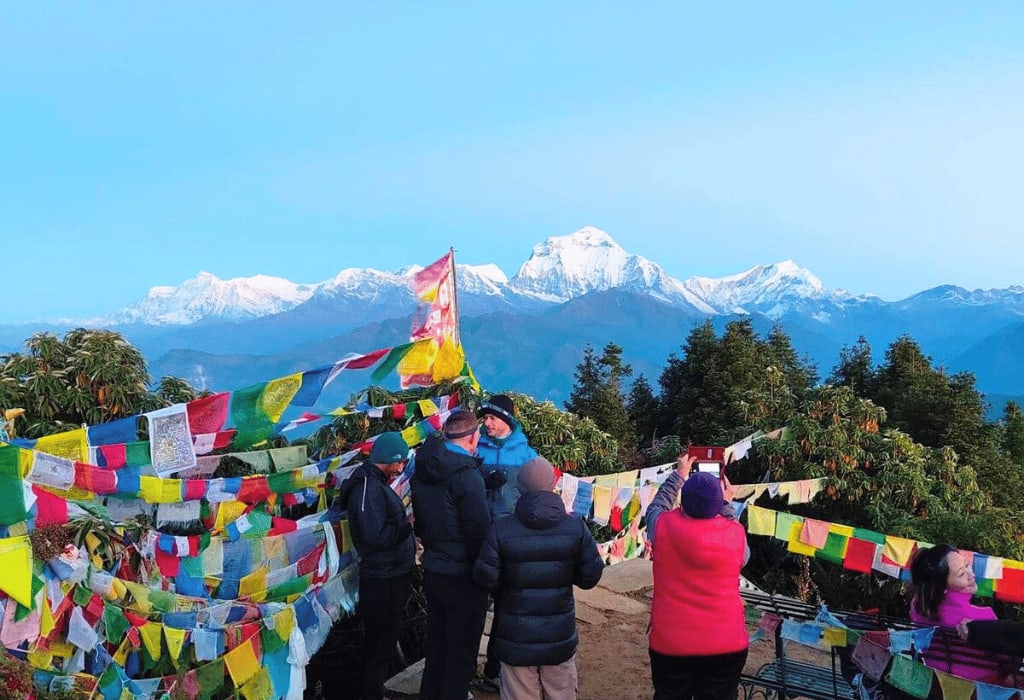
The Poon Hill Trek, topping out at 3,210 m over 4 days, is the standard recommendation for families with children from about age eight, well below the altitude-sickness threshold and short enough that a slower family pace doesn't turn it into a multi-week commitment. Its single hard section, the roughly 3,200-step Ulleri staircase, is a manageable physical test most children handle with breaks and a porter carrying the family's shared gear.
The Annapurna Base Camp trek, at 4,130 m over 7 days, is a reasonable step up for a family with an older child who has already completed a lower route and wants more altitude and a longer itinerary, though it carries meaningfully more altitude risk than Poon Hill and needs the same conservative pacing discussed above. Everest Base Camp itself stays the more demanding option even for teenagers, best reserved for a family with a genuinely experienced older child rather than a first Himalaya trek.
Our honest recommendation
Choose Poon Hill for children under 12, Annapurna Base Camp for an older child with prior hiking experience who wants more altitude, and reserve Everest Base Camp for teenagers 14 and up with demonstrated stamina and, ideally, some prior altitude exposure. Book a private rather than group departure for any family trek above 3,000 m, since the pacing flexibility a private itinerary allows is the single biggest factor in a comfortable, safe trip with kids. Talk directly with your guide about your specific child's experience level before choosing a route; the age ranges above are a starting point, not a substitute for that conversation.
One practical addition worth planning for regardless of route: pack a familiar snack and a favorite small comfort item from home, since altitude-related appetite loss and the disruption of unfamiliar teahouse food hit children's morale faster than it hits most adults, and a five-minute mood dip on day six is far easier to manage with something familiar on hand than without.
FAQ
Common questions
What is the minimum age for the Everest Base Camp trek?+
We recommend 12 to 14 as a realistic minimum, and we don't run scheduled group departures for children under 12 on this route. A child's actual hiking experience and altitude tolerance matter more than age alone, so a private family departure needs a direct conversation with your guide about your specific child before booking.
Is altitude sickness more dangerous for children than adults?+
There's no medical evidence that children acclimatize categorically worse than adults at the same ascent rate. The real added risk is that children, especially younger ones, communicate early symptoms less reliably, which can delay the descent decision that catches AMS early. Guides on family departures check in more frequently to account for this.
What's a better Nepal trek for younger children than Everest Base Camp?+
The Poon Hill Trek, topping out at 3,210 m over 4 days, is the standard recommendation for children from about age eight, well below the altitude-sickness threshold. The Annapurna Base Camp trek at 4,130 m suits an older child with prior hiking experience who wants more altitude on a longer itinerary.
Should we book a group or private departure for a family trek?+
Book a private departure for any family trek above 3,000 m. A fixed group itinerary can't slow its pace for one family without affecting every other trekker, while a private departure lets you add rest days and shorten walking days around your child's actual pace.