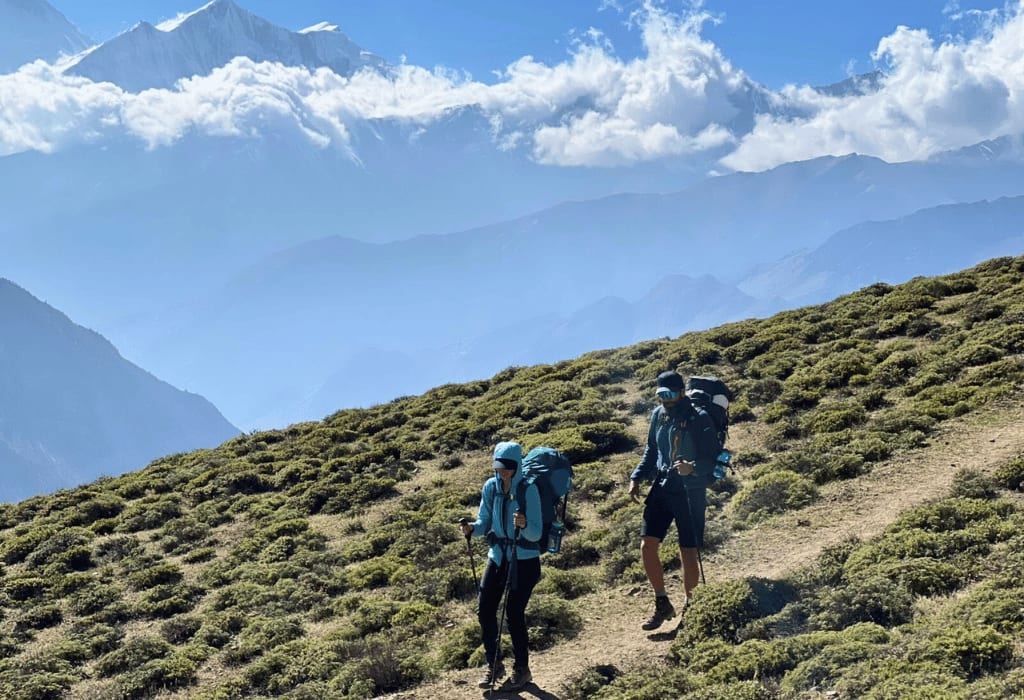
ABC's altitude profile is gentler than the Everest or Annapurna Circuit routes, but the same sleeping-altitude discipline still applies once the trail passes Bamboo: gains stay close to the 500 m per day guideline set by the Himalayan Rescue Association, covered in full in the acclimatization schedules guide. The steepest single-day gain on the standard itinerary, Bamboo to Deurali, climbs roughly 900 m, the trek's one section where pace and hydration genuinely matter, since it is the fastest sustained ascent on the route.
Because ABC's 7-day itinerary is shorter than the Circuit or Everest treks, it carries no dedicated rest day in the way Manang or Dingboche anchor those routes; instead, the schedule spreads the gain from Chhomrong to base camp across three deliberate days rather than compressing it, which achieves a similar effect without a stand-alone acclimatization day built into the plan. Our guides still run the same twice-daily oxygen-saturation checks above 3,500 m as on every high departure, and hold the same authority to slow the pace or arrange a descent if a client's symptoms warrant it.
Base camp itself, at 4,130 m, sits below the altitude where AMS becomes a major statistical risk on most published studies, but it is high enough that the rule still applies: hydrate through the day, avoid alcohol at the high lodges, and treat any headache or nausea as a signal to mention to your guide rather than push through, covered fully in the altitude sickness prevention guide.
Fitness-wise, ABC is a genuine step up from a short trek like Poon Hill but well short of the Annapurna Circuit's demands: expect five to seven hours of walking on most days, much of it on stone staircases rather than gentle gradients, with the Bamboo-to-Deurali day as the clearest test of sustained climbing. Trekkers who can comfortably hike 12 to 15 km with 700 to 900 m of ascent on consecutive days are well matched to this itinerary without additional altitude-specific training.