Kala Patthar (5,545 m) is a rocky viewpoint above Gorak Shep that shows Everest's actual summit pyramid, while Everest Base Camp itself (5,364 m) sits at the foot of the Khumbu Icefall with Everest's summit hidden behind Nuptse, so the two stops answer different questions and nearly every standard itinerary visits both rather than choosing one. Kala Patthar is 181 m higher, climbed pre-dawn in about two hours from Gorak Shep for the sunrise view; Everest Base Camp is a there-and-back walk across glacier moraine with no technical climbing and no direct Everest view at all. This is one of the most common points of confusion for first-time trekkers researching the route, since "seeing Everest" and "reaching Everest Base Camp" are not the same achievement. Passang Dawa Sherpa, who has guided both stops on 74 Everest departures since 2008, wrote this comparison.
The sections below compare what each stop actually shows, the altitude and effort difference, sunrise timing logistics, and why the standard itinerary treats both as required rather than optional.
In this guide 8
- 01 How do the two viewpoints compare at a glance?
- 02 Why doesn't Everest Base Camp itself show Everest's summit?
- 03 Why does Kala Patthar show Everest when Base Camp doesn't?
- 04 Is the extra 181 m to Kala Patthar meaningfully harder?
- 05 Does every itinerary visit both, or can you choose just one?
- 06 Our recommendation
- 07 How does Kala Patthar compare to Gokyo Ri as an Everest viewpoint?
- 08 What should you know about photographing each spot?
How do the two viewpoints compare at a glance?
| Kala Patthar | Everest Base Camp | |
|---|---|---|
| Altitude | 5,545 m | 5,364 m |
| Everest summit visible? | Yes, the full summit pyramid | No, blocked by Nuptse (7,861 m) |
| Best time | Pre-dawn for sunrise | Any time of day |
| Climb from Gorak Shep | About 380 m ascent, roughly 2 hours | Flat-ish moraine walk, roughly 2-3 hours round trip |
| What you actually see | Everest, Lhotse, Nuptse, and the Khumbu skyline | The Khumbu Icefall up close; no distant peak views |
| Skipped by any standard itinerary? | Rarely | Never, it's the trek's named destination |
Why doesn't Everest Base Camp itself show Everest's summit?
Everest Base Camp sits in a bowl at the foot of the Khumbu Icefall, directly under Nuptse's 7,861 m wall, which blocks the sightline to Everest's summit from that specific vantage point entirely. What Base Camp actually offers is a close, textured view of the Khumbu Icefall itself, the tumbled, crevassed glacier that climbing expeditions cross each spring, along with the atmosphere of standing at the literal foot of the route every Everest summit attempt has used since 1953.
Trekkers expecting a distant Everest photograph from Base Camp are consistently surprised that the mountain isn't visible there at all, which is exactly why Kala Patthar exists as a separate stop on the same itinerary rather than a substitute destination.
Why does Kala Patthar show Everest when Base Camp doesn't?
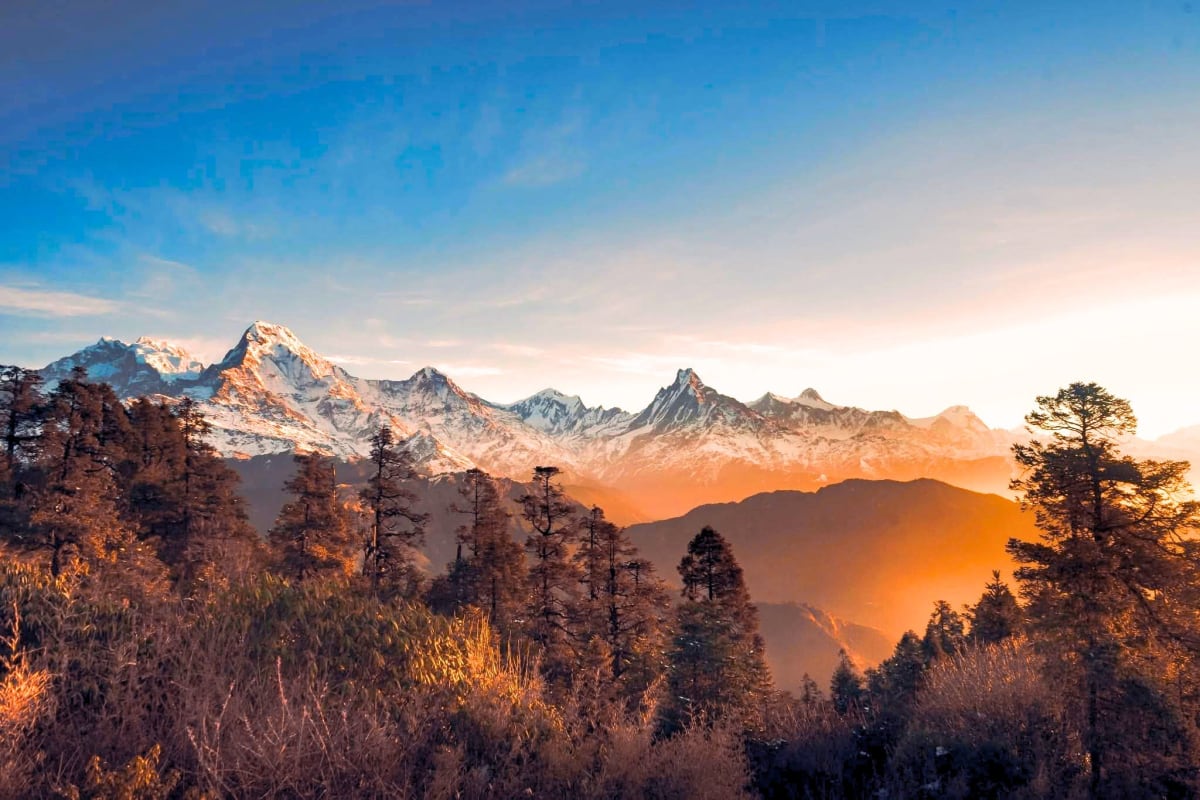
Kala Patthar sits on a ridge above and to the side of the Khumbu valley rather than inside the icefall's shadow, which gives it a clear sightline past Nuptse to Everest's full summit pyramid. The viewpoint climbs 380 m from Gorak Shep, most groups start in the dark to reach the top by sunrise, when the mountain's east face catches the first light and the wind is typically calmest.
This is the shot every EBC trekker actually wants, and it comes from Kala Patthar, not from standing at Base Camp itself. Guides on this route plan the itinerary around this fact explicitly: Kala Patthar is scheduled for the clearest available morning, weather permitting, since a cloudy sunrise there is the one disappointment a well-run itinerary tries hardest to avoid.
Is the extra 181 m to Kala Patthar meaningfully harder?
Yes, in a way that matters for planning the morning, though not for the trip's overall difficulty. The climb from Gorak Shep to Kala Patthar's summit is short, steep, and done in pre-dawn cold and darkness, which makes it feel harder than its modest 380 m of elevation gain suggests. Base Camp's walk, by contrast, is longer in distance but nearly flat by comparison, crossing glacial moraine rather than climbing a ridge.
Trekkers who struggle with the Kala Patthar climb specifically, rather than the trek generally, usually do so because of the early start and cold rather than genuine physical difficulty; a fit trekker who has handled the rest of the itinerary handles this stop too. Full altitude planning for the whole route, including this final push, sits in the acclimatization schedule guide.
Does every itinerary visit both, or can you choose just one?
Every standard EBC itinerary we run visits both, scheduled as two separate outings from the Gorak Shep base: Everest Base Camp on arrival afternoon or the following morning, and Kala Patthar at sunrise on whichever of the two mornings has the clearer forecast. Skipping Base Camp itself defeats the trip's stated destination, and skipping Kala Patthar means missing the only point on the route where Everest's summit is actually visible, so operators do not present this as a real choice on a standard departure.
The one scenario where a trekker might genuinely skip one is weather: a Gorak Shep stay hit by persistent cloud sometimes forces a guide to choose which outing gets the clearer window, and Kala Patthar takes priority in that call because Base Camp's view doesn't depend on visibility the way Kala Patthar's does. This is a field decision made on the day, not something built into the standard itinerary.
Our recommendation
Do both if your itinerary allows it, which every standard Everest Base Camp trek departure does. If you have to prioritize one because of illness, exhaustion, or a single bad-weather morning at Gorak Shep, choose Kala Patthar for the Everest summit view that Base Camp itself can't provide, and treat Base Camp as the trip's destination you've already effectively reached by getting to Gorak Shep. Trekkers extending into the fuller Everest Three Passes trek get both stops plus additional high points along the way, so this tradeoff only applies to the standard route.
How does Kala Patthar compare to Gokyo Ri as an Everest viewpoint?
Trekkers who've researched both routes sometimes ask whether Gokyo Ri (5,357 m), the summit viewpoint on the separate Gokyo Lakes trek, offers a comparable Everest view to Kala Patthar's. It does, from a different angle: Gokyo Ri looks across the Ngozumpa glacier at Everest, Lhotse, Makalu, and Cho Oyu together in one wider panorama, while Kala Patthar gives a closer, more front-on view of Everest and Nuptse specifically without Cho Oyu in frame. Neither is objectively better; a trekker choosing between the two routes partly on view quality is choosing between panorama breadth and single-peak proximity, not between a good and a lesser option.
This comparison only matters for trekkers deciding which route to book in the first place, since the Everest Three Passes trek that combines Gokyo with Base Camp delivers both viewpoints on one itinerary.
What should you know about photographing each spot?
Kala Patthar's pre-dawn light is the harder photography condition of the two: temperatures well below freezing drain camera batteries fast, so keeping a spare battery inside a jacket pocket rather than in a camera bag is standard practice among our guides, and a tripod or stable rock perch matters more than usual since low light at altitude means slower shutter speeds. The reward is the mountain's alpenglow, the summit catching pink-orange light before the sun reaches the valley floor, a specific ten-to-fifteen-minute window guides time the climb around.
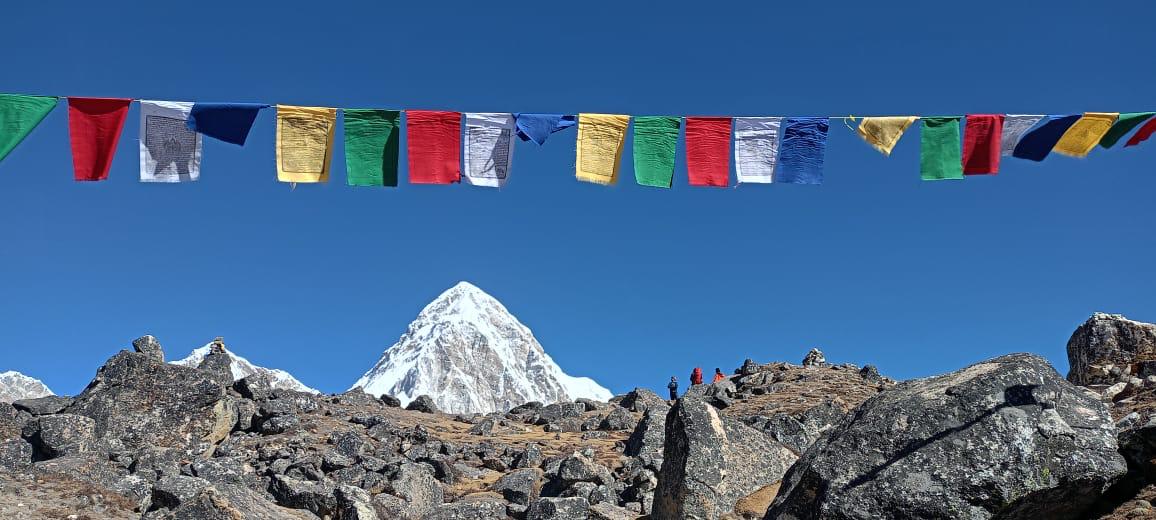
Base Camp's photography is a different, easier proposition: even midday light works fine for the Khumbu Icefall's texture and the prayer-flag-strewn rock that marks the spot, and there's no early start or extreme cold to fight. Trekkers with limited battery capacity or basic camera gear get more reliable results at Base Camp than at Kala Patthar, which is worth knowing before choosing where to prioritize photo effort on a trip with only so much battery and daylight to spend.
FAQ
Common questions
Can you see Mount Everest from Everest Base Camp?+
No. Everest Base Camp (5,364 m) sits directly under Nuptse's 7,861 m wall, which blocks the sightline to Everest's summit from that specific spot. What you see at Base Camp is the Khumbu Icefall up close, not any distant peak view. Everest's summit is visible from Kala Patthar (5,545 m) instead, a separate viewpoint on the same itinerary.
Is Kala Patthar harder to climb than the walk to Base Camp?+
It feels harder in the moment, mostly because of the pre-dawn start and cold rather than the elevation gain itself: about 380 m of ascent from Gorak Shep versus a longer but nearly flat moraine walk to Base Camp. A trekker who has managed the rest of the EBC itinerary typically manages this stop too, since it isn't technically difficult, just early and cold.
Do all Everest Base Camp itineraries include Kala Patthar?+
Yes, every standard departure we run visits both Everest Base Camp and Kala Patthar as separate outings from Gorak Shep, since skipping either means missing part of what the trip is known for. The only exception is a field decision on genuinely bad weather, where a guide might prioritize Kala Patthar's sunrise window since its view depends on visibility more than Base Camp's does.
Which viewpoint has better sunrise views, Kala Patthar or Base Camp?+
Kala Patthar, without question, since it's the specific stop scheduled for sunrise and the only one with a clear sightline to Everest's summit. Base Camp is typically visited midday or afternoon rather than at dawn, and its view, the Khumbu Icefall, doesn't change meaningfully with the time of day the way a sunrise-lit summit view does.