A Nepal trekking packing list is a layered kit built around a sleep system rated for teahouse cold, waterproof footwear, and sun protection for high-UV, low-humidity trail conditions, with the exact items scaling by altitude and season rather than staying fixed across every route. A four-season sleeping bag rated to at least -15 C comfort is the single item that matters most on any route above 3,000 m, because teahouse bedrooms are unheated at every altitude even when the dining hall stays warm by stove until around 9 pm. Passang Dawa Sherpa, who has outfitted groups for this company's Everest Base Camp departures, put this master list together from what actually gets used on the trail and what sits unused in a duffel bag.
The sections below cover the layering system, footwear and the sleep system, a table of what changes by altitude and season, and what's worth renting in Kathmandu's Thamel district against what to bring from home. High-altitude-specific gear for routes above 4,500 m gets more detail in the acclimatization schedules guide.
In this guide 5
What is the core layering system for a Nepal trek?
The core layering system is three layers, not a fixed number of jackets: a moisture-wicking base layer, an insulating mid layer, and a waterproof-breathable shell, combined and swapped through the day rather than worn all at once. A merino or synthetic base layer against the skin moves sweat away during the exertion of climbing; a fleece or light down mid layer traps warmth at rest stops and in the evening; a waterproof-breathable shell blocks wind and rain on exposed ridgelines. Cotton has no place in this system since it holds moisture against the skin and stops insulating once wet, a genuine risk on multi-day routes with no way to fully dry gear overnight.
A down jacket rated for temperatures below -10 C earns its place specifically for evenings above 3,500 m, when dining halls empty out after dinner and bedrooms carry no heat source at all. Trekkers layer up rather than owning one heavy coat, since a single bulky jacket is too warm during the day's exertion and still not warm enough standing still at a high pass before dawn.
What footwear and sleep system do you actually need?
Broken-in waterproof hiking boots with ankle support are the footwear standard for any route above 3,000 m, and "broken in" means at least 50 km of prior wear, not a pair bought the week before departure. Blisters from stiff new boots are the single most common reason trekkers arrive at a teahouse in pain on day two, and no amount of trail experience elsewhere substitutes for breaking in the specific pair going on the trip. Trekking poles reduce knee strain on the long descents that every route eventually demands, particularly the multi-hour drop from a high pass or viewpoint back to the valley floor.
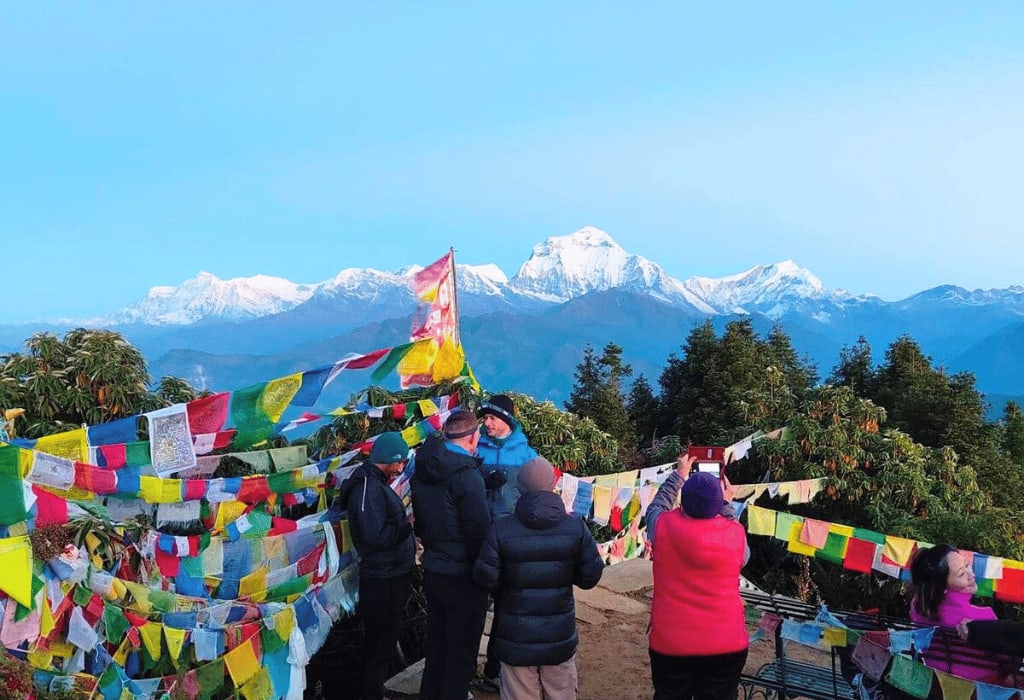
A four-season sleeping bag rated to -15 C comfort, not just "extreme," covers teahouse cold at any Nepal trekking altitude, since even a moderate-altitude route like Poon Hill drops well below freezing at night in the October-to-December season. A sleeping bag liner adds roughly 5 C of warmth and keeps the bag itself cleaner across a multi-week rental cycle, worth carrying even on a bag you own outright. Camp shoes or sandals for evenings at the lodge are a small comfort worth the extra half-kilogram, since boots come off the moment the day's walking ends and stiff, damp boots are unpleasant to put back on for a dinner-hall trip.
What changes by altitude and season?
| Item | Below 3,000 m, Oct-Dec/Mar-May | Above 4,000 m, any season | Monsoon (Jun-Sep) |
|---|---|---|---|
| Sleeping bag rating | -5 C comfort sufficient | -15 C comfort required | -5 C comfort, prioritize dry storage |
| Rain protection | Light shell, occasional shower | Wind-focused shell, snow possible | Full waterproofs, daily rain likely |
| Sun protection | SPF 30+, sunglasses | SPF 50+, glacier glasses, snow glare | SPF 30+, humidity-resistant formula |
| Extra items | Standard layering kit | Down jacket, liner gloves, buff | Leech socks, dry bags for electronics |
Monsoon routes like Upper Mustang, covered in the rain-shadow treks during monsoon guide, sit in a genuine exception: the region's own rain shadow means less rain gear is needed there than the general monsoon table above suggests, since Mustang stays dry while the rest of the country floods.
What's worth renting in Kathmandu, and what should you bring from home?
Rent bulky, trip-specific gear in Kathmandu's Thamel district and bring worn-in, fitted gear from home. Down jackets, sleeping bags, and trekking poles rent for a few dollars a day at any of the dozens of gear shops clustered around Thamel, and renting these three items alone can cut checked luggage by several kilograms on an international flight. Boots, on the other hand, should never be a rental item, since a rented pair has not been broken in to your feet and blister risk rises sharply as a result.
Base layers, socks, and personal medication travel from home because fit and fabric quality matter for multi-day wear and Kathmandu's rental stock is inconsistent on these smaller items. A basic first-aid kit with blister plasters, any personal prescription medication in its original packaging, and a water purification method (tablets or a SteriPEN, covering a full two-week route for about USD 15) round out what should already be packed before landing in Kathmandu rather than sourced there.
How should gear split between a duffel bag and a daypack?
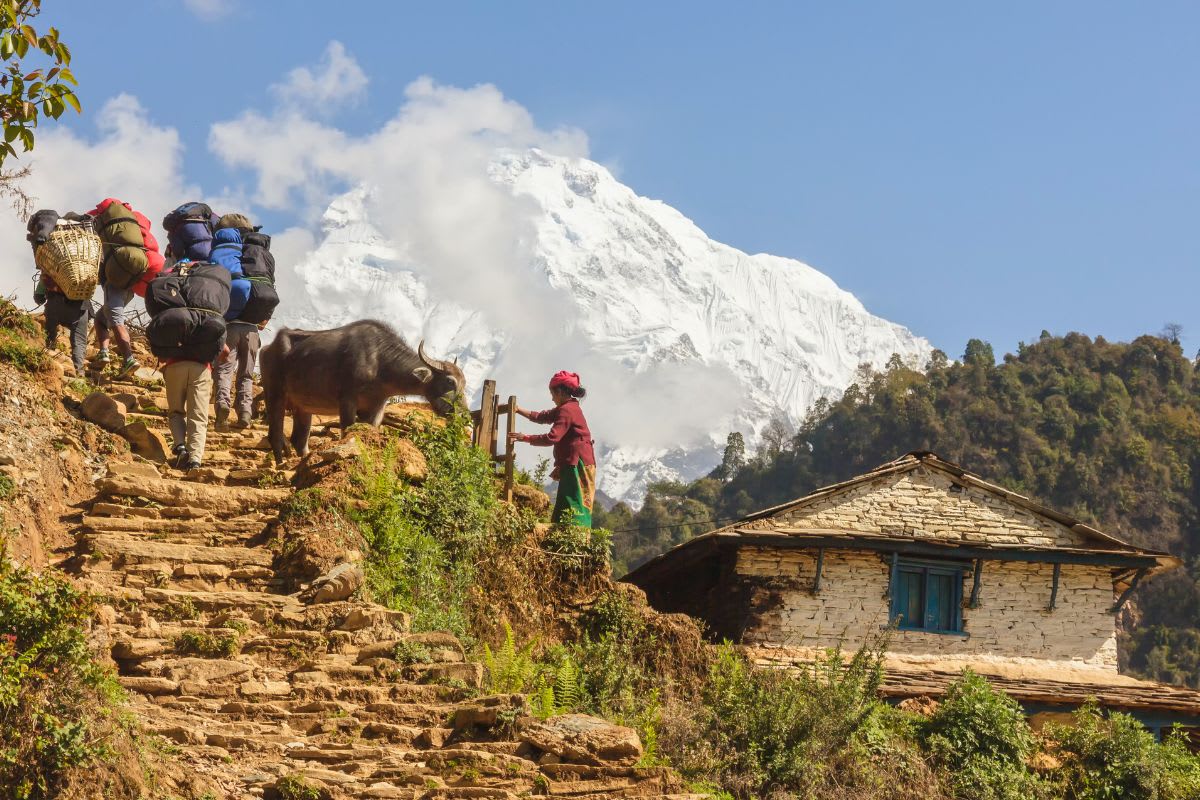
A duffel bag for porter-carried gear, capped at the standard 12 to 15 kg shared load limit most operators enforce, and a separate daypack for what you carry yourself is the split every route on this site uses. The daypack holds water, camera, extra layers, snacks, and anything needed without unpacking the duffel mid-trail; the porter-carried duffel holds the sleeping bag, spare clothing, and anything not needed until the evening stop. Weighing the packed duffel at home against the operator's stated limit avoids a surprise renegotiation with porters on departure morning, a detail Ramesh Rai's permit and logistics guides flag as one of the most common first-day frictions on group departures.
FAQ
Common questions
What sleeping bag rating do I need for a Nepal trek?+
A four-season sleeping bag rated to at least -15 C comfort covers any route above 3,000 m, since teahouse bedrooms carry no heat source even when the dining hall is warm. Lower-altitude routes below 3,000 m in the main trekking seasons can use a -5 C comfort bag instead, but above 4,000 m the -15 C rating is not optional.
Should I buy or rent gear for a Nepal trek?+
Rent bulky items, down jackets, sleeping bags, and trekking poles, from a Thamel gear shop in Kathmandu, and bring fitted, worn-in items, boots, base layers, and socks, from home. Rented boots carry real blister risk since they haven't been broken in to your feet, which is the one item on this list that should never be a rental.
How much luggage weight do porters carry?+
Most operators cap porter-carried duffel weight at 12 to 15 kg shared between two trekkers, a limit worth checking against your own packed bag at home before departure. Everything beyond that limit needs to fit in your own daypack, which you carry yourself throughout each walking day.
Do I need different gear for monsoon treks like Upper Mustang?+
Yes, but not in the direction most trekkers expect: Upper Mustang sits in a rain shadow and stays dry through the June-to-September monsoon while the rest of Nepal floods, so it needs less rain gear than a standard monsoon packing list, closer to the shoulder-season kit than the full waterproof setup other routes require in the same months.