
Nepal Travel Packages
Gosaikunda Trek

Gosaikunda Trek

★★★★★ 4.7 (22 reviews)
Langtang, Nepal 8-9 days Moderate-Strenuous Max 4,610 m
Duration
8-9 days
Max altitude
4,610 m
Difficulty
Moderate-Strenuous
Group size
Up to 12
Total distance
~60 km
Elevation gain
4,200 m
Best season
March to May, October to November
Avg daily walk
5-7 hours
Starts in
Dhunche (1,960 m)
Ends in
Sundarijal (1,460 m)
Accommodation
Teahouse lodges throughout
✓ TAAN & NMA licensed guides ✓ Permits included, no hidden fees ✓ Small group departures
Group departure · per person
USD850
Permits, guide, porter, lodging & food included
Departure date
Email Nepal
Permits and logistics fully arranged
Licensed guide included on every departure
Direct WhatsApp line to your guide

The Gosaikunda Trek is an 8 to 9 day teahouse trek in Nepal's Langtang region that climbs to the sacred alpine lake of Gosaikunda at 4,380 m and crosses the Laurebina La at 4,610 m before descending through the Helambu villages to Sundarijal. A 2026 group departure costs USD 700 to 1,000 per person including the Langtang National Park permit (NPR 3,000) and a TIMS card (NPR 2,000), the same two-permit system used on the standard Langtang Valley route. Gosaikunda is a Hindu and Buddhist pilgrimage site, and the Janai Purnima festival in August draws thousands of pilgrims to its shore, a crowd our scheduled trekking departures avoid by running in spring and autumn instead.

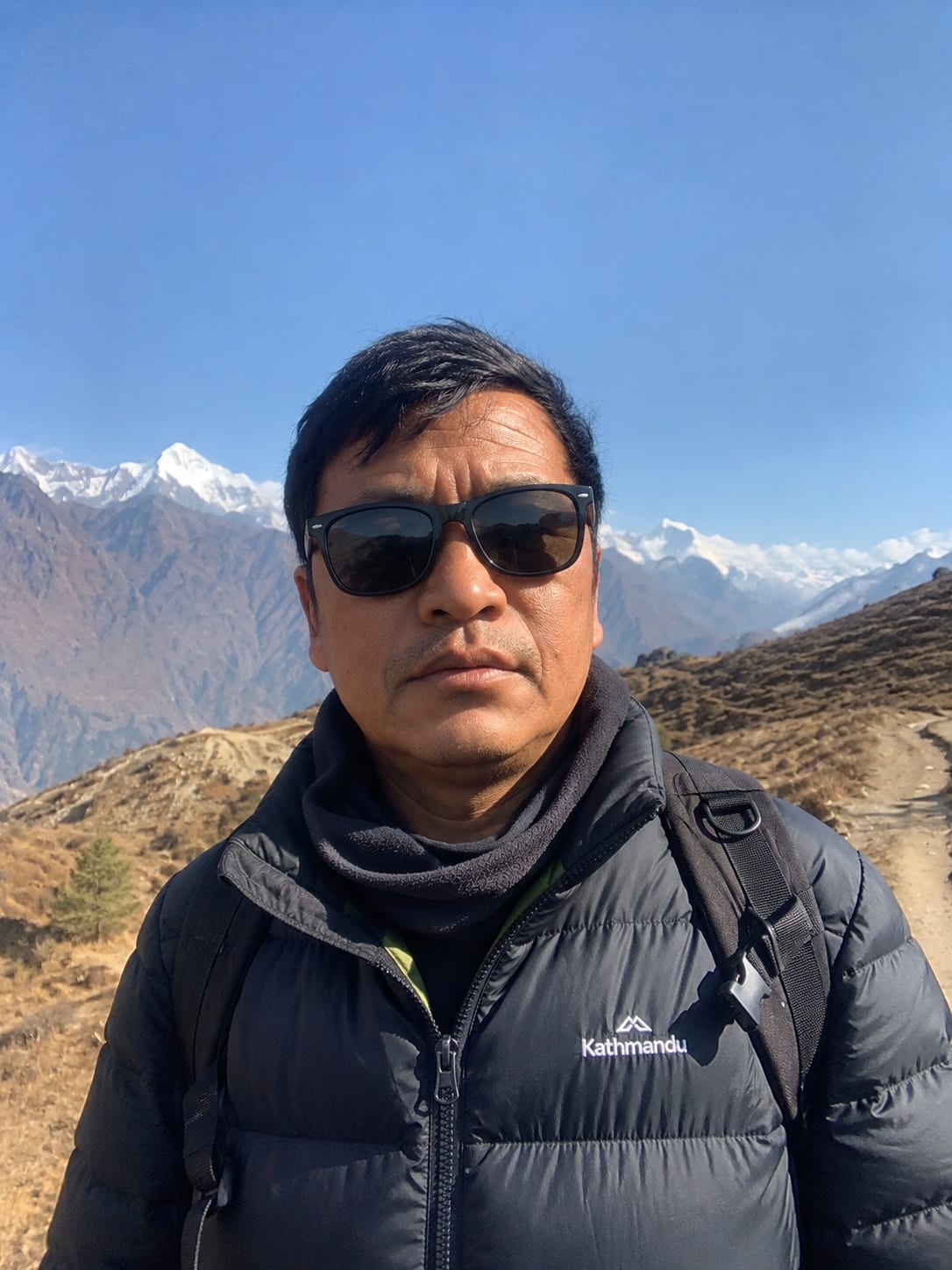
Mingma Tendi Sherpa, who grew up in the Langtang region and has guided 14 Gosaikunda departures, wrote this page and updates its Laurebina La snow conditions each season. The sections below cover the shared Langtang National Park permit, a cost breakdown against the USD 700 to 1,000 range, the Janai Purnima pilgrimage and why we route around it, and the pass-crossing difficulty that separates this route from the gentler Langtang Valley trek.

Highlights

What our guides know that others don't.

1

Janai Purnima pilgrimage crowding

Thousands of Hindu and Buddhist pilgrims bathe at Gosaikunda on the August full moon

2

108 alpine lakes

Hindu tradition counts 108 lakes in the wider Gosaikunda basin, most unnamed and unvisited

Live from the trail

Updated 2 Jul 2026

Monsoon status: Laurebina La clear, Janai Purnima crowding ahead

Monsoon rain is falling on the lower Dhunche to Sing Gompa forest section with the trail muddy but passable. The Laurebina La itself is snow-free and open. Gosaikunda lodges are preparing for heavy Janai Purnima pilgrimage traffic in August, and we are not running scheduled trekking departures that week. Next scheduled departure: early October.
What permits does the Gosaikunda Trek require?

Two permits cover Gosaikunda in 2026: the Langtang National Park entry at NPR 3,000 and a TIMS card at NPR 2,000, the identical pair used on the Langtang Valley route since both treks sit inside the same protected area. Both permits are issued at the Nepal Tourism Board office in Kathmandu or at the Dhunche park checkpoint on the drive in, and they take Nepali rupees and passport photographs. A single park permit covers the entire point-to-point route from Dhunche through Gosaikunda to the Helambu exit at Sundarijal, with no second checkpoint fee anywhere along the way, including at the Chisapani gate on the final descent.

The full Nepal permit map, including how the Langtang park system compares with restricted zones like Manaslu, sits in the Nepal trekking permits master guide. Trekkers combining Gosaikunda with a full loop through the valley itself can read the permit and route detail on the Langtang Valley trek page. Neither permit requires advance processing time the way a restricted-area permit does, so a booking confirmed just a few weeks before departure still leaves ample time to arrange both.

How much does the Gosaikunda Trek cost in 2026?

TAAN-registered operators quoted USD 700 to 1,000 for a group Gosaikunda departure in 2026, positioned between the Langtang Valley's USD 650 to 950 and the longer Annapurna routes because of its point-to-point length and pass crossing. The table below itemizes the breakdown, and the transfer line covers two separate legs, a Kathmandu-to-Dhunche drive at the start and a Sundarijal-to-Kathmandu return at the end, rather than the round-trip transfer most treks use.

Guide and porter costs follow the same TAAN 2026 daily rates as every Langtang-region trek, simply applied across 8 to 9 days instead of a longer Circuit. Food and lodging prices rise noticeably at Gosaikunda itself, where every sack of rice and cylinder of gas reaches the lake by porter over the Laurebina La approach from Sing Gompa, since no jeep track or yak-train supply route serves the lake directly. A private departure adds roughly USD 200 over the group rate mainly because the guide and transfer costs no longer split across a full party, not because the route itself changes.

Where the price goes · per person
Permits (Langtang NP + TIMS)NPR 5,000 total at 2026 rates$38
Kathmandu-Dhunche transfer + Sundarijal-Kathmandu returnLocal bus to private jeep, one-way route$25–70
Licensed guide (shared in group)USD 35-40/day, 8-9 days$200–280
Porter, one per two trekkersUSD 25/day, 20 kg shared load$140–200
Teahouse room, 7-8 nightsNPR 350-900/night, higher at Gosaikunda itself$40–90
Food and drinking waterPrices climb toward Gosaikunda where supplies arrive by porter$170–280
Company margin, logistics, staff equipment$90–180

Why do thousands of pilgrims climb to Gosaikunda in August?

Janai Purnima, a Hindu festival falling on the August full moon, draws thousands of pilgrims to bathe in Gosaikunda's water, which Hindu tradition holds was created by the god Shiva striking a glacier with his trident to relieve his thirst after swallowing poison. Buddhist pilgrims visit the same lake independently, since Gosaikunda sits inside a shared sacred landscape recognized by both traditions, and Hindu mythology counts 108 individual lakes across the wider Gosaikunda basin, most unnamed and rarely visited by trekkers. The single festival day turns the lakeshore and every lodge within a day's walk into standing-room-only crowding, with pilgrims sometimes sleeping in dining halls or under tarps.

Our scheduled trekking departures deliberately avoid the Janai Purnima week, both because August sits in the monsoon season with its own trail and visibility problems and because the pilgrimage crowding overwhelms the limited teahouse capacity near the lake. Trekkers specifically interested in witnessing the festival should ask about a dedicated departure built around it rather than joining a standard spring or autumn group.

How hard is the Laurebina La crossing?

The Laurebina La at 4,610 m is the trek's one demanding day, a climb from Gosaikunda past several smaller lakes before a rocky descent toward Ghopte, typically 6 to 7 hours depending on snow cover. No technical skill is needed, but the pass holds snow later into spring than lower Langtang trails, and a heavy winter snowpack can make the crossing slow or occasionally impassable without gaiters and poles. Our guides check pass conditions from lodge reports at Gosaikunda before committing each group to the crossing day, and a group is never pushed onto the pass in weather a guide judges unsafe, even if that means an unplanned second night at the lake.

The rest of the route grades moderate, a steady climb from Dhunche through Sing Gompa's cheese-making village to the lake, then a long descent through Helambu's Kutumsang and Chisapani. Altitude at 4,610 m is a real factor for one day, and our itinerary builds a rest day at Gosaikunda before the crossing rather than pushing straight over; prevention detail is in the altitude sickness prevention guide. Sleeping-altitude gains stay under the standard 500 m guideline for every night on this route except the single push from Sing Gompa to Gosaikunda, which our guides monitor closely with pulse-oximeter checks once the group passes 3,500 m.

When is the best season for the Gosaikunda Trek?

October to November and March to May are the two windows we run scheduled departures, matching the pattern across every Langtang-region route. Snow can linger on the Laurebina La into April in a heavy winter, so early spring departures carry a higher chance of a slower pass day, while autumn gives the most reliable crossing conditions after the monsoon clears.

Winter, December through February, closes the pass to all but well-equipped groups willing to accept a real chance of turning back, and our itineraries do not schedule departures then. General winter trekking conditions across Nepal's mid-altitude routes are covered in trekking Nepal in winter, useful context for why we hold this particular pass to the two main windows.

How does the Gosaikunda Trek compare to the Langtang Valley trek?

Both routes start at the same Langtang National Park permit and the same Dhunche or Syabrubesi road access, but they diverge completely after that: Gosaikunda is a point-to-point trek over a single high pass to a sacred lake, while the Langtang Valley trek is an out-and-back walk up a glacial valley to Kyanjin Gompa at 3,870 m, with an optional Tserko Ri summit day at 4,984 m. Gosaikunda's 4,610 m Laurebina La is a one-day technical and altitude test; the Valley route spreads its altitude gain more gradually across several days.

Trekkers choosing between them are really choosing between a pilgrimage-lake pass crossing and a glacial-valley approach to a 7,227 m peak. A guide who has led both, as Mingma Tendi Sherpa has here, will generally point first-time high-altitude trekkers toward the Valley route's gentler acclimatization profile and reserve Gosaikunda for trekkers comfortable with one demanding pass day. Groups with 12 or more days sometimes link the two into a single extended itinerary through Thulo Syabru, covered in the FAQ below.

What should you pack for the Gosaikunda Trek?

Gosaikunda's packing list follows the core layered system in the Nepal trekking packing list: a four-season sleeping bag rated to at least -15 C comfort, since teahouse rooms at 4,380 m have no heating, plus a warm hat, liner gloves, and insulated outer gloves for the pass-crossing morning. Trekking poles are genuinely useful on the Laurebina La's rocky descent toward Gopte, and gaiters earn their weight if the pass still carries late-season snow.

Sun protection matters more here than the altitude alone suggests, since the open alpine terrain around the lake has no tree cover and reflects strong UV off any residual snow. A headlamp with spare batteries covers the early starts most groups take on the pass-crossing day to clear the terrain before any afternoon cloud builds.

Elevation profile High point 4,610 m
1,5002,0002,5003,0003,5004,0001,960 m124,380 m345671,460 m8DAY
Acclimatization night High point

Day by Day

8-day itinerary, every detail planned.

Day1
Trip Day
Drive Kathmandu to Dhunche (1,960 m)
1,960m alt.

A 6 to 7 hour drive climbs steadily out of the Kathmandu valley on the same road every Langtang-region trek uses, passing through Trishuli Bazaar before the final switchbacks into Dhunche, the Langtang National Park headquarters. Permits are checked at the park office on arrival, and the group overnights here rather than pushing on the same day, since the altitude gain from Kathmandu's 1,400 m already sets the pace for the trek ahead. Dhunche itself is a working district town rather than a tourist village, with a handful of simple lodges and the last reliable mobile signal before the trail climbs into forest.

1,960 m
Day2
Trip Day
Dhunche to Sing Gompa / Chandanbari (3,330 m)
~6h walking12 km
3,330m alt.
Day3
High Point
Sing Gompa to Gosaikunda (4,380 m)
~6h walking10 km
4,380m alt.
Day4
Acclimatization
Rest and exploration day at Gosaikunda
~3h walking
4,380m alt.
Day5
Trip Day
Cross Laurebina La (4,610 m) to Gopte (3,440 m)
~7h walking13 km
3,440m alt.
Day6
Trip Day
Gopte to Kutumsang (2,470 m)
~6h walking15 km
2,470m alt.

What's Included

Transparent, all-in pricing.

Included in your price

Permits (Langtang NP + TIMS)
Kathmandu-Dhunche transfer + Sundarijal-Kathmandu return
Licensed guide (shared in group)
Porter, one per two trekkers
Teahouse room, 7-8 nights
Food and drinking water
Company margin, logistics, staff equipment

Not included

Nepal entry visa fee (USD 30-125, paid on arrival)
Travel insurance with helicopter evacuation cover
Personal trekking gear and equipment
Tips for your guide and porter
Bottled drinks, wifi, and device charging at teahouses
Meals in Kathmandu outside the itinerary

Dates & prices

Upcoming departures.

Start dateEnd datePrice / personAvailability
8 Oct 202616 Oct 2026USD 850Guaranteed · 4 leftEnquire
22 Oct 202630 Oct 2026USD 850Open · 8 leftEnquire
25 Mar 20272 Apr 2027USD 800Open · 9 leftEnquire
15 Apr 202723 Apr 2027USD 800Open · 10 leftEnquire

Verified reviews

What travellers say.

4.7/5 from 22 reviews on TripAdvisor, checked July 2026

★★★★★

A quieter alternative to the busier Annapurna routes, we saw maybe a dozen other trekkers the whole way. Gosaikunda's water was mirror-still at sunrise and the Laurebina La crossing felt well managed by our guide, who kept a slow steady pace once the snow started.

LA
Lena Andersson · Sweden
25 Apr 2026
★★★★

Went in October for clearer views and got them, plus a genuinely moving stop at the lake given its meaning in Hindu tradition. The Helambu side after the pass was a nice change of scenery from the high alpine section.

RS
Ravi Shetty · India
8 Nov 2026

Why Nepal Travel Packages

Built on published proof, not adjectives.

A named, licensed guide before you book

Full name, photo, NMA or TAAN license number, and a direct WhatsApp line. The guide on the page is the guide on the trail.

Itemized pricing, not a lump sum

Permits, guide, porter, lodging, and food broken out on every trip page. You see exactly where the price comes from.

Trail conditions updated monthly

Dated field reports from the guides running the route this season, not boilerplate written once and left to go stale.

Permits handled, not hidden

Every permit fee, checkpoint, and paperwork rule is filed for you and published in the guides — no surprise admin at Lukla.

FAQ

Common questions

Can I combine Gosaikunda with the Langtang Valley trek?+

Yes, an extended 12-day itinerary links the Langtang Valley with Gosaikunda over connecting trails near Thulo Syabru, adding four to five days to either route on its own. It needs no extra permit beyond the same Langtang National Park entry and TIMS card. Route detail for the valley portion sits on the Langtang Valley trek page.

Is Gosaikunda worth visiting outside the Janai Purnima festival?+

Yes, most of our clients prefer it that way: the lake and its 108-lake basin are strikingly quiet outside the August festival week, with clear reflections of the surrounding peaks and empty lodges. Janai Purnima itself is a remarkable cultural event but comes with monsoon rain and severe crowding, covered above.

How difficult is the Laurebina La in early spring?+

March departures can meet lingering snow on the pass approach from the previous winter, which slows the crossing but rarely closes it outright with proper gaiters and trekking poles. Our guides check conditions at Gosaikunda before committing to the crossing day and carry a contingency to wait if fresh snow just fell. April and May crossings are typically clear.

What is the religious significance of Gosaikunda?+

Hindu tradition holds that the god Shiva created the lake by striking a glacier with his trident, and pilgrims bathe in its water each Janai Purnima to purify themselves. Buddhist pilgrims also revere the site independently, and the wider basin's 108 lakes carry sacred status in Hindu numerology. The site's religious weight is part of why our guides brief clients on respectful behavior around the lakeshore even outside festival season.

Do I need a guide for the Gosaikunda Trek?+

The Langtang region operates under the same TIMS-linked licensed-guide framework as other national-park routes, so a licensed guide is required on this trek. Beyond the legal requirement, a guide who knows the Laurebina La's seasonal snow pattern and the Helambu descent trails is genuinely useful given how quiet this route is outside peak season.

Is Gosaikunda harder than the Langtang Valley trek?+

In one specific way, yes: the Laurebina La at 4,610 m is a single demanding pass day with real altitude and terrain exposure, while the Langtang Valley trek spreads its altitude gain more gradually and has no equivalent pass. Overall daily walking hours are similar between the two routes, so the difference comes down to that one crossing rather than the trek as a whole.

Can beginners do the Gosaikunda Trek?+

A reasonably fit beginner can manage it with a guided group and the built-in acclimatization day before the Laurebina La, but the 4,610 m pass makes this a step up from an entry-level trek like Poon Hill or the Tamang Heritage Trail. First-time high-altitude trekkers who want a gentler introduction should consider the Langtang Valley trek first.

What wildlife might I see around Gosaikunda?+

The alpine terrain above Sing Gompa supports Himalayan tahr and occasional blue sheep on the higher slopes, and danphe, Nepal's national bird, are sometimes spotted in the rhododendron forest below Gosaikunda. Sightings aren't guaranteed on any single trip, and guides brief clients on what's realistically visible for the season rather than promising specific wildlife.

Can I do a shorter version of the Gosaikunda Trek without the full Helambu descent?+

Yes. Some itineraries return the way they came, Ringmo back through Sing Gompa to Dhunche, rather than continuing over the Laurebina La into Helambu, shaving 2 to 3 days off the standard 8-9 day route. This works well for groups with limited time who still want the lake and the Sing Gompa cheese-village stretch, though it means skipping the pass crossing and the Helambu villages that give the standard itinerary its second half.

Is mobile phone signal available on the Gosaikunda Trek?+

Coverage is patchy above Sing Gompa and effectively absent at Gosaikunda itself and on the Laurebina La crossing, returning intermittently once the trail descends into the Helambu villages and reliably by Chisapani, close to the Kathmandu valley rim. Groups should plan on 2 to 3 days without dependable signal around the pass crossing.

What kind of accommodation is available at Gosaikunda itself?+

Basic teahouse lodges cluster near the lakeshore, simple twin rooms with shared bathrooms rather than the more developed lodges found lower in the Langtang valley, since everything at 4,380 m arrives by porter over the same trail trekkers walk in on. Rooms are unheated, consistent with every teahouse at this altitude in Nepal, so the sleeping bag recommendation in the packing section above matters most on this specific night.

How does the Gosaikunda Trek's cost compare to a Poon Hill or Ghorepani trip?+

Gosaikunda runs USD 700 to 1,000 against Poon Hill's USD 350 to 600, roughly double, reflecting the longer duration, the point-to-point transfer logistics at both ends, and the higher-altitude pass crossing that Poon Hill's gentler profile doesn't require. Trekkers choosing between the two are typically deciding between a short, easy introduction to Nepal trekking and a longer, more demanding route with genuine pilgrimage and alpine-lake significance.

What footwear does the Laurebina La crossing require?+

Broken-in waterproof hiking boots with real ankle support are essential for the pass's rocky, uneven descent toward Gopte, the same standard the site applies to every high route. Gaiters are worth carrying in March or April specifically, when lingering snow on the upper approach is more likely, even though they're rarely needed on an October or November crossing.