
Nepal Travel Packages
Tsum Valley Trek

Tsum Valley Trek

★★★★★ 4.8 (41 reviews)
Manaslu, Nepal 13-17 days Moderate Max 3,700 m
Duration
13-17 days
Max altitude
3,700 m
Difficulty
Moderate
Group size
Up to 10
Total distance
~140 km
Elevation gain
4,800 m
Best season
late September to November, March to May
Avg daily walk
5-6 hours
Starts in
Machha Khola (869 m, drive from Kathmandu)
Ends in
Machha Khola (869 m, jeep to Kathmandu)
Accommodation
Teahouses, village homestays, monastery guest rooms
✓ TAAN & NMA licensed guides ✓ Permits included, no hidden fees ✓ Small group departures
Group departure · per person
USD1,350
Permits, guide, porter, lodging & food included
Departure date
Email Nepal
Permits and logistics fully arranged
Licensed guide included on every departure
Direct WhatsApp line to your guide

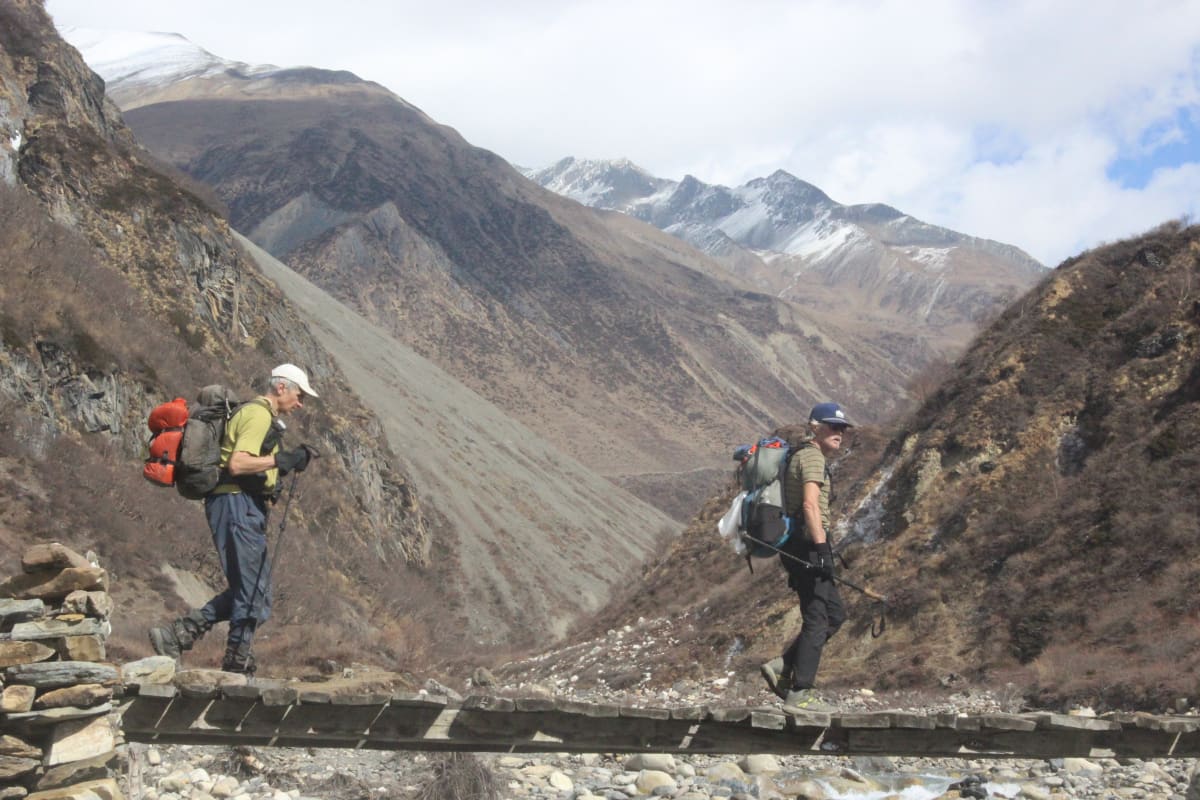
The Tsum Valley Trek is a 13 to 17 day restricted-area trek in Nepal's upper Gorkha district that follows the Budhi Gandaki and Shiar Khola rivers to Mu Gompa at 3,700 m, inside a Buddhist hidden valley that stayed closed to foreigners until 2008. The Tsum restricted-area permit costs USD 40 per person per week, issued by Nepal's Department of Immigration for a minimum of two trekkers with a licensed guide, and the Manaslu Conservation Area Permit adds NPR 3,000. A 2026 group departure costs USD 1,150 to 1,600 per person, and because the route tops out at 3,700 m it carries the lowest altitude risk of any restricted-area trek we run.

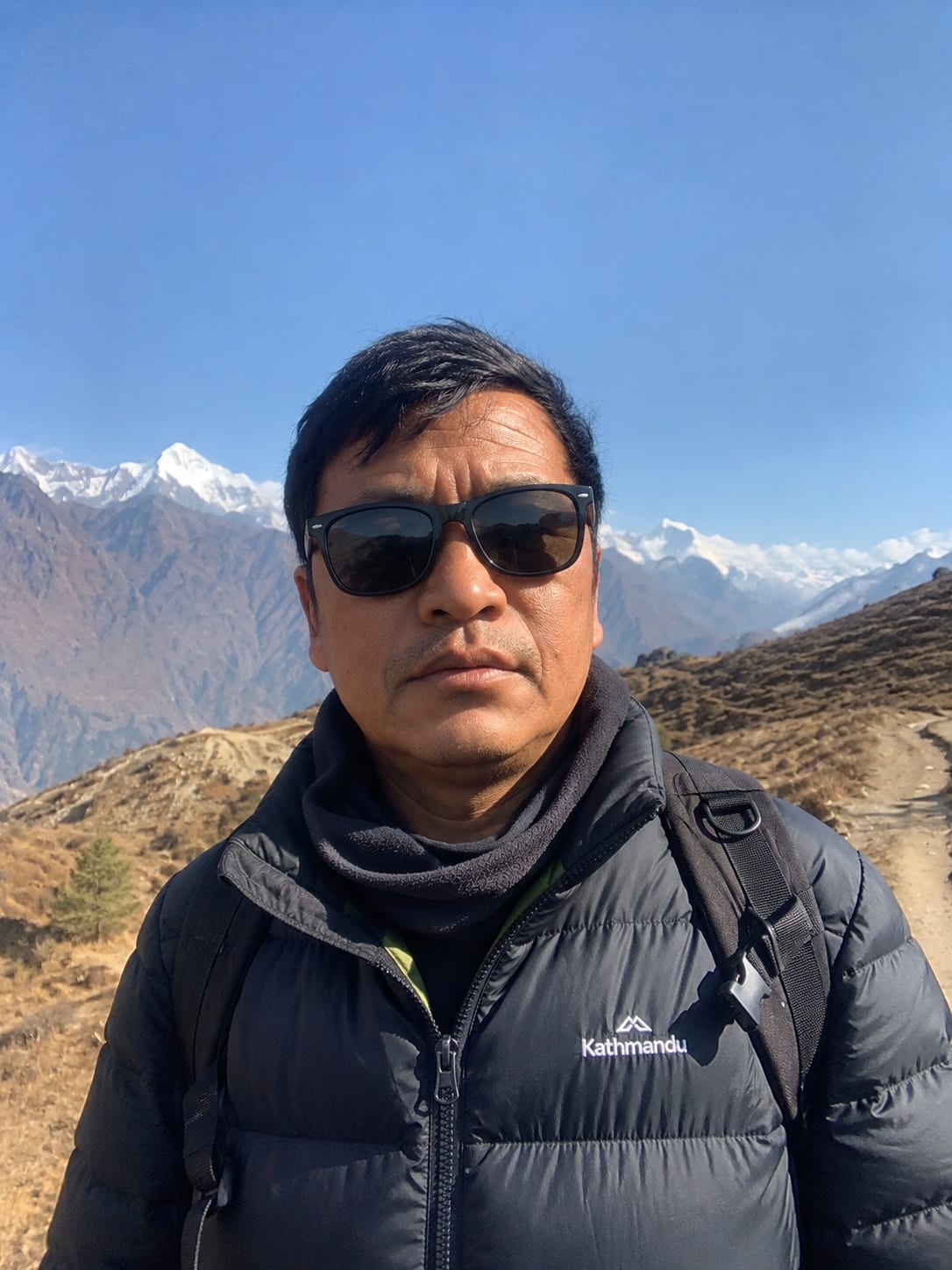
Mingma Tendi Sherpa, who has led 23 Tsum Valley departures since 2016 and stays with the same Chhokangparo homestay family on every one, wrote this page. The sections below cover the USD 40 permit mechanics, a cost breakdown against the USD 1,150 to 1,600 range, the village-by-village reality of homestays versus teahouses, overnight rules at Mu Gompa and Rachen Gompa, and how the valley combines with the Manaslu Circuit into a single 21 to 24 day permit application.

Highlights

What our guides know that others don't.

1

Sleeping by village

Teahouses to Chumling, homestays at Chhokangparo, monastery rooms at Mu Gompa

2

Gompa overnight rules

Mu Gompa guest rooms NPR 800, dinner at 6:30 pm, morning puja at 5:30 am

Live from the trail

Updated 2 Jul 2026

Monsoon closure: approach gorge shared with Manaslu Circuit

The Budhi Gandaki approach between Machha Khola and Jagat is landslide-active and we run no Tsum departures until late September. Upper Tsum itself sits in partial rain shadow and villagers report dry afternoons above Chhokangparo, but the approach gorge decides the season. The first autumn departure on September 26 has 5 of 10 seats booked; homestay allocations at Chhokangparo are already fixed for October.

How does the Tsum Valley restricted permit work in 2026?

Two documents cover a standalone Tsum trek in 2026: the Tsum Valley Restricted Area Permit at USD 40 per person per week and the Manaslu Conservation Area Permit at NPR 3,000, with no TIMS card required. The restricted permit is issued by the Department of Immigration in Kathmandu through a registered operator, for a minimum of two trekkers with a licensed guide, and its week count runs from the Philim checkpoint stamp to your exit back through the same post. A standard 14-day itinerary spends 10 days inside the restricted zone, which still bills as two full weeks because the Department rounds up.

Checkpoint load is lighter than the neighboring Manaslu Circuit: Jagat checks papers on the way in, Philim stamps the restricted permit, and a police post at Chhokangparo logs groups moving up-valley. Fee tables, photo requirements, and the shared application form for combined itineraries sit in the Manaslu restricted-area permit requirements guide, since both permits come out of the same Kathmandu office and our office files them together.

How much does the Tsum Valley Trek cost in 2026?

TAAN-registered operators quoted USD 1,150 to 1,600 for a 14-day group Tsum departure in spring 2026; private trips ran USD 1,450 to 1,950. The permit load is modest at USD 103 for two weeks plus MCAP, less than half the Manaslu Circuit's, and the table below shows where the rest goes. Quotes under USD 1,000 typically skip the porter or route you through in 11 days, which turns the Shiar Khola stages into forced marches and cuts the Mu Gompa layover day that most people book this trek for.

Cash planning matters more here than on richer routes: there are no ATMs beyond Arughat and no card payment anywhere in the valley, and homestay families settle in Nepali rupees only. Budget NPR 8,000 to 12,000 for extras across the trek, covering hot bucket showers at NPR 200 to 300, charging at NPR 150 to 300, and monastery donations, which run NPR 500 or more per gompa by local custom.

Where the price goes · per person
Tsum Valley Restricted Area Permit, 2 weeksUSD 40 per person per week, operator-filed$80
MCAP conservation entryNPR 3,000 at 2026 rates$23
Kathmandu-Machha Khola jeeps, round tripShared 4WD both ways$100–160
Licensed guide (mandatory, shared in group)USD 35-40/day including guide's food, lodging, insurance$220–300
Porter, one per two trekkersUSD 25/day, 20 kg shared load limit$300–350
Rooms: teahouses, homestays, monastery beds, 12 nightsNPR 500-1,200/night; homestays include breakfast$70–140
Food and drinking waterDal bhat NPR 500-900; menus shrink above Chhokangparo$280–400
Company margin, permit filing, staff equipment$130–220

Homestay or teahouse: where will you actually sleep, village by village?

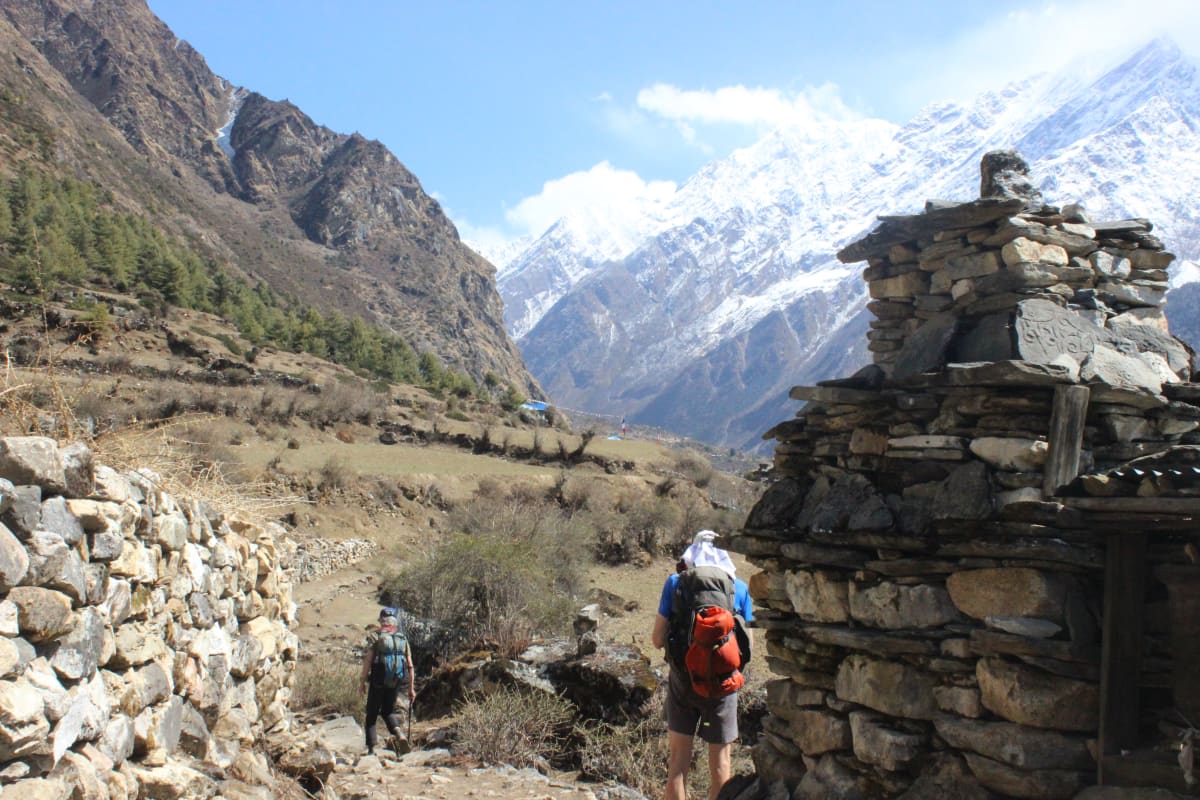
Lodging changes character three times between Machha Khola and Mu Gompa, and knowing the sequence sets expectations correctly. Machha Khola, Jagat, and Lokpa run standard teahouses with private twin rooms at NPR 500 to 800; Chumling (2,386 m) has three small teahouses of 4 to 6 rooms each; Chhokangparo (3,031 m) is homestay country, where trekkers sleep in family houses, eat from the family kitchen, and pay NPR 800 to 1,200 including breakfast. Nile (3,361 m) returns to two simple teahouses, and Mu Gompa itself offers monastery guest rooms.

Homestay nights are the reason Tsum reviews read differently from other treks, and they come with homestay rules: dinner is what the family cooks (usually dal bhat or thukpa), bedrooms are unheated with blankets supplied but a sleeping bag necessary, and the toilet is an outhouse. Mingma Tendi Sherpa has used the same Chhokangparo family since 2016, and on our departures the homestay allocation is fixed before the group leaves Kathmandu rather than negotiated on arrival, which matters in October when the village's roughly 30 guest beds fill.

Can you stay overnight at Mu Gompa and Rachen Gompa?

Mu Gompa (3,700 m), the valley's highest and oldest working monastery, takes overnight guests in a guest wing of about 15 beds at NPR 800 per person, with dinner served at 6:30 pm and the morning puja open to guests at 5:30 am. Photography is allowed in the courtyard and prohibited inside the prayer hall during ceremonies, and the monks sell thangka prints whose proceeds fund the winter food store. A layover day here reaches Dhephyudonma Gompa, a 45-minute climb, or the yak pastures toward the closed Ngula Dhojhyang pass on the Tibetan border.

Rachen Gompa (3,240 m), the nunnery on the east bank of the Shiar Khola, houses over 80 nuns and accepts guests in a smaller dormitory at NPR 600, women given priority when beds run short. Guest etiquette at both gompas is the same: quiet after 8 pm, no alcohol on the premises, and meals taken at the fixed hour or not at all. Our itinerary sleeps one night at each, which no teahouse-only schedule can offer.

Can you combine Tsum Valley with the Manaslu Circuit?

A combined itinerary runs 21 to 24 days and needs four permits filed in one application: the Tsum restricted permit (USD 40/week), the Manaslu restricted permit (USD 100/week from September to November, USD 75/week otherwise), MCAP, and ACAP for the Dharapani exit. The Tsum turn-off sits at Lokpa on day 3, so the side valley is walked first, and the week counts for the two restricted permits run separately, a detail that decides whether your paperwork costs USD 183 or USD 283 and that our office calculates date by date at booking.

The altitude profile is the strongest argument for the combination: 8 to 10 days between 2,000 and 3,700 m in Tsum is near-ideal pre-acclimatization for the Larkya La at 5,106 m, and combined-itinerary clients cross the pass noticeably stronger than circuit-only groups. Anyone considering the crossing should read the altitude sickness prevention guide first, since the combination converts a moderate trek into a strenuous one in its final week.

When should you trek Tsum Valley?

Late September to November and March to May are the reliable windows, the same as the Manaslu Circuit, but Tsum's 3,700 m ceiling stretches both shoulders: our late-November and early-December departures have run without weather incident, when the circuit's Larkya La is already closing. October gives the clearest skies over the Ganesh Himal wall; April adds flowering barley terraces around Chhokangparo and lambing season in the homestay villages.

Monsoon (June to mid-September) closes the approach for the same reason it closes the circuit, the landslide-active Budhi Gandaki gorge between Machha Khola and Jagat, even though upper Tsum itself sits in partial rain shadow and stays walkable. Winter visits in January and February are possible for cold-tolerant groups, with homestay families in residence year-round, night temperatures to -12 C at Nile, and the USD 40 weekly permit rate unchanged, since Tsum has a single flat rate in all seasons.

How does Tsum Valley's altitude profile compare to a standard restricted-area trek?

A 3,700 m ceiling at Mu Gompa makes Tsum the gentlest restricted-area trek this site runs, well under the Manaslu Circuit's 5,106 m Larkya La and Upper Dolpo's 5,190 m Numa La. The itinerary still follows the 500 m sleeping-altitude rule once the route passes 3,000 m at Chhokangparo, with the layover day at Mu Gompa doing the acclimatization work rather than a dedicated rest day lower down, since the whole upper valley sits close enough together that a single high-point pause covers it.

Night Sleeping altitude Gain from previous night
Chhokangparo 3,031 m n/a
Nile 3,361 m 330 m
Mu Gompa 3,700 m 339 m
Mu Gompa (layover) 3,700 m 0 m

Mild AMS symptoms, headache and poor sleep mostly, show up occasionally at Nile and Mu Gompa on our departures, and guides run pulse-oximeter checks from Chhokangparo onward. Serious cases are rare at this altitude range, but the response protocol is identical to any higher route: descend if symptoms don't clear overnight, covered in full in the altitude sickness prevention guide.

What should you pack for Tsum Valley beyond the standard list?

The Nepal trekking packing list covers the sleeping bag, layers, and footwear every teahouse trek needs, and Tsum's homestay nights add a specific item: a sleeping bag liner matters more here than on lodge-only routes, since homestay bedding varies family to family and a liner keeps the bag itself clean over a long trek. A headlamp earns its place for the 5:30 am puja at Mu Gompa, which runs before first light.

Cash planning is stricter in Tsum than almost anywhere else this site operates: there is no ATM beyond Arughat, no card payment anywhere in the valley, and homestay families and monastery guest wings both settle in Nepali rupees only. Small notes matter specifically, since change is limited in villages this remote, and a monastery donation, by local custom, runs NPR 500 or more per gompa.

Should you trek Tsum Valley alone, or combine it with the Manaslu Circuit?

A standalone Tsum trek suits travelers with 13 to 17 days who want the valley's cultural depth, homestays, two monastery overnights, and a Buddhist hidden-valley history closed to foreigners until 2008, without committing to the Larkya La's altitude and difficulty. The combined 21 to 24 day itinerary suits travelers who want both: Tsum's lower-altitude villages function as genuine pre-acclimatization for the pass, and combined-itinerary clients cross the Larkya La noticeably stronger than circuit-only groups, a pattern Mingma Tendi Sherpa has tracked across his own departures of both routes.

The decision usually comes down to time and altitude appetite rather than cost, since the marginal cost of adding Tsum to a circuit booking is smaller than either trek's standalone permit and logistics overhead. Anyone unsure should read the Manaslu Circuit page alongside this one before choosing, since the two share a guide, a starting point at Machha Khola, and the same Department of Immigration application process.

Elevation profile High point 3,700 m
1,0001,5002,0002,5003,0003,500869 m1234563,700 m7891011869 m12DAY
Acclimatization night High point

Day by Day

14-day itinerary, every detail planned.

Day1
Trip Day
Drive Kathmandu to Machha Khola (869 m)
869m alt.

The 8 to 9 hour jeep drive runs the Prithvi Highway to Dhading Besi and rough road up the Budhi Gandaki. First permit check at the Arughat conservation post.

869 m
Day2
Trip Day
Machha Khola to Jagat (1,340 m)
~6h walking15 km
1,340m alt.
Day3
Trip Day
Jagat to Lokpa (2,240 m)
~6h walking14 km
2,240m alt.
Day4
Trip Day
Lokpa to Chumling (2,386 m)
~4h walking8 km
2,386m alt.
Day5
Trip Day
Chumling to Chhokangparo (3,031 m)
~5h walking12 km
3,031m alt.
Day6
Trip Day
Chhokangparo to Nile (3,361 m)
~5h walking11 km
3,361m alt.

What's Included

Transparent, all-in pricing.

Included in your price

Tsum Valley Restricted Area Permit, 2 weeks
MCAP conservation entry
Kathmandu-Machha Khola jeeps, round trip
Licensed guide (mandatory, shared in group)
Porter, one per two trekkers
Rooms: teahouses, homestays, monastery beds, 12 nights
Food and drinking water
Company margin, permit filing, staff equipment

Not included

Nepal entry visa fee (USD 30-125, paid on arrival)
Travel insurance with helicopter evacuation cover
Personal trekking gear and equipment
Tips for your guide and porter
Bottled drinks, wifi, and device charging at teahouses
Meals in Kathmandu outside the itinerary

Dates & prices

Upcoming departures.

Start dateEnd datePrice / personAvailability
26 Sept 20269 Oct 2026USD 1,350Guaranteed · 5 leftEnquire
14 Oct 202627 Oct 2026USD 1,350Open · 7 leftEnquire
4 Nov 202617 Nov 2026USD 1,250Open · 8 leftEnquire
10 Apr 202723 Apr 2027USD 1,250Open · 8 leftEnquire

Verified reviews

What travellers say.

4.8/5 from 41 reviews on TripAdvisor, checked July 2026

★★★★★

The homestay at Chhokangparo was the best night of six months of travel: cooking tsampa with the grandmother while Ganesh Himal turned pink out the window. Mingma's relationship with the family is real, they've hosted his groups for years. Mu Gompa's 5:30 am puja with the valley still dark below was worth every cold minute.

IH
Ingrid Halvorsen · Norway
28 Apr 2026
★★★★★

We hit the Dhachyang horse festival in November by luck and planning, Mingma had flagged the window months out. Practical notes that proved accurate: no signal past Nile, NPR 800 for the Mu Gompa guest room, and the Milarepa cave detour is 40 minutes well spent. Quietest restricted trail I've walked; we saw eleven other trekkers in twelve days.

JW
James Whitfield · United States
20 Nov 2026

Why Nepal Travel Packages

Built on published proof, not adjectives.

A named, licensed guide before you book

Full name, photo, NMA or TAAN license number, and a direct WhatsApp line. The guide on the page is the guide on the trail.

Itemized pricing, not a lump sum

Permits, guide, porter, lodging, and food broken out on every trip page. You see exactly where the price comes from.

Trail conditions updated monthly

Dated field reports from the guides running the route this season, not boilerplate written once and left to go stale.

Permits handled, not hidden

Every permit fee, checkpoint, and paperwork rule is filed for you and published in the guides — no surprise admin at Lukla.

FAQ

Common questions

Can I trek Tsum Valley solo?+

No. The Tsum restricted permit follows the same Department of Immigration rule as Manaslu: minimum two trekkers, licensed guide, operator-filed application. Solo travelers join a scheduled group departure; each date on our calendar carries at least two confirmed trekkers before it opens to further bookings, which is what makes individual sign-ups possible.

How high does the Tsum Valley Trek go, and is altitude a problem?+

Mu Gompa at 3,700 m is the highest sleeping point, and the itinerary gains sleeping altitude gradually from day 4 onward, staying inside the 500 m per day guideline above 3,000 m. Mild AMS symptoms (headache, poor sleep) appear occasionally at Nile and Mu Gompa; serious cases are rare at these altitudes on our departures. Guides still carry pulse oximeters and run checks above Chhokangparo.

What is the food like in the homestays?+

Dal bhat, thukpa noodle soup, tsampa porridge, and homemade chapati form the core menu, with vegetables from the family plot and butter tea offered constantly. Meat is scarce above Chumling because animals are rarely slaughtered in this Buddhist valley, so vegetarians do well here. Teahouse menus at Jagat and Philim are broader, with fried rice, pasta, and eggs.

Is there phone signal or Wi-Fi in Tsum?+

NTC signal reaches Chhokangparo intermittently and disappears beyond Nile; there is no lodge Wi-Fi anywhere above Philim as of our July 2026 check. Treat the upper valley as offline for 4 to 5 days and tell contacts in advance. Our guides carry a satellite communicator on every departure.

Do I need the Manaslu restricted permit for a Tsum-only trek?+

No. A standalone Tsum itinerary that enters and exits via Philim needs only the Tsum Valley Restricted Area Permit (USD 40/week) and MCAP (NPR 3,000). The Manaslu restricted permit (USD 100/week in autumn) and ACAP join the paperwork only if you continue around the circuit over the Larkya La instead of returning down the Budhi Gandaki.

When are the monastery festivals?+

Lhosar (Tibetan New Year, usually February) and the Dhachyang horse festival (November, dates set by the lunar calendar) are the two largest, and Saka Dawa ceremonies at Rachen Gompa fall in May or June. Our November departures have coincided with Dhachyang twice; exact dates are confirmed with the gompas each year and published on this page's condition updates in season.

How fit do I need to be for Tsum Valley?+

Moderate fitness for 5-6 hour days over 12-16 days covers it; there's no single hard day like the Manaslu Circuit's Larkya La crossing. Steady hill-walking ability with a daypack is the real requirement, since the trail gains and loses altitude gradually rather than in one strenuous push, which is why we grade this trek moderate rather than strenuous.

Can Tsum Valley be a private departure instead of joining a group?+

Yes, though the two-trekker minimum for the restricted-area permit still applies, so a solo private booking needs a second trekker or a private guide fee covering the equivalent group cost. Private departures run USD 1,450 to 1,950 per person and give full control over the pace between homestay villages, which some travelers prefer given how much of this trek's character comes from unhurried time in Chhokangparo and at the gompas.

What makes Tsum Valley different from other Buddhist-culture treks in Nepal?+

Tsum stayed closed to foreign trekkers until 2008, later than almost any other culturally significant valley in Nepal, which means its homestay traditions and monastery life developed without decades of tourism shaping them the way Everest region's Sherpa villages or the Annapurna Circuit's Manang have been shaped. Rachen Gompa's roughly 80 resident nuns and Mu Gompa's active daily puja are lived religious practice, not a performance staged for visiting groups, and the etiquette expectations, quiet after 8 pm, meals at fixed hours, reflect that this is a working monastic community first.

How fit do children or older trekkers need to be for Tsum Valley?+

The trek's moderate grading, 5-6 hour days over 12-16 days with no single hard pass day, makes it more accessible than the Manaslu Circuit for a wider fitness range, though the multi-day approach and homestay-only sections above Chhokangparo mean there's no early exit once committed. Fit teenagers manage the trek well; younger children face the same no-quick-exit constraint as adults if altitude or fatigue becomes an issue partway through the valley.

What's the guide's role during homestay nights specifically?+

Beyond translation and logistics, the guide manages the handoff between trekking-company arrangements and family hospitality, confirming meal timing with the household, handling payment to the family directly rather than folding it anonymously into a package fee, and briefing the group on that household's specific customs before arrival. Mingma Tendi Sherpa's use of the same Chhokangparo family since 2016 means this handoff is a known relationship rather than a cold introduction on every departure.

Does Tsum Valley need travel insurance with helicopter evacuation cover?+

Yes, the same requirement as every restricted-area route we run, since Mu Gompa and the upper valley sit far enough from road access that a ground evacuation would cost precious time in a genuine emergency. A policy covering trekking to at least 4,000 m with helicopter evacuation is mandatory on our departures, checked against the wording before permits are filed, detailed in the helicopter evacuation insurance coverage guide.

How does Tsum Valley fit into this site's package segments?+

It isn't curated into a current package segment, since its restricted-permit minimum group size and 13-17 day length put it outside the Family and Short Nepal Travel Packages segments' criteria, and its USD 1,150-1,600 group cost sits above the Budget segment's under-USD-900 threshold. It's best understood as a standalone cultural-immersion trek alongside, or combined with, the Manaslu Circuit rather than as a fit for any single audience segment on the packages layer.