Everest Base Camp and Annapurna Base Camp are Nepal's two flagship base-camp treks, differing chiefly in altitude, duration, cost, and how you get there, EBC by a mountain flight to Lukla and ABC by a road drive from Pokhara. EBC reaches 5,364 m over 12 days at USD 1,200 to 1,800; ABC reaches 4,130 m over 7 days at USD 750 to 1,200. Passang Dawa Sherpa, who has led both routes, wrote this comparison from the questions our booking team answers most often.
The sections below compare altitude and difficulty, cost and logistics, scenery and crowds, and give a direct recommendation by traveller type.
In this guide 9
- 01 How do the two treks compare at a glance?
- 02 Which trek is more difficult?
- 03 How much more does Everest Base Camp cost?
- 04 Which has better scenery and fewer crowds?
- 05 How does the acclimatization structure differ?
- 06 Can I do both treks on a single trip to Nepal?
- 07 Our recommendation
- 08 How does the day-to-day trail and food experience differ?
- 09 Which trek suits photography and trekking style better?
How do the two treks compare at a glance?
| Everest Base Camp | Annapurna Base Camp | |
|---|---|---|
| Duration | 12 days | 7 days |
| Max altitude | 5,364 m (5,545 m at Kala Patthar) | 4,130 m |
| Difficulty | Moderate-strenuous | Moderate |
| Group cost (2026) | USD 1,200-1,800 | USD 750-1,200 |
| Access | Mountain flight to Lukla | Road drive from Pokhara |
| Altitude sickness risk | Higher | Lower |
Which trek is more difficult?
Everest Base Camp is the harder trek on every measure that matters: it climbs 1,234 m higher, runs up to five days longer, and spends eleven nights above 3,000 m against roughly two on Annapurna Base Camp's standard 7-day itinerary. The extra altitude is what drives the difficulty gap, since acute mountain sickness risk rises sharply above 4,500 m, the range where EBC spends its final days and ABC never goes. Neither trek demands technical climbing skill; both follow maintained teahouse trails.
Annapurna Base Camp suits trekkers who want a genuine Himalayan trek without committing to the altitude and time of EBC. Full difficulty detail for each sits on the Everest Base Camp trek and Annapurna Base Camp trek pages.
How much more does Everest Base Camp cost?
EBC costs roughly 50 to 60% more than ABC at the same group-departure tier, and the gap comes down to one line item: the Lukla flight, which adds USD 360 to 440 per person that ABC's road transfer never charges. Guide and porter costs scale with the extra trek length too, since EBC runs up to five more days of staff wages. Permit costs are similar for both, NPR 5,000 total either way.
Trekkers on a tighter budget or timeline consistently land on ABC; those who want the world's highest mountain in the frame, and have the extra week and budget, choose EBC.
Which has better scenery and fewer crowds?
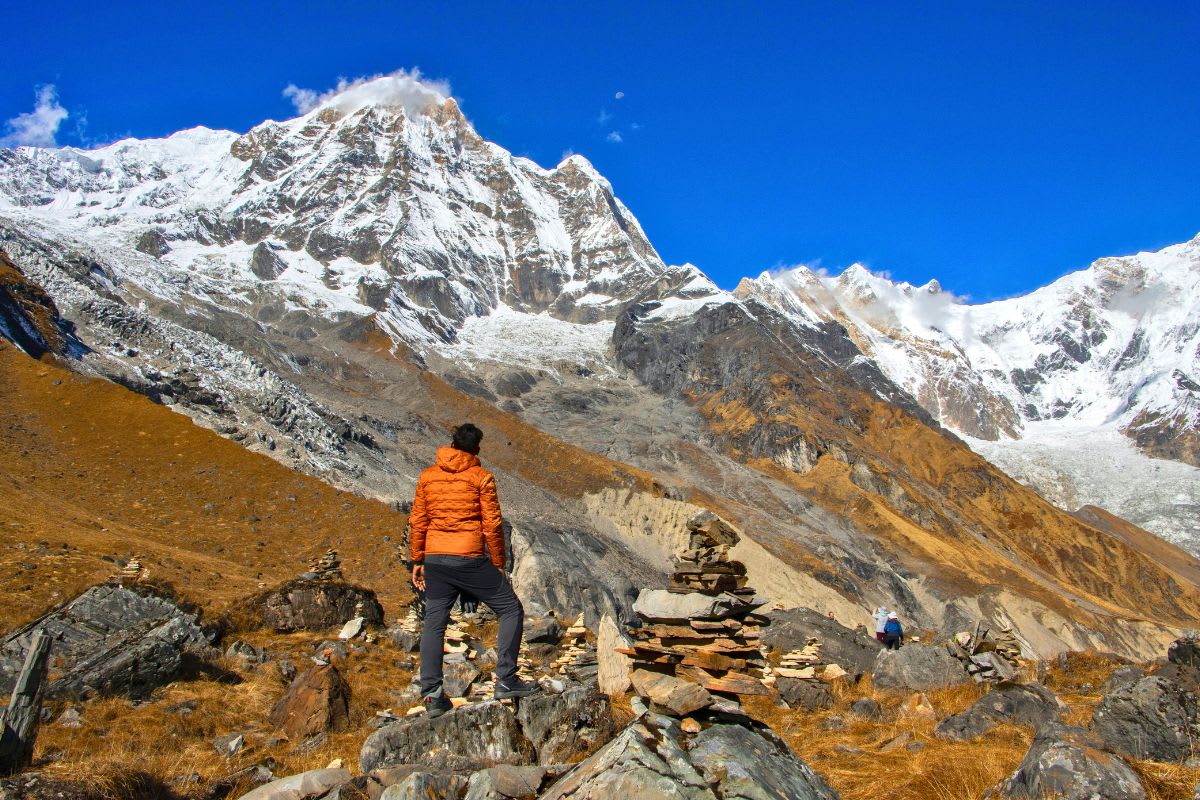
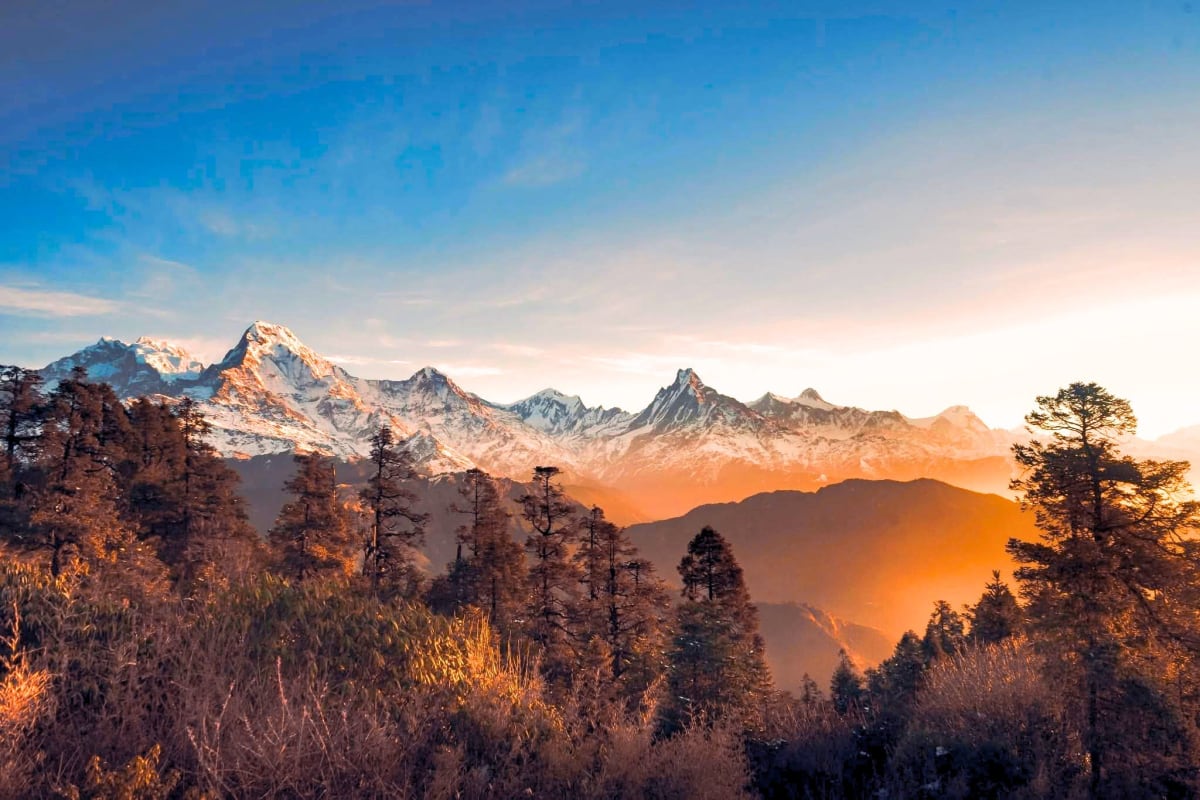
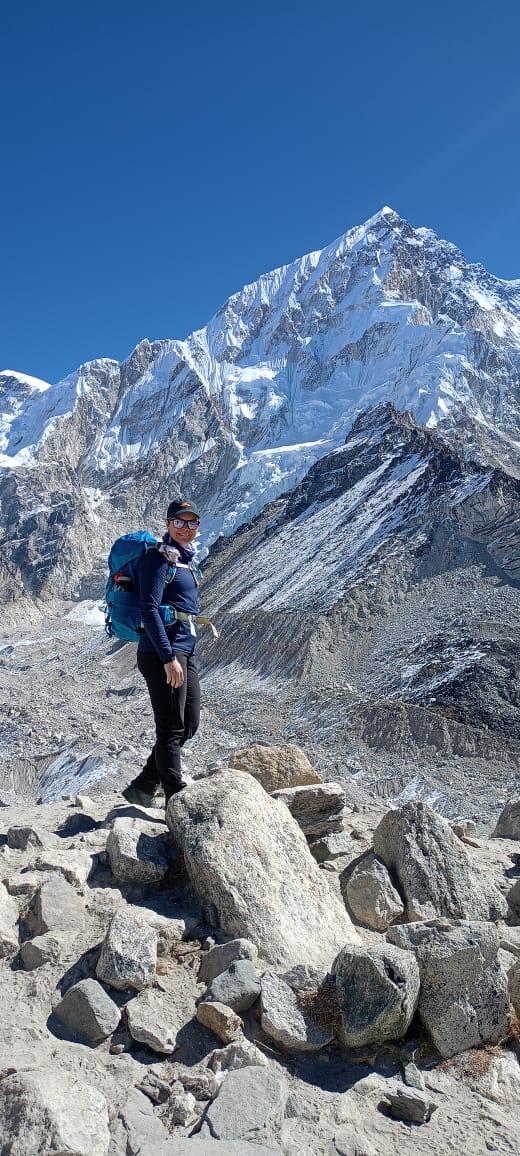
EBC's Khumbu offers the highest, most dramatic peaks in the world, including four of the six highest mountains on earth, at the cost of October crowds that fill Namche and Gorak Shep. ABC's Annapurna Sanctuary is a tighter, more enclosed amphitheatre, arguably more visually striking at its base camp itself, with somewhat lighter peak-season crowds because the trek's shorter length spreads bookings across more of the calendar.
Neither trek is quiet in October; both thin out dramatically by December and again by February, covered in the trekking Nepal in winter guide.
How does the acclimatization structure differ?
EBC builds two dedicated rest days into every itinerary, at Namche Bazaar (3,440 m) and Dingboche (4,410 m), because the route spends its final week above 4,000 m and the 500-m sleeping-altitude guideline covered in the altitude sickness prevention guide demands the buffer. ABC needs less formal acclimatization structure since it tops out at 4,130 m and most itineraries only spend one or two nights above 3,500 m, though the final push from Chomrong (2,170 m) to Annapurna Base Camp (4,130 m) still climbs quickly enough that a rushed schedule raises real risk.
This difference shows up directly in itinerary length: strip out EBC's two acclimatization days and the trek would compress to 12 days, closer to ABC's range, which is one reason EBC costs more per day of forward progress, not just in total.
Can I do both treks on a single trip to Nepal?
Combining EBC and ABC back to back is logistically possible but rarely recommended on a first visit: the two treks together run 19 to 27 days before Kathmandu transit days, and returning from EBC's altitude to trek again within the same trip gives the body little recovery time even though ABC's own ceiling is lower. Clients with three or more weeks who specifically want both do ABC first, since its lower altitude is a reasonable warm-up, then fly to Lukla for EBC once the first trek's fitness and altitude response are known.
Most trekkers on a single two-week Nepal trip choose one flagship trek and save the other for a return visit, which is also the pattern our own booking data shows: repeat clients booking a second Nepal trip choose the trek they didn't do the first time far more often than they repeat the same one.
Our recommendation
Choose Annapurna Base Camp if you have one week, a moderate budget, and want a real Himalayan trek without significant altitude risk. Choose Everest Base Camp if you have two weeks, a larger budget, and want the world's highest peaks and the achievement of reaching 5,364 m. Trekkers who are unsure and have time for only one trip most often choose EBC for the singular pull of Everest; those repeating a Nepal trip after a first Everest visit often choose ABC next, for its different, gentler character.
How does the day-to-day trail and food experience differ?
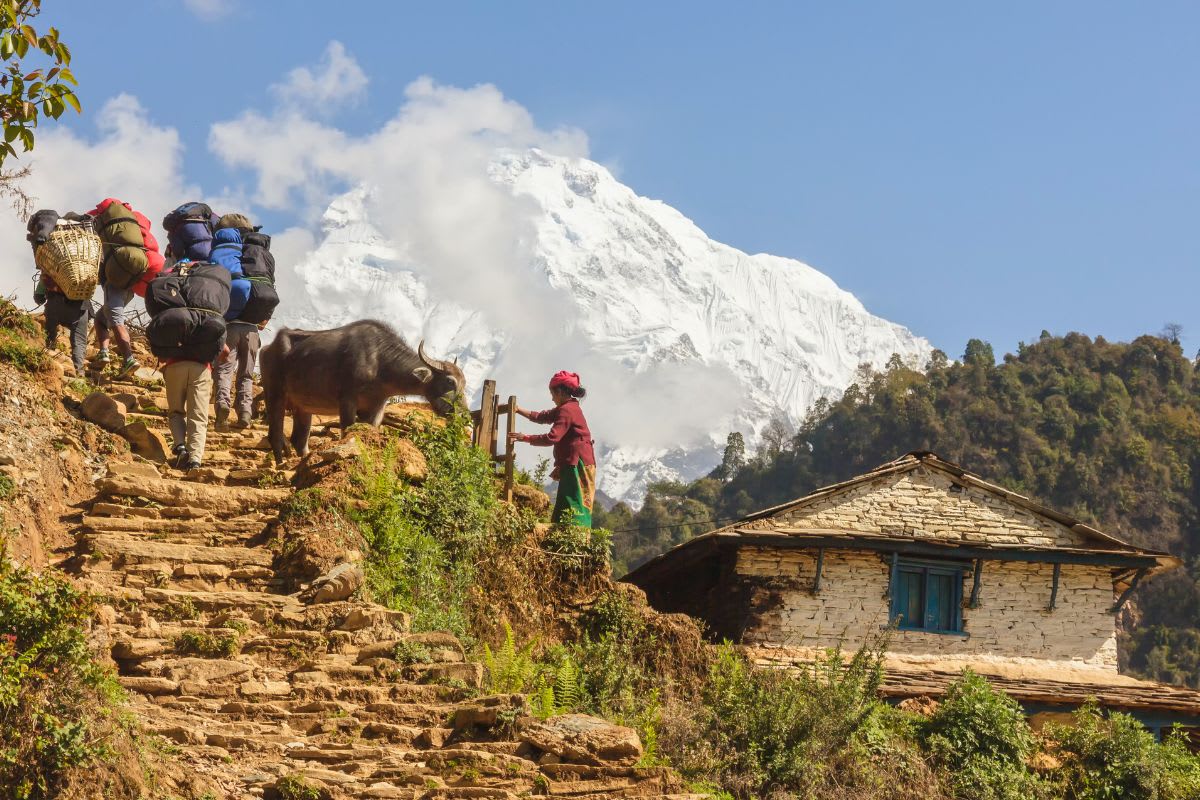
ABC's forest sections through Chhomrong, Sinuwa, and the Modi Khola gorge run through rhododendron and bamboo, a genuinely greener, more varied landscape underfoot than the Khumbu's higher, starker terrain above Namche, and the trek's shorter length means less menu repetition by the time trekkers reach base camp. EBC's food scene carries its own draw instead: the Sherpa dishes and Namche's real bakeries covered in the Everest region food guide give the Khumbu a food culture ABC's route doesn't have in the same concentrated form, since ABC villages sit closer to Pokhara's supply chain and lean more toward standard Nepali teahouse fare throughout.
Both routes keep the same teahouse system, private or shared rooms with shared bathrooms lower down and more basic facilities near base camp itself, so neither trek asks trekkers to camp or carry cooking gear.
Which trek suits photography and trekking style better?
ABC delivers its payoff in one concentrated moment: the amphitheatre view from Annapurna Base Camp itself opens suddenly after days in forest, a dramatic reveal photographers consistently rate among Nepal's best single viewpoints. EBC builds its views gradually over the entire second half of the trek, so a photographer gets more cumulative shooting days, Ama Dablam from Tengboche, the Khumbu Icefall from Kala Patthar, but no single moment matches ABC's sudden amphitheatre reveal.
Trekkers who prefer a steady walking rhythm without long transitions between forest and alpine terrain tend to find ABC's trail texture more varied day to day; those who prefer sustained high-alpine walking once the trees end tend to prefer EBC's more consistent character above Namche, the same distinction covered from the region level in the Everest vs Annapurna region comparison.
FAQ
Common questions
Can I do both Everest Base Camp and Annapurna Base Camp?+
Yes, many of our clients do both on separate trips, often ABC first as a lower-altitude introduction and EBC on a later visit once their altitude response is known. Booking both in a single trip is possible but demands a long itinerary and a big travel budget; most trekkers space them a year or more apart.
Which trek is better for a first Himalayan trek?+
Annapurna Base Camp is the gentler first trek: lower altitude, shorter duration, and lower cost, with less altitude-sickness risk. Everest Base Camp works as a first trek too if you have two weeks and want the singular draw of Everest, but budget more contingency for altitude pacing and Lukla flight delays.
Is Everest Base Camp worth the extra cost over Annapurna Base Camp?+
For trekkers specifically drawn to Everest, yes: the extra USD 400 to 600 buys the Lukla flight into the world's most famous trekking region, four of the six highest mountains on earth, and the achievement of reaching 5,364 m. Trekkers who simply want a real Himalayan trek without that specific pull often find ABC delivers comparable scenery and satisfaction for meaningfully less money and time.
Which trek has more reliable teahouse infrastructure?+
Both are well-established teahouse routes with reliable lodging at every stop, but EBC's Khumbu corridor carries more capacity built up around decades of Everest traffic, while ABC's shorter season concentration can mean tighter bunk availability at Machhapuchhre Base Camp itself during peak October weeks. Neither route requires camping equipment, and both keep dal bhat, noodle soup, and basic breakfast options on the menu at every altitude.