
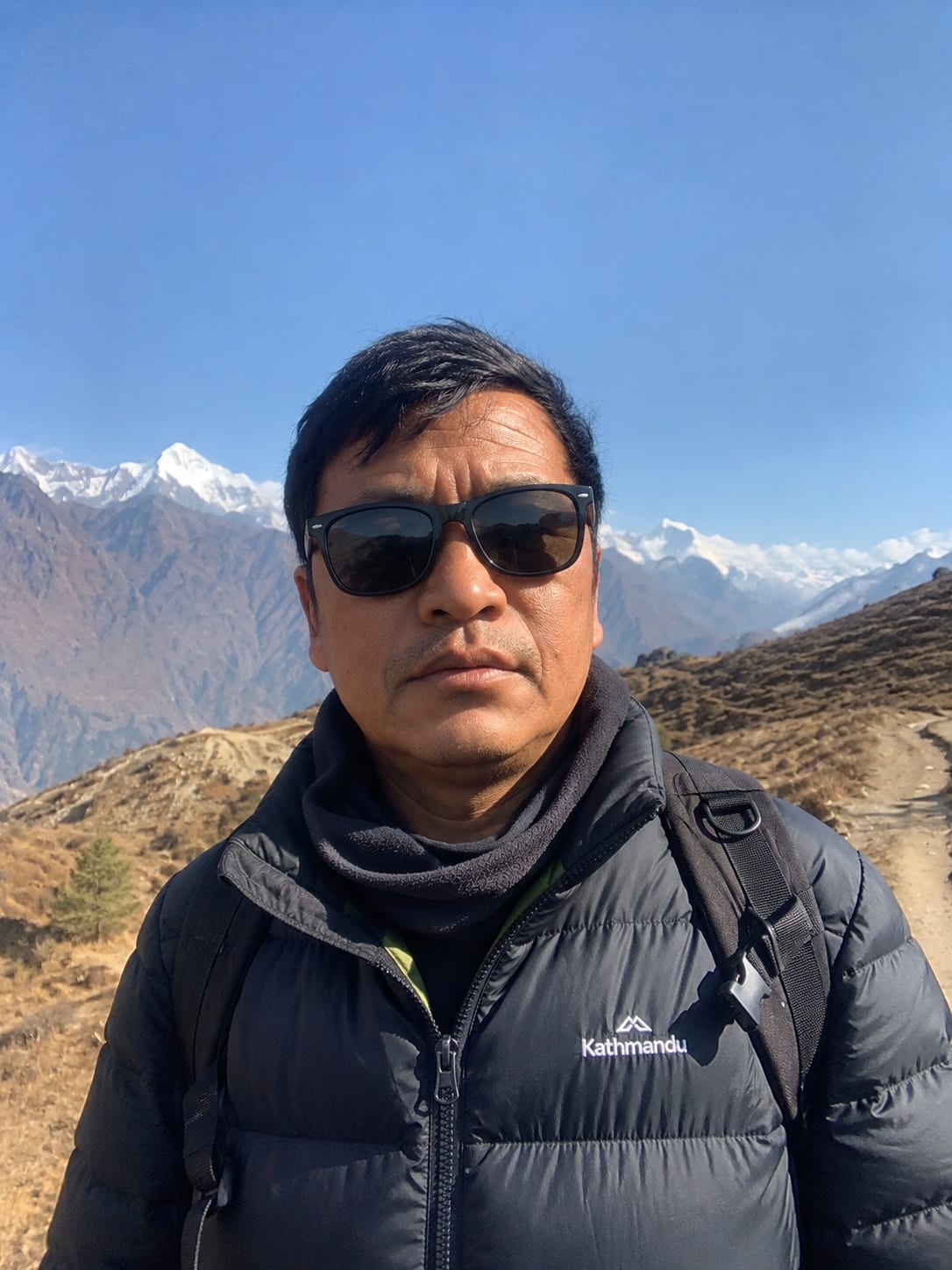
The best season to trek Kanchenjunga follows Nepal's standard windows, spring from March to May and autumn from late September to November, because the region sits in Nepal's far east with direct monsoon exposure rather than the rain-shadow protection that extends Dolpo and Upper Mustang's calendars. Daytime temperatures at Ghunsa (3,595 m) run 8 to 15 C in October and November, and the two high passes on the full circuit route, Lapsang La (5,160 m) and Sinion La (4,660 m), hold their clearest conditions in the same autumn window. Mingma Tendi Sherpa, our Senior Guide and Safety Lead, reviews seasonal conditions across every region we operate in and wrote this guide from that comparative data.
The sections below cover why Kanchenjunga's season looks different from Nepal's rain-shadow regions, the specific autumn and spring windows, what monsoon does to the route, and how winter affects the two base camp approaches.
In this guide 4
Why doesn't Kanchenjunga get a rain-shadow season extension?
Kanchenjunga sits in Nepal's far eastern corner, closer to the moisture-heavy weather systems moving north from the Bay of Bengal than the Dhaulagiri and Annapurna ranges that shield Dolpo and Upper Mustang further west. That geography means Kanchenjunga receives the monsoon's full effect rather than a blocked, rain-shadow version of it, so its trekking calendar follows the conventional Nepal pattern instead of the extended May-to-October window described in rain-shadow treks during monsoon.
This is worth stating plainly because Kanchenjunga sometimes gets lumped in with Nepal's other remote, restricted regions as if they share one weather pattern. They do not: Dolpo and Upper Mustang trade crowds for a wider season through geography, while Kanchenjunga trades crowds for remoteness alone, on the same spring and autumn calendar as Everest and Annapurna. A trekker who assumes every restricted region behaves like Dolpo risks booking a July Kanchenjunga departure straight into the region's wettest, least rewarding weeks.
When is the best time to trek Kanchenjunga?
Late September through November is Kanchenjunga's strongest window, with October the driest and clearest month, similar to the Everest and Annapurna autumn peak but with a fraction of the trekker traffic. Spring, March through May, is the second reliable window, when the rhododendron forests on the lower approach through Sekathum bloom and temperatures at altitude begin climbing out of the winter cold, though early spring can still carry snow on both high passes. Trekkers choosing between the two windows should weigh the bloom against the crossing margin: October gives the surer pass conditions, while a well-timed May departure adds the forest color that autumn lacks.
| Season | Conditions | Pass status (Lapsang La, Sinion La) |
|---|---|---|
| March-May | Rhododendron blooms lower down, warming | Snow lingers into April |
| June-September | Monsoon, heavy rain and cloud | Not recommended |
| Late September-November | Clearest, driest window | Best crossing conditions |
| December-February | Very cold, remote resupply difficult | Closed |
October and early November specifically give the most reliable pass-crossing conditions on the full circuit connecting North Base Camp at Pangpema and South Base Camp at Oktang, since both passes need a clear weather window and firm, settled snow underfoot rather than the fresh, unstable snow either early spring or an early winter storm can leave behind. A North Base Camp-only trek, which skips both passes, has more seasonal flexibility since it isn't tied to the same crossing-conditions window.
Early spring, March into early April, still carries lingering winter snow on both Lapsang La and Sinion La most years, so groups targeting a spring departure do better scheduling for late April or May, once the passes have had time to settle, than pushing for the earliest possible spring window the way some Everest or Annapurna itineraries do.
What does monsoon do to the Kanchenjunga route?
June through September brings heavy, direct rainfall to Kanchenjunga, unlike the filtered, reduced monsoon that Dolpo and Upper Mustang experience behind their rain-shadow ranges. Trails through the lower forest sections around Sekathum and Amjilosa turn muddy and leech-prone, river crossings on the approach can run high, and cloud cover removes the long-range mountain views that are much of the reason to trek this remote a region in the first place.
We do not run monsoon-season Kanchenjunga departures for this reason, a contrast worth noting against Dolpo, where the same months are actually the strongest choice. Trekkers deciding between Kanchenjunga and Everest for a spring or autumn trip should see Kanchenjunga vs Everest region trekking for a full comparison.
The jeep transfer between Bhadrapur and Taplejung is the part of a Kanchenjunga trip most exposed to monsoon disruption, since heavy rain on the hill roads leading up from the lowlands can trigger landslides that close the route for hours or, in a bad year, a full day. This road risk, on top of the trail conditions themselves, is a second independent reason a monsoon-season Kanchenjunga departure carries more uncertainty than the equivalent months on a rain-shadow route like Dolpo.
Can you trek Kanchenjunga in winter?
Winter, December through February, closes the high passes under deep snow and makes resupply difficult in villages beyond Ghunsa, since Kanchenjunga's remoteness means less winter infrastructure than better-established winter routes like Everest Base Camp or Poon Hill, both covered in trekking Nepal in winter. A partial itinerary to Ghunsa or Kambachen, without attempting either pass, is possible for well-prepared groups into early December, but a full circuit needs the autumn or spring window.
The remoteness that makes Kanchenjunga appealing in season is the same factor that makes winter riskier here than on Nepal's more developed trekking routes: fewer lodges, longer gaps between resupply points, and a rescue response that takes longer to reach this far east. Plan a Kanchenjunga trek for October, November, April, or May, and treat any other month as a compromise rather than a genuine alternative window. Helicopter evacuation from the Kanchenjunga region, if needed, takes longer to mobilize than from the Everest or Annapurna corridors simply because of the flight distance from Kathmandu, one more reason we schedule departures inside the reliable weather windows rather than pushing the calendar's edges.
FAQ
Common questions
Is Kanchenjunga trekkable during monsoon?+
No, not recommended. Unlike Dolpo or Upper Mustang, Kanchenjunga has no rain-shadow protection and gets the monsoon's full effect from June to September: muddy trails, high river crossings, and no long-range views.
What's the best month to trek Kanchenjunga?+
October is the strongest single month, combining the clearest weather with the most reliable conditions on the two high passes, Lapsang La and Sinion La. Late September through November as a whole is the best window, with March to May as the second choice.
Why doesn't Kanchenjunga have a longer season like Dolpo?+
Kanchenjunga sits in Nepal's far east, exposed to the monsoon directly, while Dolpo and Upper Mustang sit behind the Dhaulagiri and Annapurna ranges in a rain shadow that blocks most monsoon moisture. Kanchenjunga's remoteness doesn't come with the same seasonal advantage.