Nepal Travel Packages
Upper Mustang Trek

Upper Mustang Trek

★★★★★ 4.9 (47 reviews)
Mustang, Nepal 12-14 days Moderate Max 4,230 m
Duration
12-14 days
Max altitude
4,230 m
Difficulty
Moderate
Group size
Up to 10
Total distance
~110 km
Elevation gain
5,200 m
Best season
March to November, prime in June to September
Avg daily walk
5-7 hours
Starts in
Jomsom (2,720 m)
Ends in
Jomsom (2,720 m)
Accommodation
Teahouse lodges throughout
✓ TAAN & NMA licensed guides ✓ Permits included, no hidden fees ✓ Small group departures
Group departure · per person
USD2,350
Permits, guide, porter, lodging & food included
Departure date
Email Nepal
Permits and logistics fully arranged
Licensed guide included on every departure
Direct WhatsApp line to your guide

The Upper Mustang Trek is a 12 to 14 day guided teahouse trek into a restricted former Tibetan kingdom in Nepal's rain shadow, reaching the walled capital of Lo Manthang at 3,840 m north of the Annapurna mountain range. A 2026 group departure costs USD 1,900 to 2,600 per person including the restricted-area permit (USD 500 for 10 days), the Annapurna Conservation Area Permit (NPR 3,000), and the mandatory licensed guide. Because the Himalaya block the monsoon, Mustang receives roughly 250 to 400 mm of rain a year and stays walkable through June to September when most of Nepal is under cloud.

Passang Dawa Sherpa has led 7 Mustang departures. The sections below cover the restricted permit mechanics, a cost breakdown against the USD 1,900 to 2,600 range, why this is Nepal's prime monsoon trek, and the dust and wind windows that shape each walking day.

Highlights

What our guides know that others don't.

1

Monsoon dust and wind windows

Calm mornings, strong up-valley wind and dust by early afternoon

2

Sky-cave monasteries

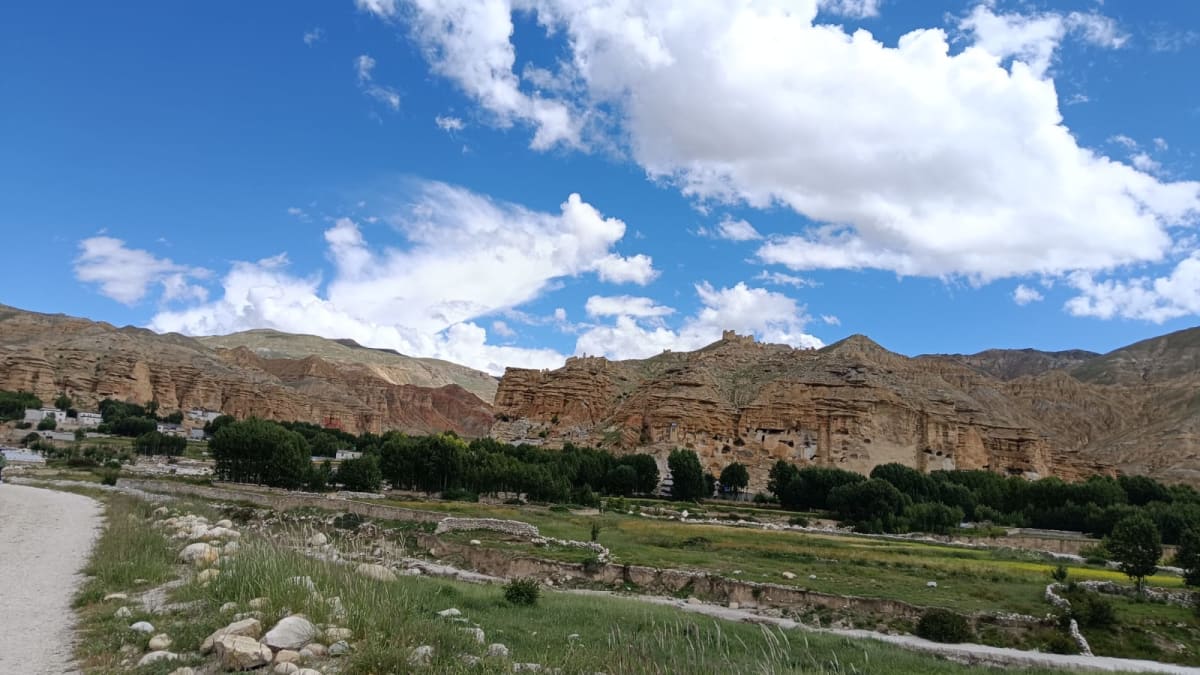
Chhoser cave complex and Lo Manthang's 15th-century gompas

Live from the trail

Updated 2 Jul 2026

Monsoon status: prime season, valley dry and clear

Upper Mustang is in its prime monsoon window with dry trails, clear skies, and daytime highs around 22 C. The only monsoon factor is the Pokhara-Jomsom flight, which is running most mornings with occasional cloud delays, so we build in a buffer day. Departures running through September.
How does the Upper Mustang restricted permit work?

Upper Mustang sits inside a restricted zone, so it needs a special permit costing USD 500 for 10 days (USD 50 per extra day), issued only by the Department of Immigration through a registered agency, never to individuals. Like all restricted zones it carries two rules: a minimum of two trekkers and a mandatory government-licensed guide, with no solo travel permitted, rules enforced at the Kagbeni checkpoint before anyone continues north into the zone itself. An Annapurna Conservation Area Permit at NPR 3,000 covers the lower approach through Jomsom, and both permits are checked together at Kagbeni before the restricted zone itself begins.

The restricted permit is the single largest cost on this trek and the reason it prices above the Annapurna Circuit. Its mechanics mirror the Manaslu system, detailed in the Manaslu restricted-area permit requirements guide, and the full permit map is in the Nepal trekking permits master guide. Processing typically takes one working day once a registered agency submits the paperwork, so groups plan at least a day of buffer in Kathmandu or Pokhara before the Jomsom flight to accommodate it.

How much does the Upper Mustang Trek cost in 2026?

TAAN-registered operators quoted USD 1,900 to 2,600 for a group Upper Mustang departure in 2026, above the Annapurna Circuit chiefly because of the USD 500 restricted permit. The table shows the breakdown, and the permit plus the Pokhara-Jomsom flights are the two lines that separate Mustang from a standard Annapurna trek. Remote-valley food and lodging also run higher than the busier southern routes.

The mandatory guide is not an upsell here but a legal requirement of the restricted zone, so no operator can strip it out to lower the price. A quote well below the band on Upper Mustang usually means the permit days are being undercounted, which causes problems at the checkpoints. Private departures run USD 2,300 to 3,200, a smaller proportional jump than on a full camping trek like the Upper Dolpo Circuit, since Mustang's teahouse-based costs don't scale with group size the way a dedicated cook and kitchen crew's costs do.

Where the price goes · per person
Upper Mustang restricted permitUSD 500 for 10 days, USD 50/day after$500
Annapurna Conservation Area PermitNPR 3,000$23
Pokhara-Jomsom flights or jeep, both waysFlight Pokhara-Jomsom or long jeep$160–300
Licensed guide (mandatory, shared)USD 35-40/day over 12-14 days$320–440
Porter, one per two trekkersUSD 25/day, 20 kg shared load$220–300
Teahouse rooms and food, 11-13 nightsRemote-valley prices run higher$360–560
Company margin, logistics, staff equipment$180–340

Why is Upper Mustang the best monsoon trek in Nepal?

Upper Mustang sits in a rain shadow: the Annapurna and Dhaulagiri massifs, both over 8,000 m, wring the monsoon dry before it reaches the valley, so Mustang gets roughly 250 to 400 mm of rain a year against 2,000 mm south of the range. That makes June to September, when the Everest and Annapurna trails are wet and leech-ridden, the prime walking season in Mustang under clear high-desert skies. Our monsoon departures run precisely because this is the one classic route with reliable summer views.

The trade is that the Pokhara-Jomsom flight can still be delayed by monsoon cloud on the southern approach, so we build in a buffer day. The full case for monsoon rain-shadow trekking, including Dolpo, is in the rain-shadow treks during monsoon guide.

What are the dust and wind windows in Mustang?

Mustang's afternoons blow hard: a strong up-valley wind funnels through the Kali Gandaki from around midday, carrying dust that reduces visibility and makes walking unpleasant, so mornings are the walking window. Our itineraries start early and aim to reach each village by early afternoon before the wind builds, the rare-attribute rhythm that separates a good Mustang trip from a gritty one. A buff or scarf for the face is standard kit here, and guides on our departures carry a spare for any client who arrives without one, since the wind catches new trekkers by surprise more often than any other single detail of this trip.

This wind pattern is a daily constant rather than a weather event, and planning around it is a core skill a Mustang guide brings. The eroded canyon terrain that makes the valley so striking is itself the product of this wind and the region's aridity. Our July 2026 trail report from an actual monsoon departure, Upper Mustang in July 2026, logged the wind building to 25-35 km/h by late morning on three separate days, confirming the pattern holds season to season rather than varying year by year.

What is the history of the Kingdom of Lo?

Upper Mustang was the independent Kingdom of Lo until Nepal absorbed it as a district in 1951, and it remained closed to outside visitors until 1992, later even than Bhutan opened to organized tourism, which is why its Tibetan Buddhist culture and architecture survived largely unmodernized into the present day. Lo Manthang served as the kingdom's capital from the 14th century onward, and the walled city's layout, narrow lanes radiating from the royal palace, gompas positioned at key points, dates substantially from that founding period rather than later rebuilding. The kingdom's royal line continued as a ceremonial and cultural authority even after the 1951 political absorption, and the former royal palace still stands inside the city walls today.

This closed history is part of why Lo Manthang's murals and manuscripts, inside the Jampa and Thubchen gompas visited on day 7, survived in a condition rare elsewhere in the Himalaya: three decades of restricted access kept the wear of mass tourism away during exactly the period when many other Himalayan Buddhist sites saw rapid change. Visiting now means seeing a walled Tibetan Buddhist capital closer to its historical state than almost anywhere else accessible by a standard trekking permit.

How difficult is the Upper Mustang Trek, and how does acclimatization work here?

Moderate is our grading: 110 km over 12-14 days with roughly 5,200 m of cumulative ascent, daily walking of 5 to 7 hours, and a maximum altitude of 4,230 m at the trail's highest pass sections, with Lo Manthang itself sitting at 3,840 m. That altitude profile sits below the Everest and Annapurna high points, and the terrain, dry high-desert trail rather than glacier or scree, is more a test of stamina against wind and dust than technical difficulty.

Acclimatization still matters at these elevations, and our itinerary builds a full rest day at Lo Manthang (day 7) rather than pushing straight through, following the same 500-m-per-day sleeping-altitude guideline used on every high route we operate, detailed in the altitude sickness prevention guide. The aridity itself is a real factor here beyond altitude: Mustang's dry air increases dehydration risk compared with the humid lower valleys of Everest or Annapurna, so guides push water intake harder than they would on a wetter route.

How does Upper Mustang compare to Manaslu or Dolpo?

All three are restricted regions requiring a licensed guide and a minimum of two trekkers, but they diverge on terrain and infrastructure: Upper Mustang runs as a teahouse trek the entire route, no camping required, which keeps its logistics closer to a standard Everest or Annapurna itinerary despite the restricted status, while Dolpo splits between teahouse-served Lower Dolpo and a full camping section in Upper Dolpo. Manaslu sits closer to Mustang's infrastructure level, teahouse-based for most of its circuit, though its permit is priced by the week (USD 75-100) rather than Mustang's ten-day block (USD 500 plus USD 50 per extra day).

The clearest differentiator is climate: Mustang and Dolpo both sit in the Himalayan rain shadow and stay trekkable through the monsoon, while Manaslu doesn't share that protection and follows the standard spring/autumn calendar. A trekker deciding between Mustang and Dolpo is really choosing between an established teahouse route with easier flights and a genuinely more remote, partly-camping expedition; the full comparison is on the Dolpo vs Upper Mustang page.

What should you pack for the Upper Mustang Trek?

Mustang's dry, windy climate calls for a packing list weighted toward sun and dust protection alongside the standard layered system in the Nepal trekking packing list: a buff or scarf for the daily afternoon wind, sunglasses rated for high-UV desert glare, and lip balm with sun protection, since the aridity and altitude combine to dry and burn skin faster than a humid lower-altitude trek. A four-season sleeping bag rated to at least -15 C comfort still applies, since teahouse rooms this far north have no heating despite the daytime warmth.

Trekking poles help on the trail's frequent short, steep pass crossings between villages, and a lightweight rain shell is worth carrying even in the dry season for the occasional evening shower reported on trips like our July 2026 departure. Duffel bags for porter-carried gear should be dust-resistant given how much airborne grit the afternoon wind puts into an open pack.

Elevation profile High point 4,230 m
3,0003,5002,720 m123453,840 m6789102,720 m11DAY
Acclimatization night High point

Day by Day

12-day itinerary, every detail planned.

Day1
Trip Day
Fly or drive Pokhara to Jomsom (2,720 m)
2,720m alt.

A 20-minute morning flight, timed early to beat the same afternoon wind that shapes every walking day ahead, or a longer jeep transfer reaches Jomsom, the district gateway and administrative center for the whole Mustang region. Permits are checked at the Kagbeni post the following morning before entering the restricted zone, so this first day is largely logistics: confirming the group's paperwork, meeting the guide team, and a short orientation walk around Jomsom's windswept main street.

2,720 m
Day2
Trip Day
Jomsom to Kagbeni to Chele (3,050 m)
~6h walking15 km
3,050m alt.
Day3
Trip Day
Chele to Syangboche (3,800 m)
~6h walking14 km
3,800m alt.
Day4
Trip Day
Syangboche to Ghami (3,520 m)
~5h walking12 km
3,520m alt.
Day5
Trip Day
Ghami to Tsarang (3,560 m)
~5h walking11 km
3,560m alt.
Day6
High Point
Tsarang to Lo Manthang (3,840 m)
~5h walking13 km
3,840m alt.

What's Included

Transparent, all-in pricing.

Included in your price

Upper Mustang restricted permit
Annapurna Conservation Area Permit
Pokhara-Jomsom flights or jeep, both ways
Licensed guide (mandatory, shared)
Porter, one per two trekkers
Teahouse rooms and food, 11-13 nights
Company margin, logistics, staff equipment

Not included

Nepal entry visa fee (USD 30-125, paid on arrival)
Travel insurance with helicopter evacuation cover
Personal trekking gear and equipment
Tips for your guide and porter
Bottled drinks, wifi, and device charging at teahouses
Meals in Kathmandu outside the itinerary

Dates & prices

Upcoming departures.

Start dateEnd datePrice / personAvailability
15 Jul 202626 Jul 2026USD 2,350Guaranteed · 5 leftEnquire
12 Aug 202623 Aug 2026USD 2,350Open · 7 leftEnquire
16 Sept 202627 Sept 2026USD 2,350Open · 6 leftEnquire
14 Oct 202625 Oct 2026USD 2,300Open · 8 leftEnquire

Verified reviews

What travellers say.

4.9/5 from 47 reviews on TripAdvisor, checked July 2026

★★★★★

Trekking in August while friends said Nepal was closed for the monsoon. Mustang was bone dry and brilliant, red canyons and clear skies every day. Lo Manthang felt like stepping into old Tibet. Pemba knew every gompa.

CD
Claire Dubois · France
20 Aug 2026
★★★★★

The most culturally rich trek I have done in Nepal. The afternoon wind is real, so the early starts matter, and our guide had us in each village before it kicked up. The sky caves at Chhoser were extraordinary.

RF
Robert Fenwick · United States
28 Jun 2026

Why Nepal Travel Packages

Built on published proof, not adjectives.

A named, licensed guide before you book

Full name, photo, NMA or TAAN license number, and a direct WhatsApp line. The guide on the page is the guide on the trail.

Itemized pricing, not a lump sum

Permits, guide, porter, lodging, and food broken out on every trip page. You see exactly where the price comes from.

Trail conditions updated monthly

Dated field reports from the guides running the route this season, not boilerplate written once and left to go stale.

Permits handled, not hidden

Every permit fee, checkpoint, and paperwork rule is filed for you and published in the guides — no surprise admin at Lukla.

FAQ

Common questions

Can I trek Upper Mustang without a guide?+

No, Upper Mustang is a restricted zone requiring a minimum of two trekkers and a government-licensed guide, with no solo travel permitted. The USD 500 permit can only be issued by a registered agency, never to individuals. These rules are legal requirements of the restricted status, not operator preferences, covered alongside Manaslu in the Manaslu restricted-area permit requirements guide.

Is Upper Mustang really trekkable in the monsoon?+

Yes, and it is the prime season: the Annapurna and Dhaulagiri massifs block the monsoon, so Mustang stays dry and clear from June to September while southern Nepal is wet. The one caveat is the Pokhara-Jomsom flight on the monsoon-affected southern approach, which can delay a day. The full case is in the rain-shadow treks during monsoon guide.

How high does the Upper Mustang Trek go?+

Lo Manthang sits at 3,840 m and the trail crosses several passes around 4,000 to 4,230 m, so it stays lower than the Everest or Annapurna Circuit high points. Altitude sickness risk is moderate, and our pacing keeps sleeping-altitude gains sensible. The desert terrain is dry and dusty rather than snowy at these heights.

What makes Lo Manthang special?+

Lo Manthang is a walled medieval capital of a former Tibetan Buddhist kingdom, home to 15th-century gompas with rare murals and a still-functioning royal palace. The sky-cave complex at nearby Chhoser adds prehistoric cliff dwellings. A full rest day here is built into our itinerary because the walled city and its monasteries reward slow exploration.

Should I trek Upper Mustang in the monsoon or in autumn?+

Both work, for different reasons: June to September is Mustang's driest, clearest window since the rain shadow blocks the monsoon entirely, while October to November offers the most reliable Pokhara-Jomsom flights since the southern approach isn't monsoon-affected. Our July 2026 trail report, Upper Mustang in July 2026, logged just 4 mm of rain across an 11-day monsoon departure, with the only real friction being a single flight delay on day 1.

How does the Upper Mustang restricted permit compare to Manaslu's?+

Upper Mustang charges USD 500 for the first 10 days plus USD 50 per extra day, a flat block rather than Manaslu's weekly rate of USD 75-100 depending on season. Both require a minimum of two trekkers and a licensed guide filed through a registered agency, and neither permit can be issued to an individual traveler booking independently.

Is Upper Mustang suitable for a first restricted-area trek?+

Yes, more so than Dolpo or Kanchenjunga: Upper Mustang runs entirely on teahouse infrastructure with no camping section, and its 3,840-4,230 m altitude range sits below the passes those two regions cross. Trekkers new to restricted-area logistics generally find Mustang's permit process and daily rhythm closer to a standard Annapurna or Everest trip than to a full camping expedition.

Can I combine Upper Mustang with the Tiji Festival?+

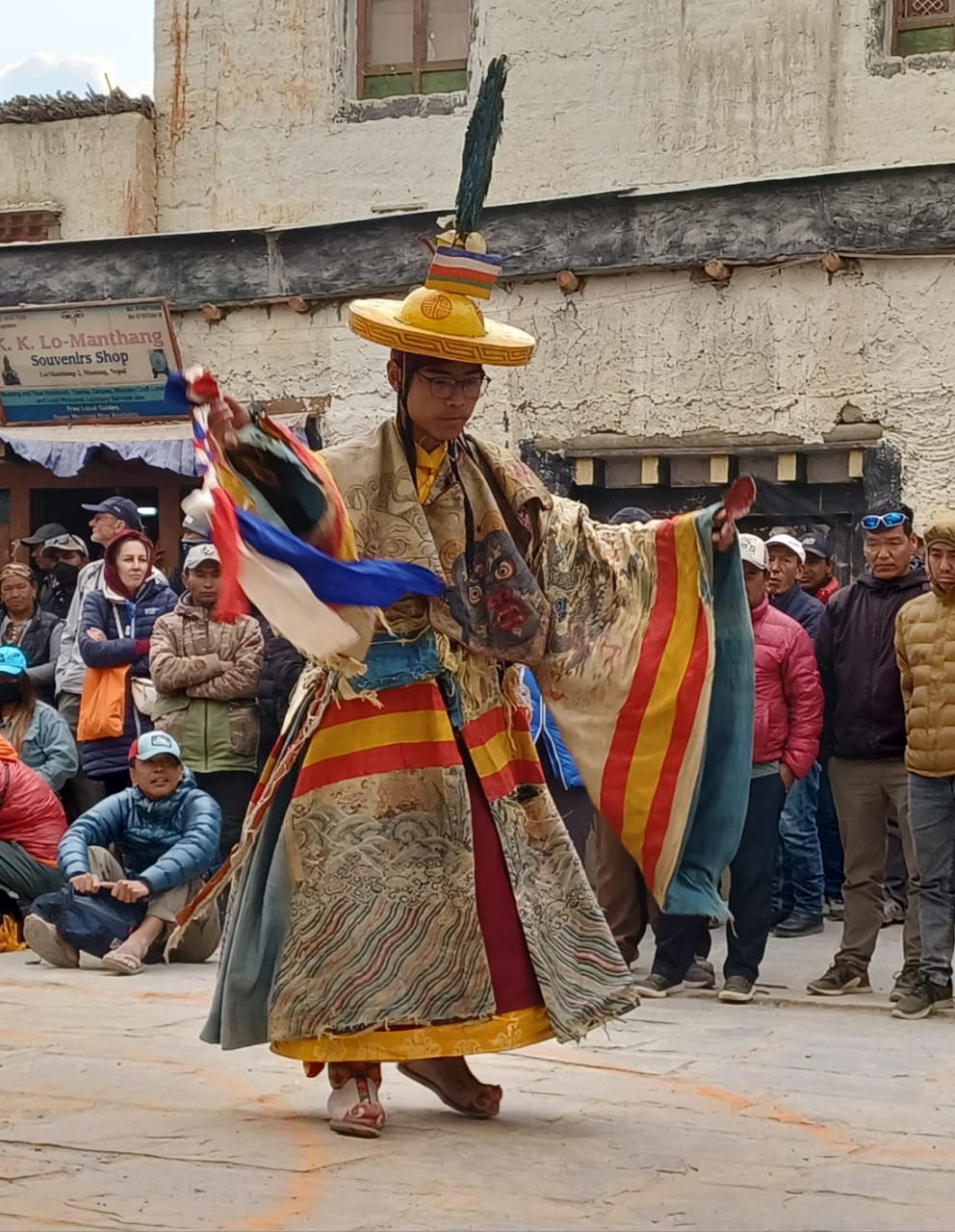
Yes, the Upper Mustang Tiji Festival Trek times the standard route to Lo Manthang's annual three-day masked-dance festival, held each spring on a lunar-calendar date that shifts year to year. The route and permit mechanics are identical to this standard itinerary; the difference is scheduling the Lo Manthang days to coincide with the festival rather than a rest day timed independently.

What's the food like on the Upper Mustang Trek?+

Standard teahouse dal bhat and noodle dishes are available throughout, supplemented in Mustang specifically by Tibetan-influenced items, thukpa noodle soup and tsampa roasted-barley porridge, that reflect the region's cultural ties to Tibet more strongly than teahouse menus further south. Prices run higher than the Annapurna Circuit's lower villages given the remote supply chain, consistent with every restricted or high-altitude route this site operates.

How many trekkers does Upper Mustang see compared to the Annapurna Circuit?+

Meaningfully fewer, since the USD 500 restricted permit and the two-trekker minimum filter out casual, unplanned visits in a way the open Annapurna Circuit doesn't experience. Lo Manthang and the villages along the route feel noticeably quieter than the Annapurna Circuit's busier teahouse towns, even in peak season, which is part of the route's appeal for trekkers who've already done a more crowded classic trek.