
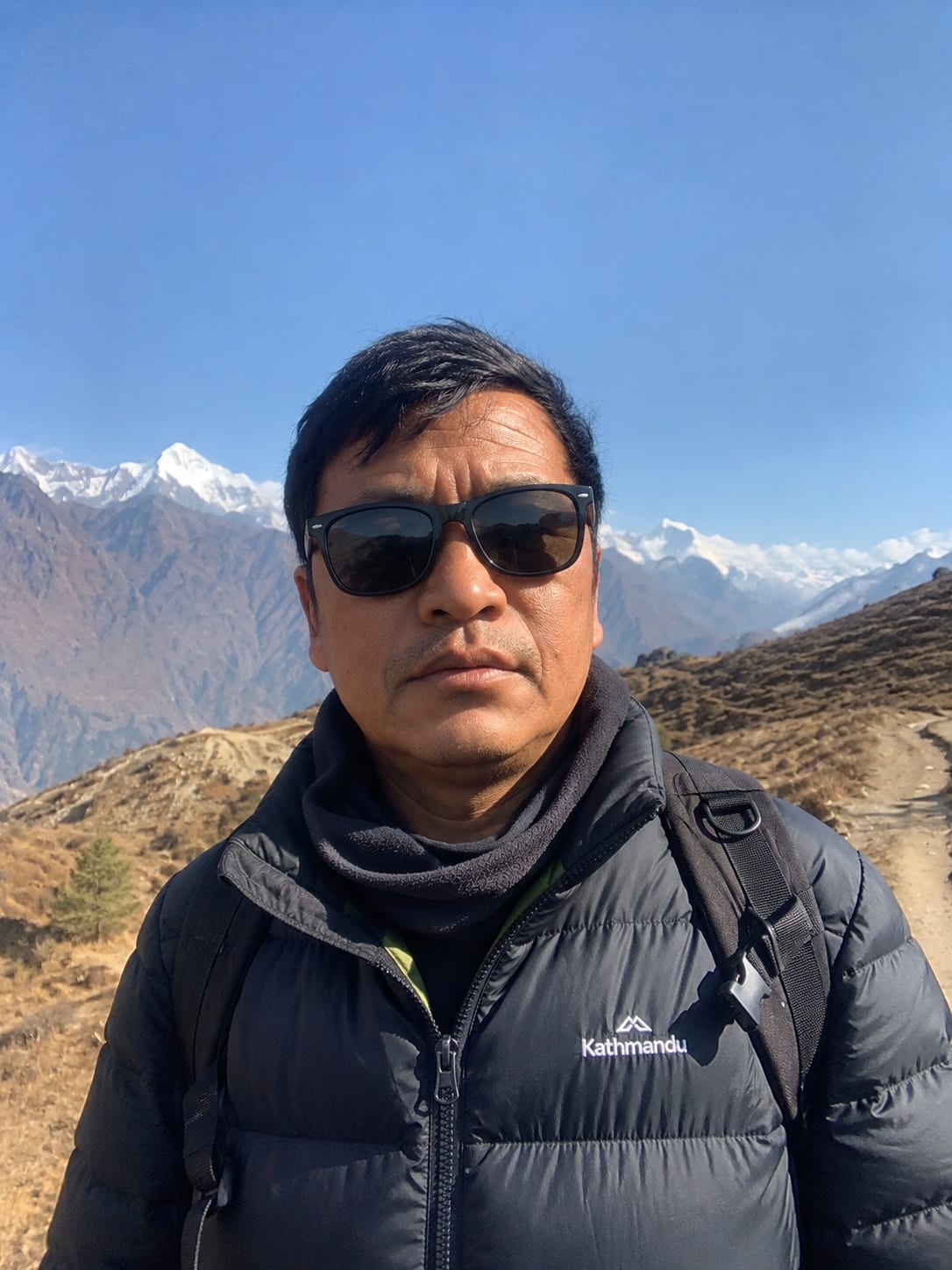
 Written & led by Mingma Sherpa
 Estimated per-person rate for this size — your guide confirms the exact quote.
The Khaptad National Park Trek is a 9-day trek in Nepal's Far West to a high plateau of grasslands and forest at approximately 3,300 m, reached by road from Dhangadhi or a short flight plus jeep transfer, using a mixed teahouse-and-camping model that sits logistically between the Rara Lake Trek's full teahouse comfort and the Limi Valley Trek's full camping expedition. A 2026 group departure costs USD 900 to 1,300 per person, covering the Khaptad National Park entry (NPR 3,000), a licensed guide, a porter, and backup camping equipment for the sections where plateau lodge coverage thins out. Mingma Tendi Sherpa, our Senior Guide and Safety Lead, plans logistics for our Far West departures and put this itinerary together as the region's route network expands beyond Rara Lake.
This is the second bookable Far West trip on our route network, positioned as the region's middle-ground option between Rara Lake's full teahouse comfort and Limi Valley's full camping expedition.
Highlights
What our guides know that others don't.
Logistics profile
Sits between Rara Lake's light teahouse staffing and Limi Valley's full camping crew, both access time and crew needs
Khaptad Ashram
A recognized pilgrimage and meditation site on the plateau associated with the sage Khaptad Baba, drawing spiritual visitors alongside trekkers
What permit does the Khaptad National Park Trek need?
Khaptad needs only the standard Khaptad National Park entry permit at NPR 3,000, with no restricted-area paperwork, no minimum group size, and no liaison officer, the same permit-free profile as the Rara Lake Trek. This puts Khaptad closer in permit process to a standard Annapurna or Langtang route than to Limi Valley, despite sitting well inside the Far West's least-developed corner. Full detail on how this compares to the region's restricted-area system sits in the Far West Nepal permits guide.
The permit is sold at the park's own office near the Khaptad entry point or arranged in advance through a registered agency, and a solo trekker can obtain it without joining a fixed-group departure, though Nepal's general 2023 guide requirement for national park routes still applies here the same way it applies on Rara Lake or the Langtang Valley trek.
How much does the Khaptad National Park Trek cost in 2026?
TAAN-registered operators quote USD 900 to 1,300 for a group Khaptad departure in 2026, positioned above Rara Lake's USD 700 to 1,000 but well under Limi Valley's USD 2,600 to 3,400, reflecting Khaptad's middle-ground logistics profile within the same region. The table above breaks the total down: the park entry itself is a negligible USD 23, and the road or flight-plus-jeep transfer from Dhangadhi is the single largest line item, followed by guide and porter wages.
A quote noticeably below this band on Khaptad usually skips the backup camping equipment carried for the plateau sections where lodge coverage thins, a real gap rather than a cost saving once the group is a day's walk from the nearest teahouse. Private departures run USD 1,150 to 1,600, a moderate premium over the group rate consistent with a guide-plus-porter crew rather than the much larger camping teams Dolpo or Limi Valley need. Khaptad's price sits close to Annapurna Base Camp's USD 750 to 1,200 group range in the Nepal trek costs guide, a reasonable point of comparison for a moderate, week-long Nepal trek despite the very different destinations.
| Khaptad National Park entryNPR 3,000 at 2026 rates, no second permit required | $23 |
| Road transfer from Dhangadhi or flight plus jeepRoad or air-plus-road, priced by route chosen | $180–320 |
| Licensed guide (9 days)USD 35-40/day | $280–400 |
| PorterUSD 25/day, 9 days | $200–250 |
| Teahouse rooms and backup camping equipmentMixed model; camping gear carried where plateau lodges thin out | $90–160 |
| Food and drinking waterHigher than a road-served central-Nepal route given the limited supply chain | $80–140 |
| Company margin and logistics | $60–110 |
How difficult is the Khaptad National Park Trek?
Moderate is our grading: roughly 62 km, close to 1,600 m of cumulative ascent, walking days of 4 to 6 hours on plateau and forest trail, and a maximum altitude of approximately 3,300 m. This sits below the altitude-sickness caution line covered in the altitude on Nepal treks guide, so no dedicated acclimatization day is built into this itinerary, though the trek's total duration and mixed lodge-and-camping accommodation still make it a genuinely different physical undertaking from a short, fully teahouse-supported trek like Poon Hill.
The road-and-trek approach itself, one to two days depending on whether the group flies partway or drives the full distance from Dhangadhi, is a longer and more variable start than Rara Lake's single short flight, and travel fatigue from this stretch is worth planning around rather than underestimating. Once on the plateau, the walking itself is gentle underfoot, mostly grassland and forest floor rather than steep mountain trail, and most groups find the days inside the park genuinely restful compared to the approach.
Weather on the open plateau can shift faster than in a forested valley, since there's little tree cover to break wind or sudden rain, so guides check conditions each morning before committing to a longer viewpoint walk and carry rain shells for the group as standard kit rather than an optional extra. None of this changes the trek's overall moderate grading, but it's a genuine planning consideration specific to Khaptad's open terrain that a forested route like Gosaikunda or a valley trek like Langtang Valley doesn't carry in quite the same way.
When is the best season for the Khaptad National Park Trek?
Spring, March through June, is Khaptad's strongest window, when the plateau grasslands green up and hold their best color into early summer, and autumn, September through November, brings the clearest long-range views across the park once the monsoon clears. Photographers and birdwatchers in particular favor the early autumn weeks, when the plateau grasses turn gold and visibility is at its best, detail covered in the Rara Lake trekking season guide.
Monsoon, June through August, turns Khaptad's open grassland to soft, difficult mud, a harder trade-off than the same months bring to Rara Lake's forested lakeshore trail, so we avoid scheduling Khaptad departures in the wettest weeks. Winter brings real cold and wind to the plateau, and Khaptad's more limited winter infrastructure makes a December-to-February visit a harder sell than Rara Lake over the same months; spring or autumn are the two windows we recommend without reservation.
What crew does the Khaptad National Park Trek need?
A standard Khaptad departure needs a licensed guide and one porter, a lighter crew than the full camping teams the Far West's restricted-area routes require, with camping equipment carried as backup on plateau sections where lodge coverage thins out, covered in full in the Far West Nepal trek logistics guide. This crew size mirrors Khaptad's access profile too, longer than Rara Lake's single flight but shorter than the multi-day trek into Limi Valley, making it a genuine middle-ground choice within the region rather than a scaled-down version of either.
Local transport for the road-and-trek approach is arranged through a registered operator from Dhangadhi, and mobile coverage on the plateau itself is limited, though not as consistently absent as it is on the fully camping-based sections of Limi Valley or Upper Dolpo.
What makes Khaptad National Park distinctive?
Khaptad National Park protects a genuinely unusual landscape for Nepal, a high plateau of open grassland interspersed with forest at an elevation more commonly associated with dense Himalayan tree cover, and the park supports wildlife including barking deer and a range of high-altitude birdlife that draws dedicated birdwatchers in the shoulder seasons. The Khaptad Ashram, a recognized pilgrimage and meditation site on the plateau associated with the sage Khaptad Baba, adds a spiritual dimension to the destination that draws visitors alongside trekkers, and our guides are respectful of both audiences sharing the same trail and campsites.
This combination, grassland ecology rarely seen elsewhere in Nepal's trekking regions plus a genuine pilgrimage site, is Khaptad's real differentiator against Rara Lake's lake-focused scenery and Limi Valley's high-Himalayan Buddhist-village culture. Trekkers drawn to open landscapes, wide skies, and a slower, more contemplative pace, rather than dramatic mountain terrain, are the clearest fit for this itinerary.
What wildlife and birdlife might you see at Khaptad?
Khaptad National Park's mix of open grassland and forest patches supports barking deer, and the park's under-visited status means sightings, while never guaranteed, come with less trail noise and disturbance than a busier route would allow. Leopard and occasionally Himalayan black bear sign turn up in the forested sections bordering the plateau, though direct sightings of either are rare and our guides do not promise specific wildlife encounters on this or any itinerary.
Birdlife is the plateau's stronger draw for most visitors: the grassland-forest mosaic supports a range of species uncommon on Nepal's higher, more barren trekking routes, and the shoulder seasons, particularly early autumn, bring the clearest visibility for spotting them. Dedicated birdwatchers on past departures have logged sightings across both forest-edge and open-grassland habitats in a single day's walk, a genuine variety that a single-habitat trek elsewhere in Nepal doesn't offer. Guides carry basic identification knowledge for the plateau's more common species and point out calls and movement along the trail, though a specialist birdwatching group should bring their own field guide for a fuller identification record.
Wildflowers across the grassland add a further seasonal layer worth noting: the plateau's meadows carry a genuine bloom through the late spring weeks, before the monsoon arrives, adding color to a landscape that's already unusual by Nepal trekking standards for its open, treeless stretches at this elevation.
The park's forest sections, mostly oak and pine at this elevation, form a genuine transition zone between the lowland Terai vegetation near Dhangadhi and the higher-altitude conifer forest found on routes like Rara Lake or the approach to Dolpo, which is part of why the trek's ecology reads as distinct even to trekkers who've done several Nepal routes already. Our guides log notable sightings from each departure and share the running pattern with future groups, an informal record rather than a scientific survey, but a useful way of setting realistic expectations before a trip.
Who is the Khaptad trek best suited for?
Khaptad suits trekkers who want a moderate, week-long Nepal trek built around landscape and quiet rather than high-altitude mountaineering or a marquee Himalayan peak view, since the plateau's own draw is its open grassland character and the Ashram's contemplative pace rather than a dramatic summit backdrop. Trekkers coming from a first Nepal trek like Poon Hill or Annapurna Base Camp and looking for a genuinely different second destination, rather than a bigger version of the same experience, are a strong fit here.
The trek also suits travelers specifically drawn to the Khaptad Ashram's spiritual and meditative character, whether or not they've trekked in Nepal before, since the approach and plateau days are paced to allow real time there rather than treating it as a brief stop on the way to somewhere else. Photographers and birdwatchers are a third clear audience, given the plateau's genuinely uncommon grassland-and-forest habitat mix and the shoulder-season visibility that rewards a patient, unhurried pace.
Khaptad is a less obvious fit for trekkers specifically chasing high-altitude mountain views or a technical challenge, since its 3,300 m ceiling and gentle grassland terrain don't deliver the dramatic peak scenery a route like Everest Base Camp or the Annapurna Circuit does. Being honest about that distinction upfront is more useful than overselling Khaptad as something it isn't.
How does Khaptad compare to Rara Lake and Limi Valley?
Within the Far West region, Khaptad sits logistically between Rara Lake's accessible, fully teahouse-supported short trek and Limi Valley's remote, restricted-area camping expedition, a position covered directly in the Far West Nepal trek logistics guide. A trekker choosing Khaptad over Rara wants more remoteness and a genuinely different landscape than a lake, without committing to Limi Valley's three-week restricted-zone commitment and higher cost.
All three destinations share the same region and the same guide, Mingma Tendi Sherpa, but they're built for different traveler profiles rather than representing three tiers of one experience: Rara for the shortest, most accessible option, Khaptad for a moderate week focused on plateau landscape and the Ashram's spiritual character, and Limi Valley for trekkers specifically seeking the region's most demanding, culturally distinctive expedition.
What should you pack for the Khaptad National Park Trek?
Khaptad's packing list follows the same core kit as any Nepal trek in this altitude range: layered clothing and a warm sleeping bag, with the full checklist on the Nepal trekking packing list. Because the accommodation model mixes teahouse rooms with backup camping, pack for both: a sleeping bag rated for genuinely cold nights even on teahouse sections, since plateau lodges run basic, plus a lightweight rain shell given the grassland terrain's exposure to wind and weather with little tree cover in places.
A printed or offline map and a spare power bank are genuinely worth carrying given Khaptad's limited mobile coverage and basic charging infrastructure, and binoculars reward the plateau's genuinely good birdwatching in the shoulder seasons. Comfortable, broken-in trail shoes rather than heavy mountaineering boots suit this trek's gentle grassland and forest terrain better than the stiffer footwear a high-pass route requires, and a lightweight daypack covers what you need on the plateau exploration days without the full trekking pack.
Waypoints mark named stops on the route; the line between them is a straight-line approximation, not a surveyed trail. Map data © OpenStreetMap contributors.
Day by Day
9-day itinerary, every detail planned.
A domestic flight reaches Dhangadhi, the Far West's main lowland transit hub near the Indian border, where the group overnights ahead of the road transfer toward Khaptad. This first leg runs on the main domestic network, so delays here are rare compared with the smaller sectors deeper in the Far West.
What's Included
Transparent, all-in pricing.
Included in your price
Not included
Why Nepal Travel Packages
Built on published proof, not adjectives.
A named, licensed guide before you book
Full name, photo, NMA or TAAN license number, and a direct WhatsApp line. The guide on the page is the guide on the trail.
Itemized pricing, not a lump sum
Permits, guide, porter, lodging, and food broken out on every trip page. You see exactly where the price comes from.
Trail conditions updated monthly
Dated field reports from the guides running the route this season, not boilerplate written once and left to go stale.
Permits handled, not hidden
Every permit fee, checkpoint, and paperwork rule is filed for you and published in the guides — no surprise admin at Lukla.
Keep exploring
Related packages
Planning
Related guides
FAQ
Common questions
Do I need a restricted-area permit for Khaptad?+
No. Khaptad needs only the standard Khaptad National Park entry at NPR 3,000, with no restricted-area paperwork, no minimum group size, and no liaison officer, the same permit-free profile as the Rara Lake Trek. Full detail is in the Far West Nepal permits guide.
How do I get to Khaptad National Park?+
By road from Dhangadhi, or a combination of a short flight to a nearby airstrip and an onward jeep transfer, followed by a one to two day trek up onto the plateau itself. This is longer than Rara Lake's single flight but more straightforward than Limi Valley's multi-day approach.
Is the Khaptad trek suitable for a solo traveler?+
Yes, in terms of the permit itself, since the park-entry system carries no minimum-group requirement. Nepal's general 2023 rule requiring a licensed guide on national park routes still applies.
Does Khaptad use teahouses or camping?+
A mixed model. Teahouse coverage exists along parts of the route, but camping equipment is carried as backup for the sections where plateau lodge coverage thins out, a logistics profile between Rara Lake's full teahouse comfort and Limi Valley's full camping requirement.
What is the Khaptad Ashram?+
A recognized pilgrimage and meditation site on the plateau associated with the sage Khaptad Baba, drawing spiritual visitors alongside trekkers. Guides on this itinerary are respectful of both audiences using the same trail and campsites.
When is the best time to trek Khaptad?+
Spring (March-June) for the greenest grasslands and autumn (September-November) for the clearest long-range views. Monsoon turns the open plateau to mud, and winter brings real cold and wind with limited infrastructure.
How does Khaptad compare to Rara Lake?+
Khaptad is a longer, more varied approach with a mixed teahouse-and-camping model, against Rara Lake's single short flight and full teahouse comfort. Khaptad suits trekkers wanting open grassland landscape and the Ashram's spiritual character; Rara suits those wanting the fastest route to a genuinely remote lake.
Will I see wildlife or birds at Khaptad?+
Birdlife is the more reliable sighting, with the plateau's grassland-forest mix supporting species uncommon on Nepal's higher, more barren routes, best viewed in the early morning during the autumn shoulder season. Barking deer and occasional leopard or bear sign turn up in the forested sections, though direct sightings of either are rare and not promised.
Is Khaptad a good trek for a first-time visitor to Nepal?+
It works better as a second trek than a first. Khaptad's grassland-and-plateau character is a genuinely different experience from Nepal's marquee Himalayan routes, so trekkers who've already done a first trip like Poon Hill or Annapurna Base Camp and want a different kind of landscape, rather than a bigger version of the same view, get the most out of this itinerary.