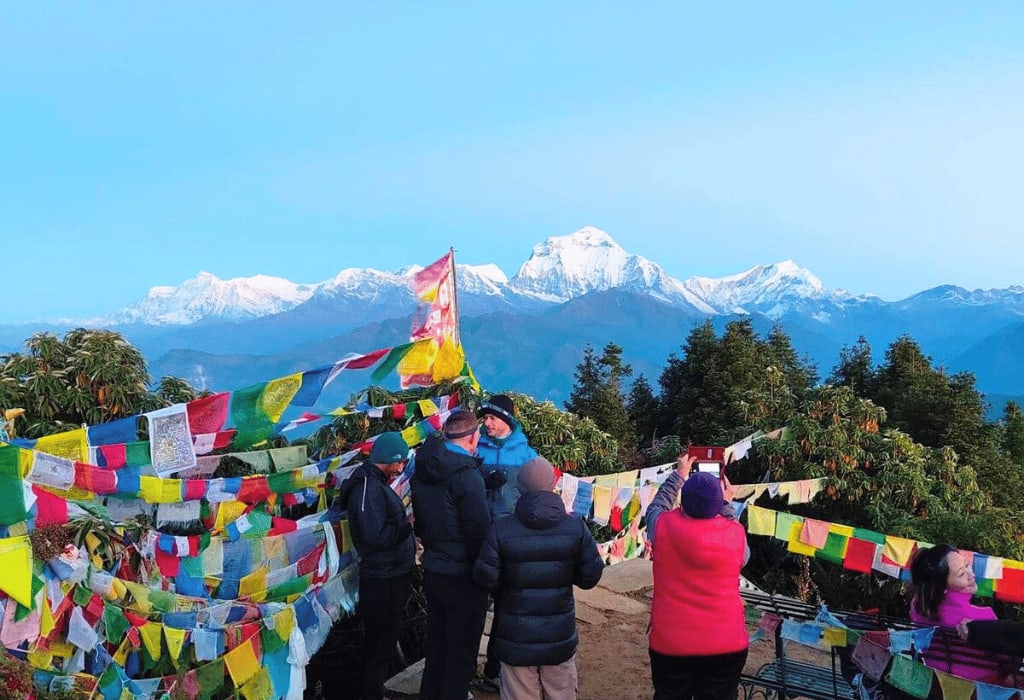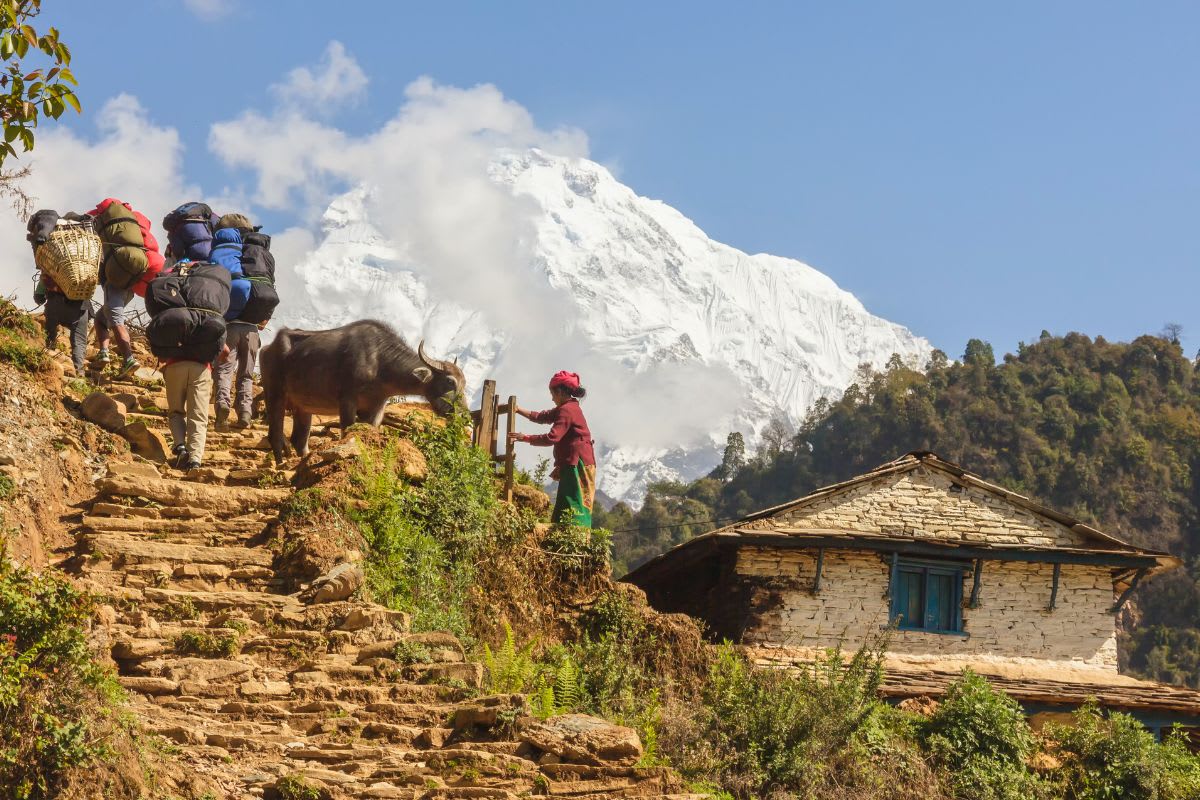
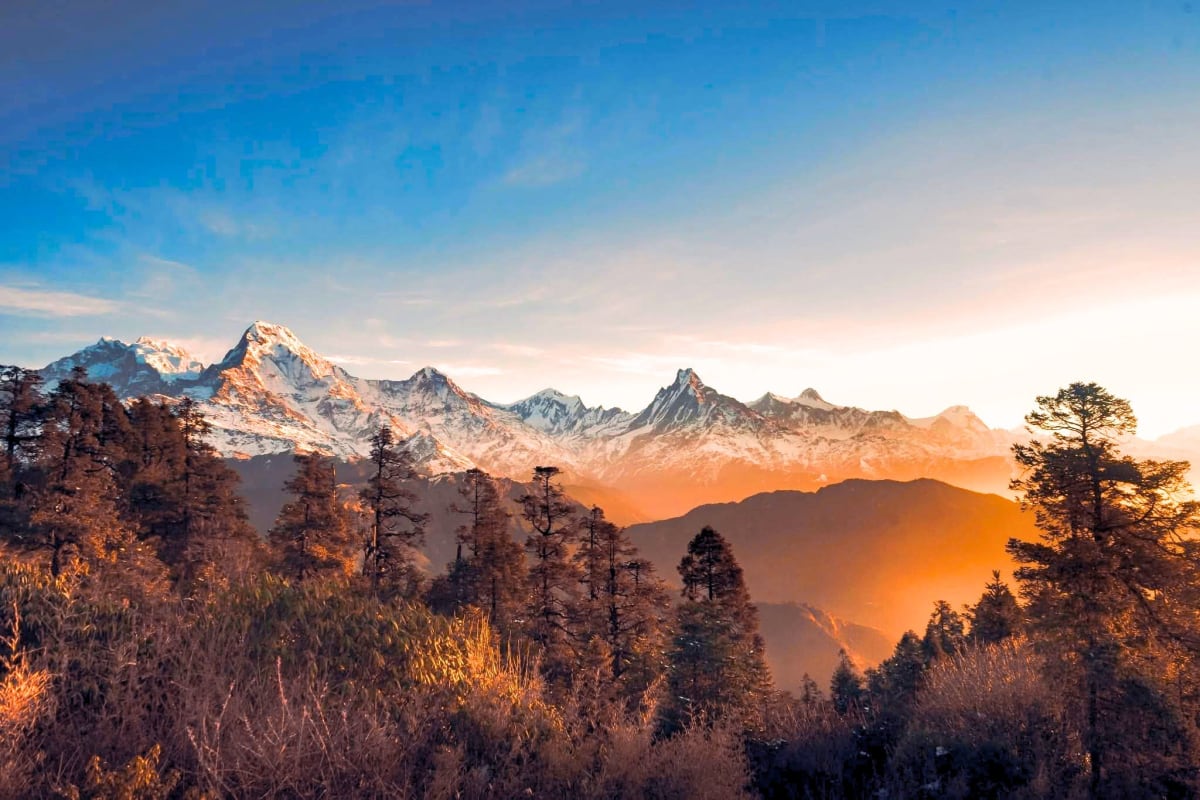
Spring in Nepal, from March to May, is the second of the two main trekking seasons, bringing rhododendron blooms, warming nights, and the Everest climbing crowds to base camp before the pre-monsoon haze builds in May. Daytime temperatures at 3,500 m run 10 to 18 C in March and warmer by May, and the rhododendron forests below 3,500 m flower from mid-March. Passang Dawa Sherpa, who guides Everest departures across every season, wrote this guide from those spring departures.
The sections below cover what spring looks like by altitude band, the pre-monsoon visibility trade in April and May, the Everest climbing-season atmosphere at base camp, and which routes peak in spring.
In this guide 6
What is spring trekking weather like in Nepal?
Spring warms steadily from March to May, and the pattern differs by altitude band, from mild valley mornings to still-cold nights above 4,500 m.
| Altitude band | March | May |
|---|---|---|
| Below 3,000 m | Days 15-22 C, nights above freezing | Warmer, nights stay mild |
| 3,000-4,500 m | Nights to -5 C, snow largely cleared | Nights near freezing |
| Above 4,500 m | Nights -10 to -15 C | Warmest practical pre-monsoon window, nights still -10 to -15 C |
Rhododendron forests flower from mid-March into April at the lower bands. Between 3,000 and 4,500 m, the trails are clear of the deep winter snow by this point in the season. Above 4,500 m, spring is the warmest practical window before the monsoon, though nights at 5,000 m remain cold.
The one seasonal trade is haze. Clear March mornings give way to a building pre-monsoon haze in late April and May, when afternoon cloud and dust cut the long-range visibility that autumn is known for. Early spring keeps the crisp views; late spring trades some clarity for warmth and blooms.
When do the rhododendrons bloom?
Nepal's rhododendron forests, dominated by the national flower Rhododendron arboreum, flower from low to high as spring advances: below 2,500 m from mid-March, between 2,500 and 3,500 m through April, and the dwarf species above 3,500 m into May. The Ghorepani and Ghandruk forests on the Poon Hill trek are among the most spectacular, turning whole hillsides red and pink in late March and April. The Everest approach through the Dudh Koshi valley and the Langtang forests bloom on the same schedule. The Annapurna Base Camp trek forest sections between Chhomrong and Himalaya also flower on this same March-to-April window, giving trekkers on that route the same blossom display Poon Hill is better known for.
This bloom window is the single strongest reason to choose spring over autumn on the mid-altitude routes. A late-March to mid-April departure catches the forests at their peak, which no other season offers.
What is Everest Base Camp like in spring climbing season?
Spring is the Everest summit season, so from April the base camp moraine fills with the tented camps of climbing expeditions preparing for the mid-May summit window, a spectacle autumn trekkers never see. Trekkers reaching base camp in April and May walk into a small city of yellow tents with climbers, Sherpas, and helicopters ferrying loads through the Khumbu Icefall. The atmosphere is unmatched, and it is a genuine reason to time an Everest Base Camp trek for spring rather than autumn. Peak Sherpa community activity centers on the Icefall Doctors' route-fixing work through March, and by late April the camp runs its own daily rhythm of weather briefings, radio calls between camps, and a steady rotation of loads moving up toward Camp 2, all visible from the standard trekker viewpoint near Kala Patthar.
The trade is that the Lukla flights and the trail carry the climbing logistics as well as trekkers, so the lower Khumbu is busy. Teahouse demand peaks in April, and our guides phone ahead for rooms as they do in the autumn crush.
Lukla flight reliability tracks the same haze pattern: our own departure records show April running a 68% on-time rate and May dropping to 61%, against February's 83% in the dead of winter, detailed in the Lukla flight guide. A spring booking should build the same two-day Kathmandu buffer autumn departures carry, since the cloud that blurs long-range views by May also closes the morning flight window more often than it does in October.
Which routes peak in spring?
Spring favours the mid-altitude forest routes and the high climbing peaks. The rhododendron routes, Poon Hill, Ghandruk, the lower Everest and Langtang valleys, are at their best in late March and April. The NMA climbing peaks like Island Peak run their main season in April and May, when the snow is stable and the days are long, covered on the Island Peak climb page. High passes like the Thorong La open reliably as the winter snow clears.
Spring is weaker only for the long-range Himalayan panoramas that autumn delivers, because of the May haze. Trekkers whose priority is crystal visibility over blooms are better served by October, while those wanting warmth, flowers, and the climbing-season atmosphere should choose spring. For the contrasting window, see trekking Nepal in winter.
How does spring pricing and booking compare to autumn?
Spring package prices sit close to autumn's, since both are peak season and teahouse rates rise for both rather than one undercutting the other. The real difference is what drives demand: autumn's crush is trekker volume across every route at once, while spring's April-May squeeze in the Khumbu specifically is compounded by climbing expedition logistics, porters, kitchen staff, and gear filling the same lodges and Lukla flights that trekkers need. A spring Everest Base Camp booking should go in three to four months ahead for April departures, longer than the two-to-three-month window that usually suffices for an autumn slot on the same route.
Routes away from Everest don't carry this extra climbing-season pressure, so Poon Hill and Annapurna Base Camp bookings follow ordinary peak-season lead times even at the height of spring.
Which spring month suits which goal?
| Month | Best for | Trade-off |
|---|---|---|
| Mid-March to early April | Rhododendron blooms, clearer visibility than late spring | Nights still cold above 3,000 m |
| Mid-to-late April | Everest base camp atmosphere building, warm mid-altitude days | Lukla flights busier, haze increasing |
| May | Warmest nights of the season, peak climbing-season energy at base camp | Weakest long-range visibility, 61% Lukla on-time rate |
A trekker who has to pick one month and wants both flowers and a functioning view should default to early April; one chasing the Everest expedition spectacle specifically should accept May's haze as the cost of seeing base camp at its busiest and most alive.
FAQ
Common questions
Is spring or autumn better for trekking in Nepal?+
Spring wins for rhododendron blooms, warmer nights, and the Everest climbing-season atmosphere at base camp; autumn wins for the clearest long-range views and the most stable weather. Late spring trades some visibility for warmth because of the pre-monsoon haze. Choose spring for flowers and warmth, autumn for crisp panoramas.
How warm is spring trekking in Nepal?+
Below 3,000 m, spring days run 15 to 22 C and nights stay above freezing. Between 3,000 and 4,500 m, March nights still reach -5 C, warming to near freezing by May. Above 4,500 m, nights stay cold at -10 to -15 C even in spring, so a four-season sleeping bag is still needed on high routes.
Which month in spring has the best combination of weather and crowds?+
Late March to early April is the sweet spot: rhododendrons are near peak bloom, Lukla flight reliability is still above 65%, and the heaviest climbing-season crowds haven't yet arrived at Everest Base Camp, which builds through April into May. Booking the first two weeks of April gets most of spring's advantages before the pre-monsoon haze and the tented city at base camp are both at their fullest.