Upper Mustang and the Manaslu Circuit are Nepal's two most accessible restricted-area treks, differing chiefly in permit structure, terrain, and season: Mustang's flat USD 500 10-day permit covers a rain-shadow high desert walkable in monsoon, while Manaslu's USD 75 to 100 weekly permit covers glaciated Himalayan terrain over a 5,106 m pass that monsoon rain makes too dangerous to cross. Mustang reaches 4,230 m over 14 days for USD 1,900 to 2,600 in 2026; Manaslu reaches 5,106 m at the Larkya La over 14 days for USD 1,250 to 1,750. Ramesh Rai, who has filed both permit types for our departures, wrote this comparison, reviewed by lead guide Passang Dawa Sherpa.
The sections below compare permit cost and structure, terrain character, and season, then give a direct recommendation by available season and terrain preference.
In this guide 9
- 01 How do the two restricted treks compare at a glance?
- 02 Which restricted permit costs more?
- 03 How does the terrain differ?
- 04 Which trek can you do in monsoon?
- 05 Does either route offer a shorter or extended option?
- 06 Which is more accessible for a first restricted-area trek?
- 07 Our recommendation
- 08 How does getting to the trailhead differ between the two routes?
- 09 How does teahouse quality and food compare between the two?
How do the two restricted treks compare at a glance?
| Upper Mustang | Manaslu Circuit | |
|---|---|---|
| Duration | 14 days | 14 days |
| Max altitude | 4,230 m | 5,106 m (Larkya La) |
| Restricted permit | USD 500 flat for 10 days, USD 50/day after | USD 100/week (Sep-Nov), USD 75/week (Dec-Aug) |
| Terrain | High desert, rain shadow, eroded canyons | Glaciated Himalayan terrain, high pass |
| Monsoon viable | Yes; prime season June to September | No; gorge trail is landslide-active |
| Group cost (2026) | USD 1,900-2,600 | USD 1,250-1,750 |
Which restricted permit costs more?
Upper Mustang's permit is a flat USD 500 for the first 10 days, with USD 50 for each additional day, issued only through a registered agency with a licensed guide; since March 2026 it no longer requires a second trekker. Manaslu's permit is priced by the week instead, USD 100 per person from September to November and USD 75 from December to August, which on a standard 14-day, two-week trek totals USD 150 to 200, well under Mustang's flat fee. Mustang, despite the smaller total trip-cost gap it drives against Manaslu, actually carries the more expensive single-line permit item of the two.
Both mechanics share the same core structure: no solo travel, a registered-agency filing requirement, and mandatory licensed guides throughout. Full detail on both sits in the Manaslu restricted-area permit requirements guide and the Nepal trekking permits master guide.
How does the terrain differ?
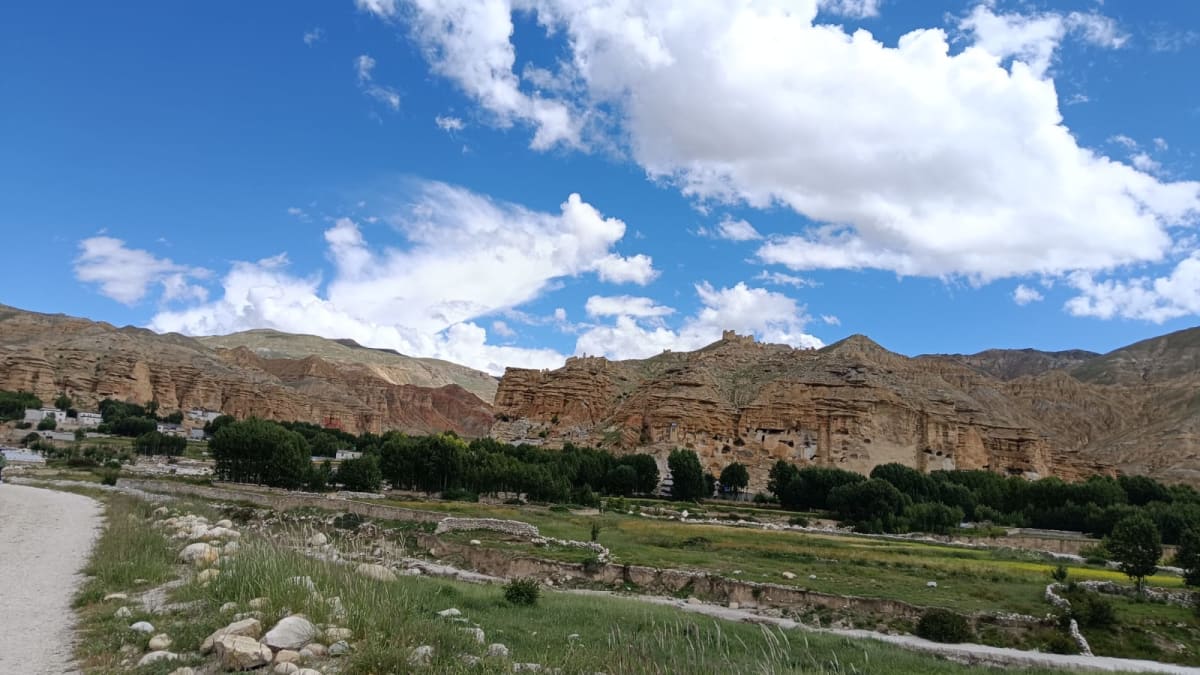
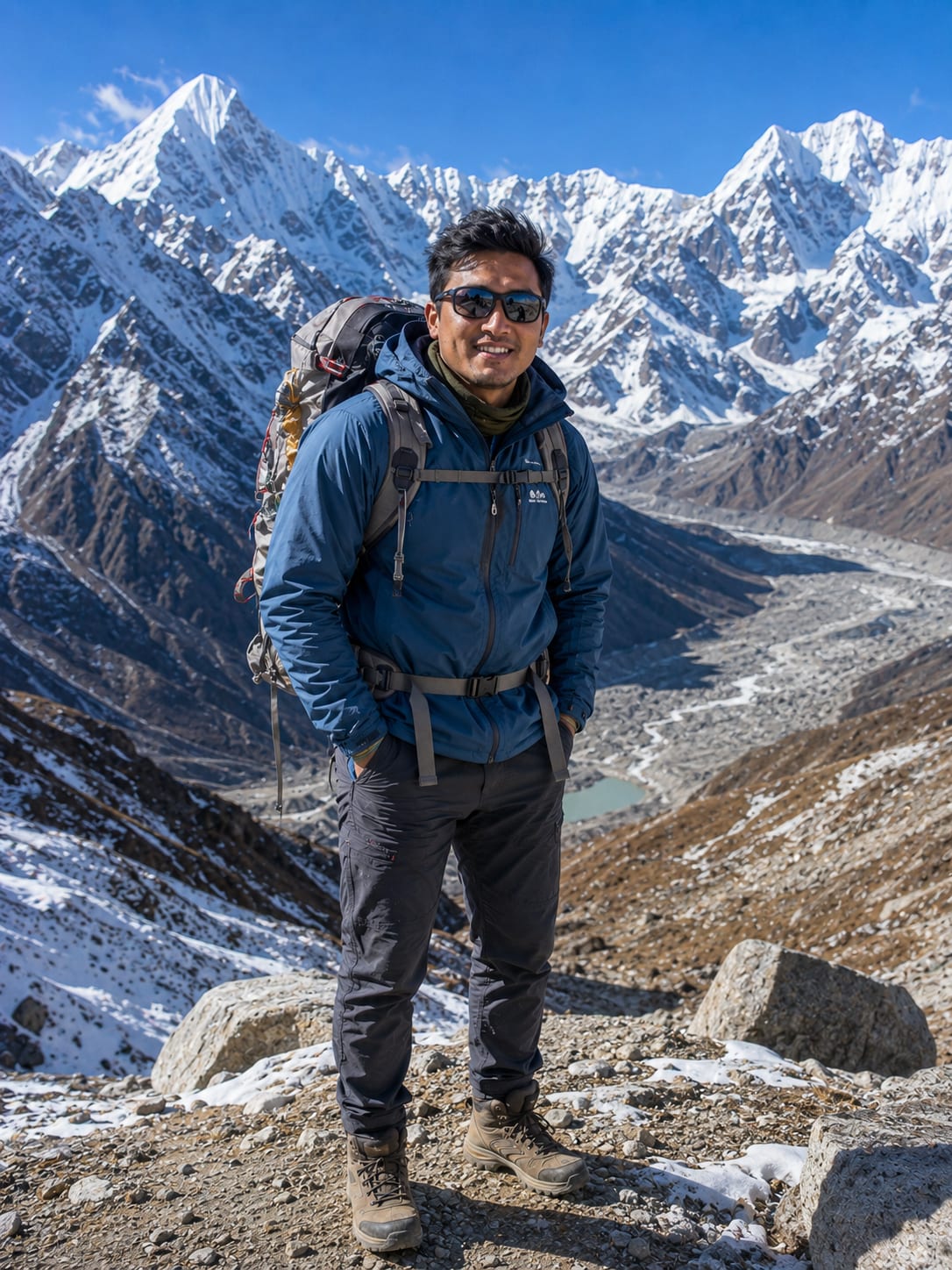
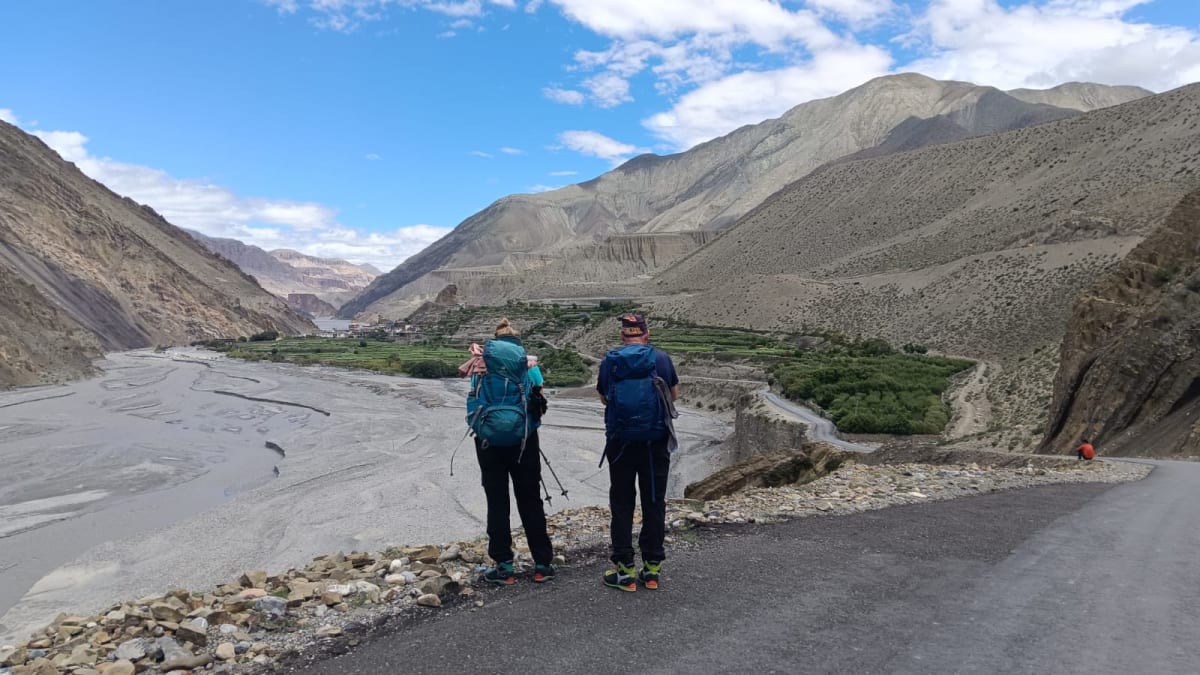
Upper Mustang is high desert: eroded canyons, whitewashed chortens, and the walled medieval capital of Lo Manthang at 3,840 m, all sitting in the Annapurna and Dhaulagiri rain shadow with just 250 to 400 mm of annual rainfall. The Manaslu Circuit is glaciated Himalayan terrain in the conventional sense, climbing through rhododendron forest and high pastures to the Larkya La at 5,106 m, a genuine high mountain pass with moraine and snow underfoot on crossing day. Trekkers who picture stereotypical Himalayan scenery, glaciers, a high pass, and 8,000 m peaks close overhead, want Manaslu; those drawn to a stark, Tibetan-plateau landscape want Mustang.
Which trek can you do in monsoon?
Mustang is walkable, and arguably at its best, from June to September, when the rain-shadow effect keeps the valley dry while the rest of Nepal sits under monsoon cloud, a pattern covered fully in the rain-shadow treks during monsoon guide. Manaslu is not: the Budhi Gandaki gorge between Machha Khola and Jagat is landslide-active through the same months, and no scheduled Manaslu departures run in monsoon for that reason. This single seasonal fact decides the choice for any trekker whose only available window falls in June, July, August, or early September.
Does either route offer a shorter or extended option?
Both do, and the extension changes the comparison slightly. Manaslu pairs naturally with the Tsum Valley Trek, a side valley reached before the Larkya La crossing, adding a genuinely separate Tibetan Buddhist cultural itinerary onto the same permit and approach. Mustang has its own extension in the Tiji Festival Trek, which times the same route to Lo Manthang's three-day masked-dance festival rather than adding new terrain. A trekker choosing between the two base routes should factor in which extension appeals more: Manaslu's adds a new valley, Mustang's adds a cultural event to the same walk.
Which is more accessible for a first restricted-area trek?
Manaslu is the more forgiving first restricted-area trek for most trekkers, since its glaciated-Himalayan terrain and teahouse infrastructure resemble the standard Everest and Annapurna routes many first-timers already know, with the Larkya La as the single unfamiliar element. Upper Mustang's high-desert terrain, sparser vegetation, wind exposure, and lower but wider-ranging daily distances feel less like a conventional Nepal trek, which some travelers find more novel and others find less immediately comfortable. Neither route demands prior restricted-area experience, but a trekker choosing a first restricted permit specifically to test the process, rather than for either region's specific landscape, tends to find Manaslu the closer match to what they've already done. Both routes still require the same registered-agency filing and licensed-guide arrangement regardless of which one feels more familiar on the trail, and neither permit process moves faster just because a trekker has done a restricted route before.
Our recommendation
Choose Upper Mustang if your travel window falls in the monsoon months or you are drawn to high-desert, Tibetan Buddhist terrain unlike anywhere else on a standard Nepal itinerary. Choose the Manaslu Circuit if you want glaciated Himalayan scenery and a genuine high pass at 5,106 m, and your travel window falls in the standard September-to-May trekking season. Trekkers locked into summer leave dates should not force a Manaslu booking against the landslide risk; Mustang exists specifically to serve that calendar gap. Either way, book the permit through us at least two weeks ahead of departure, since both restricted-area filings require lead time with the district immigration office and cannot be arranged on arrival in Kathmandu.
How does getting to the trailhead differ between the two routes?
Upper Mustang starts with a short mountain flight from Pokhara to Jomsom, 20 to 25 minutes over the Kali Gandaki gorge, one of the world's deepest, followed by a jeep or walking start from Jomsom itself; the flight is weather-dependent in the same way Lukla's is, though Jomsom's morning winds make afternoon departures the riskier slot rather than late-morning cloud. The Manaslu Circuit starts overland instead, a 7 to 9 hour jeep drive from Kathmandu to Machha Khola or Soti Khola, longer in transit time but without a flight-cancellation risk hanging over the start of the trek.
This access difference matters for itinerary planning specifically: a Mustang trekker should build the same kind of weather buffer around the Jomsom flight that an Everest trekker builds around Lukla, while a Manaslu trekker's main access risk is a landslide-blocked road during shoulder-season rain rather than a grounded flight.
How does teahouse quality and food compare between the two?
Upper Mustang's teahouses, especially in Lo Manthang and Charang, have developed steadily around the region's Tiji Festival tourism and now offer solid rooms and a food scene that blends Tibetan staples, thukpa, momos, butter tea, with standard trekking menu items. Manaslu's teahouses trail slightly behind in variety and consistency, a direct consequence of the same restricted-permit economics that keep the trail quieter, so menus shorten and room quality simplifies more noticeably past Sama Gaun than anywhere comparable in Mustang.
Neither route requires camping gear, and both keep the core teahouse model, private or shared rooms, communal dining halls, intact throughout, so the difference is one of degree rather than kind, similar to the gap covered in the Annapurna Circuit vs Manaslu Circuit comparison for Manaslu against a more developed neighboring route.
FAQ
Common questions
Can I trek Upper Mustang in monsoon but not Manaslu?+
Yes. Upper Mustang sits in the Annapurna and Dhaulagiri rain shadow and receives just 250 to 400 mm of rain a year, so June to September is its prime walking season. The Manaslu Circuit's Budhi Gandaki gorge is landslide-active through those same months, so no scheduled departures run there in monsoon.
Which restricted permit is cheaper overall?+
Manaslu's weekly-rate permit works out cheaper on a standard trek: USD 150 to 200 for a typical two-week itinerary against Mustang's flat USD 500 for the first 10 days. Mustang's per-day cost only overtakes Manaslu's on a trek shorter than about five days, which neither restricted route runs in practice.
Which trek is more culturally distinct?+
Upper Mustang preserves a former Tibetan Buddhist kingdom largely intact, with 15th-century gompas and the walled capital of Lo Manthang. The Manaslu Circuit passes through Tibetan-influenced villages too, particularly around Sama Gaun, but its cultural focus shares the stage with the Larkya La's mountaineering character.
Can I extend either trek to see more of the region?+
Yes, both have a real extension option. Manaslu pairs with the Tsum Valley Trek before the Larkya La for a second, separate Tibetan Buddhist valley on the same permit. Mustang has the Tiji Festival Trek, timing the same Lo Manthang route to the region's three-day masked-dance festival rather than adding new terrain.