Nepal Travel Packages
Mardi Himal Trek

Mardi Himal Trek

★★★★★ 4.8 (61 reviews)
Annapurna, Nepal 5-7 days Moderate Max 4,200 m
Duration
5-7 days
Max altitude
4,200 m
Difficulty
Moderate
Group size
Up to 12
Total distance
~40 km
Elevation gain
3,100 m
Best season
October to December, March to May
Avg daily walk
4-6 hours
Starts in
Kande (1,770 m)
Ends in
Pokhara
Accommodation
Teahouse lodges throughout
✓ TAAN & NMA licensed guides ✓ Permits included, no hidden fees ✓ Small group departures
Group departure · per person
USD720
Permits, guide, porter, lodging & food included
Departure date
Email Nepal
Permits and logistics fully arranged
Licensed guide included on every departure
Direct WhatsApp line to your guide

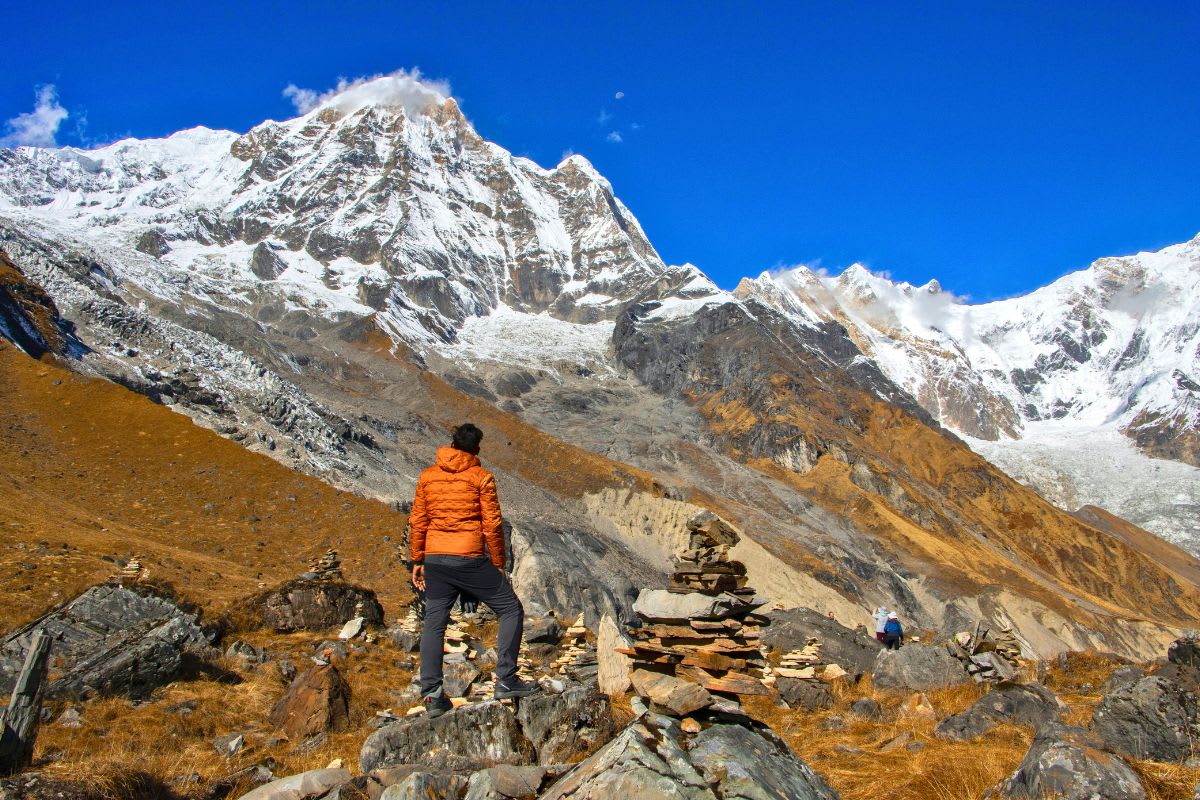
The Mardi Himal Trek is a 5 to 7 day teahouse trek along a forested ridge east of the Annapurna Sanctuary that climbs to a 4,200 m viewpoint below the 5,587 m Mardi Himal. A 2026 group departure costs USD 550 to 900 per person including the Annapurna Conservation Area Permit (NPR 3,000) and a TIMS card (NPR 2,000). It opened as a marked teahouse route only in 2012, so it stays far quieter than Poon Hill or Annapurna Base Camp while giving closer views of Machhapuchhre than either.

Ajay Shrestha has led 9 Mardi departures. The sections below cover the two permits, a cost breakdown against the USD 550 to 900 range, the water and lodge scarcity above Low Camp that shapes how the ridge is walked, the altitude and acclimatization profile of the 4,200 m viewpoint, and how this route compares to both Poon Hill and Annapurna Base Camp for trekkers deciding between the three.

Highlights

What our guides know that others don't.

1

Water above Low Camp

No natural water on the ridge; lodges sell it, carry 2 L

2

Lodge scarcity at High Camp

Few beds at High Camp (3,580 m); guides phone ahead in season

Live from the trail

Updated 2 Jul 2026

Monsoon status: ridge cloud-bound, forest wet

Monsoon cloud sits on the Mardi ridge most days with wet forest below Low Camp. The route is walkable but views are unreliable, and the dry ridge means fewer leeches than the valley routes. We schedule departures for the drier windows. Next scheduled departure: early October.

What permits does the Mardi Himal Trek need?

Two permits cover Mardi Himal in 2026: the Annapurna Conservation Area Permit at NPR 3,000 and a TIMS card at NPR 2,000, the standard Annapurna pair. Both are issued in Pokhara or Kathmandu with cash and photographs and checked at the ACAP post near Kande. As a newer route inside the same conservation area, Mardi needs no special permit.

The Nepal-wide permit map, including the licensed-guide requirement, is in the Nepal trekking permits master guide. Mardi is often walked as a quieter alternative to the Poon Hill trek on the same permits.

Why is Mardi Himal curated as a Budget Nepal Travel Package?

Mardi Himal sits inside the Budget Nepal Travel Packages segment alongside Poon Hill and Langtang Valley, all three under a USD 900 group-cost ceiling without cutting permits, guide, or accommodation from what's included. Mardi earns that placement despite reaching over 1,000 m higher than Poon Hill because its short 5-7 day length keeps guide-days and teahouse nights to a minimum, the real cost driver on any Nepal trek, not altitude itself.

Trekkers comparing Mardi against pricier high-altitude routes should note that the budget classification reflects route economics, not reduced safety oversight: the same 500 m sleeping-altitude guideline and twice-daily symptom awareness our guides apply on the Everest Base Camp trek apply here too, scaled to Mardi's shorter, less extreme altitude profile.

How much does the Mardi Himal Trek cost in 2026?

TAAN-registered operators quoted USD 550 to 900 for a group Mardi departure in 2026, sitting between Poon Hill and Annapurna Base Camp because it runs 5 to 7 days with no flight. The table shows the breakdown, and the one line that runs higher than expected is water: the ridge has no natural source above Low Camp, so lodges carry it up and price it accordingly.

The short route keeps guide and porter days modest, and the Kande road head is a cheap Pokhara jeep away. A private departure for a couple sits at the upper end because staff costs spread across fewer trekkers. That price band, with no flight and a short guide engagement, is why Mardi sits among the site's Budget Nepal Travel Packages.

Teahouse room prices climb the ridge in a way worth planning around: NPR 400-500 at Forest Camp against NPR 700-900 at High Camp, since every board, blanket, and pane of glass at 3,580 m arrived there on someone's back. Meals follow the same pattern, and it's the reason our cost breakdown budgets USD 130-220 for food and water rather than the flatter figure a road-accessible route like Langtang Valley needs.

Where the price goes · per person
Permits (ACAP + TIMS)NPR 5,000 total at 2026 rates$38
Pokhara-Kande/Sidhing transfersPrivate or shared jeep$35–80
Licensed guide (shared in group)USD 35-40/day, 5-7 days$140–220
Porter, one per two trekkersUSD 25/day, 20 kg shared load$100–160
Teahouse room, 4-6 nightsNPR 400-900/night, higher at High Camp$30–70
Food and drinking waterWater carried up costs more on the ridge$130–220
Company margin, logistics, staff equipment$70–150

Why do so few competitor pages mention Mardi's real logistics constraints?

Most generic route descriptions for Mardi Himal describe it as "a hidden gem, quieter than Poon Hill" without mentioning the two operational realities that actually shape whether a trip goes smoothly: the dry ridge above Low Camp, and High Camp's genuinely limited bed count in October. Both details only surface from guides who've actually managed group logistics on this specific ridge across multiple seasons, not from a generic itinerary written once and republished.

Ajay Shrestha's 9 Mardi departures inform the specific guidance in this page: the exact point (Low Camp) where water carrying starts, and the practice of phoning High Camp lodges directly from Low Camp rather than assuming availability, a habit built from at least one early departure where a group arrived to a fully booked High Camp and had to descend to Middle Camp for the night. That kind of specific, checkable operational knowledge is the difference between a route description and a guide who actually knows this ridge.

Why does water scarcity shape the Mardi ridge walk?

Above Low Camp the Mardi ridge has no streams or springs, so every litre is carried up by porters and sold at lodge prices that climb toward High Camp, the rare-attribute detail that catches unprepared trekkers. We ask clients to fill two litres at Low Camp and top up at each lodge rather than expecting to refill on the trail. Purification tablets are useless here because there is nothing to purify between lodges.

This dry-ridge character is also why the route stays walkable in light snow when wetter valleys turn slick. Planning water and lodge stops in advance is the practical skill this trek rewards, which is where a guide who knows the ridge earns their fee.

How limited are the beds at High Camp?

High Camp at 3,580 m has only a handful of lodges and fills fast in October, so our guides phone ahead from Low Camp to hold rooms, the second rare-attribute reality of this route. Trekkers arriving late without a booking in peak season can find themselves pushed back down to Middle Camp, adding an hour to the next day's viewpoint climb. The narrow ridge simply cannot hold the bed capacity of the wider Annapurna Base Camp valley.

Off-season, from late November and in winter, the beds are easy and several lodges offer low rates. The trade-off then is cold nights at High Camp, where temperatures drop below -5 C, and the occasional snow that dusts the Upper Viewpoint climb.

What altitude and acclimatization does Mardi Himal actually require?

Mardi Himal's 4,200 m Upper Viewpoint sits high enough for mild altitude effects to genuinely appear, unlike Poon Hill's 3,210 m ceiling, so this trek treats acclimatization as a real planning factor rather than a formality. The itinerary's sleeping-altitude progression, 2,600 m to 2,970 m to 3,580 m across the first three nights, stays close to the 500 m-per-day guideline the altitude sickness prevention guide sets out, though the jump from Low Camp to High Camp runs slightly over that threshold on a short trek where a dedicated rest day isn't practical.

Our guides watch for symptoms more actively here than on Poon Hill: a headache or mild nausea at High Camp is common and usually settles, but persistent or worsening symptoms mean the descent to Middle Camp happens immediately rather than pushing on to the viewpoint. This is also why the Upper Viewpoint climb happens as a there-and-back push from High Camp rather than an overnight stay any higher, keeping the trek's highest sleeping altitude at 3,580 m even though the day's walking reaches 4,200 m.

Is Mardi Himal a good second trek after Poon Hill?

Mardi Himal is this site's most common recommendation for trekkers who've completed Poon Hill or a similarly easy route and want genuine altitude exposure without committing to a 12+ day flagship trek. The step up is real: 4,200 m against 3,210 m, moderate against easy grading, and a sustained ridge climb rather than one hard staircase day, but it stays within reach of anyone in reasonable trekking fitness rather than requiring the dedicated training block a route like the Annapurna Circuit needs.

What changes most between the two treks isn't the walking itself, it's the planning discipline: water carrying above Low Camp, High Camp bed availability, and a genuine (if modest) altitude watch are all factors Poon Hill simply doesn't have. Trekkers who handle Mardi comfortably typically move next to Annapurna Base Camp or a similar 4,000 m-plus route with confidence that altitude itself isn't an obstacle for them.

What should you pack for the Mardi Himal Trek?

Mardi's higher altitude and colder High Camp nights call for a genuine four-season sleeping bag rated to at least -15 C comfort, following the standard Nepal trekking packing list, a step up from what a Poon Hill departure needs. Layered clothing matters more here too: the pre-dawn Upper Viewpoint push starts from an already-cold High Camp, so an insulated jacket worn from the tent or lodge door, not added partway up, is the practical approach our guides recommend.

One packing detail specific to this route: carry a collapsible water bottle or bladder with at least 2-litre capacity, since every drop above Low Camp is lodge-sold rather than stream-sourced, and running short mid-ridge means paying premium High Camp prices rather than a simple refill. A headlamp is essential for the pre-dawn Upper Viewpoint climb, and trekking poles help meaningfully on the steep, sometimes loose sections above Forest Camp.

Should you book Mardi Himal privately or join a group?

A private Mardi Himal departure costs USD 750 to 1,150 against the group rate's USD 550 to 900, a real premium since the fixed guide and porter costs split across fewer people over 5 to 7 days. Booking privately matters more here than on Poon Hill because the water-carrying discipline above Low Camp and the High Camp bed-booking phone calls both benefit from a guide focused entirely on one party's pace rather than managing a larger group's varied fitness levels on genuinely altitude-relevant terrain.

Group departures still work well for most trekkers: the fixed schedule matches Mardi's core season windows, and a shared High Camp evening below Machhapuchhre is a memorable part of the trip for many clients. Ajay Shrestha's practical guidance: book private if anyone in the party has altitude uncertainty or wants flexibility on the summit-push timing, since a private group can delay the Upper Viewpoint climb a day for weather without disrupting anyone else's schedule.

How does Mardi Himal compare to Annapurna Base Camp?

Mardi Himal and Annapurna Base Camp reach similar altitudes, 4,200 m against 4,130 m, but deliver a genuinely different experience: Mardi's narrow forested ridge gives close, intimate views of Machhapuchhre's rarely-seen east face, while ABC's wider valley approach ends inside the Annapurna Sanctuary itself, ringed by 7,000 m and 8,000 m peaks on every side. ABC runs longer, 7-11 days against Mardi's 5-7, and costs more, USD 750-1,200 against USD 550-900, reflecting the extra guide-days and teahouse nights.

Trail traffic is the other real difference: Mardi opened as a marked route only in 2012 and stays notably quieter than ABC's well-established valley trail, even in peak October weeks. Trekkers choosing between the two should weigh solitude and a tighter budget (Mardi) against the amphitheater payoff and a longer, fuller Annapurna experience (ABC); both share the same ACAP and TIMS permit pairing, so permit cost isn't a factor either way.

What's the best season for the Mardi Himal Trek?

October to December and March to May are Mardi's reliable windows, matching the standard Annapurna season, with October and November giving the clearest views of Machhapuchhre's east face from the Upper Viewpoint and the most stable High Camp weather. Spring brings rhododendron blooms through the Forest Camp section, a real draw from late March into April, though afternoon haze can soften the long-distance mountain views slightly compared to autumn's crisper air.

Winter, December through February, is possible but noticeably harder here than on Poon Hill: High Camp temperatures regularly drop below -5 C and the Upper Viewpoint climb can carry fresh snow, so we run winter Mardi departures selectively rather than on a fixed schedule, detailed further in the trekking Nepal in winter guide. Monsoon, June through September, brings persistent ridge cloud that obscures the Upper Viewpoint's payoff view most mornings, covered in the trek's condition update below; we don't schedule fixed monsoon departures for this reason.

Elevation profile High point 4,200 m
2,0002,5003,0003,5002,600 m123,580 m341,770 m5DAY
Acclimatization night High point

Day by Day

5-day itinerary, every detail planned.

Day1
Trip Day
Drive Pokhara to Kande, trek to Forest Camp (2,600 m)
~5h walking10 km
2,600m alt.

A 1-hour jeep from Pokhara reaches Kande, the road-head trailhead where the ACAP and TIMS permits are checked before the climb begins. The trail rises steeply and steadily through dense rhododendron and oak forest with almost no flat sections, gaining most of the day's 830 m in the first three hours. This is the ridge walking that defines Mardi Himal end to end, narrow forest trail with occasional breaks in the canopy hinting at the mountain views still to come.

2,600 m10 km~5h
Day2
Trip Day
Forest Camp to Low Camp (2,970 m)
~4h walking8 km
2,970m alt.
Day3
High Point
Low Camp to High Camp (3,580 m)
~4h walking7 km
3,580m alt.
Day4
Trip Day
Upper Viewpoint (4,200 m), descend to Middle Camp (3,000 m)
~6h walking11 km
3,000m alt.
Day5
Trip Day
Descend to Sidhing, drive to Pokhara
~4h walking8 km
1,770m alt.

What's Included

Transparent, all-in pricing.

Included in your price

Permits (ACAP + TIMS)
Pokhara-Kande/Sidhing transfers
Licensed guide (shared in group)
Porter, one per two trekkers
Teahouse room, 4-6 nights
Food and drinking water
Company margin, logistics, staff equipment

Not included

Nepal entry visa fee (USD 30-125, paid on arrival)
Travel insurance with helicopter evacuation cover
Personal trekking gear and equipment
Tips for your guide and porter
Bottled drinks, wifi, and device charging at teahouses
Meals in Kathmandu outside the itinerary

Dates & prices

Upcoming departures.

Start dateEnd datePrice / personAvailability
10 Oct 202614 Oct 2026USD 720Guaranteed · 6 leftEnquire
24 Oct 202628 Oct 2026USD 720Open · 8 leftEnquire
21 Nov 202625 Nov 2026USD 700Open · 10 leftEnquire
27 Mar 202731 Mar 2027USD 700Open · 11 leftEnquire

Verified reviews

What travellers say.

4.8/5 from 61 reviews on TripAdvisor, checked July 2026

★★★★★

So much quieter than Poon Hill and the ridge walking is spectacular. High Camp at dawn below Machhapuchhre is unforgettable. Glad our guide sorted the beds ahead because it was full when we arrived.

JF
James Fletcher · New Zealand
11 Apr 2026
★★★★★

A hidden gem. Five days, big views, and hardly anyone on the trail. The water situation above Low Camp is real, so listen to your guide and carry enough.

LV
Lena Vogel · Austria
25 Mar 2026

Why Nepal Travel Packages

Built on published proof, not adjectives.

A named, licensed guide before you book

Full name, photo, NMA or TAAN license number, and a direct WhatsApp line. The guide on the page is the guide on the trail.

Itemized pricing, not a lump sum

Permits, guide, porter, lodging, and food broken out on every trip page. You see exactly where the price comes from.

Trail conditions updated monthly

Dated field reports from the guides running the route this season, not boilerplate written once and left to go stale.

Permits handled, not hidden

Every permit fee, checkpoint, and paperwork rule is filed for you and published in the guides — no surprise admin at Lukla.

FAQ

Common questions

Is Mardi Himal harder than Poon Hill?+

Yes, Mardi climbs to 4,200 m against Poon Hill's 3,210 m and involves a sustained ridge ascent, so it is graded moderate against Poon Hill's easy. It stays short at 5 to 7 days and has no mountain pass. Trekkers wanting the gentler option should compare the Poon Hill trek; trekkers who've already done Poon Hill and want a real next step up in altitude and difficulty usually find Mardi the natural choice.

What's the best season for Mardi Himal?+

October to December and March to May, the standard Annapurna window, with autumn giving the clearest Machhapuchhre views and the most stable High Camp weather. Winter is possible but colder and occasionally snowy at the Upper Viewpoint; monsoon brings persistent ridge cloud that obscures the payoff view most mornings, so we don't schedule fixed monsoon departures for this route.

How much water should I carry on the Mardi ridge?+

Carry two litres from Low Camp, because there is no natural water above it and lodges are spaced an hour or more apart. Refill at each lodge as you climb rather than relying on finding a stream. This dry-ridge logistics point is the main practical difference from wetter Annapurna routes, and it's also why the trail stays walkable in light snow when wetter valley routes turn slick underfoot.

Do I need to book High Camp in advance?+

In October, effectively yes: High Camp at 3,580 m has few beds and fills fast, so our guides phone ahead from Low Camp to hold rooms. Independent trekkers in peak season risk being pushed down to Middle Camp. Off-season the beds are easy but the nights are cold.

How does Mardi Himal's trail traffic compare to Poon Hill?+

Mardi is notably quieter. It opened as a marked teahouse route only in 2012, well after Poon Hill established itself as one of the Annapurna region's busiest short treks, and the narrower ridge naturally supports fewer daily arrivals than Poon Hill's wider, more developed trail network.

Can I combine Mardi Himal with another short Annapurna trek?+

Yes, some clients combine a shortened Mardi itinerary with a few days at the Pokhara Wellness Retreat before or after, since both start and end in Pokhara with no shared acclimatization requirement. Combining Mardi directly with Poon Hill on one continuous trek isn't standard, since the two use different trailheads and would need a return to Pokhara between them, adding a logistics day neither itinerary is built to absorb on its own.

Is there altitude risk on Mardi Himal?+

The 4,200 m viewpoint is high enough for mild altitude effects, though the risk is lower than on 5,000 m routes and you sleep no higher than 3,580 m. Our pacing keeps sleeping gains moderate and stays close to the standard 500 m-per-day guideline. General thresholds and symptoms are in the altitude sickness prevention guide.

Is Mardi Himal a good second trek after Poon Hill?+

Yes, it's this site's most common recommendation for that step up: real altitude exposure (4,200 m vs 3,210 m) and a sustained ridge climb, but still within reach without a dedicated training block. What changes most is planning discipline, water carrying above Low Camp and High Camp bed booking, not the physical difficulty itself.

Should I book Mardi Himal privately or in a group?+

Book privately (USD 750-1,150) if anyone in your party has altitude uncertainty or wants flexibility on the summit-push timing. Group departures (USD 550-900) work well for most trekkers and add a shared High Camp evening below Machhapuchhre that many clients remember fondly.

How does Mardi Himal compare to Annapurna Base Camp?+

Similar altitude (4,200 m vs 4,130 m) but a different experience: Mardi's narrow ridge gives close views of Machhapuchhre's east face and stays quieter, while ABC's wider valley ends inside the Annapurna Sanctuary itself. ABC runs longer (7-11 vs 5-7 days) and costs more (USD 750-1,200 vs USD 550-900). Both use the same ACAP and TIMS permit pairing, so permit cost isn't a factor in the choice.

What should I pack for the Mardi Himal Trek?+

A genuine four-season sleeping bag rated to -15 C comfort (colder than Poon Hill needs), layered clothing for the pre-dawn High Camp start, a 2-litre water bottle or bladder since every drop above Low Camp is lodge-sold, a headlamp, and trekking poles for the steep sections above Forest Camp.

Why is Mardi Himal classified as a budget package despite its altitude?+

Its short 5-7 day length keeps guide-days and teahouse nights to a minimum, the real cost driver on any trek, not altitude itself. It sits under the same USD 900 ceiling as Poon Hill and Langtang Valley in the site's Budget Nepal Travel Packages segment, with no reduction in permits, guide, or safety oversight.