Nepal Travel Packages
Annapurna Circuit and Tilicho Lake Trek

Annapurna Circuit and Tilicho Lake Trek

★★★★★ 4.8 (29 reviews)
Annapurna, Nepal 15-17 days Strenuous Max 5,416 m
Duration
15-17 days
Max altitude
5,416 m
Difficulty
Strenuous
Group size
Up to 10
Total distance
~185 km
Elevation gain
7,200 m
Best season
March to May, October to November
Avg daily walk
5-8 hours
Starts in
Dharapani or Chame (1,860-2,710 m)
Ends in
Jomsom or Pokhara
Accommodation
Teahouse lodges throughout; single lodge cluster at Tilicho Base Camp
✓ TAAN & NMA licensed guides ✓ Permits included, no hidden fees ✓ Small group departures
Group departure · per person
USD1,550
Permits, guide, porter, lodging & food included
Departure date
Email Nepal
Permits and logistics fully arranged
Licensed guide included on every departure
Direct WhatsApp line to your guide

The Annapurna Circuit and Tilicho Lake Trek is a 15 to 17 day teahouse trek that adds a side trip from Manang to Tilicho Lake at 4,919 m, one of the highest lakes in the world by some measures, before rejoining the standard Annapurna Circuit over the 5,416 m Thorong La. A 2026 group departure costs USD 1,350 to 1,900 per person including the same Annapurna Conservation Area Permit (NPR 3,000) and TIMS card (NPR 2,000) used on the standard Circuit, since Tilicho Lake sits inside the same conservation area and needs no separate authorization. Three extra days beyond Manang, at Khangsar (3,734 m), Shree Kharka (4,020 m), and Tilicho Base Camp (4,150 m), replace the direct Yak Kharka route and are the reason this itinerary runs longer than the 12 to 16 day standard Circuit.

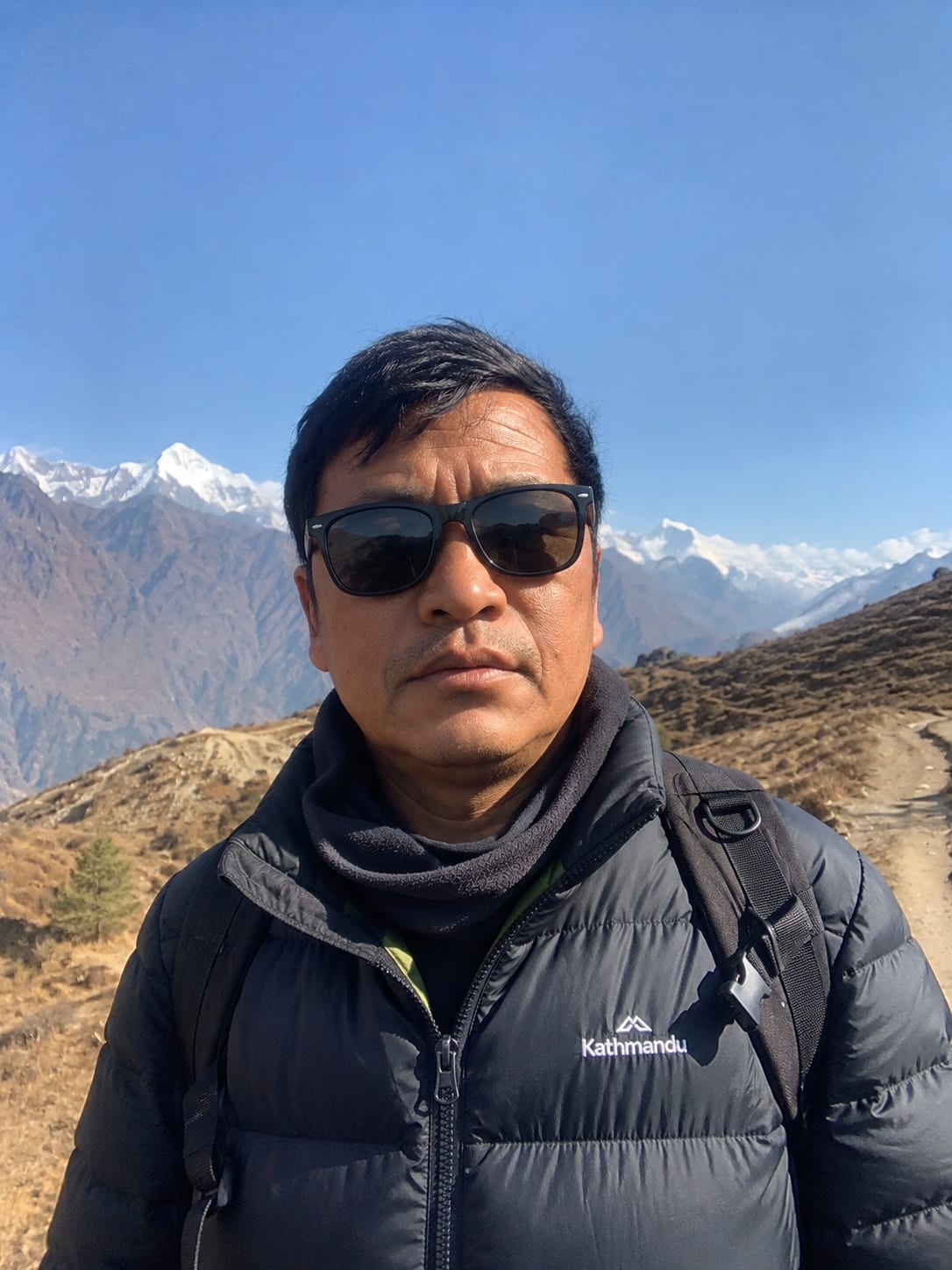
Mingma Tendi Sherpa, who has led 9 Tilicho Lake departures alongside 12 standard Circuit trips, wrote this page and reviews its landslide-crossing conditions before every group sets out. The sections below cover why no extra permit applies despite the extra altitude, a cost breakdown against the USD 1,350 to 1,900 range, the avalanche-window timing that governs the crossing to Tilicho Base Camp, how the lake changes the Circuit's overall difficulty, and how this extension compares to the standard Circuit for trekkers still deciding whether the extra three days are worth adding.

Highlights

What our guides know that others don't.

1

Tilicho Base Camp avalanche-window closures

Crossing to Tilicho Base Camp closes for a day or more after fresh snowfall on the landslide slope

2

Tilicho Lake freeze status

Lake surface partially ices over from late November to February, off the scheduled trekking window

Live from the trail

Updated 2 Jul 2026

Monsoon status: landslide slope wet, no scheduled departures

Monsoon rain has increased rockfall risk on the Shree Kharka to Tilicho Base Camp slope, and we suspend the crossing entirely from June through mid-September regardless of group readiness. The main Circuit trail as far as Manang remains passable for trekkers doing only the standard route. Next scheduled Tilicho departure: early October.

Does the Tilicho Lake extension need a separate permit from the Annapurna Circuit?

No separate permit applies because Tilicho Lake sits inside the Annapurna Conservation Area, so the same Annapurna Conservation Area Permit (NPR 3,000) and TIMS card (NPR 2,000) that cover the standard Circuit also cover the detour to the lake. This surprises many operators' clients, who assume a trek approaching Thorong La's altitude at a remote lake needs restricted-area paperwork the way Upper Mustang or Manaslu do. The ACAP checkpoint at Manang logs trekkers heading toward Khangsar and Tilicho the same way it logs those continuing directly to Yak Kharka, with no additional stamp or fee.

The permit rule difference between conservation areas and restricted zones is worth understanding before booking, and the full comparison sits in the Nepal trekking permits master guide. Trekkers who want to see how a genuinely restricted permit works, with its minimum group size and mandatory guide rules, can compare against the Manaslu restricted-area permit requirements guide.

Should you book the Tilicho extension privately or in a group?

A private departure for the extension runs USD 1,700 to 2,400 against the group rate's USD 1,350 to 1,900, a meaningful premium since the Great Landslide crossing timing and the contingency-day decision both benefit from a guide managing one party's risk tolerance rather than a larger group's mixed comfort levels on genuinely exposed terrain. Group departures still run the extension safely and regularly; the private option is worth the extra cost mainly for parties who want direct input into how a weather delay gets handled rather than following a fixed group schedule.

Mingma Tendi Sherpa's guidance to clients weighing this choice: book private if the Great Landslide crossing genuinely worries you or your schedule has zero flexibility for a contingency-day delay, since a private group can adjust timing without affecting anyone outside the party. Group departures suit trekkers comfortable trusting the guide's crossing-day judgment call, which is the large majority of clients who book this extension.

How much does the Annapurna Circuit and Tilicho Lake Trek cost in 2026?

TAAN-registered operators quoted USD 1,350 to 1,900 for a 15 to 17 day group departure with the Tilicho extension in 2026, roughly USD 150 to 300 above the standard Annapurna Circuit Trek because of three extra guide, porter, and lodging days. The table below itemizes each line, and the permit cost itself does not change since Tilicho needs no separate authorization, covered above. Guide and porter wages follow the same TAAN 2026 rates of USD 35 to 40 and USD 25 per day, simply extended across more days on the trail.

Tilicho Base Camp lodging runs at the high end of the teahouse price band because every plank of wood and bag of rice reaches the site by porter or mule from Khangsar, a supply chain that adds NPR 100 to 200 per item over Manang prices. A quote below USD 1,200 for the full extension usually means a shortened detour that skips the overnight at Base Camp, turning the lake into a rushed single push rather than the two-day approach we run.

Where the price goes · per person
Permits (ACAP + TIMS)NPR 5,000 total at 2026 rates$38
Kathmandu-Dharapani/Chame jeep + Jomsom-Pokhara transferShared jeep; flight Jomsom-Pokhara adds USD 120$90–160
Licensed guide (shared in group)USD 35-40/day over 15-17 days$380–520
Porter, one per two trekkersUSD 25/day, 20 kg shared load$260–340
Teahouse room, 14-16 nightsNPR 400-1,200/night, highest at Tilicho Base Camp$65–140
Food and drinking waterPrices climb toward Tilicho Base Camp, supplied entirely by porter$320–480
Company margin, logistics, staff equipment$140–260

How dangerous is the crossing to Tilicho Base Camp?

The trail from Shree Kharka to Tilicho Base Camp crosses a steep, loose scree slope known locally as the Great Landslide section, roughly 45 minutes of exposed traverse where rockfall risk rises through the day as the sun loosens the slope. Our guides schedule this crossing before 10 am, when the scree is still frozen or stable from the overnight cold, and treat any fresh snowfall on the slope as an automatic delay. This is the Tilicho Base Camp avalanche-window closure that separates this route from the rest of the Circuit: a snow-laden slope can shut the crossing for a full day or more while the guide team assesses stability.

Groups that reach Shree Kharka in the afternoon wait there overnight rather than attempt the crossing late in the day, which is why our itinerary builds the approach as two separate short days instead of one long push. Trekking poles and gaiters help on the loose surface, and our guides walk the group single file with spacing through the exposed sections. No technical climbing skill is needed, only steady footing and a willingness to follow the guide's timing exactly.

When is the best season for Tilicho Lake?

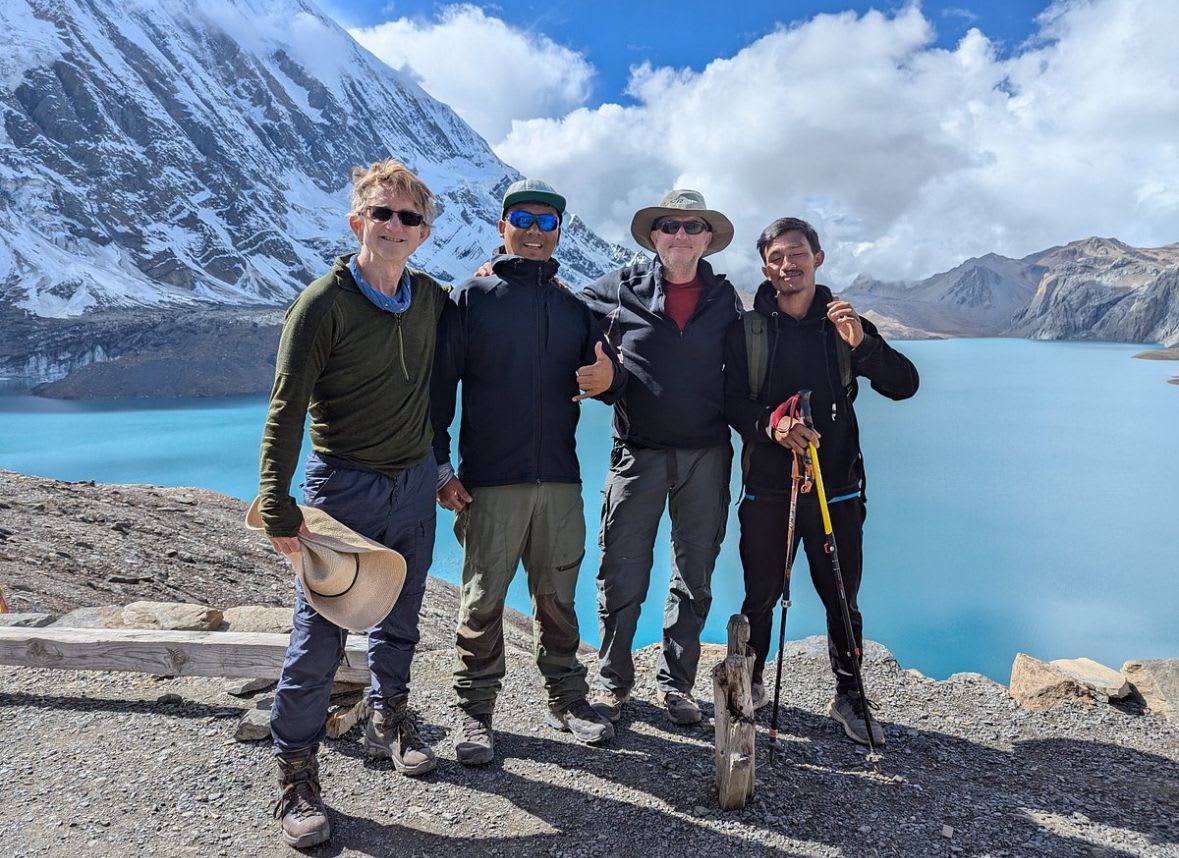
October to November and March to May are the two windows we run scheduled Tilicho departures, matching the standard Circuit's best months since both routes share the same Manang approach. Tilicho Lake itself partially ices over from late November through February, well outside our scheduled trekking window, and the Base Camp approach becomes considerably more avalanche-prone under fresh winter snow load. Spring departures see the lake fully liquid and often glassy calm in early morning light, while autumn gives the clearest mountain backdrop across the water.

Winter, December through February, is the closed window here: the pass and the Base Camp approach can hold snow for weeks, and our itineraries do not schedule Tilicho departures then. What winter conditions look like on high Annapurna trails generally is covered in trekking Nepal in winter.

How does the Tilicho extension change the Circuit's difficulty?

Strenuous is our grading for the combined route, matching the standard Circuit's own rating but sustained over three additional high-altitude days. The Tilicho Lake day hike from Base Camp climbs a further 770 m round trip at over 4,900 m, a second demanding altitude day beyond the Thorong La crossing that most Circuit itineraries do not include. Trekkers do this leg on legs already tired from the Manang acclimatization schedule, which is why fitness matters more here than on the standard route.

Altitude risk compounds across the extension because trekkers spend four consecutive nights above 3,700 m before even reaching Thorong High Camp, rather than the standard Circuit's more gradual profile. Acute mountain sickness prevention follows the same protocol our guides use everywhere above 3,000 m, detailed in the altitude sickness prevention guide. A reasonable fitness benchmark: trekkers who complete the standard Circuit comfortably should still budget extra recovery time each evening at Khangsar and Shree Kharka rather than treat the extension as a minor add-on.

How does the Tilicho extension compare to the standard Annapurna Circuit?

Both routes share the same Dharapani-to-Manang approach and the same Thorong La finish, so the entire difference sits in the three extra days between Manang and Yak Kharka: Khangsar, Shree Kharka, Tilicho Base Camp, and the lake itself. The standard Annapurna Circuit Trek runs 12-16 days at USD 1,100-1,600 group; this extension adds roughly USD 150-300 and, more significantly, a genuinely harder middle section most Circuit trekkers never see.

The honest trade-off is time and difficulty against a landscape few Circuit itineraries include: Tilicho Lake sits in a stark, largely vegetation-free basin that looks and feels different from anywhere else on the standard route. Trekkers with 12-14 days available and no strong pull toward the lake are well served by the standard Circuit alone; those with 15+ days and a genuine interest in seeing one of the world's highest large lakes should budget for the extension rather than treat it as an afterthought decided at Manang after the fact.

What should you pack for the Tilicho Lake extension?

The extension follows the same four-season sleeping bag and layered-clothing base as the standard Nepal trekking packing list, rated to at least -15 C comfort, but Tilicho Base Camp's exposed position at 4,150 m runs colder at night than equivalent-altitude teahouse villages elsewhere on the Circuit, so an extra warm layer beyond the standard list is worth the pack weight. Trekking poles and gaiters matter more here than on the rest of the Circuit specifically because of the Great Landslide crossing's loose scree surface, where sure footing counts for more than technical gear.

Sun protection deserves particular attention on the lake day itself: at 4,919 m with almost no cloud cover typical of the scheduled season, UV exposure on the walk up from Base Camp is intense enough that our guides require sunglasses rated for high-altitude glare, not just standard sunglasses, given the risk of snow blindness on a bright day even without fresh snowfall.

Why do so few competitor pages detail the Great Landslide crossing accurately?

Most generic Annapurna Circuit itineraries mention Tilicho Lake as an optional add-on without describing the Great Landslide crossing's real character, an omission that matters because it's the single technical decision point on the entire extension. Mingma Tendi Sherpa's practice of scheduling the crossing before 10 am and treating fresh snowfall as an automatic delay comes directly from repeated seasons managing this exact slope, not from a generic safety disclaimer copied across every high-altitude trip description.

The contingency day built into our itinerary at Tilicho Base Camp exists specifically because of this crossing, not as generic schedule padding; on Marcus Webb's October 2026 departure, reviewed below, that exact day absorbed a fresh-snow delay that would have otherwise forced a difficult choice between an unsafe crossing and an abandoned lake visit. This kind of specific, checkable operational detail, not a vague "conditions permitting" disclaimer, is what a genuinely experienced restricted-terrain guide provides.

Elevation profile High point 5,416 m
2,0002,5003,0003,5004,0004,5001,860 m12345678910114,850 m12132,720 m14DAY
Acclimatization night High point

Day by Day

15-day itinerary, every detail planned.

Day1
Trip Day
Drive Kathmandu to Dharapani (1,860 m)
1,860m alt.

An 8 to 9 hour jeep transfer follows the Marsyangdi valley road to the Dharapani road head, skipping the dusty lower Circuit trail. Paved and gravel sections alternate through the last two hours, and most groups arrive with enough daylight for a short village walk.

1,860 m
Day2
Trip Day
Dharapani to Chame (2,710 m)
~5h walking16 km
2,710m alt.
Day3
Trip Day
Chame to Upper Pisang (3,300 m)
~5h walking14 km
3,300m alt.
Day4
Trip Day
Upper Pisang to Manang (3,540 m)
~6h walking17 km
3,540m alt.
Day5
Acclimatization
Acclimatization day in Manang
~4h walking
3,540m alt.
Day6
Trip Day
Manang to Khangsar (3,734 m)
~3h walking7 km
3,734m alt.

What's Included

Transparent, all-in pricing.

Included in your price

Permits (ACAP + TIMS)
Kathmandu-Dharapani/Chame jeep + Jomsom-Pokhara transfer
Licensed guide (shared in group)
Porter, one per two trekkers
Teahouse room, 14-16 nights
Food and drinking water
Company margin, logistics, staff equipment

Not included

Nepal entry visa fee (USD 30-125, paid on arrival)
Travel insurance with helicopter evacuation cover
Personal trekking gear and equipment
Tips for your guide and porter
Bottled drinks, wifi, and device charging at teahouses
Meals in Kathmandu outside the itinerary

Dates & prices

Upcoming departures.

Start dateEnd datePrice / personAvailability
5 Oct 202620 Oct 2026USD 1,550Guaranteed · 3 leftEnquire
26 Oct 202610 Nov 2026USD 1,550Open · 6 leftEnquire
6 Apr 202721 Apr 2027USD 1,500Open · 7 leftEnquire
27 Apr 202712 May 2027USD 1,500Open · 8 leftEnquire

Verified reviews

What travellers say.

4.8/5 from 29 reviews on TripAdvisor, checked July 2026

★★★★★

Mingma's timing on the Great Landslide crossing was precise, we were across before 9 am both directions and never felt exposed to rockfall. Tilicho Lake itself was silent and completely still at 7 am, worth every one of the extra days. The Thorong La crossing after already having Tilicho behind us felt earned rather than just another pass.

EP
Elena Petrova · Russia
2 May 2026
★★★★

Harder than the standard Circuit for sure, four nights above 3,700 m before Thorong High Camp even starts. The contingency day at Base Camp got used on our trip for a fresh snow delay, glad it was built into the schedule. Guide knowledge of the slope conditions gave real confidence.

MW
Marcus Webb · Australia
30 Oct 2026

Why Nepal Travel Packages

Built on published proof, not adjectives.

A named, licensed guide before you book

Full name, photo, NMA or TAAN license number, and a direct WhatsApp line. The guide on the page is the guide on the trail.

Itemized pricing, not a lump sum

Permits, guide, porter, lodging, and food broken out on every trip page. You see exactly where the price comes from.

Trail conditions updated monthly

Dated field reports from the guides running the route this season, not boilerplate written once and left to go stale.

Permits handled, not hidden

Every permit fee, checkpoint, and paperwork rule is filed for you and published in the guides — no surprise admin at Lukla.

FAQ

Common questions

Do I need a special permit for Tilicho Lake?+

No. Tilicho Lake sits inside the Annapurna Conservation Area, so the same ACAP (NPR 3,000) and TIMS card (NPR 2,000) that cover the standard Circuit also cover the detour, with no extra fee, no separate authorization, and no additional checkpoint stamp beyond the standard Manang ACAP post. Restricted zones like Upper Mustang or Manaslu work differently, and that comparison is in the Manaslu restricted-area permit requirements guide.

Is Tilicho Lake worth adding three extra days to the Circuit?+

Most of our clients say yes: Tilicho Lake at 4,919 m sits in a stark high basin most Circuit trekkers never see, since the direct Manang-to-Yak Kharka route bypasses it entirely. The trade is genuine, three extra trail days, a higher cost, and a harder overall trip, so trekkers with limited vacation time or a lower risk tolerance for the Great Landslide crossing are better served by the standard Annapurna Circuit Trek without the detour.

How dangerous is the crossing to Tilicho Base Camp?+

The Great Landslide section between Shree Kharka and Tilicho Base Camp is a 45-minute traverse of loose, exposed scree where rockfall risk rises through the day as the sun loosens the slope. Our guides cross before mid-morning while the slope is still frozen and treat fresh snowfall as an automatic delay, which is why the itinerary carries a built-in contingency day at Base Camp. No technical climbing skill is required, only steady footing and following the guide's timing exactly.

Can I skip Thorong La and only visit Tilicho Lake?+

Yes, a shorter out-and-back version from Manang to Tilicho Base Camp and Tilicho Lake, then back down to Manang, is possible in about 4 to 5 days without continuing over the pass. We run this as a standalone add-on for clients who want the lake but not the full Circuit; ask about combining it with a shorter Manang-area itinerary.

Should I book the Tilicho extension privately or in a group?+

Group departures (USD 1,350-1,900) run the extension safely and regularly, and suit most trekkers. Private departures (USD 1,700-2,400) are worth the premium mainly if the Great Landslide crossing genuinely concerns you or your schedule has zero flexibility for a weather-related contingency-day delay, since a private party can adjust timing without affecting anyone else.

Is Tilicho Lake frozen when I visit?+

Not during our scheduled March-to-May and October-to-November departures; the lake ices over only from late November through February, outside the trekking window. Spring visits typically show a calm, glassy surface in early morning before any wind builds, while autumn gives the clearest mountain reflection.

How does the Tilicho extension compare in cost to the standard Circuit?+

USD 150-300 more per person: USD 1,350-1,900 for the extension against USD 1,100-1,600 for the standard 12-16 day Circuit. The gap comes from three extra guide, porter, and lodging days, not from a different permit, since Tilicho uses the same ACAP and TIMS as the rest of the Circuit.

What should I pack specifically for Tilicho Base Camp?+

The standard four-season sleeping bag and layered clothing from the Nepal trekking packing list, plus one extra warm layer since Base Camp's exposed 4,150 m position runs colder at night than equivalent-altitude teahouse villages elsewhere on the Circuit. High-altitude-rated sunglasses matter more here than on the rest of the route given the lake basin's intense glare and near-constant clear skies in the scheduled season.

Is the Tilicho extension right for a first-time high-altitude trekker?+

Not as a first trek. The Great Landslide crossing, four consecutive nights above 3,700 m, and a second demanding altitude day at the lake itself make this a harder undertaking than the standard Circuit alone. Trekkers without any prior experience on a route reaching at least 4,000-5,000 m should build that experience first, on a trip like the standard Annapurna Circuit or Everest Base Camp, before adding the Tilicho extension on a later trip.

What's the single biggest planning risk on the Tilicho extension?+

Weather-driven delay at the Great Landslide crossing. Fresh snowfall closes the slope for a day or more while guides assess stability, which is why the itinerary carries a built-in contingency day at Tilicho Base Camp rather than treating the crossing as guaranteed on schedule. Trekkers with a tight international return-flight connection should build extra buffer days beyond this trek's own contingency day.

Can beginners with strong fitness but no altitude experience attempt this route?+

Strong general fitness alone isn't sufficient here; altitude tolerance matters more than cardiovascular capacity, and this extension's four consecutive nights above 3,700 m give little margin for a first-time high-altitude reaction. We recommend the standard Annapurna Circuit or a shorter 4,000 m route as a first high-altitude trip, with the Tilicho extension as a genuine second-trip goal once altitude tolerance is established through that earlier experience.

Does the Tilicho extension change where the trek starts or ends?+

No. The start point (Dharapani or Chame) and end point (Jomsom or Pokhara) stay the same as the standard Circuit; the extension only inserts extra days between Manang and Yak Kharka. Trekkers can decide to add or skip the extension as late as Manang without needing a different flight or jeep booking at either end of the trip.